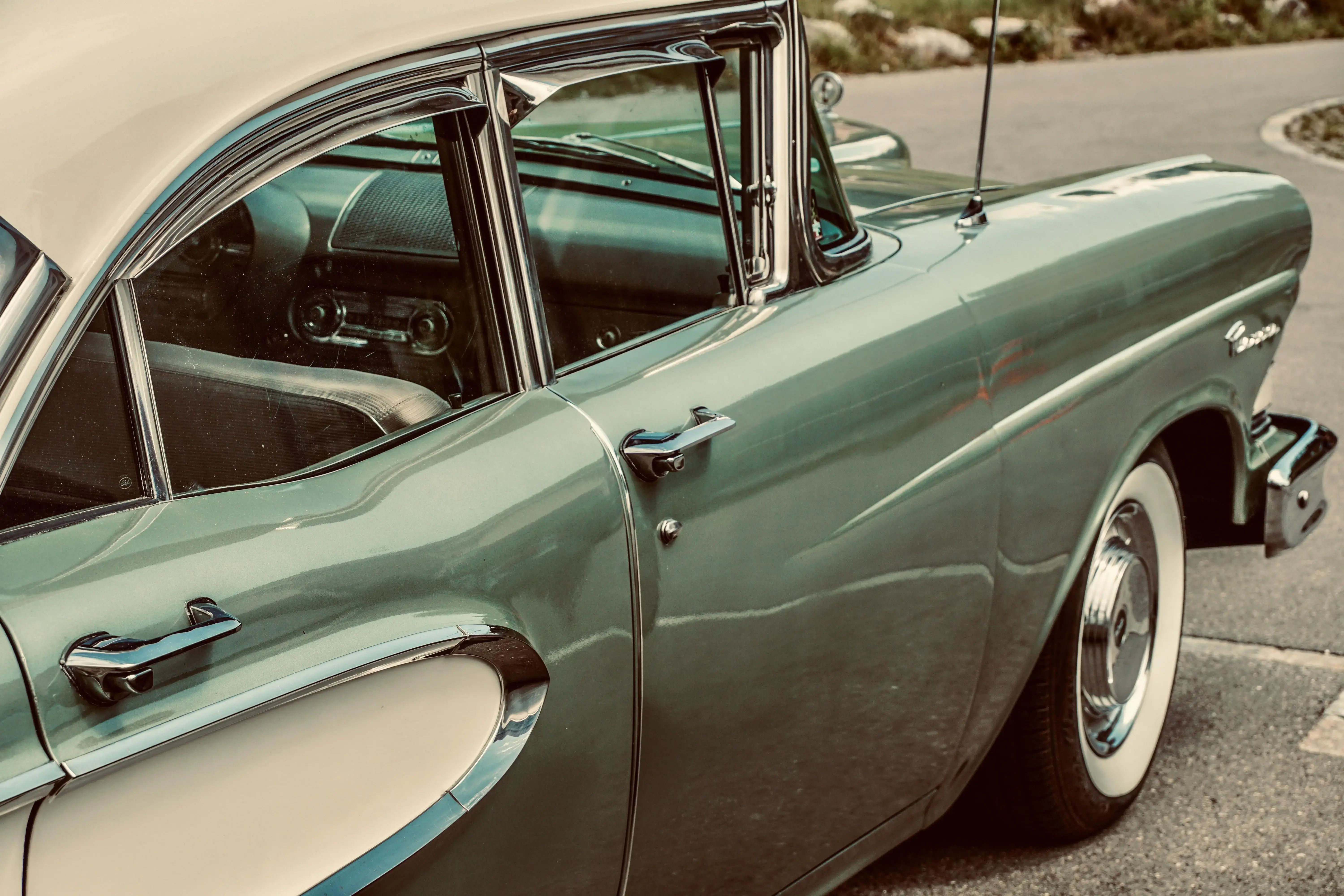

The numbers that explain 1950s American cars: 9 million new cars sold in 1955 alone, a record that stood until 1976. By 1958, roughly 75% of American households owned at least one car. Detroit launched three brand-new V8 engine families in a single decade. The Big Three traded market share like baseball cards. Power steering, automatic transmission, 12-volt electrics, air conditioning, and quad headlights all went from optional to expected during these ten years.
What makes 1950s cars special is that Detroit had the time and the budget to actually engineer them. The muscle car wars of the late 1960s short-circuited the industry into a horsepower drag race. The 1950s gave the same companies the runway to refine ride quality, body fits, chrome plating, and interior trim to a standard that has never really been matched on a mass-production scale.
The other thing worth saying out loud: 1950s cars are one of the last corners of the American classic market where you can still buy a serious, original-condition car for $20,000 to $30,000. Tri-Five Chevys and 1955-57 Thunderbirds have moved out of reach. Most of the rest of the decade has not. A Packard Patrician trades for less today in real dollars than it sold for new in 1955. A Buick Roadmaster sedan can be had for under $25,000. The 1950s are quietly the best value in the pre-1965 American classic market right now.
Six worth your time, with stories, production numbers, current values, and live listings on Hemmings, Bring a Trailer, Hagerty Marketplace, and ClassicCars.com.
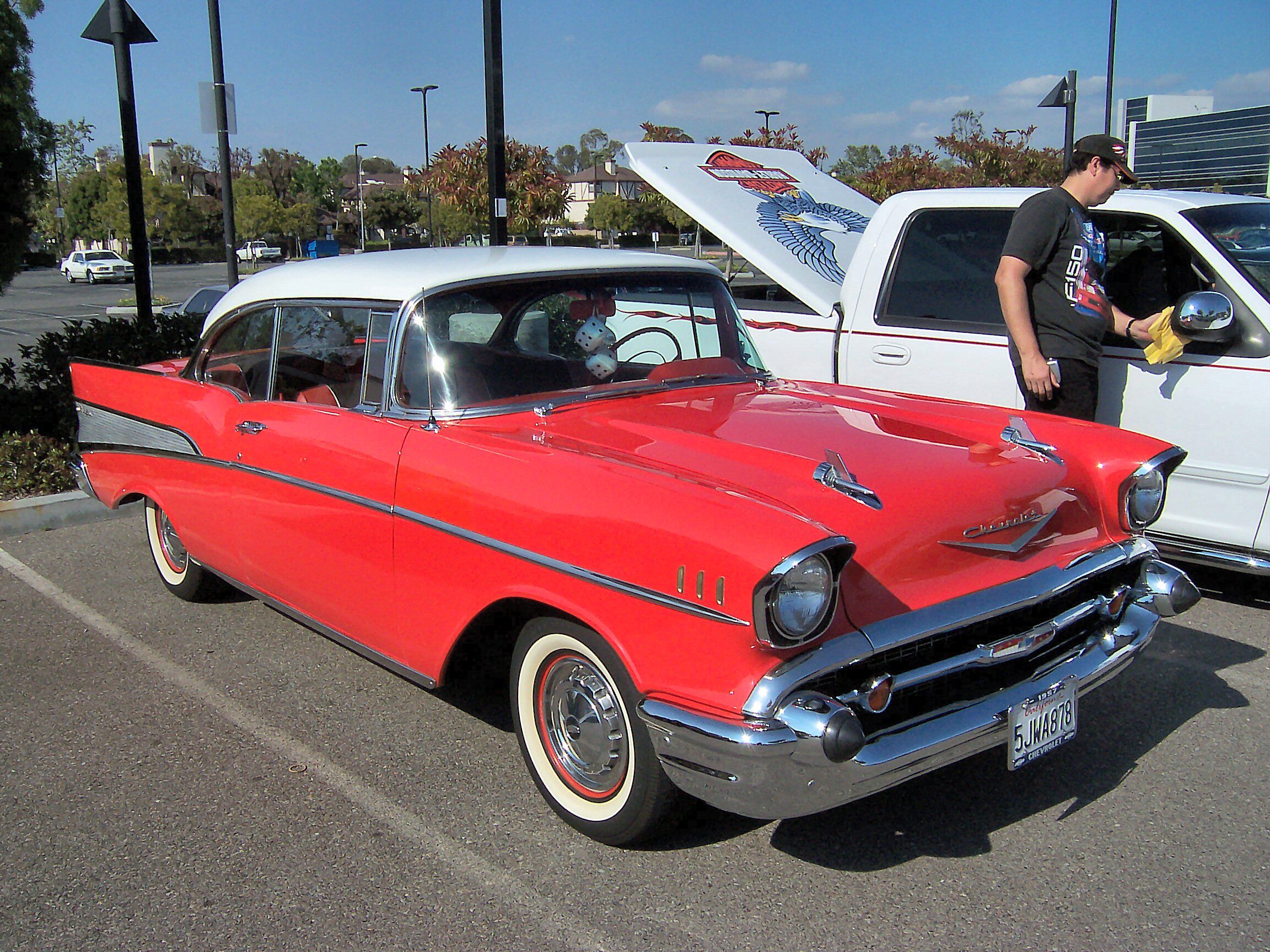
1. Chevrolet Bel Air (1955-57 Tri-Five)
The Story
The Bel Air arrived in 1950 as the name for Chevrolet's new pillarless hardtop body style. The car everyone actually means when they say "Bel Air" is the 1955-57 Tri-Five generation. 1955 introduced the small-block 265 V8, the engine that would still be in GM trucks 50 years later. 1956 cleaned up the styling. 1957 added the most photographed tailfins in American automotive history.
Why It Still Matters
The 1957 Bel Air is the single most recognizable American car ever built. Period. Walk into any car show in any country in the world and there is a 1957 Bel Air on the field. The combination of the 283 small-block (especially with fuel injection at 283 horsepower, one horsepower per cubic inch, a US first), the chrome bullet bumpers, the gold anodized grille, and the rear "wings" produced a car that looks like nothing else on earth.
The 1955 and 1956 cars are arguably better engineered and cleaner-styled. 1957 is the icon. Pick your priority.
Production Numbers
Chevrolet built about 1.5 million cars in 1957, of which roughly 700,000 wore Bel Air trim. The Sport Coupe (two-door hardtop) accounted for 166,426 units. The convertible was the rare one at 47,562. The fuel-injected 283 was ordered on fewer than 1,500 cars across the entire 1957 lineup.
Current Values
A #3 condition 1957 Bel Air Sport Coupe with the 283 sits around $45,000 to $55,000. The convertible runs $80,000 to $120,000. Fuelie cars and Nomad wagons sit higher. 1955 and 1956 Bel Airs in driver condition can still be found in the $30,000 to $45,000 range, and they are arguably the better buy at this point.
Where to Buy
- Hemmings Bel Air listings
- Bring a Trailer Bel Air auctions
- Hagerty Marketplace
- ClassicCars.com Bel Air listings
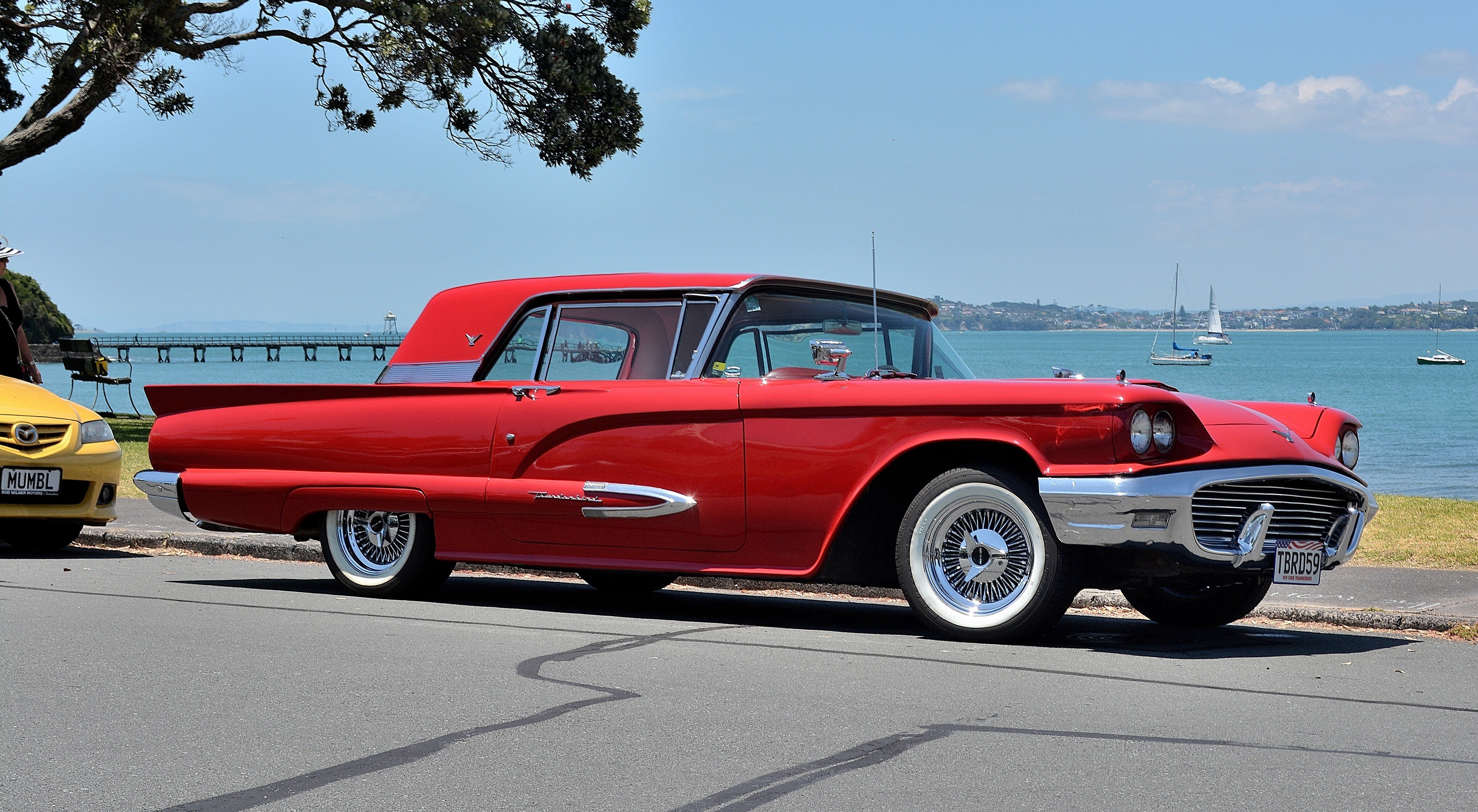
2. Ford Thunderbird (1955-57 Two-Seater)
The Story
The Thunderbird arrived in October 1954 as a 1955 model. It was Ford's response to the Corvette and it sold dramatically better, partly because Ford built it as a "personal luxury car" rather than a sports car. Two seats, a removable hardtop or soft top, and standard equipment that the Corvette would not see for years. The 1955 to 1957 cars are known as the "little birds" or two-seater Thunderbirds. From 1958 onward the car became a four-seater, and a much bigger one.
Why It Still Matters
The two-seat Thunderbird is the cleanest American car design of the 1950s. Short overhangs, tight proportions, no extraneous chrome. The 1957 model gained the porthole hardtop, the larger tailfins, and the 312 cubic-inch Y-block V8 making up to 245 horsepower in standard tune (and 300 with the rare McCulloch supercharger). It is one of the few American cars from the era that genuinely worked as both a fast car and an elegant car.
Production Numbers
Ford built just 53,166 two-seat Thunderbirds across all three years: 16,155 in 1955, 15,631 in 1956, and 21,380 in 1957. Compare that to nearly 14,000 1953-57 Corvettes (a much narrower window) and you can see why the Thunderbird won the 1950s personal-coupe war.
Current Values
A driver-quality 1955-57 Thunderbird runs $35,000 to $55,000 today. A concours example with the F-Code supercharged engine can hit $150,000 or more. The 1955 is the cleanest design and often the cheapest of the three. The 1957 is the most desirable and the most expensive. The 1956 (with the trunk-mounted Continental spare tire) splits the difference.
Where to Buy
- Hemmings Thunderbird listings
- Bring a Trailer Thunderbird auctions
- Hagerty Marketplace
- ClassicCars.com Thunderbird listings
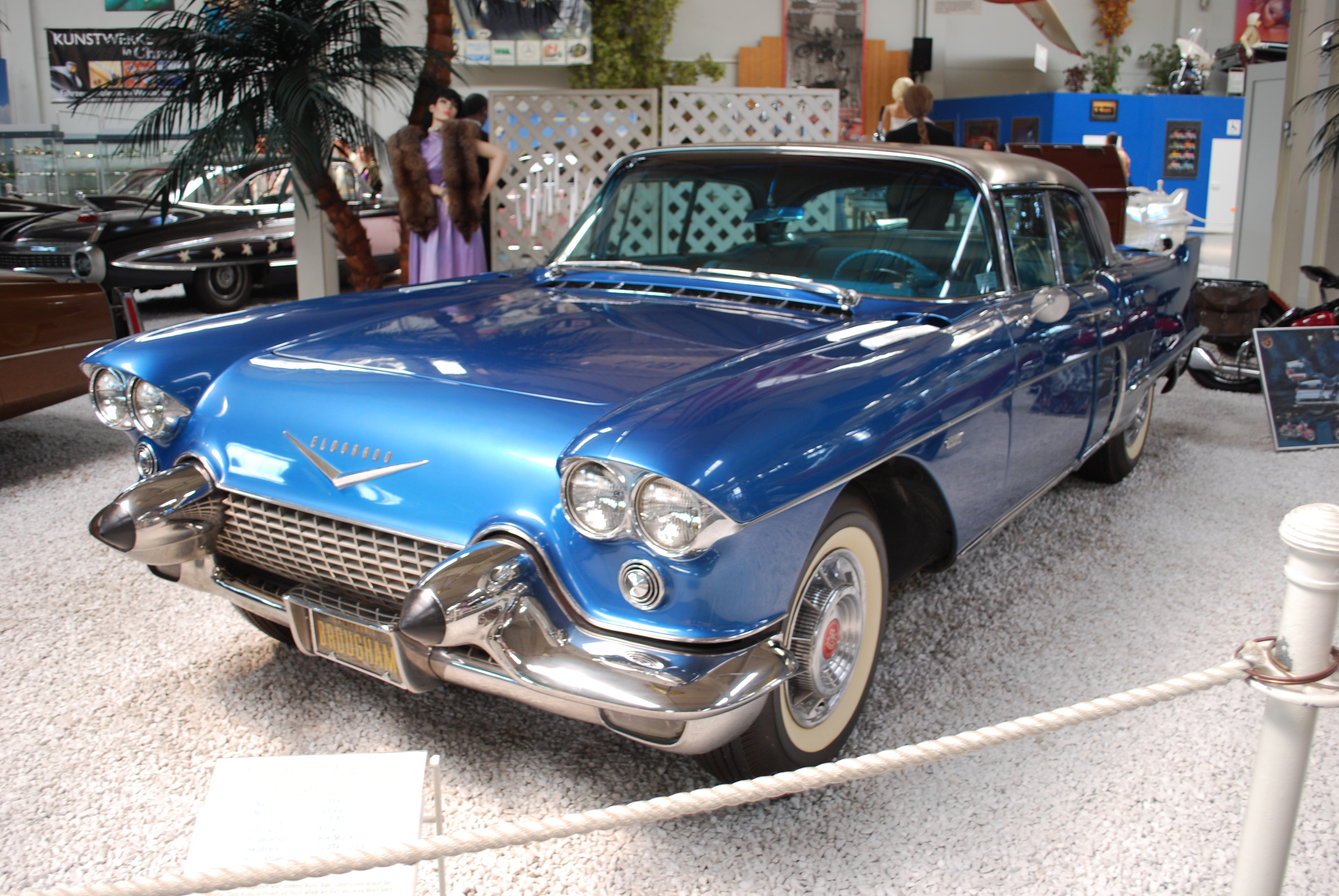
3. Cadillac Eldorado
The Story
Cadillac built the first Eldorado in 1953 as a one-year-only limited production convertible to celebrate the company's 50th anniversary. Hand-built, wraparound windshield, leather everything. Just 532 were sold at $7,750 each, which was 50% above the price of a standard Cadillac convertible. From 1954 onward the Eldorado became a regular production model, and in 1957 the Eldorado Brougham debuted as the most expensive American car of the decade at $13,074, with air suspension, quad headlights (a US first), and a stainless steel roof.
Why It Still Matters
If the Bel Air is what 1950s America wanted to drive, the Eldorado is what 1950s America wanted to arrive in. The 1959 Eldorado Biarritz convertible carried the most extreme tailfins ever fitted to a production car, at 42 inches off the ground, with twin bullet taillights inside each fin. The Brougham introduced features that would not reach the rest of the industry for decades: memory power seats, air conditioning as standard, vanity case with perfume atomizer.
Production Numbers
1953 Eldorado: 532 units. 1957 Eldorado Brougham: 400. 1958 Brougham: 304. 1959 Eldorado Biarritz convertible: 1,320. Standard Eldorado Seville and Biarritz models ran in the low thousands each year. These are genuinely rare cars by 1950s American standards.
Current Values
The 1953 first-year Eldorado is now a $250,000 to $400,000 car. The 1957-58 Brougham trades for $150,000 to $300,000 in restored condition. A 1959 Biarritz convertible can hit $200,000. Standard 1955-58 Eldorados in #3 condition are $60,000 to $100,000. These are no longer cheap cars, but they were never going to be.
Where to Buy
- Hemmings Eldorado listings
- Bring a Trailer Eldorado auctions
- Hagerty Marketplace
- ClassicCars.com Eldorado listings
4. Buick Roadmaster
The Story
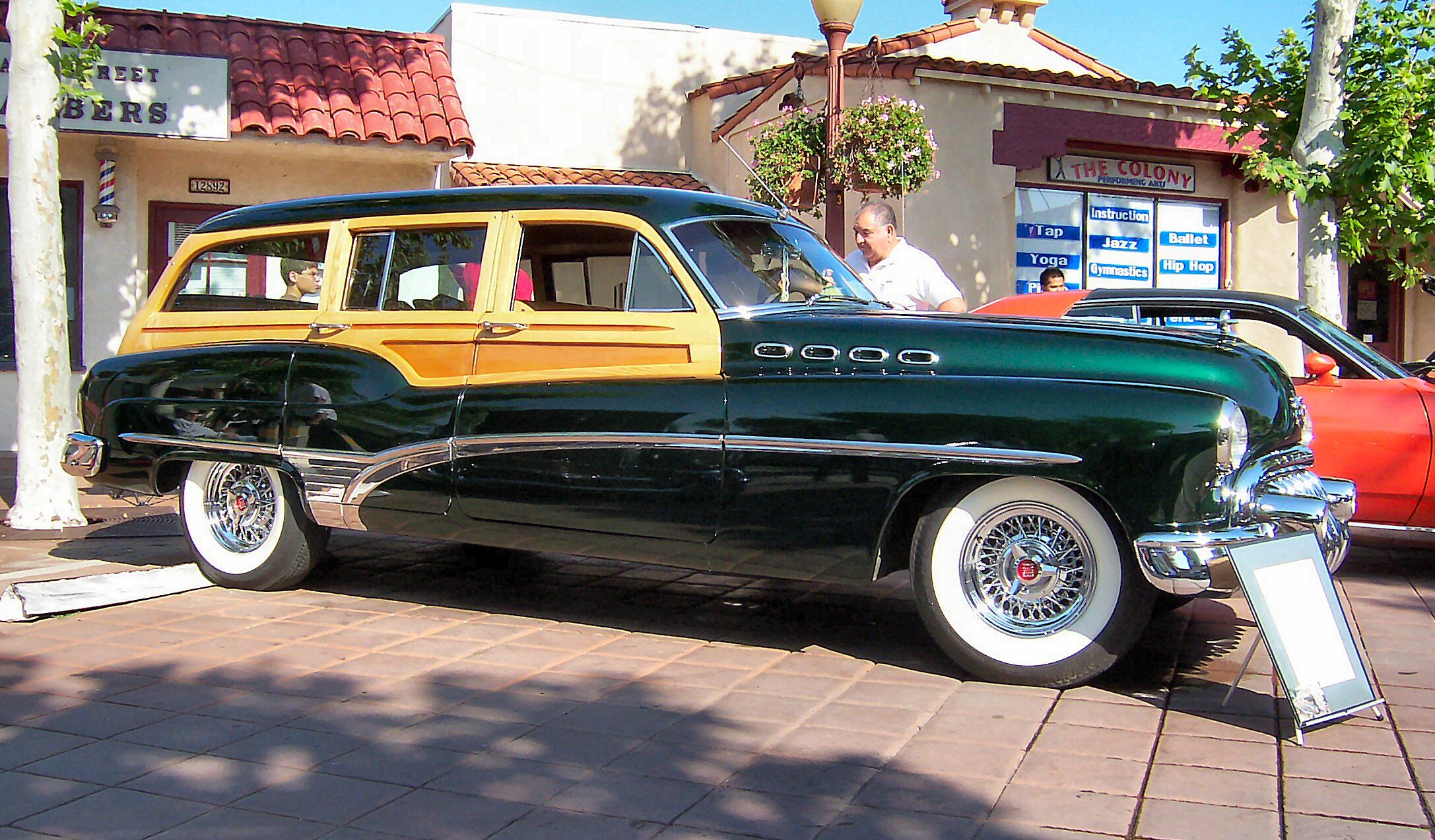
The Roadmaster name dates to 1936, but the 1950s Roadmasters are the ones worth knowing. Buick was the third-best-selling American brand for most of the decade, and the Roadmaster was its flagship. The 1953 model introduced the Nailhead V8, which made up to 200 horsepower from 322 cubic inches. The 1955-58 cars added the Dynaflow automatic, four-portholes-per-side fender vents (a real Buick spotter's tell), and the famous "sweep-spear" chrome side trim.
Why It Still Matters
The Roadmaster is the most underappreciated full-size American luxury car of the decade. It cost Cadillac money to engineer and built like Cadillac, but trades today for Oldsmobile money. The Nailhead V8 is a serious engine. The Dynaflow is a smooth, if not quick, transmission. The interior on a 1957 Roadmaster Riviera hardtop is one of the most ornate American car interiors ever built.
Production Numbers
Buick built about 118,000 Roadmasters in 1950 and roughly 50,000 to 80,000 per year through the mid-1950s. Convertibles were the rare body style at 4,000 to 7,000 units per year. Total Roadmaster production for the decade was well over 500,000.
Current Values
This is where the steal angle gets real. A driver-quality 1950s Roadmaster four-door sedan sits at $18,000 to $28,000. Two-door hardtops (the Riviera) run $25,000 to $40,000. Convertibles top out around $50,000 to $70,000. For the engineering, the chrome, and the road presence, that is roughly half what a comparable Cadillac costs.
Where to Buy
- Hemmings Roadmaster listings
- Bring a Trailer Roadmaster auctions
- Hagerty Marketplace
- ClassicCars.com Roadmaster listings
5. Dodge Custom Royal
The Story
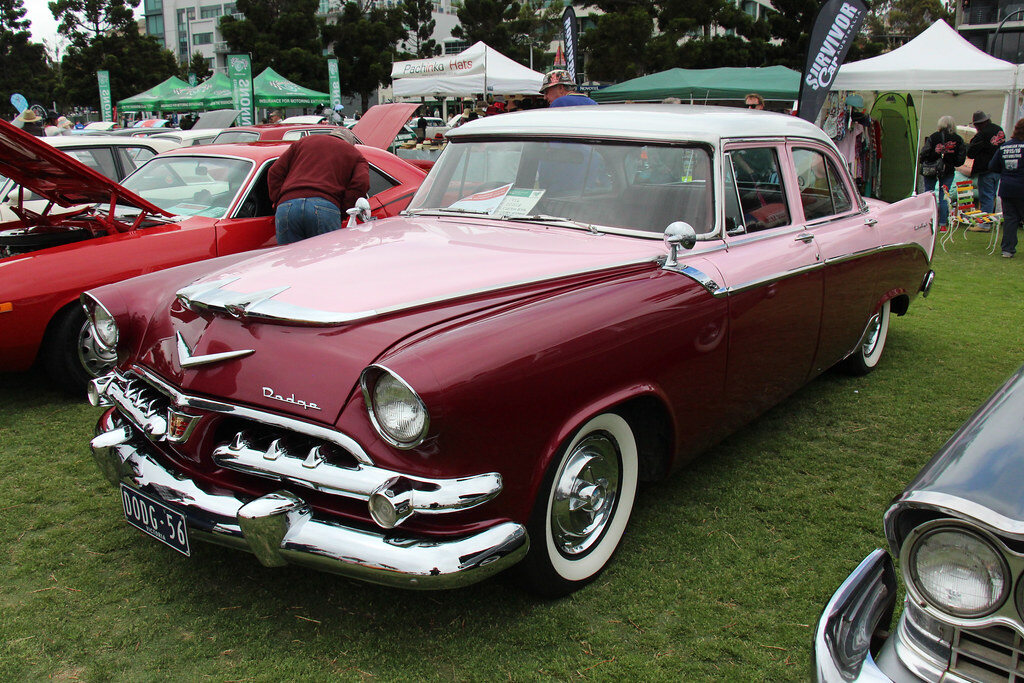
The Dodge Royal name appeared in 1954. By 1955, Chrysler's stylist Virgil Exner had reset every Chrysler division with the "Forward Look" design language, and Dodge got one of the best executions of it. The 1956 Custom Royal Lancer hardtop, the 1957 model with the soaring rear fins, and the 1958-59 cars with the dual headlights are the Dodges to know. The Hemi V8 was optional from 1953 onward in Dodge Red Ram form, with up to 315 horsepower by 1957.
Why It Still Matters
The Forward Look Dodges (1957-59) outstyled General Motors so dramatically that GM had to throw out its 1959 model year plans and start over. That is not industry mythology, that is documented company history. The 1957 Custom Royal looks like it came from 1962. Long, low, and finned, with a wraparound windshield and quad headlights (legalized halfway through the model year). The optional D-500 package with the Hemi made these cars genuinely quick by 1950s standards.
Production Numbers
Dodge built about 160,000 Royals and Custom Royals in 1957. The Custom Royal Lancer two-door hardtop accounted for roughly 23,000 units. The convertible was rarer at about 1,800. D-500 equipped cars across all Dodge models were a few thousand units total.
Current Values
Driver-quality 1957-59 Custom Royals sit at $25,000 to $40,000. A Lancer hardtop with the D-500 Hemi in restored condition can hit $80,000. The convertibles are $50,000 to $90,000. Less recognized than a Chevy or Ford from the same year, half the money, and arguably the better looking car.
Where to Buy
- Hemmings Dodge Royal listings
- Bring a Trailer Dodge auctions
- Hagerty Marketplace
- ClassicCars.com Custom Royal listings
6. Pontiac Chieftain
The Story
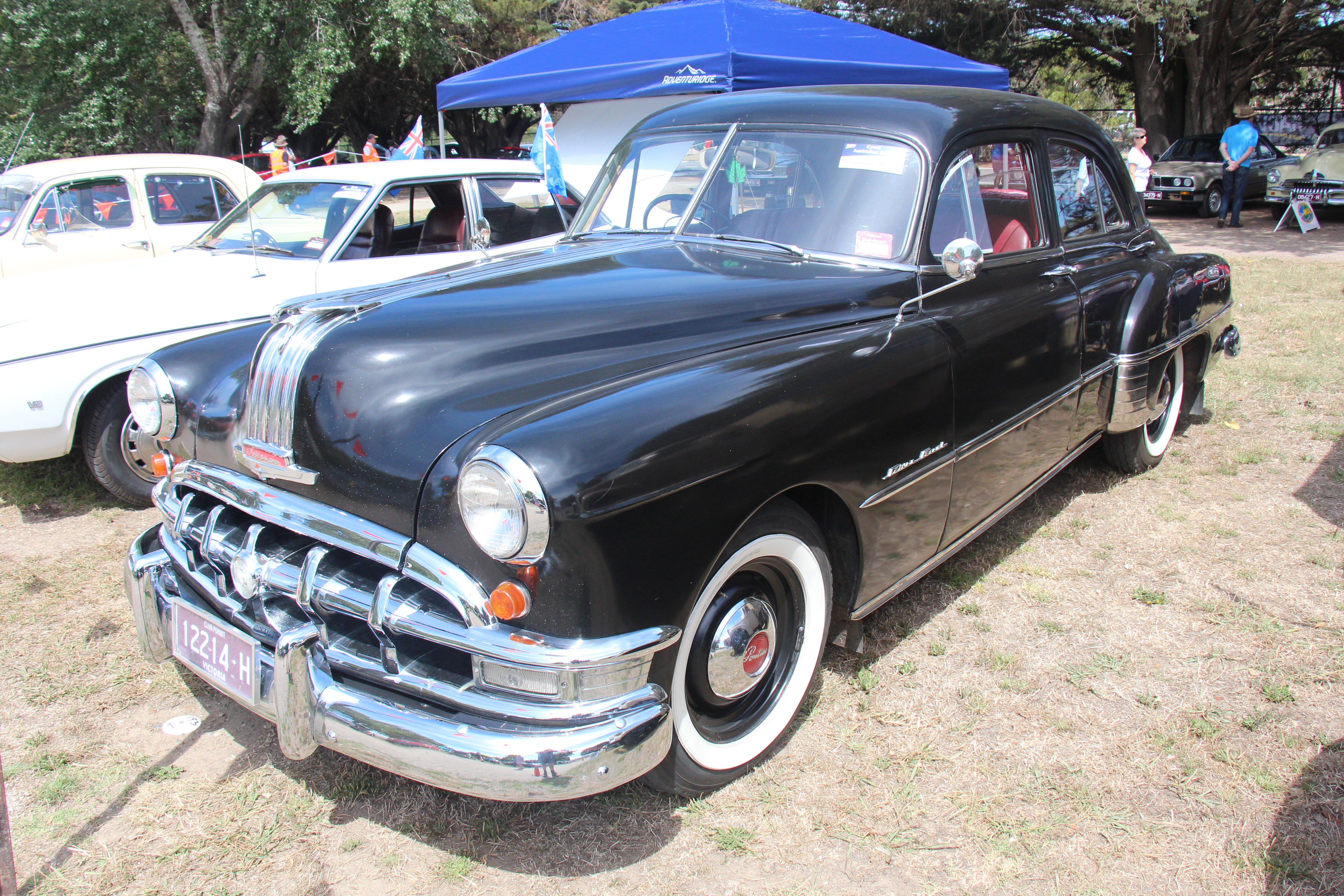
The Chieftain ran from 1949 to 1958 as Pontiac's mainstream full-size car. For most of the 1950s, Pontiac was GM's fourth division behind Chevrolet, Buick, and Oldsmobile, and the Chieftain was the car that kept the lights on. The 1955 model year was the inflection point: Pontiac dropped the prewar straight-eight, introduced the Strato-Streak V8, and rebodied the entire lineup. The 1957 Chieftain got the fuel-injected 347 V8 option, the first fuel injection ever offered on a US production car (alongside the Bel Air mentioned above).
Why It Still Matters
The Chieftain is the smartest entry point into 1950s American classic ownership. It is genuinely interesting (the silver streak hood trim, the Indian head hood ornament, the Strato-Streak V8), genuinely affordable, and shares enough mechanical DNA with more expensive Bel Airs and Oldsmobiles that parts and service are not a problem. The 1955-57 cars are the ones to find. The earlier 1950-54 cars with the straight-eight are also worth a look, especially the convertibles.
Production Numbers
Pontiac built roughly 220,000 to 350,000 Chieftains per year through the early-to-mid 1950s, with production peaking around 1955. The Catalina hardtop and convertible body styles are the desirable ones and accounted for a smaller share of total production.
Current Values
A driver-quality 1950s Chieftain sedan can be had for $15,000 to $22,000. The Catalina two-door hardtop runs $20,000 to $35,000. Convertibles top out around $45,000 to $60,000. For a real 1950s American car with a V8, this is genuinely cheap.
Where to Buy
- Hemmings Chieftain listings
- Bring a Trailer Pontiac auctions
- Hagerty Marketplace
- ClassicCars.com Chieftain listings
Honorable Mentions
Three more 1950s cars worth knowing about, even though they did not make the main list:
- Packard Patrician. Packard's last great flagship before the company collapsed in 1958. Straight-eight (and then V8 from 1955), genuine engineering, and trading at $15,000 to $25,000 today. Underpriced for what you get.
- Lincoln Continental Mark II (1956-57). The most expensive American car of its era when new ($10,000, twice the price of a Cadillac). Hand-assembled, just 2,996 built across two years. Now a $100,000 to $200,000 car.
- 1953 Studebaker Commander Starliner. The Raymond Loewy-designed coupe that the rest of the industry spent the decade trying to copy. Modest power, perfect proportions, $25,000 to $40,000 today.
The Smart Buy in 2026
If we had to pick three of the cars covered above to buy right now:
- Buick Roadmaster. $25,000 buys a 1957 Riviera two-door hardtop with the Nailhead V8 and the most over-the-top chrome of the decade. Nothing else from this era delivers as much car for the money.
- Pontiac Chieftain Catalina. The 1955-57 V8 cars are genuinely undervalued. Buy the best example you can afford and drive it.
- Dodge Custom Royal Lancer. The Forward Look 1957-59 cars are the best-looking American cars of the decade. The market has not caught up yet.
The rule that has held for 50 years of classic car buying still holds. Buy the best example you can afford, not the cheapest one you can flip. Restoration costs on a 1950s car (with all that chrome, the lead body work, and the obsolete interior trim) will humble anyone who underestimates them.
For the next decade in this series, the best 1970s American cars cover similar ground with completely different priorities. The 1960s sit in between.
Ready to ship your 1950s American classic?
We move thousands of classic cars a year out of our own warehouses in Oakland, Miami, and the New York / New Jersey port complex. 1950s American cars travel especially well to the UK, Germany, the Netherlands, the UAE, and Australia, where the demand for original Tri-Five Chevys and Forward Look Dodges keeps climbing. Contact West Coast Shipping's classic car specialists today for a personalized quote and discover how simple bringing your dream car home can be. Get an instant rate.
.webp)
1950s Americana Revival: Why Europeans Pay Premiums for Chrome
History of American Muscle Cars: Origins, Golden Age & Modern Era