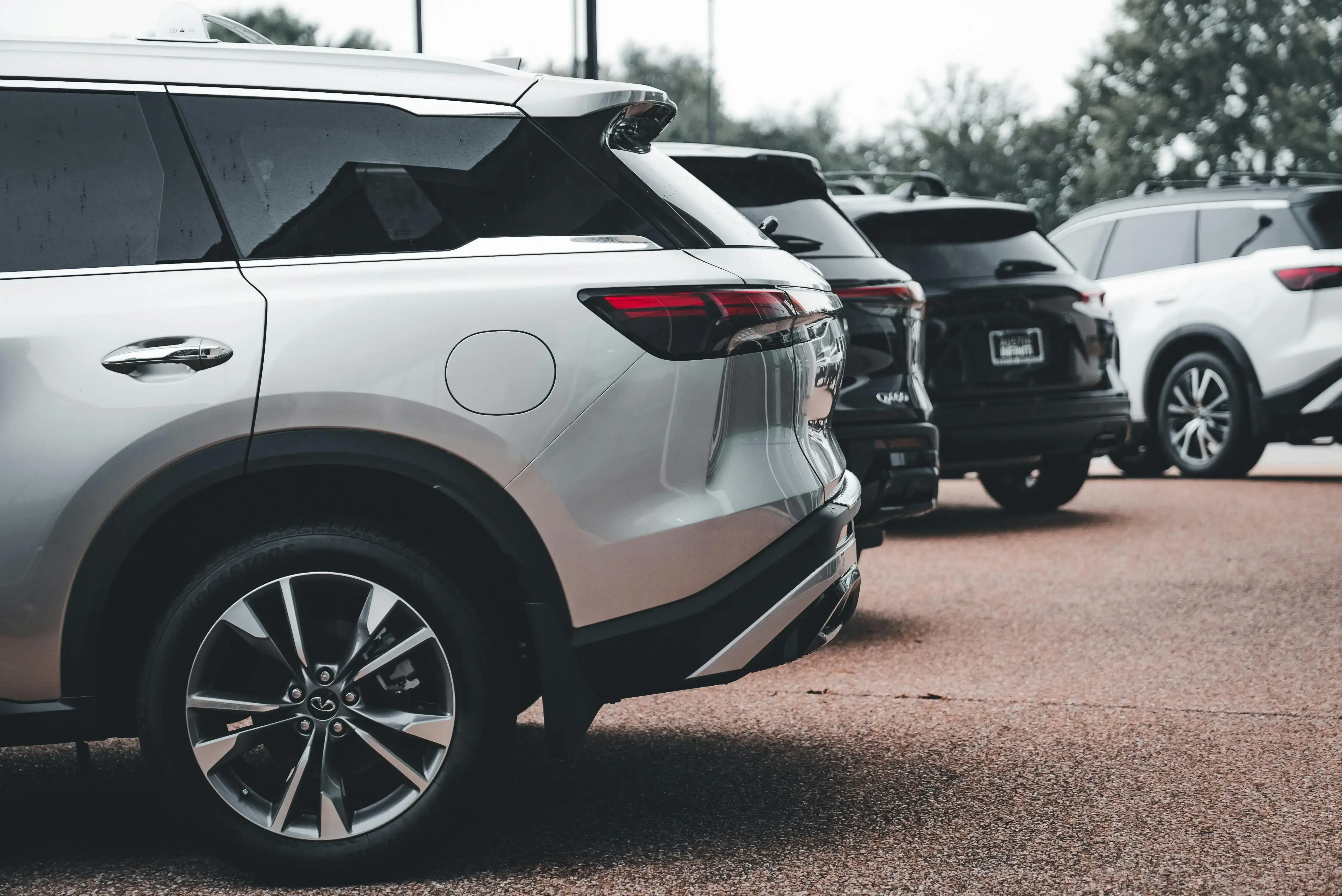

Shipping a full-size American pickup truck to Georgia's Port of Poti costs more than shipping a standard sedan -- and the reason is simple: these trucks take up more space in a shipping container, and in container shipping, space is what you pay for. This article breaks down the cost implications specifically for the Ford F-150, Ram 1500, and Chevrolet Silverado, the three most commonly shipped American trucks to Georgia. For general route costs and departure port comparisons, the full Georgia shipping cost breakdown covers that territory.
Why These Three Trucks Dominate Georgia-Bound Shipments
The F-150, Ram 1500, and Silverado are the three best-selling vehicles in the United States. Their dominance in the Georgian import market is not coincidental -- it reflects the same practical qualities that make them popular domestically. Georgian roads, particularly outside Tbilisi, favour vehicles with genuine towing capacity, high ground clearance, and durable drivetrains. American full-size trucks deliver all three at price points that competing vehicles from European or Asian markets struggle to match.
Georgian terrain puts these vehicles to work. Mountain passes, unpaved rural roads, and a construction-heavy economy create demand for the kind of capability that a half-ton American pickup provides as standard equipment. The F-150, Ram, and Silverado have each built reputations in this market over years of consistent use, which creates buyer familiarity that supports resale values and sustains import demand.
For sellers and dealers shipping a car to Georgia -- or more precisely, a truck -- understanding the cost structure specific to these models is the starting point for a realistic landed cost calculation.
How Truck Dimensions Drive Container Costs
Before getting to model-specific figures, the underlying mechanic is worth explaining clearly. Container consolidation pricing is built on how much container floor space a vehicle occupies. A standard sedan occupies roughly one slot in a consolidation load. A full-size crew cab pickup truck, with its significantly greater length and width, occupies more than one slot -- and that difference is reflected in the per-vehicle rate.
A standard 40-foot shipping container has an interior length of approximately 12,000mm and an interior height of approximately 2,350mm. A full-size crew cab truck in the 5,840mm to 5,920mm length range does not simply slot in beside other vehicles the way a compact car does. Loading configurations for these trucks depend on what else is in the container and require WCS's loading team to plan the arrangement before the rate can be confirmed.
The height dimension is equally important. Stock versions of all three trucks sit at approximately 1,960mm to 1,970mm, which fits within a standard container's 2,350mm interior height with adequate clearance. Any lift kit, roof rack, or tall bed accessory reduces that clearance and may require a high-cube container at higher cost.
All dimension figures cited are approximate and vary by model year, cab configuration, and option packages. Confirm your vehicle's measurements with WCS before booking.
Ford F-150: Dimensions, Container Fit, and Cost Impact
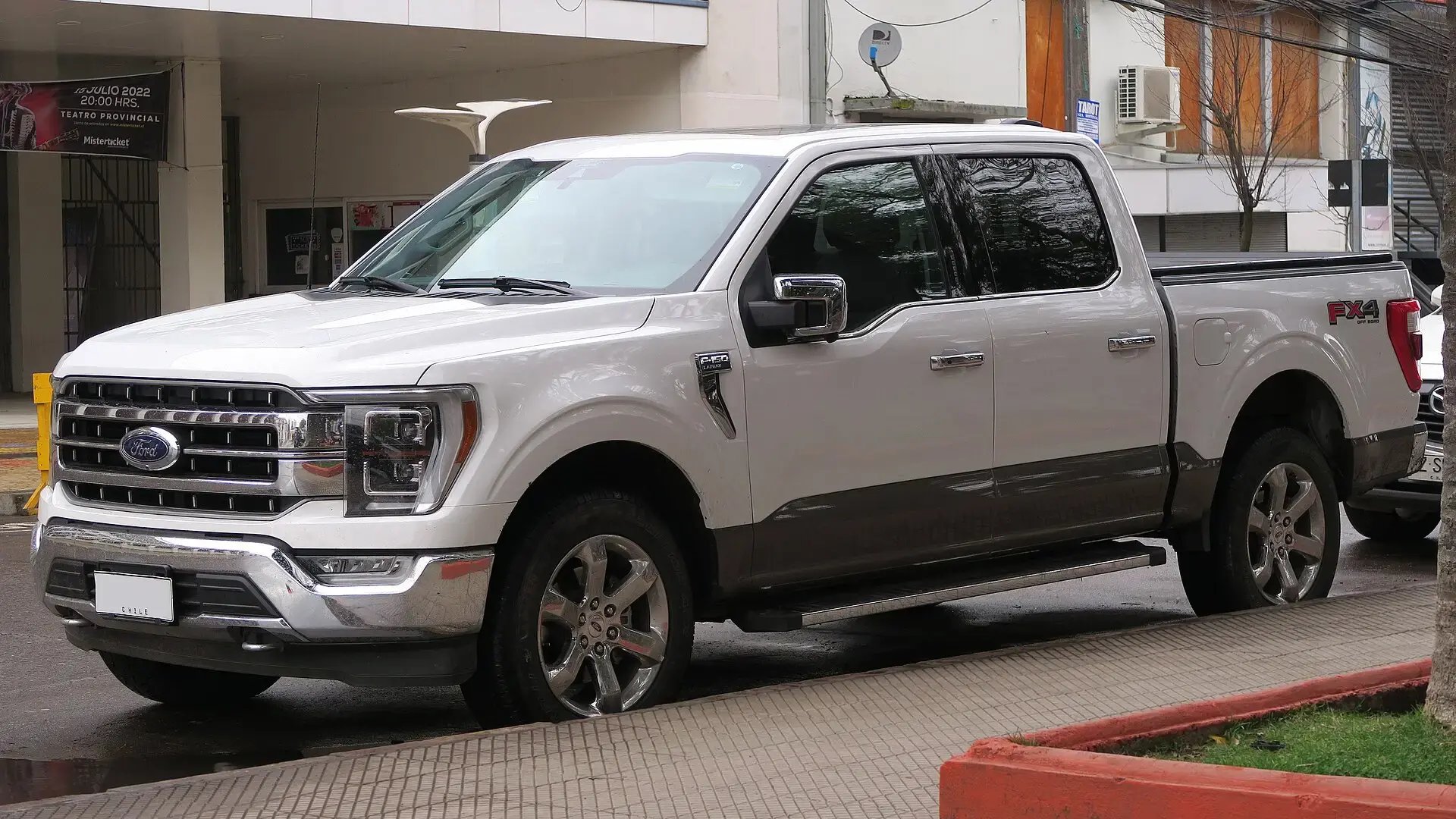
The F-150 SuperCrew with a standard 5.5ft bed is the most commonly shipped F-150 configuration to Georgia. Its approximate dimensions:
-
Length: approximately 5,890mm
-
Width: approximately 2,030mm (excluding mirrors)
-
Height: approximately 1,960mm (stock, no lift)
At just under 5,900mm, the SuperCrew's length nearly spans the full interior of a 20-foot container on its own. This makes 20-foot container loading impractical for this configuration. The 40-foot container is the standard loading unit for F-150 SuperCrew shipments.
In a consolidation load within a 40-foot container, an F-150 SuperCrew occupies significantly more floor space than a standard sedan, which is reflected in the per-vehicle consolidation rate. An F-150 will cost more to ship than a standard car from the same departure port, with the premium reflecting the additional container space consumed rather than any surcharge.
For F-150 SuperCab configurations (smaller cab, often longer bed), dimensions differ and should be confirmed separately. Extended cab versions with longer beds may actually be more challenging to load efficiently than a SuperCrew with a shorter bed, depending on total length.
Shipping rates for the F-150 vary by configuration, departure port, and vessel schedule. Contact WCS for a current quote specific to your cab and bed configuration.
Ram 1500: Similar Profile, One Key Distinction to Check
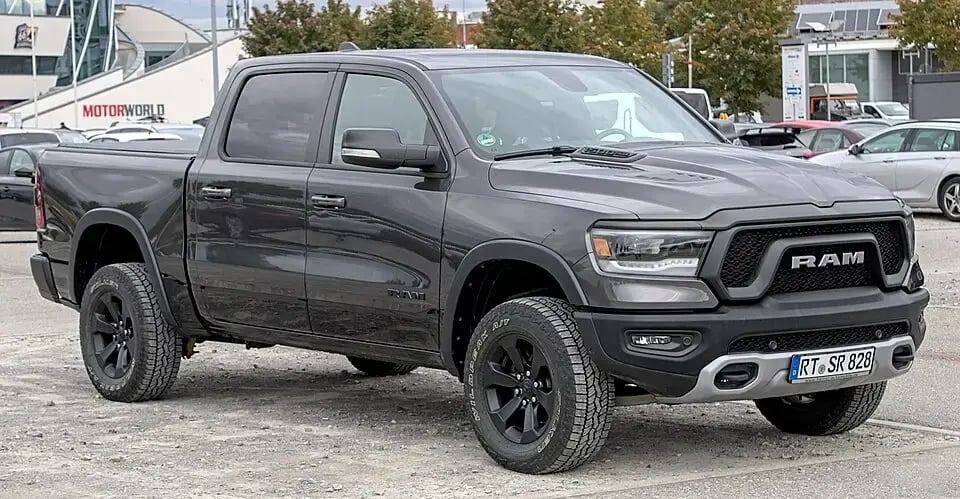
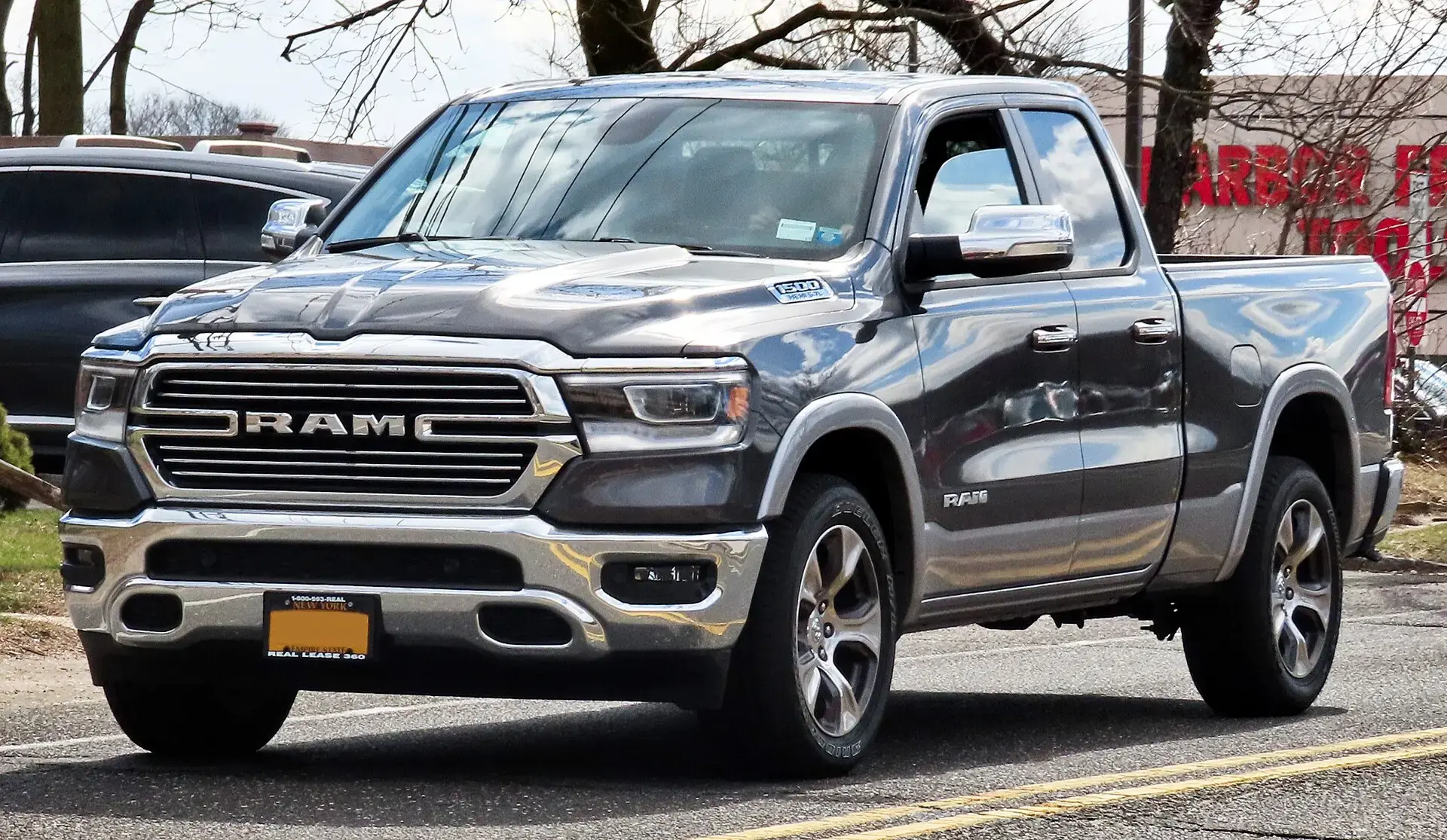
The Ram 1500 Crew Cab with a standard 5.7ft box has approximate dimensions closely comparable to the F-150:
-
Length: approximately 5,840mm
-
Width: approximately 2,010mm (excluding mirrors)
-
Height: approximately 1,968mm (stock)
The Ram's slightly narrower body -- approximately 20mm narrower than an F-150 -- rarely creates a meaningful loading difference in practice. Container loading calculations for the Ram 1500 and F-150 are nearly identical, and both are assessed similarly for space allocation and consolidation pricing.
The one distinction worth flagging: the Ram 1500 has been sold in two distinct body generations simultaneously -- the current DT generation and the Classic body style, which is a carry-forward of the previous generation. These two configurations have different dimensions, different hood lines, and different overall footprints. A buyer shipping a Ram 1500 Classic versus a Ram 1500 DT should confirm which generation they have when requesting a container loading assessment, because the dimensions used for planning cannot be assumed from the model name alone.
Shipping rates for the Ram 1500 vary by generation, configuration, departure port, and vessel schedule. Contact WCS for a current quote specific to your truck's configuration.
Chevrolet Silverado: The Widest of the Three
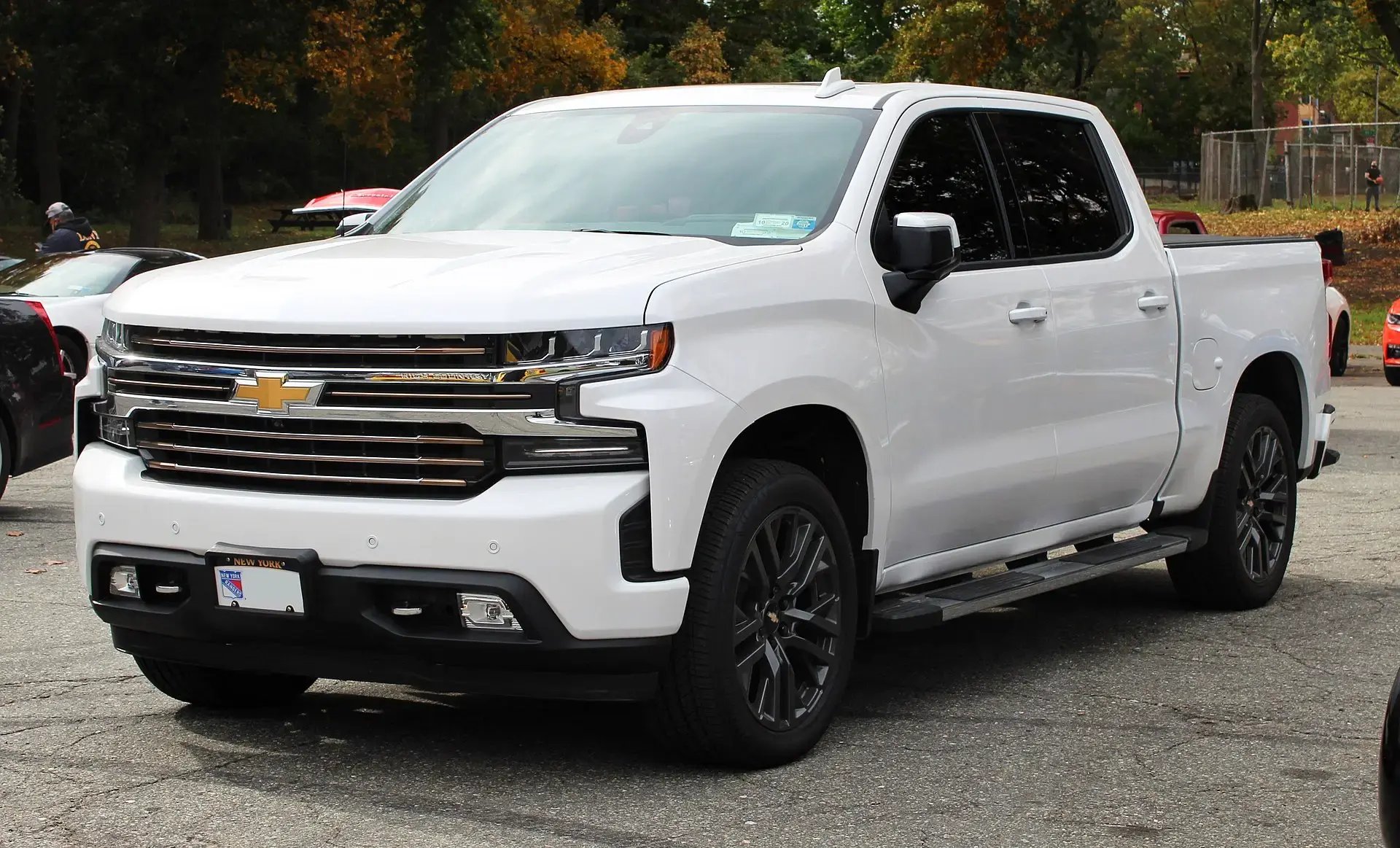
The Silverado 1500 Crew Cab with a standard 5.75ft bed has approximate dimensions:
-
Length: approximately 5,920mm
-
Width: approximately 2,055mm (excluding mirrors)
-
Height: approximately 1,970mm (stock)
At approximately 5,920mm, the Crew Cab Silverado is the longest of the three trucks. At approximately 2,055mm wide, it is also the widest -- roughly 25mm broader than the Ram and 25mm broader than the F-150. This combination of maximum length and maximum width makes the Silverado the most space-intensive of the three models in a consolidation load.
WCS's loading team pays close attention to the Silverado's width when planning a consolidation container that includes one. The extra 25mm may seem marginal on paper, but in a tightly planned container load with multiple vehicles, it affects what can be loaded alongside the Silverado without reducing clearance to unsafe levels.
The per-vehicle consolidation rate for a Silverado Crew Cab typically reflects this additional footprint. Buyers should expect a rate that is at least comparable to -- and often slightly above -- the F-150 equivalent, depending on the specific loading configuration for their shipment.
Shipping rates for the Silverado vary by configuration, departure port, and vessel schedule. Contact WCS for a current quote specific to your cab and bed configuration.
What Georgian Customs Does with These Trucks on Arrival
Georgia applies its own import duty and classification structure to incoming vehicles, and the distinction between a passenger vehicle and a pickup truck matters at the customs assessment stage. All three of these trucks -- the F-150, Ram 1500, and Silverado -- are classified as pickup trucks, not passenger vehicles, and Georgian customs assesses them accordingly.
The applicable duty rate, registration category, and any additional documentation requirements depend on the vehicle's specific classification under Georgian customs law. Cab configuration, payload rating, and accessories can all influence how a truck is categorised in practice. A Crew Cab F-150 used primarily for personal transport may be assessed differently than a Regular Cab work truck, depending on the specifics of Georgian customs classification at the time of import.
Confirm with a licensed Georgian customs broker -- before the truck ships -- what classification your specific truck will receive and what duty rate applies. This is not a step to delegate to the shipping company. The customs broker who will handle clearance at Poti is the right person to answer this question definitively.
For a complete overview of the Georgia shipping process beyond the truck-specific considerations covered here, the Georgia vehicle shipping service and the complete Georgia car shipping guide cover the full import process.
Container vs RoRo for Full-Size Trucks
For all three trucks in stock or near-stock condition, container shipping is the right method. An F-150, Ram, or Silverado at factory height fits within a standard 40-foot container with adequate clearance, and the enclosed container environment protects paint, electronics, and interior from the salt air and weather exposure that an open-deck voyage involves.
RoRo (Roll-on, Roll-off) -- where vehicles are driven onto an open vessel and secured on exposed decks -- is primarily used for oversized vehicles and heavy machinery that cannot be accommodated within standard container dimensions. For stock or lightly modified trucks, container consolidation provides better protection without the exposure risk of open-deck transit.
The cost comparison between container and RoRo is not fixed. RoRo is not automatically cheaper; pricing depends on the vessel, route, and market conditions at the time of booking. What is consistent is the protection advantage of container shipping for vehicles where condition on arrival matters.
For trucks with extreme lift heights that exceed even high-cube container clearance (approximately 2,700mm interior height), RoRo may be the only practical option. For the vast majority of F-150, Ram, and Silverado shipments heading to Georgia, a 40-foot consolidation container is the appropriate and recommended method.
Why West Coast Shipping for Your Truck Shipment to Georgia
Full-size American trucks require more logistics planning than a standard sedan -- dimension checks, container configuration, high-cube availability assessment if needed, and loading coordination for large footprints in a consolidation container. WCS handles all of this as part of the standard booking process, not as an afterthought when the truck shows up at the warehouse.
With nearly 20 years of door-to-door import experience, WCS operates from warehouses in California, Florida, and New York/New Jersey. For Georgia-bound shipments from the US East Coast, New York/New Jersey is the lowest-cost departure port for the ocean leg. Dedicated account managers coordinate the full sequence from warehouse intake through US export documentation, container loading, and connection with the Poti destination agent.
The consolidation model WCS uses keeps per-truck costs manageable. You are not paying for a dedicated full container unless the vehicle's dimensions genuinely require it. For most F-150, Ram 1500, and Silverado shipments in stock or near-stock configuration, consolidation in a 40-foot container is the right approach -- and the one that keeps your landed cost as competitive as possible.
Ready to Get a Quote for Your Truck?
Get an Instant Quote for Your Full-Size Truck Shipment
Use the WCS shipping calculator to see current rates for your specific truck model, departure port, and delivery to Port of Poti.


Shipping an SUV or Truck to Georgia (Poti): What to Prepare
Why Brits Are Importing F-150s, Rams & Silverados to the UK | WCS