

Shipping an SUV or Truck to Georgia (Poti): What to Prepare
Shipping an SUV or truck to Georgia's Port of Poti involves preparation steps that a standard sedan simply does not require. Dimensions matter for container loading. Fuel and fluid levels matter differently at larger tank volumes. And pickup trucks carry documentation considerations that passenger vehicles do not. This guide covers the SUV and truck-specific details -- not the general Georgia shipping process, which is covered at Ship car to georgia Page.
Why Georgia Is a Particularly Popular Destination for American SUVs and Trucks
Before getting into preparation, it is worth understanding why this route exists at such volume. Georgia's geography -- mountain roads, rural infrastructure, and a construction-heavy economy -- suits American full-size trucks and SUVs in ways that comparably priced alternatives do not. The towing capacity, payload ratings, and ground clearance of a Ford F-150 or a Chevrolet Silverado are genuinely useful in Georgian driving conditions, not just aspirational.
Georgian terrain does not reward small, low-clearance vehicles. American full-size trucks offer a combination of capability and durability that has built consistent demand in the Caucasus market over many years. For a seller or dealer shipping to this destination, understanding why the market wants these vehicles helps explain why preparation quality matters -- buyers in Georgia often know exactly what they are purchasing and what condition to expect.
The practical implication: a truck that arrives in Poti in poor condition, with undeclared modifications or incomplete documentation, creates problems that are harder to resolve from a distance than they would be domestically. Getting the preparation right before departure is the single most controllable variable in the process.
How SUV and Truck Dimensions Affect Container Loading
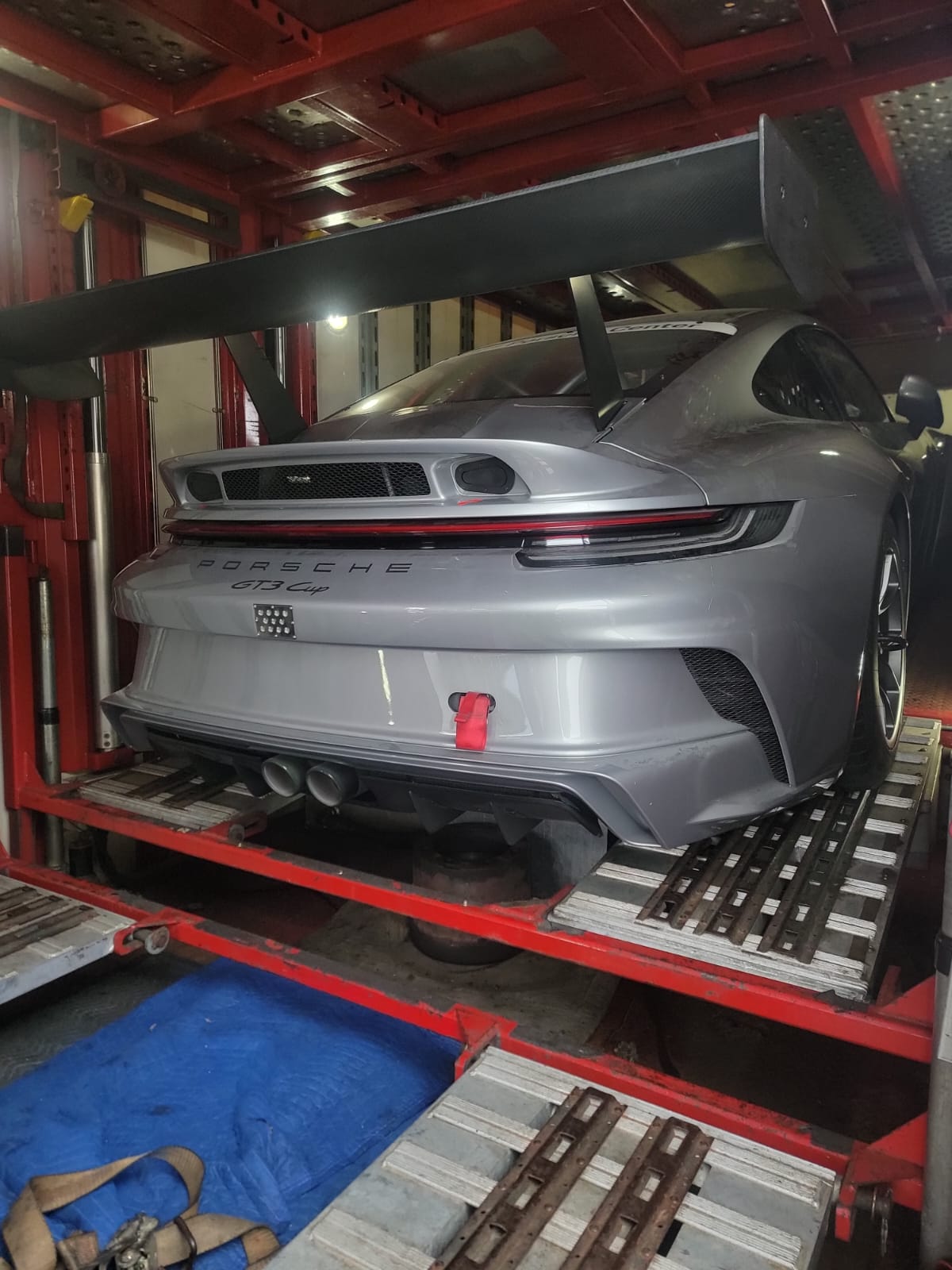
This is the section most sellers underestimate. Container loading for large vehicles is not just a question of whether the vehicle fits -- it is a question of how much space it occupies relative to other vehicles in a consolidation load, and what that means for your per-vehicle shipping cost.
Standard Container Dimensions and What They Mean for Your Vehicle
A standard ISO 40-foot shipping container has an interior height of approximately 2,350mm and an interior length of approximately 12,000mm. A 20-foot container gives approximately 5,900mm of interior length with the same height.
Most factory-stock SUVs -- a Toyota Land Cruiser, Lexus GX, or BMW X5 -- fit within standard container dimensions without any issue. The height question becomes relevant when lift kits, roof racks, or pop-up accessories are in place. It becomes critical for full-size pickup trucks in certain configurations.
Ford F-150, Ram 1500, and Silverado: The Space Calculation
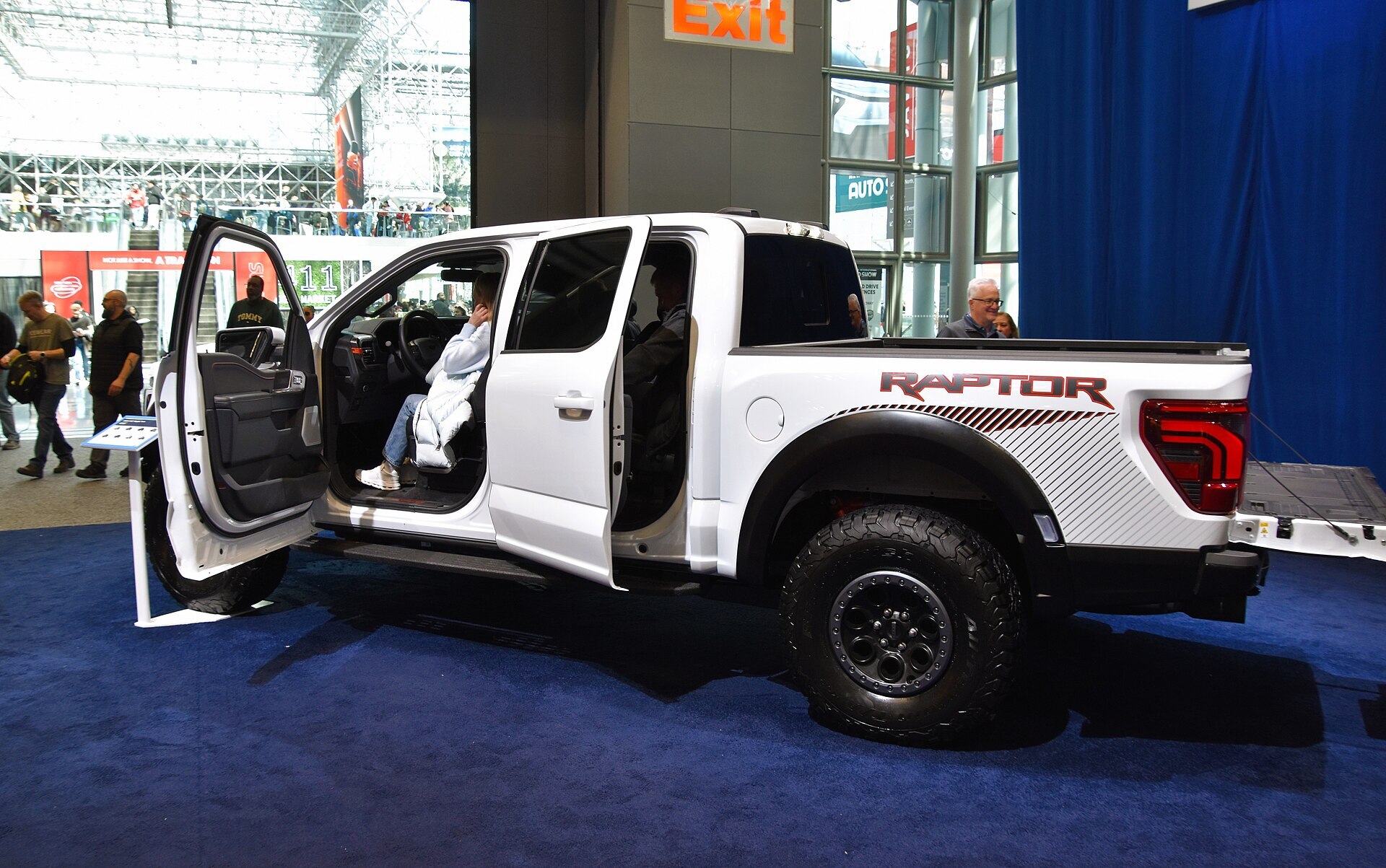
The three most commonly shipped American trucks to Georgia are the F-150, Ram 1500, and Chevrolet Silverado. Their approximate dimensions as stock vehicles (specific figures vary by model year, cab configuration, and option package -- confirm your vehicle's measurements before booking):
Ford F-150 SuperCrew (standard 5.5ft bed):
-
Length: approximately 5,890mm
-
Width: approximately 2,030mm (excluding mirrors)
-
Height: approximately 1,960mm (stock)
Ram 1500 Crew Cab (standard 5.7ft box):
-
Length: approximately 5,840mm
-
Width: approximately 2,010mm (excluding mirrors)
-
Height: approximately 1,968mm (stock)
Chevrolet Silverado 1500 Crew Cab (standard 5.75ft bed):
-
Length: approximately 5,920mm
-
Width: approximately 2,055mm (excluding mirrors)
-
Height: approximately 1,970mm (stock)
All three trucks in stock form fit within a standard container. The key variable is floor space. At nearly 5,900mm in length, an F-150 SuperCrew nearly spans the full interior length of a 20-foot container on its own -- which is why 20-foot containers are rarely used for full-size crew cab trucks. A 40-foot container is the practical loading unit.
In a consolidation load, each of these trucks occupies more floor space than a standard sedan. WCS's loading team accounts for this when calculating the consolidation rate -- a full-size truck typically carries a higher per-vehicle rate than a compact car for this reason. It is not a surcharge; it is a reflection of the actual container space consumed.
Dimension figures are approximate and subject to variation by model year, cab configuration, and option packages. Contact WCS with your vehicle's specific measurements before confirming a container booking.
Lifted Trucks: What Happens When Your Vehicle Exceeds Standard Container Height
A stock F-150 at 1,960mm sits comfortably inside a standard container's 2,350mm interior height -- roughly 390mm of clearance. Add a 3-inch lift kit (approximately 76mm) and that clearance narrows to around 315mm. Add a roof rack on top and you may be approaching the limit of what a standard container can accommodate.
This is not an automatic problem. But it becomes one if it is discovered at the warehouse on loading day rather than during the booking process.
When a Standard Container Is No Longer an Option
If your truck's height with all accessories in place exceeds standard container clearance, two options exist:
High-cube container: Approximately 2,700mm of interior height, compared to 2,350mm in a standard container. High-cube containers are available but require advance planning around container availability at the departure port and carry a higher per-vehicle cost. For trucks with moderate lifts or tall accessories, high-cube is usually the straightforward solution.
Measure before you book: This is the practical takeaway. Confirm your truck's height with the lift kit, any roof rack, bed cover in the raised position, or other vertical accessories fully in place. Do this before contacting WCS for a quote -- it is the single piece of information that determines which container type applies.
WCS's team will ask for this measurement. Having it ready shortens the booking process and avoids the scheduling problem that comes from discovering a height discrepancy at the warehouse.
RoRo for Extreme Cases
For trucks with extreme lifts that genuinely exceed high-cube container clearance, RoRo (Roll-on, Roll-off) may be the only practical option. RoRo is primarily used for oversized vehicles and heavy machinery that cannot be accommodated in any standard container configuration. It is not necessarily cheaper or more expensive than container shipping -- the cost depends on the vessel, route, and market conditions -- but it does mean the vehicle travels on an open deck rather than inside an enclosed container.
For most lifted trucks, high-cube container shipping is the better choice for vehicle protection. RoRo exposure to salt air over a multi-week ocean crossing is not ideal for a truck with a quality paint job or aftermarket components. Use RoRo when there is genuinely no container alternative.
How to Prepare an SUV or Truck Differently from a Standard Sedan
Standard international shipping preparation applies to all vehicles: quarter tank of fuel, clean interior, no personal items, battery in good condition. SUVs and trucks have additional considerations that are worth understanding in advance.
Fuel Tank Volume
The quarter-tank rule applies equally to trucks and SUVs. The difference is the tank size. A Ford F-150's standard tank runs 23 to 26 gallons depending on configuration -- a quarter tank represents 6 to 7 gallons, which is significantly more fuel volume than a sedan equivalent. Some ports apply additional scrutiny to fuel levels on larger tanks, and the specific threshold that triggers this can vary.
Confirm the fuel level requirement with WCS at time of booking. For tanks above a certain capacity, WCS may advise a lower fill level than the standard quarter-tank rule.
Tonneau Covers and Bed Accessories
Soft tonneau covers should be removed or fully secured before the vehicle reaches the warehouse. They can shift during loading and create problems for both the truck and adjacent vehicles in a consolidation container.
Hard tonneau covers are generally acceptable but should be declared at booking. They add to the vehicle's height profile, which is relevant if your truck is already close to the container clearance limit.
Aftermarket bed liners, toolboxes, and cargo organisers do not need to be removed but must be declared. Items that are not secured to the bed should be removed. Anything left loose in the bed is a liability during ocean transit.
Air Suspension and Complex Electronics
Trucks equipped with active air suspension systems, adaptive ride height, or heavy electronics packages require additional attention during battery disconnect. Some air suspension systems default to an unusual ride height when power is cut, which can create clearance issues during loading.
If your truck has air suspension, notify WCS at booking. The preparation team can advise on whether any steps are needed before the vehicle arrives at the warehouse. This is not a reason to avoid shipping these vehicles -- it is simply a coordination step that takes a few minutes to address in advance and considerably longer to resolve at the warehouse.
Documentation That Pickup Trucks Require Beyond a Standard Car
This section applies specifically to pickup trucks -- not SUVs classified as passenger vehicles, but body-on-frame pickups like the F-150, Ram 1500, and Silverado.
Georgian Customs Classification
Georgia applies its own import duty structure based on vehicle classification. A pickup truck is classified differently from a passenger vehicle under Georgian customs law, and the applicable duty rate, registration category, and any additional documentation requirements reflect that classification.
Confirm with a licensed Georgian customs broker -- before the truck ships -- what classification your specific truck will receive under Georgian customs rules, what duty rate applies, and whether any cab configuration, payload rating, or accessory affects how it is categorised. A truck with a hardtop bed cover, for example, may be assessed differently in some customs contexts than one with an open bed.
This is not a reason to avoid shipping a pickup truck to Georgia. It is a reason to ask the question before the truck is on the vessel rather than after it arrives at Poti.
US Export Documentation for Pickup Trucks
On the US export side, pickup trucks are correctly classified as light trucks in the Automated Export System (AES) filing. This classification is handled by WCS as part of the standard export documentation process. What it means in practice: the export paperwork correctly identifies the vehicle type, which is what Georgian customs will reference on arrival.
Ensure that any discrepancy between the vehicle's registration class (light truck), its physical configuration (crew cab, bed length, accessories), and its documentation is identified and resolved before shipping. A truck registered differently from how it presents physically can create questions at Poti that are easier to answer before the vessel departs.
Why West Coast Shipping for Your SUV or Truck to Georgia
WCS has been shipping American trucks and SUVs to Georgia's Port of Poti for years, and the logistics of full-size trucks -- dimension checks, container selection, high-cube availability, loaded configuration planning -- are handled as routine operations rather than special cases.
With nearly 20 years of door-to-door import experience, WCS operates from warehouse facilities in California, Florida, and New York/New Jersey. For most Georgia-bound truck shipments from the US East Coast, the New York/New Jersey warehouse is the primary departure point and the lowest-cost ocean freight option at $3,500 per standard vehicle.
Dedicated account managers handle the full sequence from warehouse intake through US export documentation, ocean freight coordination, and connection with the destination agent at Poti. For a truck with non-standard dimensions, modified suspension, or accessories that affect container loading, the account manager flags these at the booking stage -- not at the warehouse door on loading day.
The consolidation model WCS uses keeps per-vehicle costs manageable even for large trucks. You are not paying for a dedicated full container unless the vehicle's dimensions genuinely require it. For most F-150, Ram, and Silverado shipments in stock or near-stock form, consolidation in a 40-foot container is the right approach.
For a complete overview of shipping a car to Georgia from the US -- including port arrival procedures, import documentation, and Georgian duty considerations -- the complete Georgia car shipping guide covers the full process.
Ready to Ship Your SUV or Truck to Georgia?
Get an Instant Quote for Your Vehicle
Use the WCS shipping calculator to see current rates for your specific truck or SUV, departure port, and delivery to Port of Poti.
-093789-edited.png?width=220&height=79&name=wcs_final_logo_(1)-093789-edited.png)