
Ford introduced the Mustang in April 1964. By September 1966, Chevrolet had a response sitting in showrooms. The development timeline from concept approval to production start is widely described as approximately 18 months -- a compressed schedule that required real engineering trade-offs, some of which shaped the car's character permanently and continue to affect how collectors assess authenticity today. To be precise, the 18-month figure refers specifically to the body design and engineering phase -- the broader program from GM approval to production start ran somewhat longer, but the physical design of the car was completed under exceptional time pressure.
This article focuses exclusively on what makes each of the three model years different, and why those differences matter for anyone buying, restoring, or shipping a first-generation Camaro. For broader context on the Mustang-Camaro rivalry, the Mustang vs Camaro rivalry guide covers that story. For the wider muscle car history picture, the history of American muscle cars provides the broader frame.
The 18-Month Development Story: What the Compressed Timeline Actually Meant
When Chevrolet's leadership approved the Camaro program, the engineering team knew what they were building against: the Mustang had already sold over a million units by the time the Camaro was confirmed. Speed was the priority.
The platform used was the F-body, built on a modified version of the Nova's architecture. It was an efficient decision -- the Nova's existing engineering gave the team a foundation to work from rather than starting clean. But it also meant the Camaro's chassis was adapted rather than purpose-designed, which shows in how the car handles compared to what a ground-up sports car platform might have produced.
The practical consequences of the compressed timeline:
-
The front subframe design left limited room for the largest engine options, which is part of why the COPO program became necessary later to accommodate 427 cubic inch units
-
The body was designed quickly enough that 1967 and 1968 cars share the same basic shell, but with differences in safety-driven details that make cross-year parts swaps visible to trained eyes
-
Some production tolerances were wider than they might have been with a longer development window, which is relevant today when assessing numbers matching and original specifications
None of this diminishes what the Camaro became. The 18-month timeline produced a car that genuinely challenged the Mustang on every metric buyers cared about. It just did so with the marks of its origin still legible if you know where to look.
The 1967 Camaro: Why the First Year Is the Purest
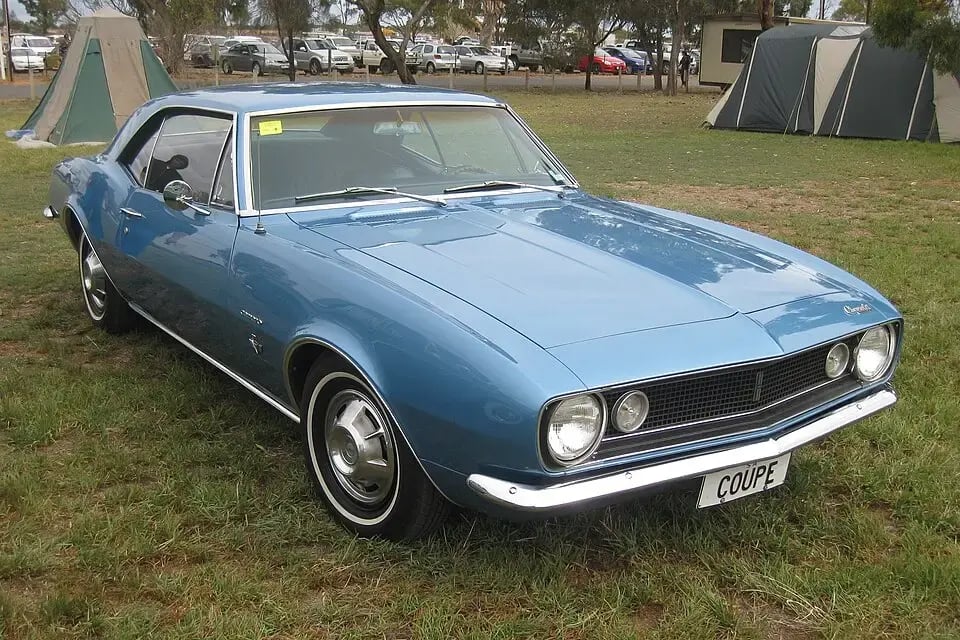
First-year cars carry a specific collector appeal that does not always track with pure performance. The 1967 Camaro is lighter than subsequent model years, has a simpler option list, and carries the cleaner body that had not yet acquired the visual and regulatory changes of 1968 and 1969.
The weight difference is meaningful. Federal safety regulations required side marker lights beginning in 1968, along with structural reinforcements that added mass. The 1967 car pre-dates those requirements, and that combination of lighter weight and cleaner lines is part of what makes it distinctive to buyers who have driven all three years.
1967 Variant Production Numbers
| Variant | Approximate Production | What It Is |
|---|---|---|
| SS (Super Sport) | ~34,411 units | Performance appearance package, combinable with most engines |
| RS (Rally Sport) | ~64,842 units | Appearance package with hidden headlights, available alone or as RS/SS |
| Z/28 | ~602 to 603 units | Homologation special for Trans-Am racing, 302ci high-rev V8 |
The Z/28's first-year production is what defines its premium. Fewer than 603 examples were built. Confirmed, documented 1967 Z/28 examples are rare enough that authentication is non-negotiable before any purchase decision. Verify production numbers against GM Heritage Center documentation rather than treating commonly cited figures as fully settled.
What the 1967 Z/28 Actually Was
The Z/28 was not originally marketed to the public as a performance option. It was a homologation package, built to qualify the Camaro for SCCA Trans-Am racing. The ruleset required a production engine displacing no more than 305 cubic inches. Chevrolet's response was the 302ci unit -- a short-stroke V8 built by combining a 327ci block with a 283ci crankshaft, producing an engine that revved higher than anything else in the Camaro lineup.
That 602-unit production figure from the first year makes the 1967 Z/28 one of the rarest variants in muscle car history. Most buyers in 1967 had no idea it existed.
The 1968 Camaro: What Changed, and Why It Matters for Restorers
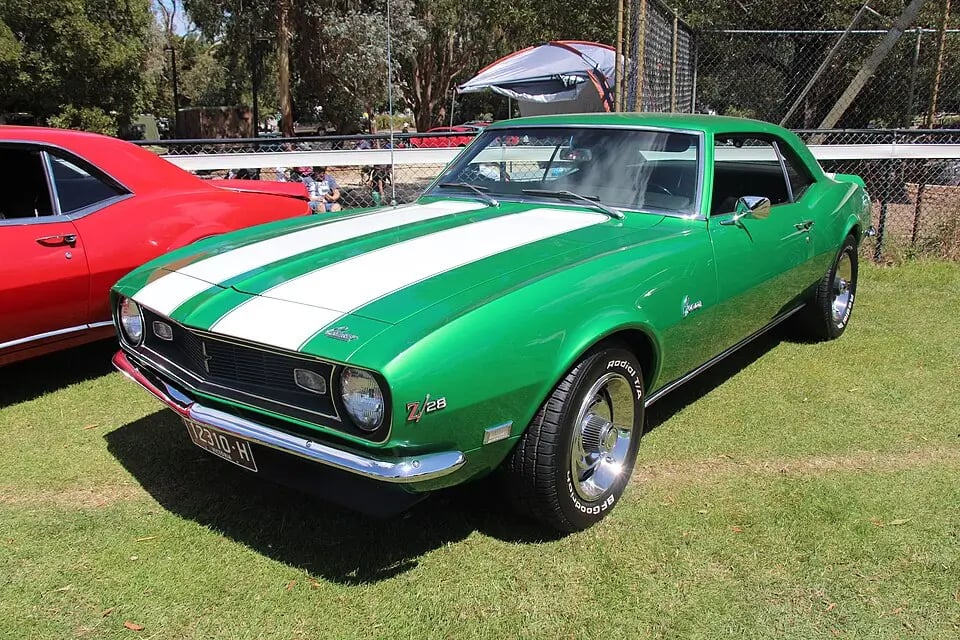
The 1968 model is often treated as a transitional year, and in some ways that framing is accurate. Federal regulations drove the most visible changes, and understanding them matters when assessing any 1968 car's authenticity.
The Key 1968 Changes
-
Triangular vent windows eliminated: New federal safety standards removed the small front side windows. This is one of the most recognizable visual differences between 1967 and 1968 cars.
-
Front end restyled: New grille treatment changed the face of the car relative to the 1967.
-
Side marker lights added: Front and rear side marker lights were federally mandated beginning with the 1968 model year.
-
COPO ordering expands: The Central Office Production Order system became more actively used in 1968 for high-performance builds, though the most documented COPO Camaros are the 1969 models.
For restorers, the practical consequence is direct: 1967 and 1968 front ends are not interchangeable. Using 1967 parts on a 1968 body, or vice versa, creates visible inconsistencies that appraisers and serious collectors will identify. Correct-year parts matter for both authenticity and value.
1968 Production Numbers
| Variant | Approximate Production |
|---|---|
| SS | ~27,884 units |
| Z/28 | ~7,199 units |
| RS/SS combination | Widely produced; figures embedded within SS total |
The Z/28's jump from ~603 units in 1967 to ~7,199 in 1968 reflects the car's Trans-Am racing success raising its profile. By the end of the 1967 season, the Camaro Z/28 had won enough races that enthusiast buyers understood what the package was. Demand followed.
The 1969 Camaro: The Most Collectible Year, and Why
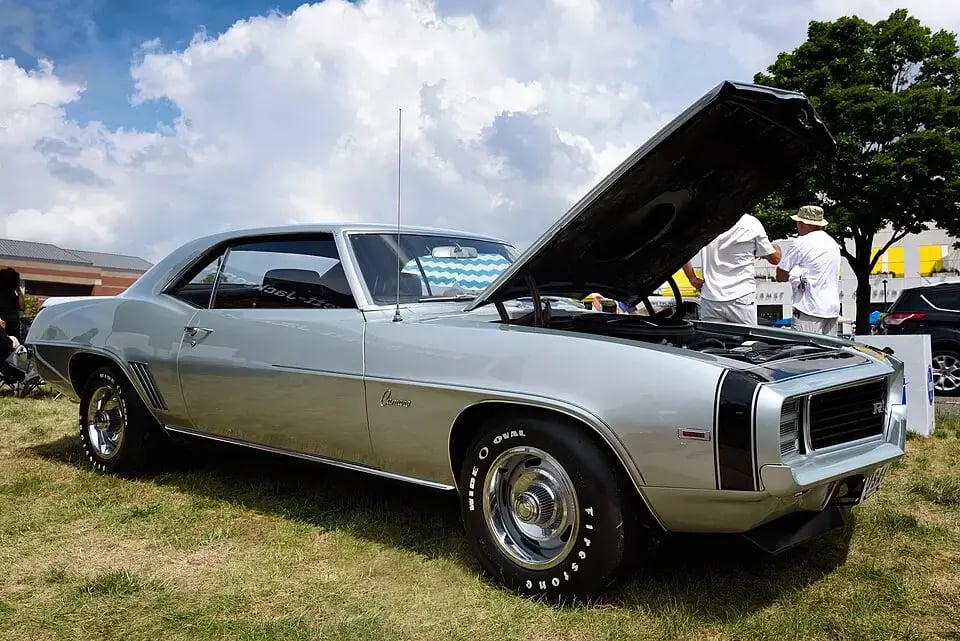
Most collectors and market observers treat the 1969 Camaro as the peak of the first generation. It was the final year of the body style. It offered the widest variant range of the three model years. And it included the ZL1 -- the all-aluminum 427 cubic inch engine option that represents the absolute outer limit of what the first-generation chassis was engineered to carry.
The 1969 also had the highest production volume of the three years, which is something of a paradox: the most produced year is also the most collectible. The explanation is that higher production created more variants and configurations, and several of those variants were produced in tiny numbers despite the overall model year volume.
1969 Variant Production Numbers and Current Values
| Variant | Approximate Production | Approximate Current Value (documented examples) |
|---|---|---|
| Z/28 | ~20,302 units | $60,000 to $120,000+ depending on spec and documentation |
| SS/RS convertible | Widely produced | $80,000 to $150,000+ for well-documented examples |
| COPO 9560 (427/425hp) | ~1,015 units | $150,000 to $250,000+ for verified examples |
| ZL1 | ~69 units (figures vary by source) | $1,000,000+ at major auctions including Mecum and Barrett-Jackson |
Production figures are approximate. COPO production figures in particular have been subject to revision as registry documentation has improved -- the Camaro Vehicle Identification Guide and COPO registry databases are the most reliable current sources alongside GM production records. Verify all figures against recognized Camaro authentication resources before making purchase decisions based on any claimed production number.
The COPO 9560 and ZL1: What They Actually Were
The COPO program -- Central Office Production Order -- existed as an internal Chevrolet ordering mechanism originally designed for fleet and commercial vehicles. In 1969, performance-minded dealers used it to order Camaros with the 427 cubic inch L72 engine (COPO 9560), bypassing the production limits that prevented large displacement engines from being factory-installed in the Camaro through regular option ordering.
The ZL1 took this further. Where the L72 was an iron-block unit, the ZL1 used an all-aluminum 427 -- a racing-derived engine that prioritised track performance over street practicality, and cost approximately $4,000 at the time, nearly the price of the base car itself. That cost, combined with the engine's demanding nature for everyday use, is why production was so limited.
Approximately 69 ZL1 Camaros were built, though sources vary slightly on the precise count. Verify against documented authentication resources before any transaction. Values above $1,000,000 have been recorded at major auctions, though as with any collector vehicle, condition, provenance, and documentation quality drive results significantly.
What the 18-Month Development Means for 1969 Restoration
The engineering compromises made during the compressed development program are most visible in the 1969 car precisely because it pushed the original chassis to its limits. The front subframe's original design had not anticipated 427 cubic inch engines. COPO cars required additional engineering at the dealer level in some cases, and documentation of those modifications matters for authentication today.
For any COPO or ZL1 purchase, the paper trail is the car. Engine stamps, broadcast sheets, dealer invoices, and Protect-O-Plate records are the evidence that separates a verified example from a tribute. This is not a caveat unique to muscle car history -- it applies to any significant collector vehicle -- but the premium commanded by COPO and ZL1 examples makes it especially consequential here.
Why West Coast Shipping for Your Classic Camaro
Shipping a first-generation Camaro overseas is not the same as shipping a modern vehicle. A confirmed Z/28 or a documented COPO car represents a significant financial and historical asset, and it deserves handling that reflects that.
West Coast Shipping has been managing international classic car shipments for over 17 years. Every Camaro shipment travels in an enclosed container, providing the physical protection that a vehicle of this value warrants for an ocean crossing. A dedicated WCS account manager handles the US export documentation, container loading, and customs clearance coordination on the US side, so the car you authenticated before purchase arrives with the same documentation integrity it left with. Customs clearance at the destination country is coordinated with local agents at the port of arrival -- your WCS account manager can advise on what to prepare for the destination country's import process.
For collectors shipping a first-generation Camaro to Europe, the UK, Australia, or anywhere in the WCS global network, the international car shipping service is the starting point for understanding routes, timelines, and cost.
For the full picture on classic Chevy muscle cars -- including the Nova SS and Chevelle, and which variants European collectors are actively seeking -- the complete classic Chevy muscle car guide covers all three models and the European market context together.
Ready to Ship Your Classic Camaro?
Get an Instant Quote for Your International Car Shipment
Use the WCS shipping calculator to see current rates for your specific vehicle, US departure port, and international destination.

1990-1995 Lincoln Town Car Buying Guide
Buick Gran Sport Evolution: 1965–1972 Luxury Muscle History