

Japan's domestic 4x4 market produced vehicles that the US never officially received, not because they were inferior, but because American buyer preferences and Japanese domestic engineering priorities diverged sharply during the years these trucks were built. The result is a category of capable, durable, and now increasingly desirable off-road vehicles sitting at the intersection of genuine utility and collector appeal. This guide covers the models worth understanding, the generational differences that actually matter, and what US ownership looks like in practice.
Why JDM 4x4s Are Built Differently From US-Market SUVs
The gap between what Japan sold domestically and what reached American dealers is not just a trim-level difference. It goes deeper than that.
Japanese domestic market 4x4s were engineered against a different set of constraints: narrower roads, mountainous terrain, a buyer base that genuinely used these vehicles off-road rather than primarily for commuting, and fuel economy pressures that pushed manufacturers toward diesel powertrains decades before American buyers showed much interest. The result was a generation of trucks and SUVs with mechanical characteristics that simply did not exist in the US-market equivalents.
Diesel Engines That Never Came Here
The most significant difference for most buyers is the powertrain. Japanese domestic versions of models like the Toyota Hilux Surf, Nissan Patrol, and Mitsubishi Pajero frequently offered turbo diesel engines that were either unavailable in the US market or significantly different in specification. The 1KZ-TE diesel in the Hilux Surf, the TD42 in the Nissan Patrol, the 4M40 in the Mitsubishi Pajero -- these are engines with established reputations for longevity and fuel efficiency that the American-spec versions of the same models never offered.
Diesel powertrains are particularly appealing to overlanders and serious off-road users because of the torque profile at low RPM, the fuel range advantage over long distances, and the general durability of the engines under sustained load. A diesel 4x4 that has been properly maintained will typically outlast its petrol equivalent under hard use, which is one reason these JDM imports attract buyers who intend to use them rather than display them.
Four-Wheel Drive Systems More Sophisticated Than Their Era Suggests
Another area where JDM 4x4s frequently outperformed their US-market equivalents is drivetrain sophistication. Mitsubishi's Super Select 4WD system, available on higher-specification Pajero models, allowed drivers to select between two-wheel drive for normal use, full-time four-wheel drive with a centre differential lock for mixed surfaces, and four-wheel drive low range for demanding terrain -- all selectable on the move. This level of system flexibility was unusual for the period.
Toyota's Land Cruiser 70 Series, similarly, used a drivetrain configuration developed through decades of use in markets like Australia, Africa, and the Middle East where reliability in remote environments was genuinely non-negotiable. These are not marketing claims. The engineering behind these systems reflects real-world feedback from markets that demanded more from their 4x4s than American suburban buyers typically did.
Which JDM Off-Road Models Are Eligible Under the 25-Year Rule Right Now
The 25-year rule makes vehicles manufactured 25 or more years ago eligible for import to the US without meeting federal motor vehicle safety standards, which is the primary legal pathway for most JDM 4x4 imports. As of 2026, that means vehicles manufactured in 2001 or earlier are currently eligible. This threshold advances each calendar year -- vehicles from 2002 will become eligible later in 2026, and buyers should confirm the current eligibility year at the time of purchase.
Here is where the most relevant platforms stand:
Toyota Land Cruiser 70 Series
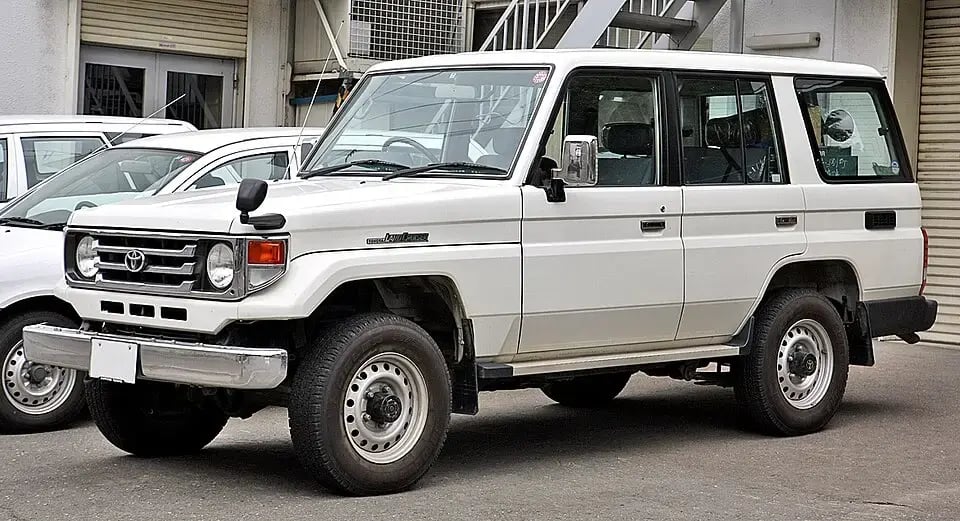
The 70 Series is the benchmark by which most serious JDM off-road imports are measured. It was produced from 1984 onward for markets including Japan, Australia, Africa, and the Middle East, but never officially for the US. The 70 Series spans multiple body styles -- three-door wagon, five-door wagon, pickup (the 79 Series), and the single-cab 75 Series -- each with distinct use cases.
Currently eligible 70 Series examples in the most useful configurations include:
-
The HZJ (4.2L inline-six diesel) variants from the mid-to-late 1990s, known for exceptional reliability and strong parts availability internationally
-
The 1KZ-TE diesel wagon configurations from the late 1990s through 2001
Parts availability for the 70 Series is notably strong relative to other JDM imports. The platform's global following -- particularly in Australia, where it remains a current-production vehicle -- means that aftermarket parts, upgrades, and mechanical knowledge are accessible in ways that benefit US owners.
Nissan Patrol (Y60 and Y61 Generations)
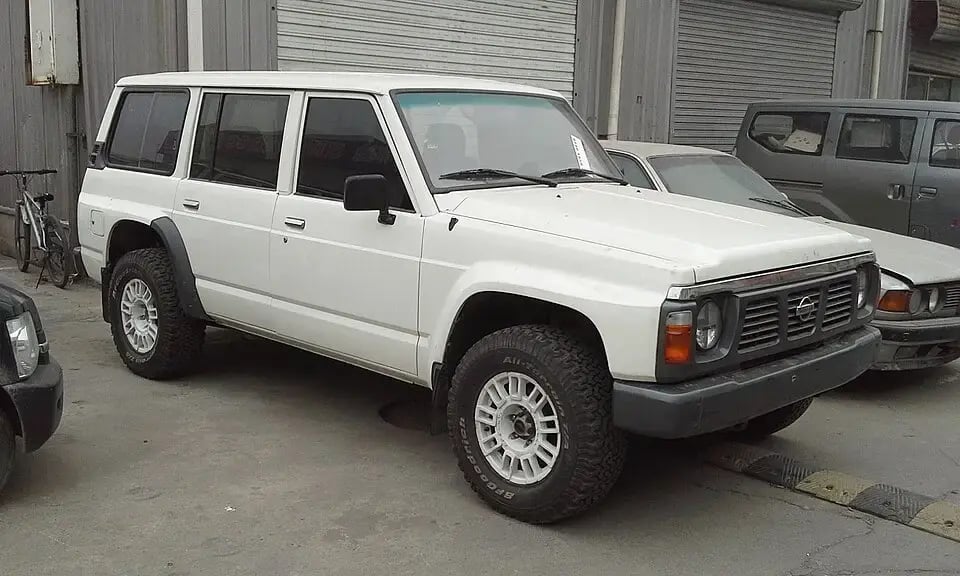
The Y60 Patrol (GQ in some markets) ran from 1987 to 1997 and the Y61 (GU) from 1997 onward, making both generations currently eligible. The Patrol occupies a more truck-like position in the JDM 4x4 market than the Land Cruiser -- heavier, more utilitarian, and arguably more capable in certain extreme off-road situations because of its longer wheelbase and suspension travel.
The TD42 engine (4.2L naturally aspirated diesel) in the Y60 is particularly well-regarded. It is not a performance engine, but it has a reputation for running for extraordinary mileage with basic maintenance. The RD28 diesel in the Y61 has a generally solid reputation and is a reasonable choice in well-maintained examples. The later ZD30, particularly in pre-Common Rail form, has documented issues including piston and head gasket failures under certain conditions -- research the specific variant and service history carefully before purchasing a ZD30-equipped Patrol.
Nissan Patrol has no US-market equivalent for these generations, which creates state registration complexity -- but it also means there is no domestic pricing baseline to compete against, which tends to support values for well-preserved examples.
Toyota Hilux Surf (3rd and 4th Generation)
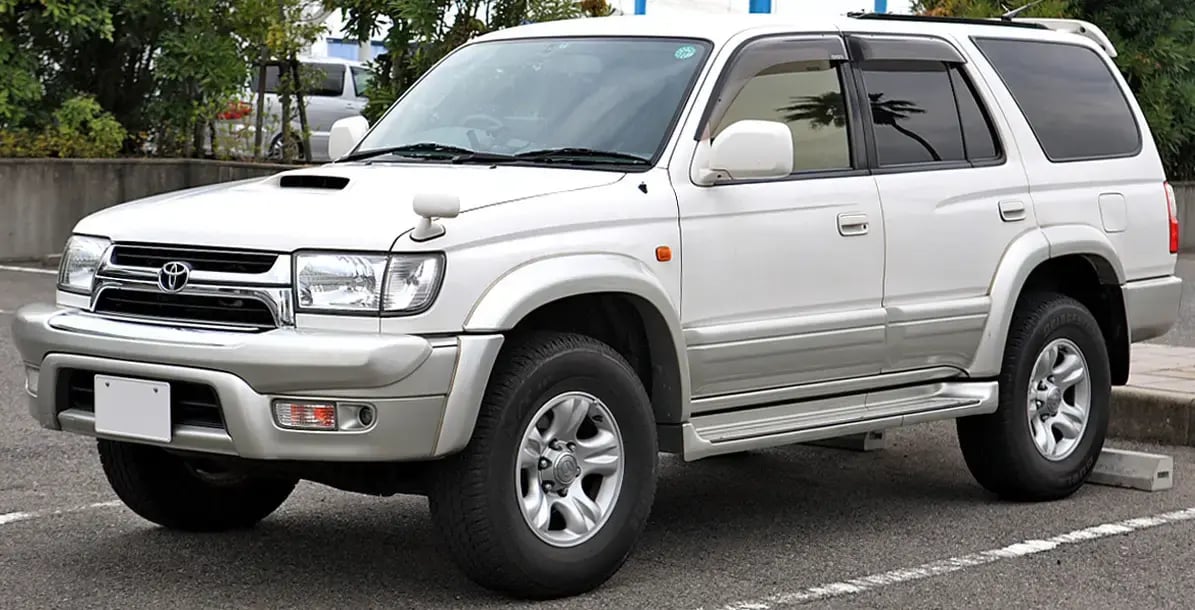
The Hilux Surf shares its platform with the US-market 4Runner but differs meaningfully in specification. Third-generation Surf models (1995 to 2002) offered the 1KZ-TE turbo diesel -- unavailable in the US-market 4Runner and the most significant specification difference for buyers considering the JDM variant. Some trim levels also offered equipment combinations that the American version never received.
The partial equivalence with the 4Runner is a double-edged situation. On one hand, some components are shared, which aids parts sourcing. On the other hand, state DMVs sometimes treat the Surf as equivalent to the 4Runner for registration purposes, which can create documentation confusion when the specifications do not align. Having documentation that clearly distinguishes the JDM variant from the US-market model is worth preparing before the vehicle arrives.
Mitsubishi Pajero (2nd and 3rd Generation)
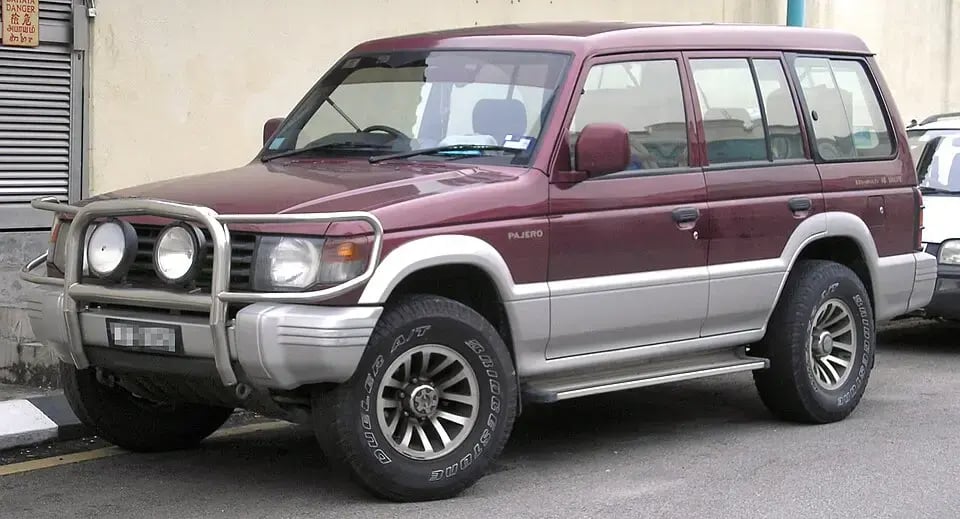
The second-generation Pajero (1991 to 1999) is fully eligible, and early third-generation models (1999 to 2001) are currently eligible under the 25-year rule as well. Later third-generation examples from 2002 onward will become eligible progressively through 2031. The short-wheelbase configuration, which was not sold in the US as the Montero, is particularly popular with buyers who want genuine off-road capability in a more compact form factor.
The 4M40 diesel (2.8L turbo) is the most sought-after powertrain in earlier examples. Later models transitioned to the 4M41 (3.2L), which offers more power but has different maintenance characteristics -- confirm the specific engine before buying, as the two are not identical in their long-term ownership profile.
The Chicken Tax and What It Means for JDM Truck Imports
Buyers importing a Japanese pickup truck rather than an SUV or wagon need to be aware of the Chicken Tax, a 25% tariff on imported light trucks that applies to completed pickup trucks and significantly affects the total landed cost. For context: this 25% is calculated on the vehicle's customs value and sits on top of standard import duties, making pickup imports materially more expensive than equivalent SUV or wagon imports of similar value. Some buyers explore vehicle classification questions with a licensed customs broker, though this requires careful legal analysis specific to the individual vehicle. For full detail on how this applies to your specific import, the US import duties and documentation page for Japanese vehicles covers the calculation in detail.
US Compliance Nuances Specific to JDM 4x4 Platforms
Getting a JDM 4x4 legally on the road in the US involves more than clearing federal customs. Each platform has its own compliance considerations at the state level, and some states create meaningful additional complexity.
California's Referee Program
California has the strictest emissions requirements of any US state, and the pathway for non-OBD2 vehicles involves inspection through the Bureau of Automotive Repair's Referee Program -- a dedicated process for vehicles that cannot be assessed through standard smog testing. This is not a barrier to registration, but it is an additional step that requires specific preparation and sometimes a vehicle inspection appointment that can take several weeks to schedule.
If you are importing a diesel JDM 4x4 to California, the compliance pathway depends on the engine and model year. Diesel vehicles have separate exemption categories and testing standards from petrol vehicles. Research the specific pathway for your model before the vehicle arrives -- finding out at the DMV is a slower and more expensive way to learn this.
Right-Hand Drive in Left-Hand Drive States
All of the core JDM 4x4 platforms discussed here are right-hand drive. Most US states permit RHD registration without restriction, but a small number have additional requirements. Confirm your specific state's current rules before purchase, and factor in the practical day-to-day implications -- highway overtaking, drive-throughs, and mail collection are all manageable but require adjustment. These are not reasons to avoid a JDM 4x4, but they are worth knowing before you are committed to the purchase.
The OBD2 Question
Vehicles manufactured before 1996 predate OBD2 emissions diagnostics, which affects how standard smog testing works in states that require it. The California Referee Program (mentioned above) is the most structured solution to this, but other states handle it differently -- some with visual inspections, some with exemptions for older vehicles, and some with specific documentation requirements. Knowing your state's approach before the vehicle lands is not optional if you intend to register and use it.
Overlanding with a JDM Truck: What US Owners Actually Experience
The overlanding community's embrace of JDM 4x4s has grown significantly over the past several years, and the reasons are practical rather than purely aesthetic.
Parts and Support in the US
Parts availability has improved substantially for the most popular platforms. Toyota Land Cruiser 70 Series and Nissan Patrol owners benefit from large international communities, and US-based suppliers have expanded their inventory as demand has grown. For platforms like the Mitsubishi Pajero, availability is more variable -- common wear items are generally accessible, but some model-specific components require international sourcing with corresponding lead times.
The overlanding community has also built a knowledge base around these vehicles that did not exist five years ago. Forums, dedicated Facebook groups, and specialist mechanics who have hands-on experience with JDM 4x4s are now accessible in most major US cities. This matters more than parts catalogues for owners who plan to use their vehicles in remote areas.
Fuel: Diesel Range Advantage vs Infrastructure
Diesel JDM 4x4s offer a genuine range advantage over petrol equivalents. The fuel economy difference between a diesel Land Cruiser 70 Series and a petrol version of the same vehicle is meaningful on long overland trips, and the low-end torque of a turbo diesel is well-matched to the loads that overlanders typically carry.
The trade-off is infrastructure. Diesel availability in the US is less consistent than in Japan or Australia, particularly in rural areas of the American West where many overlanders spend their time. Cold-weather fuel management is also a consideration in northern climates -- older diesel engines can require fuel additives or pre-heating systems below certain temperatures. These are solvable problems, but they are worth planning for before you are four hours from the nearest town.
Modification and Lift Considerations
JDM 4x4s are popular platforms for overlanding modifications: suspension lifts, all-terrain tyres, roof racks, recovery gear, and auxiliary lighting are common additions. A few of these modifications can create state registration complications if they affect headlight height, tyre protrusion beyond the body, or lighting compliance standards.
A significant suspension lift, for example, may push headlight height beyond what is permitted in some states without additional certification. Knowing your state's vehicle modification rules before investing in a lift kit avoids an expensive problem later. It is worth consulting with a specialist who has registered modified JDM 4x4s in your specific state before committing to a build plan.
For a broader view of everything involved in importing a vehicle from Japan documentation, customs, and the full process, that detail is covered on the WCS Japan import page.
For the full picture on JDM SUVs, trucks, and the Mitsubishi Delica Space Gear specifically, the complete JDM SUV and truck import guide covers the broader category in detail.
Shipping rates, transit times, and container availability are subject to change. Contact WCS directly for current pricing on your specific vehicle and route.
Why West Coast Shipping for Your JDM 4x4 Import
Importing a JDM 4x4 from Japan involves more moving parts than most buyers expect and more variables than a standard sports car import. Vehicle height, gross weight, diesel compliance pathways, and state registration complexity for platforms with no US-market equivalent all require upfront planning. This is where experience with the specific vehicle category matters.
West Coast Shipping has managed JDM imports and international vehicle shipments for over 17 years, with a dedicated account manager assigned to every shipment who handles the process in-house from US export clearance through to port arrival. No third-party handoffs. No documentation gaps between vendors.
For JDM 4x4s shipping from Japan, WCS's California warehouse is the most efficient US receiving point, positioned directly on the Pacific routes that serve Japanese ports. Container consolidation keeps costs substantially lower than a dedicated container while providing the enclosed, protected environment that a Land Cruiser, Patrol, or Pajero deserves for an ocean crossing.
WCS also stays current on tariffs on Japanese cars -- including the 25-year vehicle exemption under HTS 9903.94.04 that applies to the 4x4 platforms covered in this guide -- and works with licensed customs brokers to confirm the duty picture for your specific vehicle before you commit to a purchase.
For a full overview of the shipping process from the US export side through to port arrival, the Import Cars from Japan to USA page covers every stage in detai
Ready to Calculate Your Import Costs?
Get an Instant Quote with the WCS Car Import Calculator
Use the car import calculator to estimate costs for your specific JDM 4x4, shipping route, and destination port.

2023 Bull Market: Classic 4x4 Pickups and SUVs
JDM SUV vs Sports Car Import: How the Process and Costs Differ