

Disclosure & Disclaimer (January 2026): This article is provided by West Coast Shipping (WCS) and reflects WCS’s understanding of recent India‑EU trade developments and Indian import rules as of late January 2026, based on public trade announcements and WCS internal analysis. All prices, timelines, and duty impacts discussed below are illustrative examples and not binding quotes or legal/tax advice. Tariff schedules, GST rules, and customs procedures in India are subject to change. Readers remain responsible for verifying current requirements with Indian authorities and licensed customs brokers and for consulting qualified legal or tax professionals before making decisions. Past pricing and regulatory outcomes do not guarantee future results.
Recent trade announcements indicate that India and the European Union have reached a landmark free trade agreement under which India will sharply reduce tariffs on imported cars from current highs of around 110% down toward 40%, with further phased reductions toward 10% for certain vehicles over time. These changes are framed as part of a broader India‑EU deal expected to open one of the world’s most protected auto markets and significantly improve access for European manufacturers. While full details and implementation timelines are still being finalized, the direction of policy is now clear: India is moving toward lower car import tariffs.
For vehicle shippers and importers, especially those who ship car from usa, this shift matters for two reasons. First, it reshapes expectations around landed cost in India over the next several years. Second, it signals a more open stance toward imported vehicles generally, which may influence how Indian buyers think about sourcing models not currently produced or widely available in the domestic market.
What the Tariff Change Means for International Importers
India has long applied some of the world’s highest duties on fully built imported cars, with basic customs duty often well above 60% and in some bands up to 100–110% for larger engines and premium vehicles. According to public summaries of the new India‑EU agreement, India will now grant the EU a unique schedule of reductions, cutting tariffs on qualifying EU‑origin cars down to around 40% initially, with a quota and phased reductions toward 10% for higher‑value models over several years.
For international importers, even if they are not shipping EU‑origin vehicles, this development has several implications:
-
Benchmark for future policy. When a country grants deep tariff cuts to one partner, it often becomes a reference point in later negotiations with others. Importers in the U.S. and other markets will watch closely to see whether similar concessions emerge through Most‑Favored Nation adjustments or future bilateral talks.
-
Shift in buyer expectations. Once Indian customers see lower‑taxed EU imports on the road, price resistance to imported vehicles in general may soften. That can make U.S.‑sourced vehicles—especially niche, classic, or performance models—more attractive if overall import costs look manageable.
-
Need to re‑evaluate product mix. Dealers and traders who previously avoided India due to high tariffs may now revisit their assumptions, particularly for high‑margin segments where demand is strong and domestic supply is limited.
Even for non‑EU vehicles, the message is that India’s automotive market is becoming more accessible, and importers should be ready to adapt when specific duty lines and quotas are confirmed.
How Reduced Tariffs Affect Landed Cost and Planning
Lower tariffs do not automatically make every shipment profitable, but they change the math of landed cost in important ways. A simplified landed‑cost model for an imported car into India includes:
-
Vehicle purchase price
-
Ocean freight and inland transport
-
Port, terminal, and documentation fees
-
Basic customs duty at the applicable rate
-
Integrated GST (IGST) and any applicable surcharges, calculated on the customs value plus duty
-
Local logistics, compliance, and registration expenses
When basic customs duty is cut from triple‑digit levels toward, say, 40%, the combined burden of duty + GST on the CIF value can drop significantly. This may:
-
Bring certain premium models into a price band that more Indian buyers can afford
-
Allow importers to price more aggressively while maintaining margin
-
Justify the additional logistics and compliance work required to move vehicles into India versus selling in closer markets
However, because GST, surcharges, and potential local levies still apply, importers should build updated landed‑cost calculators rather than assuming headline tariff cuts will automatically turn every deal into a clear win.
As duties shift, compliance becomes more—not less—important. Accurate HS classification, proper valuation (including freight and handling), and correct treatment under any applicable trade agreement are essential to ensure the reduced rates are applied properly and to avoid disputes or post‑clearance audits.
Shipping Considerations From the USA to India
Tariffs Are Only One Part of the Equation
For U.S. exporters, the India‑EU deal does not immediately change duty rates on American vehicles, but it changes the competitive and regulatory landscape. Importers planning to ship car from usa to India should consider how tariff changes intersect with:
-
Route and mode selection (container vs RoRo, port choices on both sides)
-
Transit times and vessel reliability, especially if targeting specific sales seasons or launch dates
-
Homologation and compliance costs, including right‑hand‑drive rules, emissions standards, and safety requirements
-
Documentation quality, since customs authorities often scrutinize imports more closely during periods of regulatory change
Even if U.S. vehicles continue to face higher duty rates than EU cars in the near term, importers may find niche opportunities in categories where brand, specification, or model availability outweigh pure tax differentials.
Regulatory Verification Is Essential
Indian customs and tax rules are detailed and changeable. Current public guidance indicates that:
-
Basic Customs Duty (BCD) on imported vehicles remains the primary tax lever, with rates varying by HS code and engine size.
-
Integrated GST (IGST) is applied on top of the customs value plus duty, often at a high rate for vehicles.
-
Additional charges such as Social Welfare Surcharge can apply in specific cases.
Because the India‑EU agreement introduces new preferential rates for qualifying EU vehicles—and because domestic policy can evolve rapidly—importers should treat any duty or GST figures as provisional until confirmed by an Indian customs broker with access to the latest tariff schedule and implementation notices.
Example: Shipping From the USA to India With WCS
West Coast Shipping (WCS) offers international vehicle export services from multiple U.S. ports to India and other destinations. Based on WCS internal data from early 2026, an illustrative container rate for a standard passenger car from the U.S. East Coast into northern India is:
-
Car by ocean container – New York to India serving the New Delhi market: approximately $3,850 with a typical transit time of around 25 days
In practice, the container arrives at a major Indian seaport and then continues overland to the New Delhi region. This figure is meant as an example of current market conditions; actual rates vary with season, carrier capacity, vehicle dimensions, and service type, and are always subject to change.
Where WCS adds value in a shifting tariff environment is not just the freight rate itself, but the ability to:
-
Compare multiple U.S. departure ports and services to find the best combination of cost and transit time for India‑bound vehicles
-
Coordinate documentation (export filings, bills of lading, valuation support) so Indian customs can apply the correct duty and GST rates
-
Model landed‑cost scenarios that blend expected Indian tariffs with concrete freight and handling numbers
-
Adjust routing strategies as India clarifies how the new EU agreement interacts with MFN rates and any future U.S.‑India negotiations
Importers can use the live quotes and tools on the international car shipping page as a starting point, then work with WCS specialists to adapt those numbers to updated Indian tariff schedules and compliance requirements.
Moving Forward: Planning for India’s Next Phase of Auto Imports
India’s decision to cut car import tariffs for the EU—initially to around 40% for many qualifying vehicles and lower over time—is a strong signal that the country’s auto market is entering a more open era. Even though the immediate benefits are targeted at European manufacturers, the policy shift will influence pricing expectations, competitive dynamics, and future negotiations affecting U.S. exporters as well.
For importers and dealers who ship car from usa, this is the right moment to:
-
Revisit assumptions about India’s long‑term viability as an import market
-
Build updated landed‑cost models that incorporate potential tariff paths and evolving GST rules
-
Strengthen relationships with logistics and customs partners who can keep pace with regulatory changes
Plan Your India Shipping Strategy With Up‑to‑Date Numbers
If you are evaluating India as a destination for U.S. vehicles, start by mapping your real‑world costs. Use the tools and routes on the international car shipping page to generate current container rates from U.S. ports, then overlay those figures with the latest Indian duty and GST information from your customs broker so you can make informed decisions in light of India’s new tariff landscape.


Shipping a Force India F1 Car Overseas
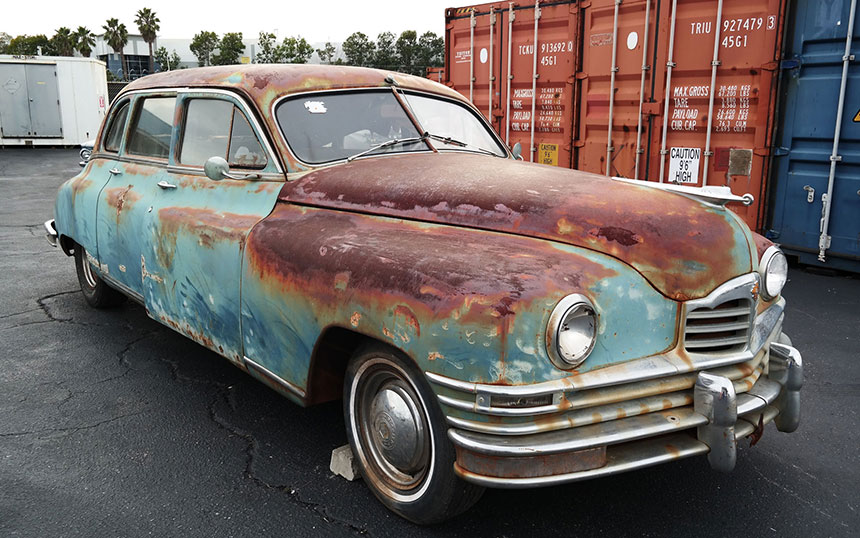
Packard Super 8 project car shipping to India