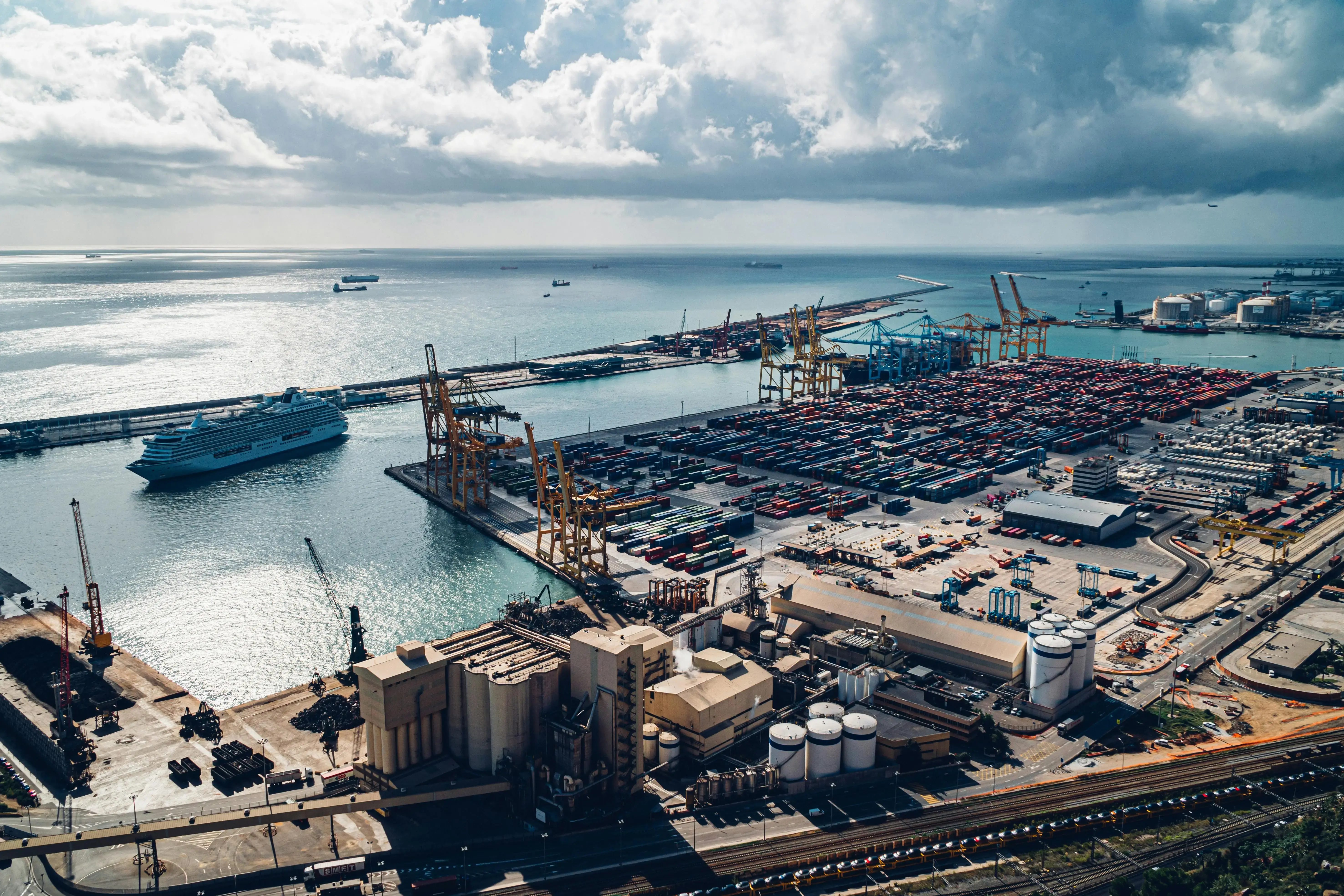

Day 13 of the Iran war has brought an escalation at sea, in the air, and at major Gulf ports. New leadership in Tehran has publicly committed to keeping the Strait of Hormuz closed, more ships were struck overnight in Iraqi territorial waters and off the UAE coast, U.S. forces are confirmed as not yet ready to escort commercial vessels, and oil prices are back above $100 a barrel.
For anyone shipping vehicles internationally right now, the situation is materially worse today than it was 48 hours ago.
Background: Why There Is a New Supreme Leader
The current phase of the conflict began on February 28, 2026, when joint U.S. and Israeli strikes on Iran killed former Supreme Leader Ali Khamenei, as reported by CNN, NPR, and CBS News. Iran's Assembly of Experts subsequently selected Mojtaba Khamenei as the new Supreme Leader around March 8, 2026, as reported by The Guardian. His first public statement since taking the position — issued on Day 13 — is the most significant development of the day for shippers, as it signals Tehran's stated position on the strait going forward.
Today's Key Developments (March 13, 2026)
Iran's New Supreme Leader Vows to Keep Hormuz Blocked
In his first public statement since the war began, Iran's newly appointed Supreme Leader Mojtaba Khamenei vowed to continue blocking the Strait of Hormuz. The statement was a written message relayed by Iranian state-run television, not a direct public address. Hours later, IRGC Navy Commander Alireza Tangsiri confirmed via his official account on X that Iran's Revolutionary Guards would carry out this directive, according to Euronews.
An important caveat: Iran's ambassador to the United Nations in Geneva told Euronews separately that Iran does not have any intention to block the strait, and that the current disruption is a consequence of war in the region rather than deliberate state policy. These two positions directly contradict each other. This contradiction is reflected in the chokepoint status section below. What is clear for logistics planning is that no carrier has announced any intention to resume Hormuz transits on the basis of either statement.
Ships Struck in Iraqi Territorial Waters, Off the UAE, and in the Strait
According to the Joint Maritime Information Centre, a coalition overseen by the U.S. Navy, at least 16 commercial vessels had been attacked in the Persian Gulf and wider region through Wednesday night. Euronews reported the running total had reached at least 19 as of Thursday morning.
Confirmed individual incidents include:
-
The Safesea Vishnu, a Marshall Islands-flagged fuel tanker, and the Zefyros, a Malta-flagged tanker, were both struck by explosive boats in Iraqi territorial waters near Basra and the Al-Faw Peninsula, approximately 50 kilometres from Iraq's coast, according to TRT World, Reuters, and Al Jazeera. The attacks sparked fires and killed one crew member. Iraqi authorities responded by shutting down all oil terminal operations in the area.
-
A container ship was hit approximately 65 kilometres off Jebel Ali port in the UAE, sparking a small fire, confirmed by the UK Maritime Trade Operations agency, as reported by Euronews.
-
The ONE Majesty, a 6,724 TEU Japan-flagged container vessel owned by Mitsui O.S.K. Lines and operated by Ocean Network Express (ONE), was struck by an unknown projectile approximately 25 nautical miles northwest of Ras Al Khaimah, UAE, while at anchor in the Gulf, sustaining a 10-centimetre hull breach above the waterline. All crew were safe and the vessel remained seaworthy, according to statements from Mitsui O.S.K. Lines and ONE confirmed by Al Jazeera, gCaptain, and Kuehne + Nagel maritime updates.
-
The Thai-flagged bulk carrier Mayuree Naree was struck by two projectiles while transiting the Strait of Hormuz approximately 11 nautical miles north of Oman, damaging the engine room and causing a fire. Twenty crew members were rescued by the Omani Navy. As of March 12, three crew members were reported missing and believed to be trapped in the engine room, with rescue efforts still ongoing, according to vessel operator Precious Shipping as cited by Khaleej Times, Reuters, and Bloomberg. Precious Shipping managing director Khalid Hashim told AFP on Thursday that rescuers had still not been able to board the vessel. The IRGC claimed responsibility via Tasnim News Agency, stating that the vessel had ignored IRGC warnings and attempted to transit the strait in violation of its directives, according to CBS News and The Nation Thailand.
These are no longer isolated incidents near the strait entrance. Attacks now cover Iraqi territorial waters near Basra, UAE coastal areas, and the strait itself — a significant geographic expansion of the maritime risk zone.
IRGC Claims on Gulf Infrastructure — What Was Claimed vs. What Was Confirmed
The IRGC's Sepah News agency claimed its forces targeted U.S. military positions including Sheikh Zayed Road in Dubai, Ahmad Al-Jaber Airport in Kuwait, Al-Dhafra base in the UAE, and mobile U.S. bases in Iraq. However, UAE authorities confirmed that air defence systems intercepted 10 ballistic missiles and 26 drones targeting UAE territory, with intercepted missile debris falling in several Dubai locations including near Sheikh Zayed Road — meaning the damage in that area resulted from interception, not a direct strike reaching its intended target, according to the Times of India and Khaleej Times Day 13 live updates.
In Kuwait, the situation was different. Kuwait's Civil Aviation Authority confirmed that Iranian drones did strike Kuwait International Airport, causing direct damage. The Kuwaiti Defence Ministry also reported that a residential building was struck, wounding two people, according to Euronews.
U.S. Military Not Ready to Escort Ships Through Hormuz
U.S. Energy Secretary Chris Wright told CNBC directly on Thursday that the U.S. military is not ready to escort oil tankers through the Strait of Hormuz, stating: all of our military assets right now are focused on destroying Iran's offensive capabilities and the manufacturing industry that supplies their offensive capabilities. When asked whether escorts would be possible by end of month, Wright replied: yes, I think that is quite likely the case. Fox Business independently confirmed these statements from Wright's CNBC Squawk Box interview. Reuters also confirmed separately that a U.S. official told the shipping industry directly that Hormuz escorts are not possible for now.
Worth noting: a post on Wright's official X account earlier in the week claimed the Navy had successfully escorted a tanker through the strait. The White House and the Department of Energy subsequently confirmed the post was erroneous and deleted it, as reported by Reuters and Al Jazeera. No escort operation has taken place.
For logistics planners, the conclusion is clear: there is no commercial escort framework in place today, and carriers have no basis to resume Hormuz transits in the near term.
Brent Crude Back Above $100
Euronews reports that Brent crude spiked back above $100 per barrel on Thursday, up more than 9 percent in early trading. U.S. benchmark crude jumped to approximately $95. CNBC reported that Iran simultaneously warned oil prices could reach $200 per barrel if attacks continue at pace. Higher oil prices feed directly into bunker fuel costs, one of the largest operating expenses for container ships, and are passed on to shippers via surcharges or higher base rates.
Why Today's Escalation Matters for Vehicle Shipping
The Attack Zone Now Covers the Entire Northern Arabian Gulf
Until this week, maritime risk was concentrated near the strait itself. Confirmed overnight attacks in Iraqi territorial waters near Basra, approximately 65 kilometres off Jebel Ali in the UAE, and 25 nautical miles northwest of Ras Al Khaimah now make clear that the entire northern Arabian Gulf is an active attack zone.
-
Jebel Ali, the world's ninth-busiest container port and a critical transshipment hub for Asia-to-Africa and Asia-to-Europe vehicle cargo, had a container ship attacked within 65 kilometres of its coastline this morning.
-
Oil terminal operations in Iraqi territorial waters near Basra have been suspended by Iraqi authorities following the overnight strikes on the Safesea Vishnu and Zefyros.
-
Port infrastructure in Kuwait is confirmed directly struck by Iranian drones, with Kuwait International Airport sustaining damage.
Gulf Booking Suspensions Remain in Full Effect
As detailed in West Coast Shipping's Iran War Shipping Update: Maersk Suspends Services, major carriers including Maersk, Hapag-Lloyd, CMA CGM, and MSC have suspended cargo bookings to and from the UAE, Oman (except Salalah), Iraq, Kuwait, Qatar, Bahrain, and Saudi Arabia's eastern ports. Maersk has set a March 21 deadline for cargo owners with stranded Gulf containers to provide instructions, after which termination-of-voyage procedures will begin.
Today's expansion of attacks into UAE and Iraqi territorial waters reinforces that these suspensions are unlikely to lift before the conflict de-escalates.
Asia–Europe Routes Remain on Cape Diversions
Reuters confirms that Maersk, Hapag-Lloyd, and CMA CGM have rerouted vessels around the Cape of Good Hope following the Hormuz closure and continued Red Sea risk. The World Shipping Council's Red Sea Security briefing documents that these diversions add up to 17 days to certain Asia-Europe services, increase bunker costs materially, and reduce the annual round-trip capacity of each vessel in the fleet.
With Iran's Supreme Leader publicly committing to maintaining the closure and U.S. escort capability confirmed as not yet operational, there is no basis to plan for a near-term return to Suez-routed services. Vehicle shippers moving cargo between Asia and Europe should continue planning around Cape of Good Hope transit times for the foreseeable future.
Current Chokepoint Status — March 13, 2026
Strait of Hormuz
De facto closed for most Western-aligned commercial shipping. The Joint Maritime Information Centre confirms at least 16 commercial vessels attacked through Wednesday night; Euronews reports the total reached 19 as of Thursday morning. Iran's newly appointed Supreme Leader directed continued closure via a written statement relayed by state TV; the IRGC Navy commander confirmed compliance. Iran's UN ambassador in Geneva issued a contradictory statement saying the closure is a consequence of war rather than deliberate policy — creating genuine uncertainty about whether this reflects official state direction or a military operational posture. U.S. military escorts are confirmed not yet operational by CNBC and Reuters.
Northern Arabian Gulf (Iraqi Territorial Waters, UAE, Kuwait)
Active attack zone as of March 13. The Safesea Vishnu and Zefyros struck in Iraqi territorial waters near Basra and the Al-Faw Peninsula, approximately 50 kilometres from Iraq's coast, with oil terminal operations suspended. Container ship hit 65 kilometres off Jebel Ali. ONE Majesty struck 25 nautical miles northwest of Ras Al Khaimah. In Kuwait, drones directly struck Kuwait International Airport. In the UAE, air defences intercepted 10 ballistic missiles and 26 drones, with debris from interceptions falling in several Dubai locations including near Sheikh Zayed Road.
Red Sea and Bab el-Mandeb
High-risk corridor. Maersk, Hapag-Lloyd, and CMA CGM continue to pause Bab el-Mandeb transits and route services around Africa, as confirmed by Reuters.
Suez Canal
Technically open but practically inaccessible for most Western-aligned carriers, since reaching it requires transiting the Red Sea and the Bab el-Mandeb.
Panama Canal
The Panama Canal Authority expects approximately 33 daily transits in 2026, compared to a restored capacity ceiling of 36 transits per day reached in late 2024 following the easing of drought restrictions, as documented by Seatrade Maritime and the Panama Canal Authority's own advisories. Structural vulnerability to water levels persists according to project44's canal recovery analysis.
Freight Cost and Capacity Impacts
Conflict Surcharges
West Coast Shipping's Day 11 and Day 12 updates document Emergency Conflict Surcharges from CMA CGM in the range of 2,000–4,000 USD per container, War Risk Surcharges from Hapag-Lloyd at 1,500 USD per TEU for standard boxes and 3,500 USD for reefers and special cargo, and Maersk emergency contingency charges reaching up to approximately 3,300 USD per TEU from Oman, Jordan, and Saudi Arabia. These surcharges sit on top of base ocean rates.
Longer Voyages and Higher Bunker Costs
Each Asia–Europe Cape detour adds approximately 10–17 days of sailing and several thousand nautical miles compared with the Suez routing, according to the World Shipping Council's Red Sea Security briefing and carrier advisories summarized in West Coast Shipping's Global Shipping Disruption explainer. Brent crude above $100 per barrel, as reported by Euronews, puts additional upward pressure on bunker surcharges across all trades.
Stranded Container Capacity
CNBC, citing Xeneta, reports 147 container ships sheltering in the Persian Gulf. West Coast Shipping's Day 12 update, drawing on Alphaliner data, puts the figure at 138 container ships with nearly 470,000 TEUs of capacity stranded. Ship and Bunker independently confirms approximately 140 boxships stranded. The variance across sources reflects the fast-moving nature of the situation; all credible estimates point to a substantial share of global container capacity temporarily removed from active service.
Practical Guidance for Vehicle Shippers This Week
Based on today's confirmed reporting from Euronews, Reuters, CNBC, Al Jazeera, TRT World, Khaleej Times, Bloomberg, and CBS News, vehicle shippers should act on the following:
-
Do not plan any shipments routing through or transshipping at Gulf ports until further notice. Booking suspensions are in full effect across all major carriers and attacks are now occurring at port level across Iraqi territorial waters near Basra, the UAE, and Kuwait.
-
Build a minimum of two additional weeks into any Asia–Europe transit plan. Cape of Good Hope diversions are adding 10–17 days per voyage with no near-term reversal in sight.
-
Budget for conflict surcharges in the range of 1,500 to 4,000 USD per container on any trade touching the Middle East, Red Sea, or Cape-diverted services, based on published carrier levels documented in West Coast Shipping's day-by-day coverage.
-
If your vehicle was booked on a Maersk service transiting the Gulf, note the March 21 instruction deadline referenced in West Coast Shipping's Maersk Suspends Services update before termination-of-voyage procedures apply.
-
For Asia–US East Coast cargo, assess whether the Panama Canal, averaging approximately 33 daily transits in 2026, can accommodate your service, or whether US West Coast plus rail is a more predictable alternative given current Red Sea and Suez constraints.
For a full framework on how these disruptions affect car shipping lane by lane, see West Coast Shipping's detailed explainer: Global Shipping Disruption: How the Iran Conflict Is Reshaping Routes.
For the full day-by-day shipping impact series since February 28, visit West Coast Shipping's Iran war shipping disruption coverage.
Calculate Your International Car Shipping Costs
The Iran war has fundamentally changed shipping timelines and costs across the Middle East, Asia-Europe, and Asia-Americas corridors. What was standard two weeks ago is no longer a reliable baseline. To get a quote that reflects today's carrier routing decisions, active surcharge levels, and realistic transit windows, contact the West Coast Shipping team directly. They are monitoring this conflict daily and can build a route plan around what is actually moving right now.

Iran War Day 26: US Demands Iran Accept Defeat, GCC Red Lines
Iran War Day 24: Talks Denied, Missiles Fly, Pakistan Brokers Peace