
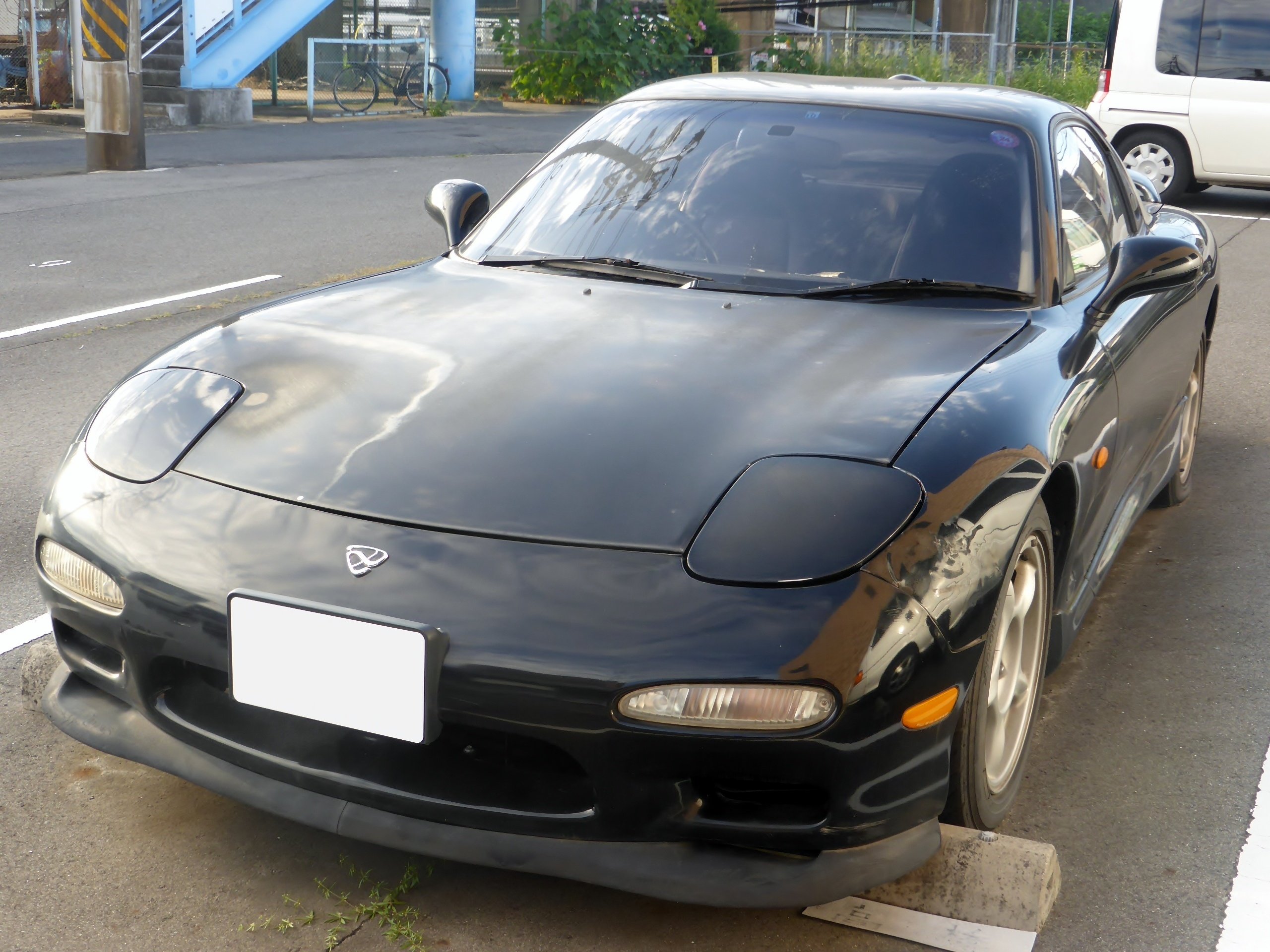
255 hp from 1.3 liters, two rotors and two turbos taking turns: that is the 1995 Mazda RX-7 FD3S, and every one is now 31 years old, past the US 25-year rule and past the 30-year line most of Europe uses for classics. Our view: buy the FD for its chassis and its shape, budget for the engine from day one, and pay more for a documented rebuild than for low miles.
Related: the best 90s sports cars by price in 2026.
Related: the best 90s JDM cars and what they're worth in 2026.
Part of our guide to the best 90s cars.
Historical Significance & Model Overview
The Rotary Revolution
The FD generation RX-7 (1992-2002) represents the pinnacle of Mazda's rotary engine development. The 1995 model specifically falls within the Series 6 (1992-1995) production run, featuring refined engineering and distinctive styling that has made it an automotive design icon. Distinguished by its flowing, organic shape, compact dimensions, and formidable performance, the FD3S marked significant technological advancements for Mazda.
Key Historical Milestones:
-
Only production car with a sequential twin-turbocharger system
-
Most powerful production rotary engine of its era
-
Revolutionary weight distribution and handling characteristics
-
Considered the pinnacle of 1990s Japanese sports car engineering
-
Limited production numbers with fewer than 15,000 sold in the US market
Model Variations
The FD RX-7 was offered in various specifications across different markets, with notable distinctions between JDM (Japanese Domestic Market) and export models:
| Market/Model | Notable Features | Production Numbers | Value Premium |
|---|---|---|---|
| US Base | 255hp, no rear wiper, specific bumper design | <15,000 total US (all years) | Standard valuation |
| US Touring | Sunroof, fog lights, upgraded audio system | Limited | +5-10% |
| US R1/R2 | Additional oil cooler, aero package, suspension upgrades | Very limited | +15-20% |
| Japanese Type R | 265hp, revised suspension | Moderate | +10-15% |
| Japanese Type RZ | Track-oriented, no rear seats | Limited | +20-25% |
| Japanese Spirit R | Final production model (1999-2002) | 1,500 units | +30-50% |
Considering Import Costs?
Engine & Drivetrain: The 13B-REW Rotary
Twin-Turbocharged 1.3L Rotary Engine
The heart of the RX-7 is its legendary 13B-REW powerplant, a twin-rotor Wankel engine featuring a sequential twin-turbocharger system producing 255hp (US spec) at 6,500rpm and 217 lb-ft of torque at 5,000rpm.
Key Engine Specifications:
-
Displacement: 1.3L (1,308cc)
-
Engine configuration: Two-rotor Wankel rotary
-
Compression ratio: 9.0:1
-
Induction system: Sequential twin turbochargers
-
Fuel system: Electronic fuel injection
-
Maximum boost: 10 psi (0.7 bar)
-
Engine code: 13B-REW
-
Redline: 8,000rpm
Critical Maintenance Points & Common Issues
The rotary engine is fundamentally different from conventional piston engines and requires specialized knowledge for proper maintenance:
-
Apex Seals: The most critical wear components in any rotary engine, these seals maintain compression between the rotor chambers. Failure symptoms include rough idle, poor compression, and excessive oil consumption. Enthusiasts on Reddit mention upgraded "super seals and Atkins solid corners," which are premium upgrades to address this common issue.
-
Sequential Turbocharger System: The complex twin-turbo setup experiences numerous issues including vacuum line deterioration, actuator failure, or solenoid malfunction. Some owners opt for single-turbo conversions, as seen in online discussions about modified RX-7s showing a "single turbo conversion" with a "very large Borg Warner turbo".
-
Cooling System Integrity: Rotary engines run hotter than piston engines, making cooling critical. Rotary enthusiasts frequently discuss cars with "custom radiator, intercooler and oil cooler, built in V arrangement", common upgrades to address the FD's notorious heat issues.
-
Oil Consumption: All rotary engines consume oil by design as it lubricates the apex seals. Expect to add 1 quart every 1,000-1,500 miles. Pre-mixing two-stroke oil with fuel (1:100 ratio) is recommended for additional protection, as discussed by rotary specialists.
-
Ignition System: The leading coils, trailing coils, and spark plugs have shorter service intervals than conventional engines. Replace plugs every 15,000-20,000 miles and coils every 30,000-40,000 miles.
Expert Tip: "The rotary engine requires frequent oil changes every 3,000 miles with synthetic oil meeting API SF or SG specifications. Never use oils with friction modifiers as these can damage rotary engines. Regular compression tests should be performed to monitor engine health."
Transmission & Drivetrain Considerations
The RX-7 features a robust 5-speed manual transmission routing power to the rear wheels through a limited-slip differential.
Common Transmission Issues:
-
Synchromesh Wear: Second and third gear synchronizers tend to wear, resulting in difficult shifts. This is similar to issues seen in other performance cars from this era, such as the TVR Griffith.
-
Clutch Lifespan: Stock clutches typically last 40,000-60,000 miles under normal driving. Performance driving or increased power substantially reduces lifespan.
-
Differential Maintenance: The factory limited-slip differential (LSD) requires regular maintenance. Some models have enhanced differentials, as seen in online tuning discussions mentioning "Differential: 50A 30R" settings.
Buyer's Alert: Check for smooth engagement across all gears, particularly when the transmission is cold. Crunching or grinding during shifts indicates expensive transmission work in your future.
Chassis, Suspension & Brakes: Balanced Performance
Handling Characteristics
The RX-7 FD is renowned for its near-perfect weight distribution (50/50) and responsive handling, offering a driving experience that remains competitive with modern sports cars.
Suspension Configuration:
-
Front: Double-wishbone with coil springs
-
Rear: Multi-link with coil springs
-
Dampers: Gas-pressurized monotube
Critical Inspection Points
When evaluating a potential purchase, pay special attention to these suspension components:
-
Bushings & Ball Joints: OEM rubber bushings deteriorate, causing excessive play and vague handling. Aftermarket tuning guides suggest specific settings for these components.
-
Shock Absorbers: Original units commonly leak or lose effectiveness. Many enthusiasts upgrade to adjustable coilovers, as mentioned in FD owner discussions describing a car with "BC adjustable coil overs".
-
Power Steering System: The power steering rack and pump frequently develop leaks, requiring careful inspection during purchase.
-
Brake System Integrity: Factory brakes are adequate for street use but fade quickly during performance driving. Rotary forums recommend "Sport Brakes" as a minimum upgrade.
-
Wheel Bearings: Front and rear bearings typically last 80,000-100,000 miles but should be inspected during purchase.
Performance Enhancement: Many owners upgrade to larger brake kits from the RX-7 Spirit R or aftermarket solutions. The tuning community has developed numerous suspension packages that maintain the car's balanced handling while improving performance.
Bodywork, Corrosion & Interior Quality
Lightweight Construction
The RX-7's construction helped achieve its impressive 1,284 kg (2,826 lb) curb weight, but specific areas require careful inspection.
Critical Inspection Points:
-
Rust in Wheel Wells & Sills: Check inner fenders, particularly around suspension mounting points. UK models had specific modifications, including "an ugly rear bumper to add in reflectors, fog lights and a wider number-plate recess" – these modified areas often trap moisture.
-
Sunroof Drainage: If equipped, sunroof drain tubes can clog, causing water to enter the cabin. Thorough inspection is essential.
-
Panel Fit & Prior Repairs: Inspect for uneven panel gaps or poor-quality body repairs, which are common due to the FD's complex curves. Many examples have been modified with body kits, as noted in FD ownership threads mentioning "Original Parts and Wheels are available to take this car back to stock".
-
Wheel Condition: Original wheels are increasingly valuable. Some models came with desirable factory wheels, like the "Original Ray's Engineering wheels" mentioned in RX-7 marketplace discussions.
-
Underbody Protection: Check for corrosion in hidden areas, particularly on cars imported from regions that use road salt.
Found your FD in Japan, the US or at an auction overseas? Get the landed cost first:

Interior Durability & Electronics
The RX-7's driver-focused interior features supportive seats, a well-designed instrument panel, and minimal luxury concessions to reduce weight. UK models came with "leather seats as standard".
Common Interior Issues:
-
Climate Control System: The heating and A/C controls frequently fail, resulting in non-functioning climate control. This is similar to issues seen in other cars from this era.
-
Power Window Regulators: Window mechanisms fail at 25+ years, particularly on the driver's side.
-
Seat Wear: Driver's side bolsters typically show significant wear. Many enthusiasts appreciate the factory seats, with owner forums highlighting "Factory MOMO seats" as a desirable feature.
-
Dashboard Cracks: UV exposure causes dashboard cracking, particularly near the defrost vents. Quality replacements are increasingly scarce.
-
Electrical Gremlins: Check all power accessories, particularly the pop-up headlights, instrument cluster, and radio. Some owners upgrade to digital gauges, as seen in RX-7 modification threads mentioning a "Digital boost gauge".
Interior Preservation Tip: "Invest in a quality sun shade and interior protectant to prevent UV damage to the dashboard and interior plastics. Heat cycling accelerates deterioration of Japanese interior materials from this era."
Market Analysis & Investment Potential
Current Valuation Trends
2025 Market Valuation by Condition:
| Condition | US Market ($) | European Market (€) | UK Market (£) | Mileage Benchmark |
|---|---|---|---|---|
| Fair/Project | 18,000 | 20,000 | 17,000 | 120,000+ miles |
| Good/Driver | 30,000 | 32,000 | 28,000 | 70,000-120,000 miles |
| Excellent | 41,300 | 45,000 | 38,000 | 30,000-70,000 miles |
| Concours/Investment | 60,000+ | 65,000+ | 55,000+ | Under 30,000 miles |
Market Factors Influencing Values:
-
Color Rarity: Certain factory colors command premiums
-
Modification Status: Unmodified, original examples fetch 15-25% more than modified vehicles
-
Documentation: Complete service history adds 5-10% to valuation
-
Regional Origin: Japanese market vehicles with verifiable history typically command 10-15% premiums over US-spec models
-
Special Editions: R1/R2 models in the US or Type R/RZ models from Japan can command 15-25% premiums
Import Considerations Under 30-Year Rules
European Union Import Process:
-
Documentation Requirements: Original title, de-registration certificate, and vehicle history documentation
-
Technical Inspections: Modified vehicles may require TÜV or equivalent certification
-
VAT Implications: Most EU countries charge reduced VAT rates (6-10%) on classic vehicles versus standard rates
-
Emissions Exemptions: 30-year-old vehicles typically receive exemptions from strict emissions standards
-
Insurance Considerations: Specialized classic insurance policies offer agreed value coverage
UK Import Process Post-Brexit:
-
NOVA Notification: Required within 14 days of import (free online)
-
Vehicle Registration: Historic vehicle classification (pre-1995) exempts road tax
-
MOT Testing: Vehicles over 40 years old are exempt; the RX-7 still requires testing
-
Import Duty: 10% on declared value plus 20% VAT for non-EU vehicles
We ship Japanese classics door to door, by ocean or air. For the choice between a shared container and RoRo, see container vs RoRo for classic cars.
Ownership Costs & Maintenance Schedule
Annual Operating Expenses
Owning an RX-7 involves predictable maintenance costs that, while substantial, remain lower than many European sports cars of the same era.
Typical Annual Budget (10,000 kilometers/6,000 miles):
| Service Item | Interval | Cost ($) | Notes |
|---|---|---|---|
| Engine Oil Service | 3,000 miles | 150-200 | Use only API SF/SG synthetic oil |
| Minor Service | Annual | 600-800 | Includes fluids, filters, inspections |
| Major Service | 30,000 miles | 1,500-2,000 | Includes plugs, coils, coolant |
| Premix Oil | Ongoing | 100-150 | Two-stroke oil for apex seal lubrication |
| Compression Test | Annual | 150-250 | Essential health check for rotary engines |
| Fuel Consumption | - | Premium fuel at 16-18 MPG | Significantly lower during spirited driving |
| Insurance (Agreed Value) | Annual | 800-1,500 | Depends on usage, storage, location |
| Parts Fund | - | 1,000-1,500 | Recommended annual contingency |
-
Depreciation: Minimal to none for well-maintained examples; many are appreciating 5-10% annually
-
Storage: Climate-controlled storage recommended at $150-250 monthly
-
Specialist Knowledge: Rotary-experienced mechanics typically charge $100-150 hourly
-
Parts Scarcity: Certain components require sourcing from Japan with 2-4 week lead times
DIY-Friendly Maintenance Tasks
Despite the rotary, the RX-7 offers reasonable accessibility for routine maintenance.
Owner-Serviceable Items:
-
Oil and filter changes
-
Air filter replacement
-
Spark plug inspection/replacement
-
Basic fluid checks
-
Minor interior repairs
-
Premix oil addition
Professional-Required Services:
-
Compression testing
-
Turbocharger servicing
-
Engine rebuilds
-
Major electrical troubleshooting
-
Chassis/suspension alignment
The Driving Experience: Why the RX-7 FD Endures
The RX-7 provides a sensory experience entirely absent from modern performance cars, combining extraordinary balance with a unique powertrain. The distinctive high-pitched rotary engine note, sequential turbo surge, and telepathic steering create a visceral connection between driver and machine.
Performance Specifications:
-
0-60 mph: 5.5 seconds (factory claim)
-
Top Speed: 156 mph (limited)
-
Quarter Mile: 14.0 seconds @ 94 mph
-
Lateral Grip: 0.97g
-
Power-to-weight: 196 bhp/ton
Unlike modern turbocharged engines with flat torque curves, the RX-7's sequential turbos deliver their power in two distinct phases. This creates a thrilling driving experience as the secondary turbo engages around 4,500 rpm, delivering a second wave of acceleration that rewards skilled drivers. The exceptional chassis balance and communicative steering make the FD one of the most engaging driver's cars ever produced.
As one enthusiast writing for Rush Magazine notes, "Mazda aimed to shake up the sports car establishment with its rotary-engine RX-7 but ultimately failed. The car makes less sense than ever in 2021, yet somehow its appeal has never been greater". This paradox, a demanding car with an unfiltered drive, explains the RX-7's enduring collectibility.
Final Verdict: Buy the Chassis, Budget for the Engine
As the pinnacle of rotary engine development and a genuine analog driving experience, the 1995 Mazda RX-7 FD3S represents a unique proposition in the collector car market. Its newfound eligibility for simplified European importation under the 30-year rule puts it within reach of European buyers as well as American ones. We would buy the best-documented car we could afford, with a recent compression test on both rotors, over the lowest-mileage one.
For buyers seeking the quintessential 1990s JDM experience wrapped in timeless styling, the RX-7 delivers emotionally engaging performance that transcends mere specifications. While the rotary engine requires specialized maintenance, its uniqueness and character provide rewards that conventional piston engines simply cannot match.
We ship RX-7s door to door, by ocean or by air. Our own warehouses in California, Florida and New Jersey cover all of the US for imports and exports, and our own team loads every car and handles every document. A licensed customs broker files the US entry, and a local import agent handles the destination side on exports. See how we ship a collector car from pickup to delivery.
Essential Purchase Checklist:
✓ Compression test across both rotors (minimum 100 psi, balanced readings)
✓ Verification of regular oil changes and premix usage
✓ Documentation of maintenance history, particularly cooling system upgrades
✓ Inspection of turbos for shaft play and oil leakage
✓ Review of modification history and quality of work performed
✓ Assessment of import compliance requirements for your jurisdiction
✓ Secure enclosed shipping with specialty insurance coverage
Buy carefully, keep up the oil, the premix and the cooling, and an FD gives back what few 90s cars can: 2,826 lb that still feel light at an 8,000 rpm redline.
Ready to Import your Mazda?
Found your RX-7 in Japan, at a US auction or at an event overseas? We ship it door to door by ocean or air, through our own warehouses in California, Florida and New Jersey. It's your dream car. Let's bring her home.
Top Japanese Sports Cars Eligible for Import in 2025
Best 90s Sports Cars by Price: What Each Costs in 2026