
The European market for American muscle cars is not monolithic. Different countries have built different preferences -- shaped by what entered those markets through official channels decades ago, what appeared in film and television, and the enthusiast communities that formed around these vehicles. For sellers and dealers shipping classic Chevys overseas, understanding those preferences is as important as understanding the logistics.
For broader context on European muscle car market values, the European muscle car market guide covers the wider market picture. This article focuses specifically on Camaro, Chevelle, and Nova SS -- three models with meaningfully different collector profiles across European markets.
For the full history behind these three models and which variants matter most for collectors, the complete classic Chevy muscle car guide covers the model history and variant detail in full.
The Camaro: Why German Collectors Want the Z/28 and UK Buyers Want the SS Convertible
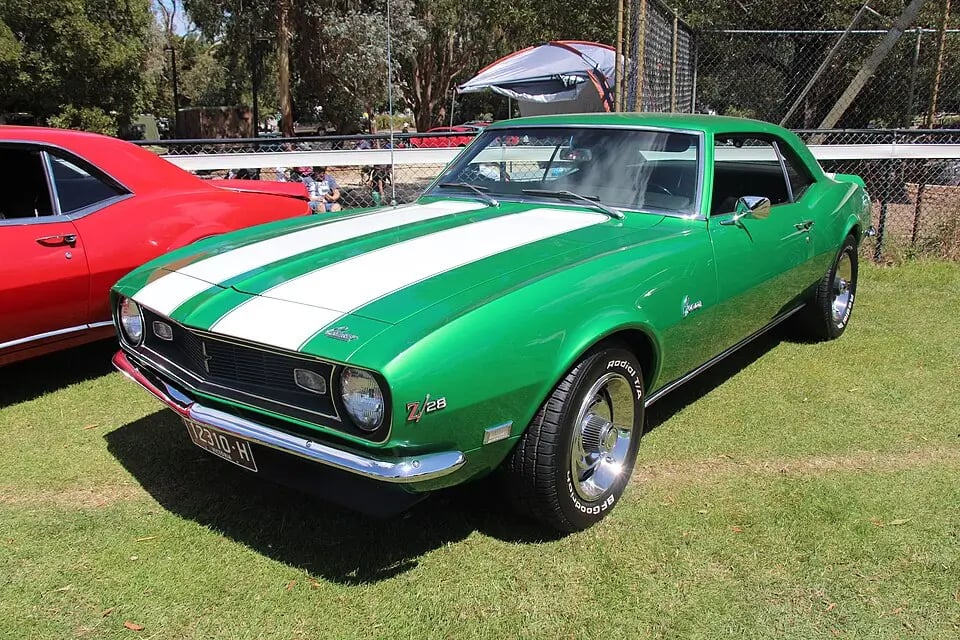
The first-generation Camaro sits at the top of the muscle car history collector market in Europe, but the variant preferences split clearly by country -- and the split is not arbitrary.
Germany: The Z/28 and the Circuit Connection
Germany's collector car market is oriented toward driving dynamics. The Z/28 -- built specifically for road racing, fitted with a high-revving 302ci small-block, representing a performance philosophy based on handling rather than straight-line acceleration -- has found a receptive audience in a market that also produces the BMW M3 and the Porsche 911.
German collectors who have spent years appreciating driver-focused cars recognise the Z/28's intentions in a way that markets less focused on circuit driving sometimes do not. The car's Trans-Am racing history provides competition provenance that German buyers understand and value.
What this means for shipping documentation:
Z/28 authenticity documentation is essential for German customs valuation. The declared customs value of a Z/28 is significantly higher than a standard SS. The documentation supporting that value needs to be in order before the container is sealed:
-
VIN verification confirming Z/28 specification
-
Broadcast sheet where available
-
Any NCRS or equivalent authentication documentation
-
Engine stamp photos and numbers-matching evidence
Discrepancies between the declared value and the supporting documentation create customs delays that are difficult and expensive to resolve from a distance. Get the documentation right before the car ships.
UK: The SS Convertible Premium
The British market has historically shown stronger preference for the visual drama of the SS convertible over the circuit-oriented Z/28. This likely reflects both the different driving culture -- UK buyers tend to relate to the muscle car as a cultural artifact and visual statement as much as a performance machine -- and the long exposure to American convertibles through film and media.
The SS convertible in first-generation Camaro form is genuinely rare. Convertible production across 1967, 1968, and 1969 was a fraction of hardtop production. Well-documented convertible examples command a premium that the UK market is more willing to pay than most European markets.
Shipping consideration for SS convertibles to the UK:
-
The convertible body requires individual assessment for container loading to protect the soft top and mechanism during transit
-
Soft top condition represents a significant portion of the car's value -- treat it accordingly during packing
-
Enclosed container shipping is the only appropriate method; open-deck transit is not suitable for a vehicle where surface condition matters this much
-
DVLA documentation for UK registration requires proof of age and specification -- have the paperwork complete before the car leaves the US
The Chevelle LS6: Europe's Most Sought-After Chevy and the Documentation Problem
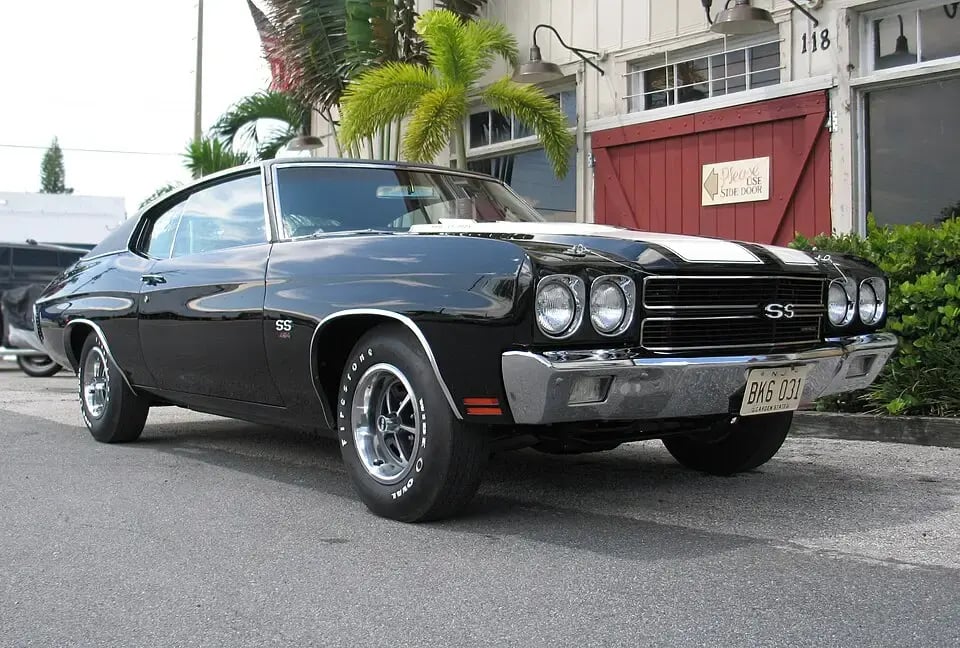
The Chevelle LS6 -- equipped with the 454 cubic inch engine producing 450 horsepower (SAE gross, the rating system used at the time of production) in 1970 specification -- is consistently cited by European collectors as one of the top acquisition targets in American muscle car history. It is also one of the most frequently misrepresented vehicles in the collector market.
Why the LS6 Is So Valued in Europe
The LS6's position in muscle car history is straightforward: it represents the peak of what the big-block era produced. For European collectors who know the history, the combination of cubic inches, horsepower output, and limited production makes it a reference point for the entire genre.
The 454 engine was available in two configurations. The LS5 was the lower-output variant and considerably more common. A Chevelle presented as an LS6 requires verification before any purchase, because the financial difference between a genuine LS6 and an LS5 is substantial.
European collectors understand this well. Many have encountered undocumented claims. As a result, verified, documented LS6 examples command strong premiums in European markets, with buyers placing particular weight on the completeness of the documentation package.
Documentation Checklist for Chevelle LS6 Exports
Before a Chevelle LS6 leaves the US, the following documentation should be:
-
Photographed and digitised in high resolution
-
Stored separately from the vehicle -- physical documents traveling inside the car during ocean transit face environmental risk
-
Available on arrival to support customs valuation at the destination port
Key documents:
-
Cowl tag (confirming LS6 specification)
-
VIN documentation
-
Original window sticker or order documentation where available
-
Any NCRS documentation or authentication letters
Customs valuation for a verified LS6 differs substantially from a standard SS 454. The documentation needs to be available and credible at the destination to support that declared value. This is not a situation where paperwork can be assembled after the car arrives.
The Nova SS: Why It Is Appearing on European Wishlists Now
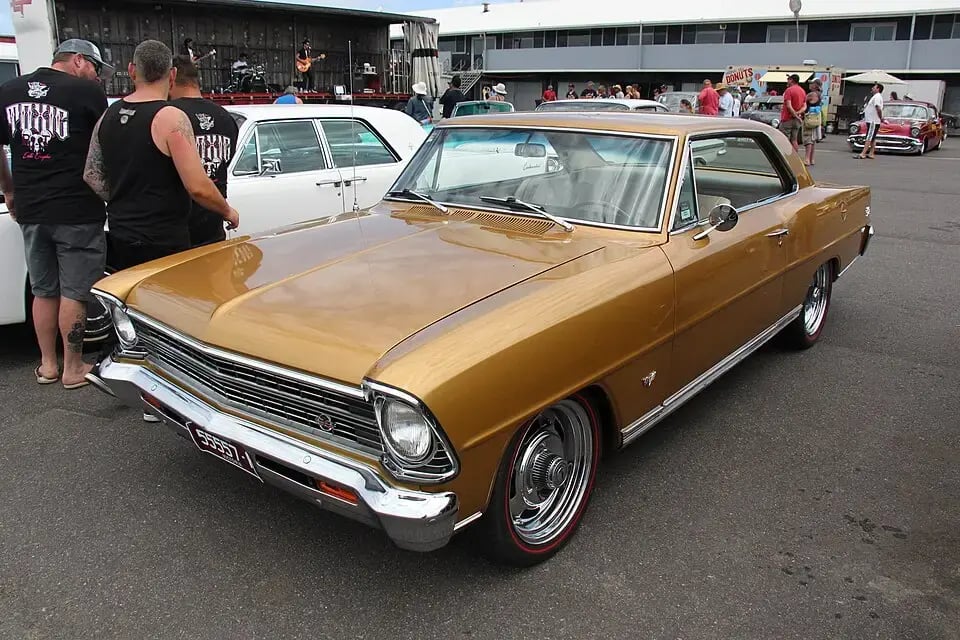
The Nova SS is relatively new to European collector consciousness, and the timing is not coincidental. As Camaro and Chevelle prices have moved to levels that exclude many buyers, European collectors are looking at what else the muscle car era produced -- and the Nova SS answers that question well.
The Collector Case for the Nova SS in Europe
The Nova's appeal is specific. It looks like an ordinary compact car. Underneath, particularly in COPO configuration with the 427 cubic inch engine, it is capable of matching or exceeding the performance of better-known muscle cars. That disconnect between appearance and capability -- the sleeper quality -- carries genuine appeal in European markets where automotive understatement has its own cultural weight.
The price argument remains valid, though it is narrowing as the car's profile rises. A COPO Nova or a Yenko Nova today is significantly more accessible than a comparable COPO Camaro. That window will not remain open indefinitely, and some European collectors are aware of it.
Why European buyers are paying attention now:
-
COPO and Yenko Nova examples have historically been priced below comparable COPO Camaro variants -- a gap that has been narrowing as the Nova's collector profile has risen. Verify current market values before making purchase decisions based on relative pricing assumptions.
-
The sleeper aesthetic resonates with European buyers who find the Camaro's profile overly familiar
-
Rising Camaro prices have created a spillover effect into less well-known variants
-
The muscle car history connection is well-documented for buyers who do their research
Shipping Consideration for Nova SS Exports
For COPO-optioned and Yenko Nova examples, engine certification and numbers-matching documentation is the central concern before shipping.
European customs authorities assess declared value against the specification claimed. A verified high-option Nova's customs value is substantially higher than a standard Nova SS, and the documentation supporting that difference needs to be:
-
Engine stamp photographs (block, heads, intake)
-
VIN decoder confirmation of COPO option codes
-
Any Yenko dealer documentation where applicable
-
Broadcast sheet if available
Yenko documentation is among the most difficult to authenticate in the muscle car market -- a significant number of tribute Yenko Novas exist. For any car presented as a Yenko conversion, authentication by a recognised specialist before purchase is strongly recommended.
Without this documentation, the declared value may be challenged at customs, creating delays and potentially requiring re-assessment. Unlike a Camaro, where the Z/28 or SS designation is widely understood by customs officials and appraisers, the Nova's value case requires more complete documentation to be self-evident.
Container Shipping: The Right Method for All Three Models
For Camaro, Chevelle, and Nova SS exports, container shipping is the appropriate method. These are collector vehicles where condition on arrival is a significant portion of the value -- paint, interior, and mechanical condition all matter. Enclosed container transit provides protection that open-deck RoRo cannot match for vehicles of this type.
RoRo is primarily used for oversized vehicles and heavy machinery that cannot be accommodated within standard container dimensions. For classic muscle cars -- standard-sized vehicles where condition on arrival is a significant portion of the value -- enclosed container shipping is the appropriate and standard choice.
Shipping rates vary by route, container schedule, and market conditions. Contact WCS for a current quote specific to your vehicle and destination.
Why West Coast Shipping for Your Classic Chevy Export
Not every shipping company understands that a Z/28 and a standard SS are different customs propositions. Or that a COPO-optioned Nova requires specific documentation handling. Or that a Chevelle LS6's value at the destination depends as much on what travels with it as on the car itself.
West Coast Shipping operates from warehouse facilities in New Jersey and Florida for European routes, with sailings to major European ports. The California facility serves Pacific routes. Every classic car shipment is assigned a dedicated account manager who handles US export documentation, container loading, and coordination with destination agents at the arrival port -- no gaps between vendors, no third-party handoffs on the US side.
For sellers and dealers, WCS's international car shipping service covers the full logistics chain from US warehouse to European port, with the documentation handling that high-value collector vehicles require.
For the complete model history on these three cars and which specific variants carry the most collector significance, the classic Chevy muscle car history guide is the right starting point before the shipping conversation begins.
Ready to Ship Your Classic Chevy Overseas?
Get an Instant Quote for Your International Car Shipment
Use the WCS shipping calculator to see current rates for your specific vehicle, US departure port, and European destination.


Window of Opportunity for Dealers - Ship Cars to Nigeria via Benin Now

Why Ship Cars in Containers? Protection, Flexibility & Cost Savings