<img height="1" width="1" alt="" style="display:none" src="https://www.facebook.com/tr?ev=6015199818423&amp;cd[value]=0.00&amp;cd[currency]=USD&amp;noscript=1">

Car Shipping from US to Belgium: T1 Docs, Collectors, Car Shows

April 27, 2026 at 8:56 AM

Belgium sits at a specific intersection of EU customs infrastructure, collector car culture, and logistics geography that makes it one of the more nuanced destinations for car shipping from the US. The Port of Antwerp is one of the largest vehicle import hubs in Europe, but arriving at Antwerp is not the same as importing to Belgium -- and that distinction matters depending on what you are shipping and where it is ultimately going.

This guide covers three angles that most Belgium shipping articles miss entirely: how the T1 transit document actually works for US vehicles arriving at Antwerp, what the Belgian collector market specifically wants from America, and how to ship a classic car to a Belgian show and bring it home afterward.

For the Belgium car shipping service including routes, costs, and the permanent import process, WCS covers that directly.

Current Shipping Rates: US to Belgium (Antwerp via Rotterdam)

Based on current WCS calculator pricing:

Route Ocean Freight Transit Time
New York to Antwerp $1,100 17 to 20 days
Florida to Antwerp $1,275 28 to 31 days
California to Antwerp $1,850 32 to 43 days


Destination charges at Antwerp are estimated at EUR 750 to EUR 850 and are invoiced separately. All rates subject to change -- contact WCS for a current quote.

What Is the T1 Transit Document and Why Does It Matter for Your US Car Arriving in Belgium?

The T1 is a customs transit declaration used within the European Union's external transit procedure. It is not an import document -- it is a movement document. Understanding this distinction is the key to understanding why a car arriving at Antwerp through a container shipment from the US may have a T1 associated with it even if the car is never formally imported into Belgium.

What the T1 Actually Is

When goods arrive at a EU port from a non-EU country, they have not yet been "released for free circulation" in the EU. They exist in a customs limbo -- physically present in EU territory, but not yet cleared through EU customs. The T1 document governs the movement of those goods under "customs supervision" from the port of arrival to the customs office of destination.

For a car arriving at Antwerp Port from the US, the T1 is generated at the port and specifies:

  • The goods being transported (your vehicle, by VIN)

  • The customs office of origin (Antwerp)

  • The customs office of destination (wherever the customs clearance will formally occur)

  • The guarantee amount covering potential customs duties if the T1 is not properly closed

Shipping through Antwerp to another EU country? The T1 transit document is what bridges Belgian port custody and your final destination customs office. Get the full breakdown -- including what happens if it is not closed correctly -- in our T1 transit document guide for US cars arriving in Belgium

When the T1 Applies to Your US Car Arriving at Antwerp

This is where many importers are surprised. Two scenarios determine whether a T1 is relevant:

Scenario A -- Direct import to Belgium: Your car arrives at Antwerp, clears Belgian customs at Antwerp, and stays in Belgium. In this case, the customs clearance happens at the port of arrival and the T1 procedure either does not apply or is opened and closed at the same point. This is the standard permanent import process.

Scenario B -- Transit through Belgium to another EU destination: Your car arrives at Antwerp but is destined for Germany, the Netherlands, France, or elsewhere in the EU. The car cannot simply be driven across the Belgian border -- it must travel under a T1 transit document from Antwerp to the customs office at the final destination country, where formal import clearance will occur.

This scenario is more common than many US shippers realise. Belgium and specifically Antwerp function as a major EU entry point for US vehicles that are actually destined for German, Dutch, or French buyers. If you are shipping a car from the US to a buyer in Frankfurt who is using Antwerp as the arrival port, the T1 is the document that legally moves that car from Belgian port custody to German customs authority.

Who Generates the T1 and When

The T1 is generated by a licensed customs broker or freight forwarder at the port of arrival -- in this case, at Antwerp. It is not something the US shipper creates. It is created by the Belgian customs agent once the container is unloaded and the vehicle is identified.

The T1 is accompanied by a financial guarantee (either a cash deposit or a guarantee provided by a customs broker's bond) covering the potential customs duties and VAT on the vehicle. This guarantee exists because the vehicle is moving under customs supervision, not yet having paid EU duties.

What Happens If the T1 Is Not Closed Correctly

The T1 must be formally "discharged" at the customs office of destination -- the point where the vehicle is formally presented to customs and either cleared for import or placed under another procedure. If the T1 is not discharged:

  • The guarantee is executed (the bonded amount is collected as if the vehicle was imported without paying duty)

  • The shipper or the importer of record faces a customs debt that can be significant -- EU VAT plus applicable import duty on the full vehicle value

  • Resolving an undischarged T1 requires documentation from both the origin customs office and the destination customs office, which can take months

This is one reason why using an experienced logistics provider for EU-destined US vehicles matters significantly. A T1 that is correctly opened and discharged is invisible to most shippers. One that is not correctly closed creates a problem that is expensive and time-consuming to resolve.

How WCS Coordinates T1 Logistics for Antwerp-Arriving Vehicles

For US vehicles arriving at Antwerp through WCS, the destination agent coordinates the T1 process in conjunction with the local customs broker. For vehicles with a Belgian destination, standard customs clearance applies. For vehicles transiting to other EU countries through Antwerp, WCS's account managers can advise on what the T1 procedure requires and ensure the documentation package arriving with the vehicle supports a clean transit process.

For more on the general Belgium import process and documentation, the complete Belgium car shipping guide covers the permanent import framework in full.

Which American Cars Are Most Popular with Belgian Collectors? What the Market Wants from the USA

Belgium's collector car market is smaller than Germany's or the UK's but is meaningfully distinct from both. Understanding what Belgian buyers specifically want -- and why -- is useful whether you are a US seller considering European buyers or a Belgian collector researching what is available.

For the Belgium shipping costs and import process, the Belgium car shipping service covers that context. This section focuses on the market intelligence.

Why Belgium Is a Distinct Collector Market

Belgium occupies an interesting position in the European collector car landscape. It is not the largest market, but it functions as a re-export hub -- Belgian dealers and private buyers source vehicles that end up in France, the Netherlands, Luxembourg, and beyond. The country's position at the intersection of French, Dutch, and German automotive cultures creates a diverse collector base with preferences that blend those influences.

The Flemish collector community (Dutch-language Belgium) has historically shown stronger interest in American muscle cars and pickup trucks, partially reflecting the broader Dutch and North Sea cultural connection to American vehicles. The Walloon community (French-language Belgium) has preferences that align more closely with the French market -- classic American cars with strong visual presence and cultural recognition.

Selling to a Belgian buyer? Muscle cars, Corvettes, Cadillacs, and classic trucks all land differently in the Belgian market and the 30-year VAT threshold directly affects which years collectors prioritize. Get the full market breakdown in our guide to what Belgian collectors want from the USA

The 6% Reduced VAT Rate: Why It Shapes What Belgian Buyers Want

Belgium applies a reduced VAT rate of 6% (rather than the standard 21%) to vehicles classified as historic -- specifically those 30 years old or older. VAT rates and historic vehicle classifications are subject to Belgian legislative changes -- confirm the current applicable rate with a Belgian customs specialist or tax advisor before making purchase decisions based on this figure. This tax differential is significant enough to directly influence purchasing decisions in the Belgian collector market.

A 1970 Chevelle SS arriving from the US is 55 years old and qualifies for the 6% reduced rate. A 1998 Chevrolet Corvette C5 does not. The effective tax burden difference between a 30-year-old vehicle and a newer collectible can represent thousands of euros on the total landed cost. This pushes Belgian collector interest toward vehicles from the 1960s through the early 1990s, and specifically toward vehicles that have already crossed the 30-year threshold.

The practical consequence: American muscle cars from the 1965 to 1994 window are among the most tax-advantaged vehicles a Belgian collector can import, and this is one reason that window of vehicles consistently attracts strong interest at Belgian classic car events and among Belgian importers.

The Most Sought-After American Cars in the Belgian Market

Chevrolet Corvette (C1 through C4): The Corvette has strong recognition in Belgium across all communities. C1 and C2 examples command the highest prices. C3s in documented condition are accessible and actively traded. The C4 generation has recently crossed the 30-year threshold, making early-1990s examples newly attractive for the tax advantage.

Belgian market reference prices for Corvettes: C2 examples in good condition, EUR 60,000 to EUR 120,000+. C3 documented examples, EUR 25,000 to EUR 55,000. Early C4s, EUR 15,000 to EUR 30,000.

Ford Mustang (1964 to 1973): First-generation Mustangs are consistently among the most actively traded American vehicles in Belgium. The fastback body style commands premiums. Belgian buyers show particular preference for documented, matching-numbers examples -- provenance matters more in the Belgian market than in some other European markets, possibly because of the re-export function the market serves.

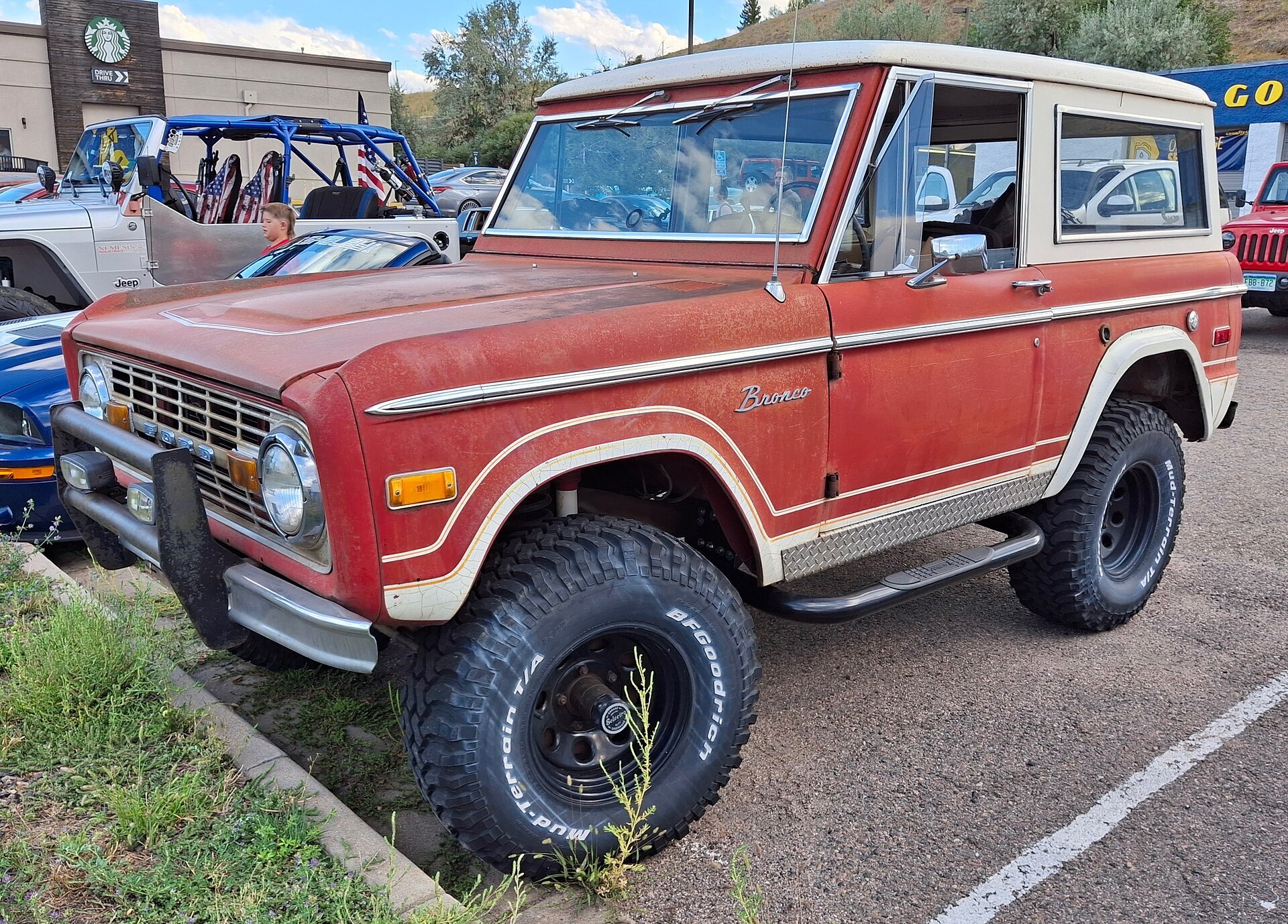
Classic American Trucks (1947 to 1972): Chevrolet and Ford pickups from the late 1940s through early 1970s have found a specific and growing audience in Belgium that is somewhat more developed than in neighbouring markets. The truck segment represents an area where Belgian buyers are willing to pay competitive prices for clean US-sourced examples.

Cadillac (1955 to 1970): Classic Cadillacs -- particularly the finned designs of the late 1950s and early 1960s -- have a devoted following in Belgium. The visual drama of these vehicles resonates particularly in the French-speaking Belgian market. Well-preserved examples with documented history are genuinely scarce in Europe, and Belgian buyers sourcing directly from the US can find better examples at lower prices than what the local European market offers.

Models on Belgian Wishlists That Are Difficult to Source Locally:

  • Pontiac GTO (1964 to 1969): European supply is thin; demand consistently exceeds available inventory

  • Plymouth Road Runner and Barracuda: Scarce in Europe and consistently requested by informed Belgian collectors

  • Buick Riviera (1963 to 1965): The first-generation design has a following in Belgium that European supply cannot meet

  • Pre-war American classics: Significant demand and essentially no domestic European supply -- US market sourcing is the only viable channel

Belgium as a Re-Export Hub

It is worth noting that a portion of American cars purchased through Belgian dealers or importers are not their final destination. Belgium's central location, its EU membership, and its logistics infrastructure make it a practical entry point for vehicles destined for Dutch, French, or Luxembourg buyers who are working through Belgian import channels. This means the effective demand for US vehicles routed through Belgium is larger than the Belgian collector population alone.

Belgian Classic Car Shows: How US Vehicle Owners Ship Their Cars to Participate

Shipping a car from the US to Belgium to participate in a classic car show -- with the intention of returning it to the US afterward -- is a different logistics and customs challenge from permanent import. The vehicle enters Belgium temporarily, is exhibited, and then leaves. The key question is what legal framework governs that temporary presence and how the logistics work around a fixed event date.

This section covers private collectors and enthusiasts attending Belgian classic car shows -- not race teams or professional motorsport logistics. For the general Belgium import process, the Belgium car shipping service covers permanent import. This section focuses entirely on the temporary attendance scenario.

The Major Belgian Classic Car Shows With US Vehicle Presence

Flanders Collection Car (Ghent): One of Belgium's largest and most established classic car events, held annually at the Ghent Flanders Expo. Flanders Collection Car consistently features significant American vehicle representation and attracts collectors from across Belgium, the Netherlands, and northern France. It is the show where US vehicles have the strongest established presence in Belgium.

Classic Auto Hasselt: One of Belgium's most established classic car events, held in the Hasselt exhibition centre. Classic Auto Hasselt attracts collectors from across Flanders and the Dutch border region and consistently features American vehicle representation alongside European classics.

Antwerp Classic Salon: A major event in Belgium's automotive calendar, held at Antwerp Expo. The Antwerp show's location is logistically advantageous for US vehicles -- the Port of Antwerp is minutes from the exhibition venue, reducing inland transport costs and complexity.

Zoute Grand Prix (Knokke-Heist): A prestigious coastal classic car event held on the Belgian coast, combining a concours, rally, and auction elements. The Zoute event attracts high-value vehicles and an international collector audience, making it a relevant destination for significant American classics. Note that Brussels also hosts various classic car events throughout the year that benefit from the city's central position between Flemish and Walloon collector communities, though these vary in scale and scheduling year to year.

Taking your car to a Belgian show? ATA Carnet logistics, Brussels LEZ rules for temporarily imported vehicles, confirmed transit times from all three US departure ports, and what to do with the car between the show and the return vessel -- all covered in our Belgium classic car show shipping guide

The ATA Carnet: The Correct Tool for Temporary Import to Belgium

For a US vehicle owner shipping a classic American car to a Belgian show and returning it to the US, the ATA Carnet is the appropriate customs tool. The Carnet allows a vehicle to temporarily enter and exit the EU without triggering import duty or VAT payment -- because the vehicle is not being imported, it is being temporarily admitted.

How the ATA Carnet works for Belgium:

  • The Carnet is obtained in the US through the US Council for International Business (USCIB) before the vehicle ships

  • The Carnet specifies the vehicle (make, model, year, chassis number, estimated value) and the intended countries of visit

  • At Antwerp port arrival, Belgian customs stamps the Carnet as the vehicle enters EU territory

  • At the end of the show, when the vehicle is loaded for return to the US, Belgian customs stamps the Carnet again confirming departure

  • The Carnet is then closed with the USCIB on return to the US, releasing the security deposit

Cost of obtaining an ATA Carnet:

The USCIB charges a fee based on the declared value of the goods. For a classic American car valued at $40,000, the carnet fee typically runs $200 to $400. The security deposit covers the maximum duties and taxes that would be payable if the vehicle were permanently imported -- confirm the specific guarantee requirement with the USCIB when applying, as it depends on the vehicle's declared value and applicable EU duty and VAT rates. The security deposit can be placed as a surety bond rather than cash, which significantly reduces the out-of-pocket cost.

Validity period: ATA Carnets are typically issued for 12 months, which is more than sufficient for a show attendance visit.

The 6% VAT and Brussels LEZ for Temporary vs Permanent Imports

The 6% reduced VAT rate that applies to historic vehicles (30 years and older) for permanent import does not apply to temporary ATA Carnet imports -- because no VAT is assessed on a temporary import at all. If the Carnet is correctly managed and the vehicle exits Belgium within the admitted period, no VAT is ever due.

The Brussels Low Emission Zone (LEZ) restricts certain older vehicles from entering the Brussels city area based on Euro emission standards. A pre-Euro-4 American classic car shipped to Brussels for the Rétromobile event would normally face LEZ restrictions for driving in Brussels proper.

Practical implication: For vehicles attending Brussels shows, check the LEZ exemption status for the specific event and venue. Many classic car events have temporary LEZ exemptions for exhibition vehicles, but this should be confirmed with the show organisers before the vehicle arrives -- not after.

For Antwerp and Ghent shows, the LEZ restrictions are different from Brussels, and the practical impact on show attendance vehicles is generally lower.

WCS Logistics for Belgian Show Attendance: The Timeline That Works

The logistics timeline for a Belgian classic car show attendance shipment is more constrained than a permanent import because the vessel arrival must align with the show date. A vehicle that arrives two weeks after the show opens is useless for exhibition purposes.

Working timeline from the US (based on New York departure):

  • Container cut-off at NJ warehouse: approximately 3 to 4 weeks before the show opening date

  • Ocean transit New York to Antwerp: 17 to 20 days

  • Port clearance at Antwerp (with ATA Carnet): 2 to 5 days

  • Inland transport to show venue: 1 to 2 days

Total lead time from warehouse cut-off to show venue arrival: approximately 25 to 30 days.

WCS's account managers can advise on the specific container schedule to target for a given show date, and can coordinate the return shipment logistics after the event -- so the vehicle is loaded, Carnet-stamped, and on its way back to the US without the owner having to manage the port logistics independently.

All transit times and rates are subject to change. Contact WCS for current sailing schedules when planning around a specific show date.

Ready to Ship Your Car from the US to Belgium?

Get an Instant Quote for Your Belgium Vehicle Shipment

Use the WCS shipping calculator to see current rates for your specific vehicle, US departure port, and Antwerp destination.

Get Email Notifications