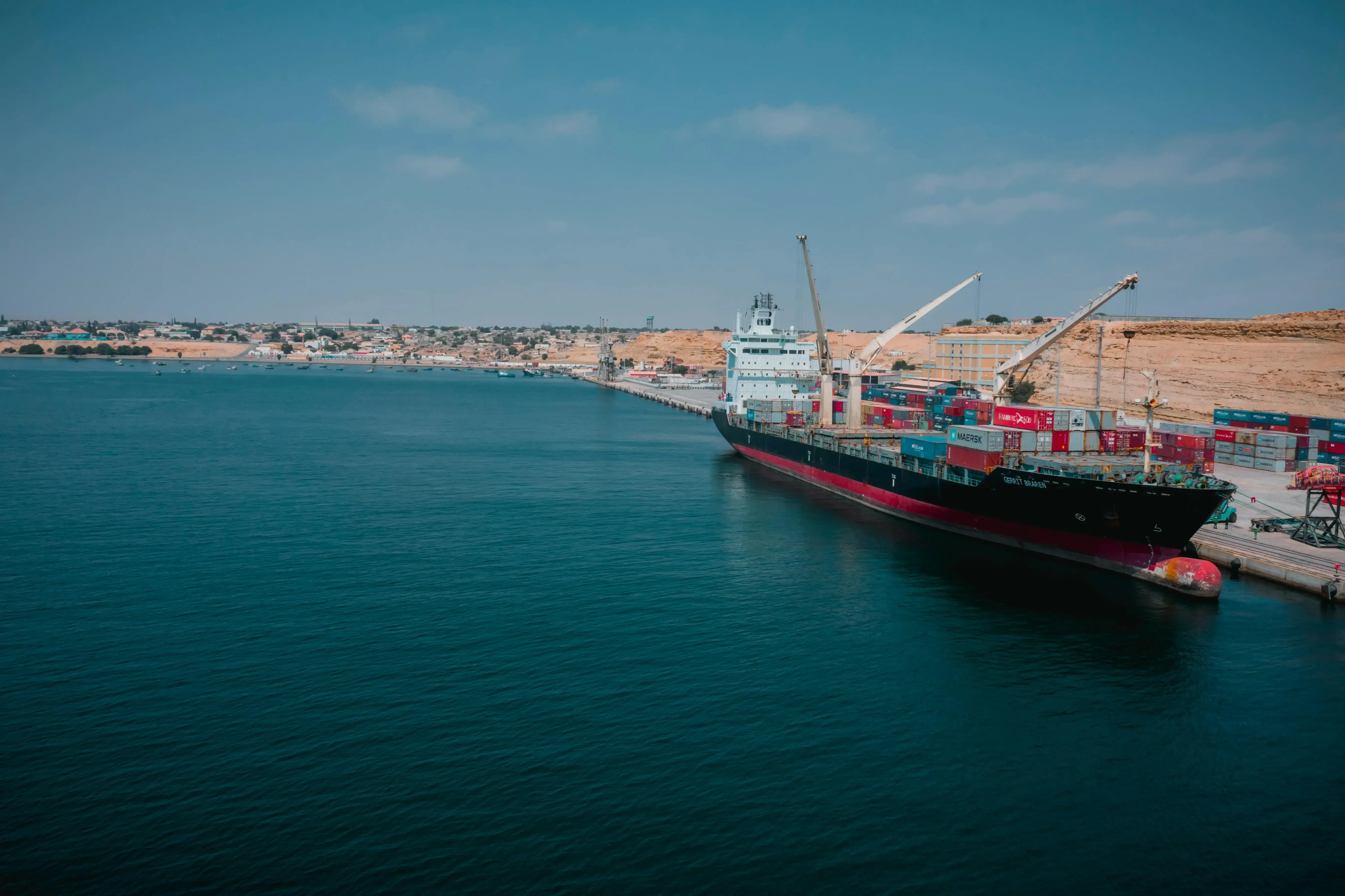

March 27, 2026 — Day 27 delivers a paradox that has become the defining rhythm of this conflict: diplomatic extension and military escalation occurring simultaneously within hours of each other. President Trump extended his deadline for attacking Iran's energy facilities by 10 more days to April 6, posting on Truth Social that "discussions are in progress and they are proceeding well." Within the same news cycle, the IRGC issued its strongest Hormuz enforcement statement yet — warning that "any passage through this strait will face a harsh response" — and confirmed it had already turned back three vessels attempting to transit, including two COSCO-operated container ships.
Israel responded to Trump's pause not with restraint but with an announced expansion of its Iran campaign, with Defense Minister Israel Katz warning strikes would "intensify and expand." Israel launched fresh attacks on the "heart of Tehran" and Beirut simultaneously. Wall Street suffered its worst session since the Iran war began, with the S&P 500 sinking 1.7 percent and the Nasdaq entering correction territory. Brent crude was trading at approximately $107 to $108 per barrel on Friday morning. The Trump delay did not lift markets — it deepened the uncertainty.
For international vehicle shippers, Day 27 extends the operational planning horizon without changing a single variable that matters for actual cargo movement. The Strait of Hormuz is enforced closed, three ships were turned back in the past 24 hours, and April 6 is now the next hard deadline for the most dangerous potential escalation of the conflict. Here is what happened and what it means for your shipments.
Today's Key Developments: March 27, 2026
Trump Extends Energy Strike Deadline to April 6, Claims Iran Requested the Delay
The headline diplomatic development of Day 27 is Trump's announcement that he is extending the pause on attacking Iran's energy infrastructure by 10 more days, to April 6.
According to CNBC:
"On Thursday, President Donald Trump announced a 10-day extension of the current temporary halt in assaults on Iran's energy installations, pushing the deadline to April 6, following a request from the Islamic Republic's government. In a post on Truth Social, Trump remarked, 'In accordance with the Iranian Government's request, please consider this statement as an indication that I am extending the period of Energy Plant destruction.' He added, 'Discussions are in progress and, contrary to misleading claims from the Fake News Media and others, they are proceeding well.'"
According to Reuters:
"He later posted on social media that he would pause threatened attacks on Iranian energy plants for 10 days until April 6 at 8 p.m. Eastern."
According to Firstpost/YouTube:
"The US-Israel-Iran conflict is entering an unpredictable phase as President Donald Trump extends his pause on strikes against Iran's energy sites by ten more days, claiming Tehran requested the delay and that negotiations are 'going very well.' Trump insists he is not 'desperate' for a deal, even as Iran continues missile attacks and Israel steps up its military campaign."
Iran has not confirmed that it requested the delay, and its foreign ministry has continued to deny it is engaged in substantive negotiations. The gap between Trump's characterization of "discussions proceeding well" and Iran's public posture of "we do not want a ceasefire" remained unresolved as of Friday morning.
IRGC Issues Strongest Hormuz Warning Yet: "Any Passage Will Face a Harsh Response" Three Ships Turned Back Including Two COSCO Vessels
While Trump was announcing his diplomatic extension, the IRGC escalated its Hormuz enforcement posture to its most explicit level yet.
According to Democracy Now:
"Iran's Islamic Revolutionary Guard Corps declared the Strait of Hormuz 'closed,' warning 'any passage through this strait will face a harsh response.'"
According to ITV News:
"'The movement of any vessel to and from ports of origin belonging to allies and supporters of the Zionist-American enemies, to any destination and through any corridor, is prohibited,' the IRGC said."
And critically, the IRGC moved from statement to operational enforcement. According to Ada Derana:
"Iran's Islamic Revolutionary Guard Corps said on Friday that the Strait of Hormuz is closed and any transit through the waterway will face 'harsh measures.' The IRGC also said the Strait of Hormuz was 'closed' to vessels traveling to and from enemy ports, and that they had turned back three ships seeking to cross the transit point."
And per News18/YouTube:
"Iran's Islamic Revolutionary Guard Corps says the strait remains closed, warns ships linked to U.S. & Israel allies to stay away. Claims 3 container vessels have already turned back."
Two of the three turned-back vessels have been identified by Kpler tracking data, confirmed by the Wall Street Journal, Middle East Eye, The Week, Moneycontrol, and Iran International, as COSCO-operated container ships CSCL Indian Ocean and CSCL Arctic Ocean — both of which had been stranded in the Persian Gulf since the war began. The third vessel is tentatively identified as the Selen, flagged to Saint Kitts and Nevis and Pakistan-bound. The presence of two COSCO-operated vessels among the turned-back ships is commercially significant: it signals that the IRGC's expanded interdiction mandate is being applied even to Chinese state-linked shipping operators that had previously been transiting under bilateral permission frameworks.
The IRGC's Day 27 statement is notably broader than any previous Hormuz warning in 27 days of conflict. Earlier statements targeted US and Israeli-affiliated vessels. Friday's statement extends the prohibition to vessels traveling to or from "ports of origin belonging to allies and supporters" — language that could encompass vessels from any NATO member state, any GCC country, Japan, South Korea, or Australia. This broadening of the target definition, combined with three confirmed vessel turn-backs including COSCO ships, signals an active tightening of Hormuz enforcement rather than a loosening in response to Trump's diplomatic pause.
Israel Announces Strikes Will "Intensify and Expand"; Hits Heart of Tehran and Beirut
Trump's 10-day diplomatic pause did not restrain Israel. Defense Minister Israel Katz announced explicitly that operations would expand.
According to Times of Israel:
"Defense Minister Israel Katz warned on Friday that Israel would ramp up its strikes on Iran in the coming days, citing continued Iranian missile fire."
According to ITV News:
"Israel launches attacks in the 'heart of Tehran' and in Beirut on Friday morning ahead of planned UN Security Council meeting."
The same ITV report confirmed the human cost of the conflict as of Day 27: "More than 1,900 people have been killed in Iran, according to nation's health ministry, as well as 1,100 in Lebanon, 80 in Iraq, 18 in Israel and 13 US service members."
Israel's decision to escalate while Trump pauses reflects the operational independence that has characterized the US-Israel coordination throughout this conflict: the US manages the diplomatic and energy-infrastructure pressure track, while Israel maintains continuous military pressure on Iranian strategic targets. For shipping planners, this means Trump's diplomatic pause has not reduced the daily strike tempo that is the primary driver of Iran's refusal to reopen Hormuz.
Pentagon Prepares 3,000 More Paratroopers; Kharg Island Seizure Under Consideration
The diplomatic extension is running in direct parallel with the largest US military buildup of the entire conflict.
According to NPR:
"The Pentagon is preparing to deploy up to 3,000 paratroopers from the 82nd Airborne Division to the Middle East, alongside thousands of Marines."
According to Times of Israel:
"These troops would be in addition to the 1,000 paratroopers from the 82nd Airborne Division and 5,000 Marines already deployed to the Gulf. The report, citing Defense Department officials with knowledge of the planning, said the forces would likely be stationed within striking distance of Iran's Kharg Island, which handles around 90% of Iran's crude oil exports. The US has already struck targets on the island during the current war, and Trump has not publicly ruled out the option of taking Kharg, a move he advocated for during the Iran-Iraq war in the 1980s."
According to Fortune:
"While about 5,000 Marines and 3,000 soldiers are headed to the Middle East, with 10,000 more U.S. ground troops reportedly under consideration, Callan is 'very skeptical' that Trump can deliver a knock-out blow to Iran that will cause the regime to accept his peace terms. Still, he expressed 75% confidence that the U.S. will put boots on the ground to seize Iranian territory and try to fully reopen the Strait of Hormuz."
Analyst Callan expressed 75 percent confidence that the US will put boots on the ground to seize Iranian territory and attempt a full Hormuz reopening. These figures are individual confidence estimates for distinct scenarios, not mutually exclusive probability shares — Callan's assessments reflect overlapping outcome paths rather than a single either/or projection. The 75 percent ground-troop estimate is nonetheless the highest credible military escalation probability published in 27 days of conflict. April 6 is not just a deadline for energy infrastructure strikes — it is the timeline within which Kharg Island positioning will be complete, making any post-April 6 escalation significantly more capable than any prior US military action in this conflict. For context on how prior US military buildup decisions have affected shipping routes, see West Coast Shipping's Iran War Day 21 analysis.
UK Foreign Secretary: Iran Cannot "Hold the Global Economy Hostage"; G7 Talks Friday
International pressure on Iran's Hormuz position intensified on Friday, with the UK's foreign secretary making the most direct economic-hostage framing of any G7 official to date.
According to ITV News:
"UK foreign secretary says Iran cannot 'hold the global economy hostage' ahead of G7 talks on Friday."
The G7 foreign ministers meeting on Friday represents the first coordinated Western diplomatic response to the Hormuz crisis at that level. The outcome of that meeting — and specifically whether G7 members issue a joint statement demanding Hormuz reopening with specified consequences — will determine whether Iran faces multilateral economic pressure or can continue treating the closure as a bilateral US-Iran negotiating chip.
Wall Street Posts Worst Day Since the Iran War Began; Markets Unimpressed by Trump's Pause
Financial markets gave an unambiguous verdict on Trump's diplomatic extension: they did not believe it would produce a Hormuz reopening in the near term.
According to Transport Topics:
Wall Street's worst single session since the Iran war began came on March 26. On Friday March 27, losses continued as the S&P 500 sank a further 0.7%, the Dow Jones fell 333 points (0.7%), and the Nasdaq dropped 1.1% — pushing Wall Street toward its fifth straight losing week, which would be its longest such streak in nearly four years.
The same report quoted ING Bank analysts Ewa Manthey and Warren Patterson: "Oil prices steadied after U.S. President Donald Trump again pushed back the deadline for striking Iran's energy. (But) the scale of supply at risk remains significant."
On Friday morning, as the IRGC issued its harshest Hormuz warning yet, oil climbed sharply. According to NBC News:
"This morning, oil prices experienced another surge, with international Brent crude oil exceeding $110 per barrel once more. So far today, this marks an increase of 3%. Meanwhile, U.S. crude oil prices are also on the rise, approaching $97 per barrel, reflecting a gain of over 2% for the day."
However, per Times of India and Fortune's live oil price data, Brent touched $108 before easing, with the verified Friday morning trading range at approximately $107 to $108 per barrel and WTI near $92 to $93. Brent's conflict intraday peak of $110.96 was recorded on March 20; Friday's level represents a sharp rebound from Wednesday's ceasefire-hope low near $97, but did not retest that peak.
The conflict's oil price corridor is now firmly reset above $100. Barclays provided the clearest analytical framework for what sustained closure means, per Sprague Energy: "Barclays said that a prolonged closure of the Strait of Hormuz would likely lead to a 13–14 million bpd supply loss... Barclays said under its base case, it expects traffic through the Strait of Hormuz to normalize by early April and Brent crude would average $85/barrel in 2026. However, if disruptions persist until end-April, 2026 Brent forwards could reprice to $100/barrel, and in a more prolonged scenario stretching to end-May prices could rise to $110/barrel."
UN Security Council Meeting Scheduled; Iran Confirmed Three Ships Turned Away
Iran confirmed directly that three ships of different nationalities had been turned away from the Strait of Hormuz, per ITV News, which also confirmed "Israel launches attacks in the 'heart of Tehran' and in Beirut on Friday morning ahead of planned UN Security Council meeting."
The UN Security Council meeting adds a multilateral diplomatic dimension that has been largely absent from the conflict's first four weeks, which have been dominated by US-Iran bilateral channels via Pakistan and Egypt. Whether Russia or China will veto any Security Council resolution on Hormuz freedom of navigation is the key variable in that forum's potential impact.
Strait of Hormuz Status: Day 27
Enforced closed by IRGC with active vessel turn-backs. Three ships confirmed turned away on Day 27, including two COSCO-operated vessels. IRGC target definition now extended to vessels of US and Israeli ally nations.
Updated status:
-
Western-affiliated commercial vessels: Zero transits. War-risk P&I coverage withdrawn since March 5. All major carrier Gulf booking suspensions remain in effect.
-
IRGC enforcement posture: Upgraded on Day 27 to explicit "harsh response" warning covering all vessels traveling to or from ports of US/Israeli ally nations — the broadest target definition issued in 27 days of conflict.
-
Vessels turned back on Day 27: Three ships confirmed. Two identified by Kpler tracking data as COSCO-operated container ships CSCL Indian Ocean and CSCL Arctic Ocean, both stranded in the Persian Gulf since the war began. Third vessel tentatively identified as the Selen, Saint Kitts and Nevis-flagged, Pakistan-bound.
-
Bilateral permission corridor (Larak): Operational status now in serious doubt. The turn-back of two COSCO-operated vessels — previously among the nationalities transiting under bilateral frameworks — indicates the IRGC's expanded interdiction mandate is being applied to Chinese state-linked operators.
-
Vessels stranded west of the Strait: Approximately 3,200.
-
Seafarers stranded: Approximately 20,000.
-
Force majeure declarations in effect: QatarEnergy, Kuwait oil companies, Bahrain oil companies.
-
Next hard deadline: April 6, 8 p.m. Eastern — Trump's extended energy facility strike deadline.
The IRGC's Day 27 statement represents the most operationally dangerous Hormuz enforcement posture of the entire conflict. It is broader in target scope, backed by confirmed enforcement action against Chinese state-linked vessels, and issued simultaneously with Trump's diplomatic pause rather than in response to escalation. This is not a de-escalation signal. This is Iran using Trump's pause to harden its Hormuz position.
What This Means for Container and Vehicle Shipping
The April 6 Deadline: What It Is and What It Is Not
Trump's extension to April 6 is a pause on US energy infrastructure strikes, not a ceasefire, not a Hormuz reopening, and not a suspension of military operations. It is a diplomatic breathing space for back-channel talks that Iran publicly denies are happening.
For shipping planners, the April 6 deadline creates a specific planning window with a binary outcome:
-
If talks produce a preliminary framework before April 6: A 30-day ceasefire with provisional Hormuz reopening becomes possible. War-risk P&I coverage restoration would take 7–14 days after a security determination, meaning earliest possible Western carrier Gulf service resumption would be mid-to-late April at the absolute earliest.
-
If April 6 arrives without a framework: Trump faces a credibility choice between a third extension (further damaging deterrence) or following through with energy infrastructure strikes (triggering immediate Iranian escalation). A strike on energy infrastructure, particularly Kharg Island, would likely push Brent well above $110 per barrel and could trigger Iranian retaliatory strikes on Gulf port infrastructure, further deepening the shipping disruption.
Do not plan around an April 6 resolution. Plan around continued Cape of Good Hope routing through at minimum end of April, with Q2 2026 as the conservative operational horizon.
The COSCO Turn-Back: Why This Is the Most Significant Hormuz Development in 27 Days
The identification of CSCL Indian Ocean and CSCL Arctic Ocean — both COSCO-operated — among the three vessels turned back on Day 27 is the most commercially significant single Hormuz development since the war began, and it changes the operational picture for all shippers regardless of cargo origin or flag state.
Throughout the first 26 days of the conflict, Chinese-operated and Chinese state-linked vessels had been the primary beneficiaries of the bilateral permission corridor, operating under an implicit Iran-China understanding that allowed limited transits. The turn-back of two COSCO vessels on Day 27 indicates one or more of the following:
-
The IRGC's expanded "ally nation" definition now encompasses vessels whose destination ports are deemed enemy-adjacent, regardless of operator nationality
-
Iran is deliberately demonstrating to China that the Larak corridor is not a reliable commercial arrangement, potentially as leverage in broader geopolitical negotiations
-
The operational Larak corridor has effectively collapsed as a viable routing option for any vessel, including those previously operating under bilateral frameworks
For Western vehicle shippers, the practical implication is unchanged in the short term — Western-affiliated vessels were never transiting regardless. But the Larak corridor's collapse as a Chinese-operated route removes the last viable Hormuz transit option from the market entirely and confirms that no commercial vessel can reliably plan around a Hormuz routing until a formal ceasefire framework with explicit Hormuz provisions is in place. For background on how the corridor evolved and what its closure means for global rerouting, see West Coast Shipping's Global Shipping Disruption overview.
Kharg Island Positioning: The Highest-Impact Shipping Variable of the Next 10 Days
The US military buildup specifically around Kharg Island is the variable with the highest potential impact on global shipping of any development in the next 10 days. Kharg handles 90 percent of Iran's crude oil exports. A US military seizure or neutralization of Kharg would accomplish several things simultaneously:
-
Remove Iran's primary oil export revenue, dramatically increasing pressure on Tehran to negotiate
-
Trigger immediate Iranian retaliation against Gulf energy and port infrastructure
-
Potentially push Brent crude well above the current $107–$108 level toward $120 to $130 in an initial shock
-
Accelerate or destroy the current diplomatic track entirely
Cape of Good Hope: Rates and Surcharges; Brent at $107–$108
All major carriers maintain their Gulf booking suspensions. Key data as of March 27:
-
Brent crude: approximately $107 to $108 per barrel Friday morning, up sharply from $97 Wednesday but below the conflict's intraday peak of $110.96 recorded March 20 — full restoration of energy cost pressure on top of Cape routing surcharges
-
Asia-Europe rates: approximately $3,800 to $4,200 per FEU, up approximately 55 percent from pre-conflict levels
-
Asia to US West Coast rates: approximately $3,100 to $3,400 per FEU, up approximately 30 percent
-
Additional transit time on most trade lanes: 10 to 14 days versus pre-conflict baselines, extending to 17 days or more depending on trade lane direction and vessel type
-
Carrier surcharges: all in effect; watch for upward adjustment given Brent back near $108
For more background on how the Cape rerouting is specifically affecting vehicle shipping lanes, see West Coast Shipping's Iran War Shipping Disruption overview.
What to Watch Over the Coming Days
-
April 6 deadline. Trump's new hard line. Monitor whether any confirmed diplomatic framework emerges before this date. An Islamabad or Ankara direct contact in the coming days would be the first real signal. Absence of any confirmed meeting by April 3–4 would suggest April 6 becomes a new escalation point.
-
COSCO corridor collapse implications. Two COSCO-operated vessels turned back on Day 27. Monitor whether China makes any formal diplomatic protest to Tehran, and whether Chinese-flagged vessels resume Larak transits or cease attempting them entirely. A Chinese suspension of Larak transits would be the final confirmation that Hormuz is operationally closed to all commercial traffic without exception.
-
G7 foreign ministers meeting. Friday's meeting could produce the first coordinated multilateral framework for economic pressure on Iran over Hormuz. A joint G7 statement with specific consequences for continued closure would be the strongest international signal yet.
-
Kharg Island force positioning. Monitor US military deployment updates. 3,000 additional paratroopers from the 82nd Airborne plus 10,000 more troops under consideration. When positioning is complete within striking distance of Kharg, the April 6 deadline becomes operationally backed.
-
Israel's "intensify and expand" campaign. Katz's announcement signals continued Israeli escalation regardless of Trump's pause. Monitor for strikes on Iranian command, energy, or port infrastructure not covered by Trump's energy facility moratorium.
-
Brent crude trajectory. At approximately $107–$108 Friday morning, well above the $97 ceasefire-hope low of Wednesday. A Kharg Island operation or post-April 6 escalation pushes toward $120+.
Practical Guidance for Vehicle Shippers
For shipments to or from the Middle East:
-
The IRGC's Day 27 expanded interdiction language and the confirmed turn-back of COSCO vessels means the Hormuz situation has worsened operationally, not improved, despite Trump's diplomatic pause. Do not interpret the April 6 extension as a softening of the physical shipping environment.
-
Gulf port operations remain suspended or severely restricted across UAE, Kuwait, Qatar, Iraq, Bahrain, and parts of Saudi Arabia and Oman.
-
Budget for continued emergency surcharges with Brent near $107–$108. The $97 level seen briefly Wednesday was a one-session ceasefire-hope anomaly, not a new baseline.
-
Plan around a minimum Q2 2026 disruption horizon. If April 6 produces an escalation rather than a framework, extend that planning horizon to Q3.
For Asia-Europe or Asia-US shipments:
-
Continue planning around Cape of Good Hope transit times, adding 10 to 14 days on most trade lanes versus pre-conflict baselines.
-
With Brent near $107–$108 and carrier surcharges unchanged, freight budgets should be modeled at current elevated rates through at minimum end-April.
-
Space remains constrained. Book early and build a minimum 2 to 4 week buffer into all delivery commitments.
For all international shipments:
-
April 6 is the next hard planning date. If you have bookings or contracts dependent on Gulf port access, Hormuz transit, or Middle East origin/destination, build a contingency plan now for both scenarios: a preliminary ceasefire framework that reopens Hormuz provisionally, and a US escalation against Kharg Island that deepens the disruption.
-
Contact your logistics provider directly for current routing, rate, and port-status information before making any booking decisions.
For the full day-by-day Iran war shipping impact series, see West Coast Shipping's Iran War Day 26 analysis.
Calculate Your International Car Shipping Costs
Twenty-seven days into the Iran war, the IRGC has just issued its broadest Hormuz interdiction mandate yet, three ships including two COSCO-operated vessels have been turned back in 24 hours, and the US is positioning forces within striking distance of Kharg Island. The April 6 deadline is the next binary decision point for global energy and shipping markets. West Coast Shipping monitors carrier decisions, port statuses, and freight rates daily and can provide a current quote built around what is actually moving right now.

Iran War Day 30: Trump Take the Oil, Houthis Enter, Brent $115
Iran War Day 26: US Demands Iran Accept Defeat, GCC Red Lines