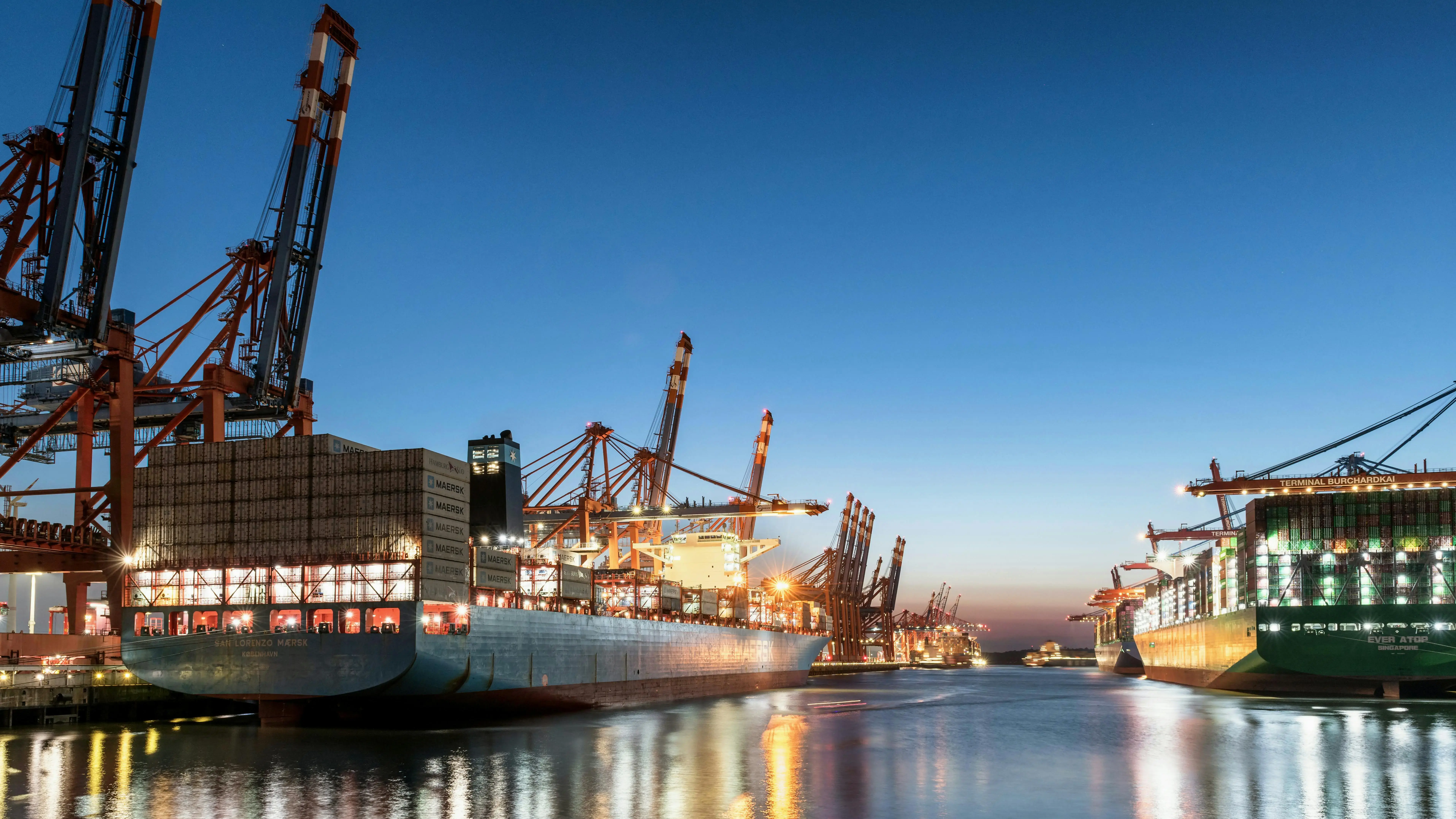

March 30, 2026 — Day 30 marks one month of continuous conflict and delivers the most consequential cluster of developments since the war began on February 28. In a Sunday Financial Times interview published before the markets opened Monday, President Trump explicitly stated his preference to "take the oil in Iran" and confirmed the US is weighing a seizure of Kharg Island. Simultaneously, the conflict crossed a new threshold: the Houthi movement in Yemen formally entered the war over the weekend, firing ballistic missiles at Israel and drones toward Eilat — raising the immediate prospect of a second front on the Red Sea that could disrupt the very Cape of Good Hope alternative routing that global carriers have been using since Hormuz closed.
Iran responded to these escalatory signals with a conditional diplomatic gesture: Trump confirmed Monday that Iran has agreed to allow 20 oil tankers to transit the Strait of Hormuz, which he described as a "gift" in negotiations. On the same day, Iranian forces struck a Kuwaiti power and desalination plant, killing one Indian worker and injuring ten Kuwaiti troops in a separate missile and drone attack. Brent crude surged above $115 per barrel in early Monday trading — a 38 percent single-month gain for March 2026 that would be the largest monthly percentage rise since March 2022 (distinct from the war-total gain of approximately 56 percent from the February 27 pre-war close) — while WTI crossed $100 for the third straight session.
For international vehicle shippers, Day 30 introduces the most dangerous combination of variables yet: a US President publicly stating he wants to seize Iran's primary oil export hub, a new Houthi front threatening the Red Sea alternative, and Brent above $115. The April 6 deadline is now one week away. Here is what happened and what it means for your shipments.
Today's Key Developments: March 30, 2026
Trump: "My Preference Would Be to Take the Oil in Iran" — Kharg Island Seizure Now an Explicit US Policy Option
The most commercially significant development of Day 30 — and possibly of the entire 30-day conflict — is Trump's Financial Times interview published Sunday, in which he explicitly stated he wants to seize Iran's oil and confirmed Kharg Island is a live military option.
According to Time Magazine:
"'Maybe we take Kharg Island, maybe we don't. We have a lot of options,' Trump told the Financial Times in an interview published Sunday. The seizing of the island would involve troops on the ground and would require the U.S. military 'to be there for a while,' Trump added."
The same Time report confirmed Trump's explicit preference: "'To be honest with you, my favourite thing is to take the oil in Iran but some stupid people back in the U.S. say: Why are you doing that? But they're stupid people,' he claimed."
According to CNBC:
"U.S. President Donald Trump expressed that he could 'take the oil in Iran' and capture Iran's key export hub, Kharg Island, as tensions in the Middle East progressed into their fifth week. In an interview with the Financial Times on Sunday, Trump indicated his 'preference would be to take the oil,' drawing parallels to the recent U.S. military action in Venezuela, where the U.S. effectively took control of the country's oil sector following the ousting of its leader, Nicolas Maduro."
According to Al Jazeera:
"United States President Donald Trump has said he wants to 'take the oil in Iran' by seizing its export hub of Kharg Island, a plan being opposed by 'some foolish individuals' back in the U.S. In a Sunday interview with the Financial Times, Trump outlined that his approach towards Iran is distinct from that concerning Venezuela, where the U.S. plans to exert control over the oil sector 'indefinitely.'"
According to Euronews:
"Trump's social media post comes after he said in an interview with the Financial Times on Sunday that he wanted to take Iran's oil."
And from Forbes:
"Trump told FT, 'Maybe we take Kharg Island, maybe we don't. We have a lot of options.'"
This is the most operationally direct statement made by any US president about seizing a foreign nation's primary oil export infrastructure since the 1980s. For 30 days, Kharg Island has been treated as a possibility. As of Day 30, it is an explicit presidential preference — and the April 6 deadline is the next decision point.
Trump Declares "Regime Change Has Happened" in Iran; New Leadership Is "Very Reasonable"
Aboard Air Force One on Sunday, Trump made a separate declaration that adds a critical dimension to the diplomatic picture: he announced that Iran's leadership has already effectively changed and that the US is now negotiating with "very reasonable" new interlocutors.
According to The New York Times:
"'We've experienced regime change,' Mr. Trump remarked to journalists aboard Air Force One. He elaborated, 'The previous regime was obliterated, annihilated; they are all deceased. The current regime is largely gone,' suggesting that Iran has transitioned to what he termed its 'third regime.' The president indicated that American negotiators were engaging with 'a completely different set of individuals,' who he described as having been 'very reasonable.'"
According to Newsweek:
"Trump touts talks with new, 'more reasonable' regime."
Trump's "regime change complete" declaration is not verified by any independent reporting. Iran's government, led by clerics and the Revolutionary Guards, appears firmly in control per the New York Times. The significance for shipping planners is in what it signals about Trump's negotiating posture: he is now framing the war as a completed strategic success — a posture that either precedes a deal announcement or precedes a final escalatory move to force Iranian capitulation before April 6. Neither reading supports a passive planning stance.
Iran Allows 20 Oil Tankers Through Hormuz — Trump Calls It a "Gift"
The single most operationally significant Hormuz development of Day 30 is Trump's confirmation that Iran has agreed to allow 20 oil tankers to transit the Strait, describing it as a diplomatic gesture.
According to Balkan Web:
"US President Donald Trump said Iran had agreed to allow 20 oil tankers to pass through the Strait of Hormuz, describing it as a 'gift' in the negotiations between the parties. According to his statements to international media, Iran had initially allowed a smaller number of ships, but then increased it to 20, which are expected to pass starting Monday and in the coming days."
According to Newsweek:
"Trump mentioned that Iran had consented to permit 20 oil tankers to transit through the Strait of Hormuz starting Monday, as the vital maritime passage remains largely obstructed."
This 20-tanker gesture must be assessed carefully. It is not a Hormuz reopening. It is a limited, unilateral Iranian gesture — almost certainly consisting of friendly-flagged or pre-approved tankers — that falls far short of the full commercial freedom of navigation required for Western carriers to resume Gulf services. War-risk P&I coverage has been withdrawn since March 5 and cannot be restored by a 20-tanker permission that does not come with a formal ceasefire framework. However, it is the most concrete Iranian signal of willingness to negotiate in 30 days of conflict and represents a notable shift from Day 27's "harsh response" posture.
Iran Strikes Kuwait Power and Desalination Plant; One Indian Worker Killed
While Trump was announcing the 20-tanker diplomatic gesture, Iranian forces continued attacking Gulf civilian infrastructure — most lethally, a direct strike on a Kuwaiti power and water facility.
According to Al Jazeera:
"The Ministry of Electricity in Kuwait released a statement on Monday indicating, 'A service building at the power and water desalination facility was struck part of Iranian aggression the State Kuwait, leading to the fatality of an Indian worker and considerable material damage to the site.'"
According to Kurdistan 24:
"An Iranian strike targeting a power station in Kuwait resulted in the death of one Indian worker and caused structural damage to the facility, according to an early Monday statement from the Gulf state's electricity ministry reported by Agence France-Presse."
According to Al Jazeera's correspondent:
"'Just last night, the Defence Ministry reported the detection of 14 missiles and 12 drones in Kuwaiti airspace, with many of those drones targeting a military installation, resulting in injuries to 10 servicemen,' he stated. 'The injured personnel were subsequently transported to the hospital for treatment.'"
The Kuwait strike illustrates the central operational contradiction of Day 30: Iran is simultaneously offering a 20-tanker Hormuz gesture and attacking civilian infrastructure in a GCC state with 14 missiles and 12 drones in a single overnight salvo. For shipping planners, this dual posture signals that Iran is using limited diplomatic concessions and continued military pressure simultaneously — a classic negotiating-under-fire pattern that does not indicate an imminent ceasefire.
Houthis Formally Enter the War: Ballistic Missiles at Israel, Drones at Eilat, Red Sea Threat Returns
The most structurally important new development for global shipping since Hormuz closed is the Houthi movement's formal entry into the conflict over the weekend — threatening the Cape of Good Hope rerouting that all major carriers have been relying on since the Strait closed.
According to Wikipedia's verified entry on 2026 Houthi strikes on Israel:
"On 28 March, the Houthi movement launched a ballistic missile attack towards Israel and triggering air raid sirens in Beersheba. The missile was intercepted and no casualties were reported. They said that they launched 'a salvo of ballistic missiles' and vowed to continue doing so 'until the aggression against all resistance fronts ceases,' in reference to the Iran war and the 2026 Lebanon war against Hezbollah."
According to Xinhua:
"The Israeli Defense Forces said on Monday its air force intercepted two drones launched by Houthi forces in Yemen. The drones triggered air raid sirens in the southern city of Eilat on the Red Sea."
According to JNS:
"The Israel Defense Forces intercepted two drones launched overnight Sunday by Houthi terrorists in Yemen. The Iranian-backed Houthis entered the conflict in the early hours of Saturday, firing a ballistic missile at Beersheba, exactly one month after the IDF and U.S. forces began a preemptive strike on Iran on Feb. 28."
According to Fortune:
"Saturday's assault calls into question whether the Houthis will target commercial shipping in the Red Sea corridor, as they did during the Israel-Hamas war. About $1 trillion worth of goods passed through the Red Sea annually before the war. Any attacks on Red Sea shipping routes would disrupt traffic through the Suez Canal, a crucial waterway for vessels bearing oil, gas and sundry goods to the Mediterranean Sea. About 10% of global maritime trade — including 40% of container ship traffic — passes through the canal each year."
The same Fortune report noted the Houthi threat also complicates US naval carrier positioning: "The Houthis' involvement would complicate the deployment of the USS Gerald R. Ford, the aircraft carrier that sailed to Crete for repairs then to Split, Croatia, where it arrived on Saturday. Sending the carrier to the Red Sea could draw it into similar attacks as experienced by the USS Dwight D. Eisenhower in 2024 and the USS Harry S. Truman in the 2025 campaign against the Houthis."
According to Politics Today:
"Yemen's Iran-aligned Houthi movement entered the war over the weekend, raising fears of a broader regional escalation."
The Houthi entry is the single most disruptive new shipping variable of the entire 30-day conflict. From November 2023 to January 2025, Houthi attacks on Red Sea shipping forced the same rerouting via Cape of Good Hope that carriers are currently using as the Hormuz alternative. If the Houthis resume commercial vessel targeting in the Red Sea, the Cape rerouting is itself at risk — leaving no viable alternative route for Asia-Europe or Asia-US East Coast trades. For context on how this scenario played out in 2023–2025, see West Coast Shipping's Suez Canal Disruption overview.
US Has Over 50,000 Troops in West Asia; 10,000 More Under Consideration
The military buildup reached a new threshold over the weekend, with confirmed total US troop presence now exceeding 50,000 across the region.
According to WION:
"The Iran conflict is rapidly escalating as the United States now has more than 50,000 troops deployed across West Asia amid ongoing hostilities with Tehran. U.S. President Donald Trump has made controversial remarks saying that the U.S. 'could take Kharg Island easily' — a strategic Iranian oil export hub — as part of military options to pressure Iran."
According to Arab News:
"The island handles 90 percent of Iran's oil exports and seizing it would give the United States the ability to severely disrupt Iran's energy."
With 50,000 troops now deployed and Trump publicly stating he wants to seize Kharg Island, the April 6 deadline has transitioned from a diplomatic soft deadline into a hard military decision point. The infrastructure for a Kharg Island operation is either already in place or days from completion.
Brent Surges Above $115; WTI Crosses $100; Record Monthly Gain on Track
Oil markets opened the new month with their most emphatic pricing statement of the entire conflict.
According to The Middle East Insider:
"Brent crude hit $115.35 (+2.47%) and WTI reached $101.25 (+1.62%) on March 30 as the Iran conflict enters its second month. Record monthly gain incoming — March is on track for a +38% single-month gain for March 2026 alone, which would be the largest single-month percentage gain since March 2022."
The $115.35 intraday figure cited by The Middle East Insider is consistent with CNBC's confirmed early Asian trading high of $115.86 and Trading Economics' settlement figure of $114.88, bracketing the intraday range. The same Middle East Insider report confirmed the structural insurance cost shift now embedded in all Gulf tanker routes: "The cost of insuring a single VLCC voyage through Hormuz has risen from approximately $180,000 pre-conflict to over $800,000 today — a cost that feeds directly into the landed price of crude in Asia and Europe."
According to Turkiye Today:
"Brent crude oil surged more than 3 percent at the start of the week, breaking above $115 a barrel, as the now five-week-old war involving Iran showed no signs of a near-term resolution and investors braced for a prolonged disruption to global energy flows. The benchmark settled at $112.57 on Friday before extending gains Monday, marking its highest level since July 2022."
The same report cited Goldman Sachs: "Goldman Sachs estimates the conflict has added between $14 and $18 per barrel in geopolitical risk premium to crude prices."
According to CNBC:
"Brent crude futures prices rose 36% from February 27 — the last day of trading before the war started — through March 27, when they traded above $113 per barrel. In contrast, the Dubai price, which tracks physical oil delivery from select Middle Eastern sellers, surged 76%, reaching $126, more than double the paper price, and has been particularly volatile."
According to Newsweek:
"The spot price of Brent crude oil was around $115 on Monday, up nearly 60 percent since the start of the war."
This war-total figure of approximately 56–60 percent measures the gain from the February 27 pre-war close of approximately $73, and is separate from the 38 percent single-month gain for March 2026 referenced in the lede.
The conflict's oil price trajectory is now: pre-war $73 → March 9 spike to $120 → March 20 intraday peak $119.13 → March 25 ceasefire-hope low $97 → March 27 $107–108 → March 30 above $115. The conflict has established a new structural floor well above $100.
UN Security Council Meeting Scheduled; Iran Confirmed Three Ships Turned Away
Iran confirmed directly that three ships of different nationalities had been turned away from the Strait of Hormuz, per ITV News, which also confirmed "Israel launches attacks in the 'heart of Tehran' and in Beirut on Friday morning ahead of planned UN Security Council meeting."
The UN Security Council meeting adds a multilateral diplomatic dimension that has been largely absent from the conflict's first four weeks, which have been dominated by US-Iran bilateral channels via Pakistan and Egypt. Whether Russia or China will veto any Security Council resolution on Hormuz freedom of navigation is the key variable in that forum's potential impact.
Strait of Hormuz Status: Day 30
Partially open under Iranian discretion for 20 pre-approved tankers. Western-affiliated commercial shipping remains excluded. Houthis now add a second front threatening Red Sea alternative routing.
Updated status:
-
Western-affiliated commercial vessels: Zero transits. War-risk P&I coverage withdrawn since March 5. All major carrier Gulf booking suspensions remain in effect.
-
20-tanker Iranian gesture: Trump confirmed Iran agreed to allow 20 oil tankers to pass beginning Monday. These are almost certainly pre-approved, friendly-flagged vessels — not a general commercial reopening. No Western carrier has announced any resumption of Gulf services.
-
IRGC enforcement posture: Still operative. Day 27's "harsh response" warning for all vessels tied to US/Israeli ally nations has not been formally rescinded. The 20-tanker arrangement does not constitute a restoration of freedom of navigation.
-
VLCC war-risk insurance per voyage: Up from $180,000 pre-conflict to over $800,000 — making the effective all-in cost of any Hormuz transit commercially prohibitive for Western operators even if P&I coverage were reinstated.
-
Vessels stranded west of the Strait: Approximately 3,200.
-
Seafarers stranded: Approximately 20,000.
-
Force majeure declarations in effect: QatarEnergy, Kuwait oil companies, Bahrain oil companies.
-
New front — Red Sea/Houthis: Two ballistic missiles and multiple drones fired at Israel since March 28. No commercial vessel targeting confirmed as of Day 30, but Houthis have explicitly warned they are "prepared to act" as the conflict widens.
-
Next hard deadline: April 6, 8 p.m. Eastern — Trump's energy facility strike extension expires.
What This Means for Container and Vehicle Shipping
The 20-Tanker Arrangement: What It Is and What It Is Not
Iran's agreement to allow 20 oil tankers through Hormuz is the most significant Hormuz-related diplomatic development in 30 days. It is not, however, a commercial shipping reopening, and it should not be treated as one in any operational planning.
The 20-tanker figure represents a specific, discretionary Iranian permission — almost certainly limited to crude oil tankers from non-Western, non-hostile-flagged operators. It is the operational equivalent of the bilateral Larak corridor that existed for the first three weeks of the conflict, now being used as a diplomatic signal rather than a commercial framework.
For Western vehicle shippers and container carriers, the practical changes from Day 30's 20-tanker announcement are zero: war-risk coverage is still withdrawn, Gulf bookings are still suspended, and the IRGC's expanded interdiction warning covering all vessels tied to US/Israeli ally nations is still operative. However, the 20-tanker arrangement does signal that Iran is using Hormuz access as a negotiating chip in active discussions — which means the diplomatic situation is more fluid than at any point since Day 25.
The Houthi Entry: Why This Is the Most Dangerous New Development for Shipping Planners
The Houthi entry into the conflict is not a Middle East problem. It is a global shipping problem, and it must be treated as the highest-priority new risk variable of the entire conflict for shippers who are not moving cargo through the Gulf at all.
The logic is direct: since Hormuz closed on March 5, every major carrier has been routing Asia-Europe and Middle East-Europe trades via the Cape of Good Hope. That added 10 to 14 days and $800 to $1,200 per FEU in additional costs, but it worked. There was a reliable alternative.
The Houthi entry threatens to close that alternative. From November 2023 to January 2025, Houthi attacks forced the entire industry onto the same Cape rerouting. If the Houthis resume commercial vessel targeting in the Red Sea — as they have explicitly threatened to do "if the conflict continues to widen" — carriers lose both their primary route (Hormuz) and their alternative route (Red Sea/Suez) simultaneously.
There is no viable third route at scale. The Cape of Good Hope and the Suez Canal together handle virtually all East-West container trade. A simultaneous closure of both would produce rate spikes and space shortages that would dwarf even the current elevated levels. The conflict's Day 28 Houthi ballistic missile at Beersheba and Day 30's two drone intercepts over Eilat are early warning signals, not isolated incidents. For background on how the 2023–2025 Red Sea crisis reshaped vehicle shipping specifically, see West Coast Shipping's Suez Canal and Red Sea Disruption overview.
Kharg Island: From Military Option to Presidential Preference
Trump's Financial Times statement moved Kharg Island from background planning to explicit presidential preference in a single interview. For shipping planners, this shifts the risk calculation for the April 6 deadline materially.
A US military seizure of Kharg Island would have the following direct effects on shipping:
-
Immediate Iranian retaliation across all Gulf energy and port infrastructure. Iran's stated doctrine is to respond to any Kharg operation with strikes on all Gulf state energy facilities. Every GCC port — Jebel Ali, Dammam, Jubail, Shuaiba, Ruwais, Sohar — becomes an active target.
-
Brent crude spike to $120–$130 or above. Kharg handles 90 percent of Iran's crude exports. Its seizure or destruction would remove approximately 3 million barrels per day from global supply immediately. Goldman Sachs' current geopolitical premium estimate of $14 to $18 per barrel would likely double.
-
Indefinite disruption timeline. Trump confirmed a Kharg seizure would require US troops "to be there for a while." This is not a 30-day operation — it is an extended military occupation that would keep the conflict in active-phase status through at minimum Q3 2026.
-
Freight rate implications. Asia-Europe rates are currently at $3,800 to $4,200 per FEU on Cape routing. A Kharg seizure scenario that triggers GCC port disruptions could produce a complete collapse of Gulf-origin and Gulf-destination cargo movements, with rates potentially reaching or exceeding the conflict's early peaks.
The April 6 deadline is the next binary decision point. If Iran does not present a credible negotiating framework before April 6, and Trump chooses escalation over a third extension, Kharg Island is now explicitly the stated preference. For the full context of how the military buildup has evolved since the war began, see West Coast Shipping's Iran War Day 23 analysis.
Oil Above $115: The Cape Routing Freight Budget Has Changed Again
With Brent above $115 on Monday morning — up from $107–$108 on Day 27 and up approximately 58 percent from the pre-war $73 baseline — every freight budget built on any pre-April oil price assumption is now outdated.
Current key figures as of March 30:
-
Brent crude: above $115 per barrel Monday morning — highest level since July 2022; intraday range $114.88 to $115.86 per confirmed sources
-
WTI: $101.25 per barrel — above $100 for the third consecutive session
-
Dubai physical crude: $126 per barrel — 76 percent above pre-war levels, per CNBC
-
VLCC war-risk insurance per Hormuz voyage: approximately $800,000, up from $180,000 pre-conflict
-
Asia-Europe Cape routing rates: approximately $3,800 to $4,200 per FEU; watch for upward revision given Brent above $115
-
Asia to US West Coast rates: approximately $3,100 to $3,400 per FEU
-
Additional Cape transit time versus pre-conflict baselines: 10 to 14 days standard, 17 days or more for some lanes
-
March 2026 single-month Brent gain: approximately 38 percent — on track for largest monthly gain since March 2022
-
War-total Brent gain from February 27 pre-war close: approximately 56–60 percent
All freight budgets and carrier quote validity windows should be reviewed immediately against the current Brent level. Carrier fuel surcharges are indexed to bunker prices that closely track crude, and any surcharge schedules set before late March are almost certainly below current fuel cost reality. For more background on how oil price movements are translating into specific car shipping cost impacts, see West Coast Shipping's Iran War Shipping Disruption overview.
What to Watch Over the Coming Days
-
April 6 deadline — one week away. The next and most consequential hard deadline of the conflict. Trump's explicit Kharg Island preference, combined with 50,000+ US troops in the region, means this deadline is now backed by the largest credible military threat of the entire conflict. Monitor for any confirmed Iran-US direct or indirect negotiating contact before April 3–4. Silence by April 4 would be an operationally bearish signal.
-
The 20-tanker Hormuz transit. Watch whether the 20 Iranian-permitted tankers actually transit starting Monday, which flags they carry, and whether they pass without incident. A successful transit followed by Iran expanding the permitted number would be the first concrete evidence of a diplomatic track producing Hormuz movement. A failed or blocked transit would confirm Iran's gesture was performative.
-
Houthi commercial vessel targeting. The Houthis have fired at Israel but have not yet targeted commercial vessels in this conflict. The question is whether they escalate to Red Sea shipping as they did in 2023–2025. Any confirmed Houthi attack on a commercial vessel in the Red Sea triggers a dual-route closure scenario. Monitor Houthi statements and Red Sea vessel movements daily.
-
Kharg Island military positioning. With 50,000+ US troops in the region and Trump's explicit seizure preference stated publicly, the operational question is whether the military positioning around Kharg is complete. Any reports of US naval or airborne forces moving to Kharg-proximity positions in the coming days would be a direct pre-escalation indicator.
-
Iran's formal response to the "regime change" declaration. Trump's "very reasonable new leadership" framing has not been confirmed by any Iranian official. Iran's formal response — whether they deny it, ignore it, or partially validate it — will determine whether the 20-tanker gesture is the beginning of a real negotiating track or a tactical move to delay April 6 escalation.
-
G7 and UN Security Council follow-up. Last Friday's G7 foreign ministers meeting and the UN Security Council session produced no confirmed joint statement. Watch for any coordinated multilateral action on freedom of navigation or Iranian civilian infrastructure targeting in the coming week.
Practical Guidance for Vehicle Shippers
For all shipments — updated April 6 countdown guidance:
The conflict has now been active for exactly one month. The April 6 deadline is the single most important planning date of the next 10 days. Here is how to plan around both scenarios:
-
Scenario A — Iran presents a negotiating framework before April 6: A preliminary deal, even a ceasefire-in-principle without Hormuz specifics, would trigger an oil price correction toward $100–$105 and a 7–14 day P&I coverage reinstatement process. Western carrier Gulf service resumption would be earliest mid-to-late April. Rate normalization would take 4–8 weeks after Hormuz physically reopens. Plan for current elevated rates through at minimum late April under this scenario.
-
Scenario B — April 6 produces a US escalation toward Kharg Island: Brent spikes to $120–$130+. GCC port infrastructure becomes active target for Iranian retaliation. Cape routing rates increase further. Houthi activation of Red Sea targeting becomes more likely as the conflict widens. Extend your operational planning horizon to Q3 2026 under this scenario and immediately review all open freight contracts and booking validity periods.
For Middle East shipments:
-
Gulf port operations remain suspended or severely restricted across all UAE, Kuwait, Qatar, Iraq, Bahrain, and parts of Saudi Arabia and Oman ports.
-
Iranian strikes on Kuwaiti civilian infrastructure on Day 30 — 14 missiles and 12 drones in a single overnight salvo — confirm that Gulf port approaches remain active conflict zones regardless of diplomatic gestures.
For Asia-Europe and Asia-US shipments:
-
The Houthi entry into the conflict means Cape of Good Hope routing cannot be assumed to remain available indefinitely. Build contingency plans for a dual-route closure scenario.
-
With Brent above $115 and continuing to climb, all freight budgets built before late March need immediate revision. Current fuel surcharges from carriers likely do not reflect current Brent levels.
For all international shipments:
-
Book early. Space demand on Cape routing continues to rise as the conflict extends with no resolution timeline.
-
Build a minimum 3 to 5 week buffer into all delivery commitments, and notify counterparties now if April or May delivery windows are at risk.
For real-time guidance on Cape routing availability and current rates, see West Coast Shipping's Iran War Day 27 analysis and contact us directly for a current quote.
Disclaimer: This article is provided by West Coast Shipping as general informational content based on publicly available reporting as of March 30, 2026. The situation in the Middle East is developing rapidly and details may change. This is not legal, financial, customs, or tax advice. All shipping routes, carrier policies, port statuses, and cost figures referenced are illustrative and based on publicly available information at the time of writing. Actual conditions, rates, and timelines may differ. West Coast Shipping provides logistics coordination services only; we do not provide customs brokerage, legal, or financial advisory services. Before making any booking decisions, contact your logistics provider directly for the most current information.
Calculate Your International Car Shipping Costs
Thirty days in, Brent is above $115, the Houthis have entered the war, Trump has publicly stated he wants to seize Iran's oil, and the April 6 deadline is one week away. The shipping environment is more complex and more volatile than at any point since the conflict began. West Coast Shipping tracks carrier decisions, port statuses, route availability, and freight rates every day and can provide a current quote built around what is actually moving right now — not what was moving last week.

Iran War Day 27: Trump Delays April 6, IRGC Turns Back 3 Ships
Iran War Day 26: US Demands Iran Accept Defeat, GCC Red Lines