Mercury Marauder Performance: 1963–2004 Through the Decades
Mercury spent much of its life positioned between Ford and Lincoln, but from the early 1960s onward it developed a quiet performance thread that still resonates with enthusiasts. The Marauder nameplate bookends that story: early‑1960s full‑size fastbacks built with NASCAR in mind, and early‑2000s V8 sedans trying to revive old‑school American muscle in a modern package. Between those poles, Mercury moved through big‑block performance, mid‑size muscle, and then a long quiet period before its final performance experiment.
For international buyers scanning US auctions and private listings, understanding this Marauder arc is useful when deciding which cars to pursue, how to value them relative to better‑known Fords, and what it will take to ship them safely with services such as West Coast Shipping’s international car shipping.
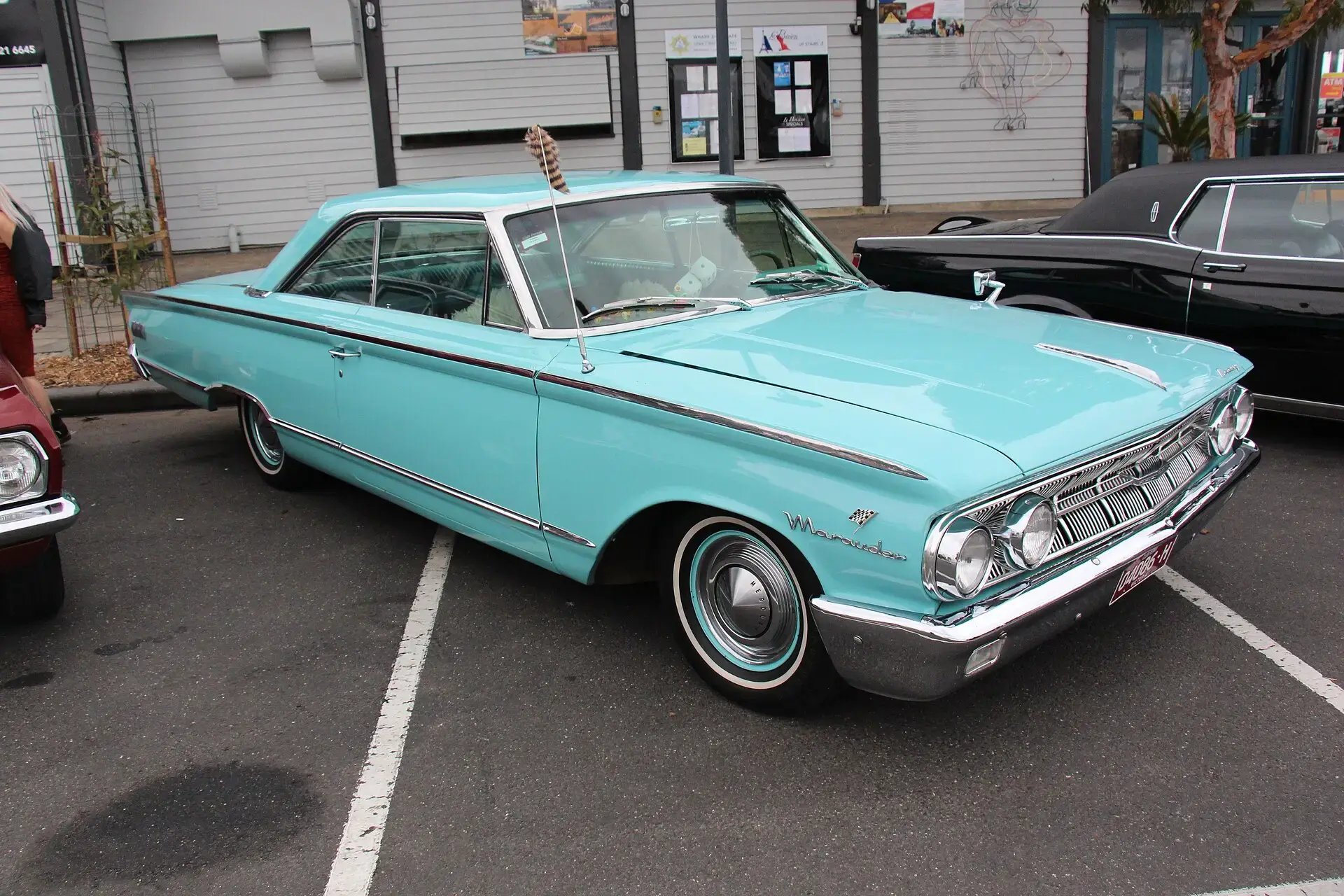
1963–1965: Marauder as Full-Size Aerodynamic Performance Flagship

Fastback Rooflines and Big-Block Power
In the early 1960s, Mercury introduced the Marauder name on full‑size models that combined cleaner rooflines with serious V8 power. Contemporary accounts and factory literature commonly describe these cars as featuring:
-
Fastback‑style “breezeway‑delete” rooflines designed to reduce aerodynamic drag at higher speeds.
-
Big‑block V8 options, including 390 and 427 cubic‑inch engines in various performance configurations.
-
Interiors and trim levels that underscored Mercury’s role as a step up from Ford in comfort and image.
The aerodynamic focus aligned with Mercury’s participation in stock‑car racing, where cleaner airflow could translate into meaningful speed and stability advantages on long ovals.
Where These Early Marauders Sit Today
In the current collector landscape, early‑1960s Marauders tend to appeal to:
-
Enthusiasts who appreciate full‑size American performance with period NASCAR flavor.
-
Buyers who prefer a more understated look than some of the flashier muscle cars of the late 1960s and early 1970s.
-
Collectors looking for something different to park alongside more predictable Chevelles, Chargers, and Torinos.
Because production volumes were modest compared with mainstream Ford models, clean Marauder examples can be relatively hard to find—especially outside the US—making them interesting candidates for cross‑border sourcing and shipping.
Late 1960s–1970s: From Full-Size Muscle to a Quieter Role

Transition to Mid-Size Muscle and Cousins
As the muscle‑car boom took hold, Mercury’s performance spotlight shifted toward models like the Cyclone and, later, the Cougar, which leveraged mid‑size and pony‑car platforms rather than full‑size sedans and coupes. In this environment:
-
The Marauder name quietly faded from center stage, even as Mercury’s broader lineup continued to share mechanical DNA with high‑performance Fords.
-
Buyers seeking overt mid‑size muscle gravitated toward Cyclones, Montegos, and their Ford equivalents, while Marauders were more often seen as large, comfortable cruisers with strong available powertrains.
From a performance‑history standpoint, this period underscores how the Marauder nameplate functioned: it launched Mercury’s full‑size performance identity, then ceded much of the muscle spotlight to other models as tastes shifted.
Impact on Today’s Market
The relative scarcity of high‑profile, late‑1960s Marauder‑branded performance models means that:
-
Early Marauders occupy a unique, somewhat niche position for collectors who focus on full‑size 1960s cars.
-
Attention in the 1970s performance space centers more on Cyclones and similar models, with Marauder heritage serving as context rather than the headline.
This complexity makes solid documentation—build sheets, option codes, and period literature—especially important when evaluating any car carrying performance branding from this era.
2003–2004: The Marauder Nameplate Returns

Modern Interpretation of a Classic Idea
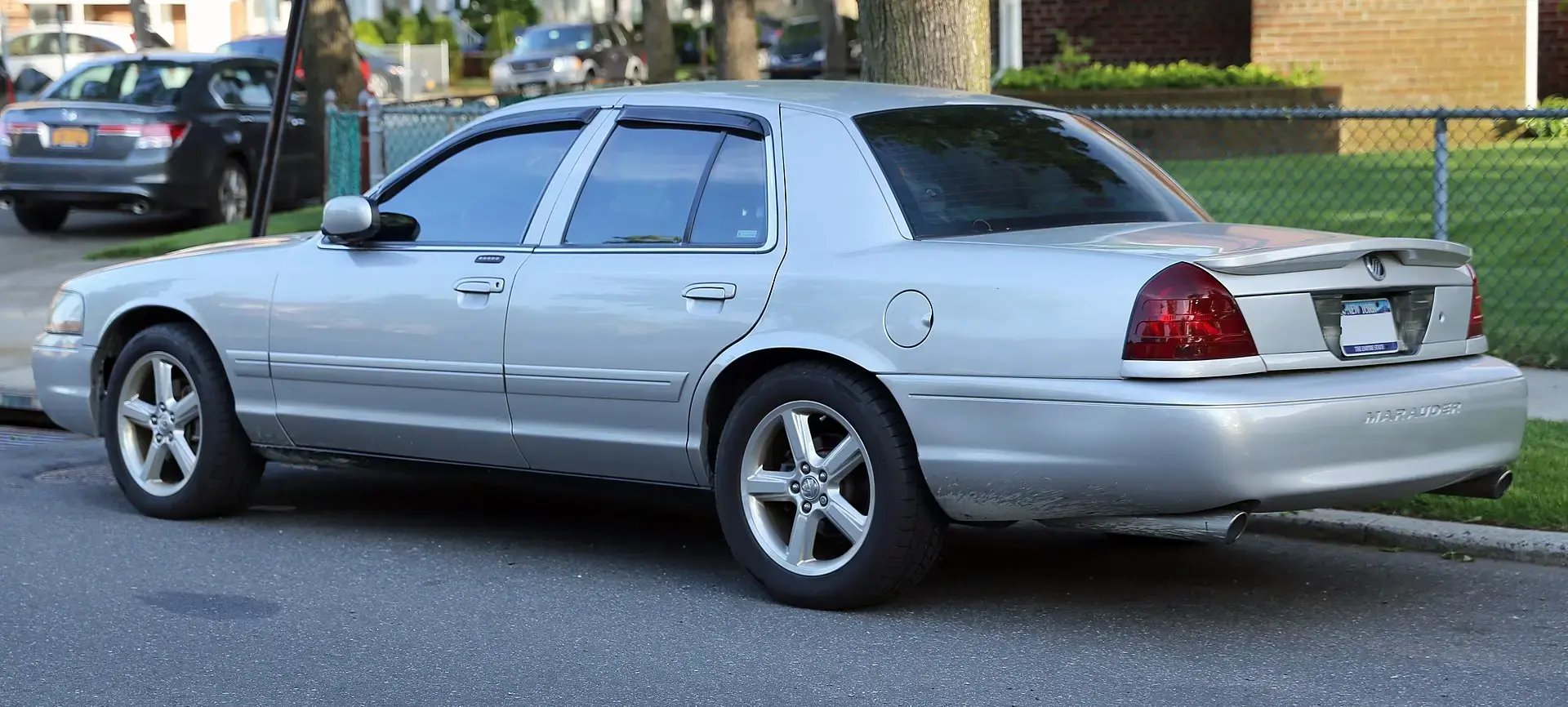
In the early 2000s, Mercury reintroduced the Marauder badge on a performance‑oriented sedan based on the Panther‑platform Grand Marquis/Crown Victoria architecture. The 2003–2004 Marauder is widely described as combining:
-
A 4.6‑liter DOHC V8 (similar to engines used in Ford’s contemporary performance sedans), tuned to produce more power than the standard Grand Marquis.
-
Uprated suspension components, larger brakes, and performance‑oriented wheel and tire packages.
-
Monochrome exterior treatments—black or dark colors, body‑color trim, and subtle badging—that gave the car a sleeper‑style look.
The goal was to offer a modern, four‑door interpretation of Mercury’s performance heritage: rear‑wheel drive, V8 power, and understated presence.
Why the 2003–2004 Marauder Matters to Collectors
Although the modern Marauder had a short production run, it has attracted a dedicated following for several reasons:
-
It represents one of the last V8, body‑on‑frame, rear‑wheel‑drive American sedans with a factory performance focus.
-
Production volumes were limited, and the model was only offered for two model years.
-
Its connection to the Police Interceptor and other Panther‑platform cars gives it a reputation for durability and straightforward mechanical service.
From a global perspective, 2003–2004 Marauders offer something unusual: a relatively recent car that feels old‑school in layout, with enough age to fit into certain countries’ “modern classic” frameworks, but new enough to be comfortable for regular use.
Comparing Early and Late Marauders: Themes and Differences
Shared Themes Across Decades
Despite the time gap, there are several conceptual through‑lines between early‑1960s and early‑2000s Marauders:
-
V8, rear‑wheel‑drive layout – Both eras kept the fundamental American performance recipe.
-
Understated performance positioning – Marauders were not about loud graphics; they offered power and speed in relatively subtle wrappers.
-
Positioning above Ford equivalents – As with most Mercurys, Marauders sat a half step above Fords in trim and perceived status.
These shared elements make the nameplate attractive to enthusiasts who like performance that does not shout—whether that means a 1963 fastback or a 2003 sedan.
Key Differences to Consider
At the same time, there are important differences:
-
Purpose and context – Early Marauders were tied closely to stock‑car racing and high‑speed promotional runs; late Marauders were aimed more at street use and nostalgia.
-
Technology and parts availability – Early cars rely on big‑block carbureted engines and period‑correct parts; late cars use modern electronics, fuel injection, and widely available drivetrain components.
-
Import and compliance – Depending on destination country, early Marauders may fit classic‑oriented import frameworks, while 2003–2004 Marauders can fall under more recent safety and emissions rules unless they cross certain age thresholds.
These differences influence not only which Marauder appeals to a given buyer, but also how straightforward it will be to register and maintain the car in a new country.
International Appeal: Why Enthusiasts Abroad Care About Marauders
Full-Size Americana with a Twist
Outside the US, full‑size American cars already stand out for their sheer presence. Adding the Marauder element—especially on early cars—brings:
-
A direct connection to 1960s American stock‑car culture.
-
Styling that is distinct from better‑known Chevrolet and Ford models, giving collectors a way to differentiate their garages.
-
A conversation piece at shows and events, where the Mercury badge often prompts questions.
For some overseas enthusiasts, this combination makes a Marauder a more interesting choice than yet another Chevelle or Charger, particularly when building a curated collection.
Modern Marauder as a Global Curiosity
The 2003–2004 Marauder occupies a different niche:
-
It offers four‑door practicality and comfort for markets where big sedans still have fans.
-
It delivers a type of driving experience (V8, rear‑wheel‑drive, body‑on‑frame) that is increasingly rare in newer vehicles.
-
In some countries, its age and production period position it on the edge of “modern classic” status, which can influence import pathways and collector interest.
As global classic‑car flows have increased, these factors have made Marauders more visible in international auction results and private sales.
Shipping a Marauder Internationally: Practical Considerations
Compliance and Eligibility
Before committing to a Marauder purchase with export in mind:
-
Check age‑based import rules – Many countries differentiate between vehicles older than 25 or 30 years and newer vehicles for duties, emissions, and safety requirements. Early‑1960s Marauders often fall squarely into classic frameworks; 2003–2004 Marauders may or may not, depending on destination and current year.
-
Clarify emissions and modifications – Catalytic converters, exhaust systems, and other emissions‑related components can be critical for newer vehicles. For older cars, noise limits, lighting, and other equipment standards may still apply.
-
Confirm paperwork – Titles (or local equivalents), bills of sale, and any period documentation or appraisal reports should be in order before the car enters the export pipeline.
All eligibility and compliance questions must be addressed by licensed customs brokers and local registration specialists in the destination country; high‑level age rules are useful context but not a substitute for professional advice.
Condition and Restoration Level
When evaluating Marauders for international shipping:
-
Early Marauders (1960s)
-
Inspect for rust in floors, frames, and structural areas, especially on cars that have lived in harsh climates.
-
Pay attention to originality if that matters to you: correct engine codes, trim, interior materials, and paint details can significantly affect value.
-
Consider whether major restoration work should be done before shipping (to ensure safe transport and reduce immediate work abroad) or after arrival (if local labor and parts are easier to arrange).
-
-
2003–2004 Marauders
-
Review maintenance records for common wear items: timing components, suspension bushings, brakes, and cooling systems.
-
Check for electrical issues and modifications to the engine management system, particularly on tuned or heavily modified cars.
-
Look for signs of fleet or hard use if the car started life in a law‑enforcement or livery context.
-
Good documentation and pre‑purchase inspections are especially important when the car will be leaving the country where most specialist support exists.
Shipping Method, Transit Time, and Cost
Once feasibility is confirmed, logistics planning with a carrier such as West Coast Shipping typically covers:
-
Choice of shipping method
-
Container shipping is the default for classic and performance cars, providing enclosed protection during transit.
-
Air freight is available for time‑sensitive or high‑value moves but at a significantly higher cost.
-
-
Shared vs. dedicated containers
-
Shared containers allow multiple customers’ vehicles to travel together, reducing per‑unit cost.
-
Dedicated containers give a single client full control over layout and contents, useful for collections or multi‑vehicle shipments.
-
-
Transit times and budgeting
-
Depending on origin and destination, container transit typically ranges from about 2–3 weeks to many European ports to 4–8 weeks for Asia‑Pacific and other long routes, plus time for loading, consolidation, and customs.
-
The total cost includes ocean freight, port and handling charges, domestic transport to the export facility, and any additional services arranged with the logistics provider.
-
West Coast Shipping’s international car shipping page explains how these variables fit together and how the company structures services for classic, performance, and specialty vehicles.
Important Disclaimer and Information Limits
The information in this article is based on publicly available sources, enthusiast literature, and general industry practices as of early 2026. Specific details about Mercury Marauder models—including exact production numbers, option availability, and technical specifications—can vary between sources and may be clarified as new documentation appears.
Before making any purchase, restoration, or export/import decision involving Mercury Marauders or related performance models:
- Always verify technical and historical information with factory documentation, build reports, marque registries, and recognized specialist experts. Summarized narratives are not a substitute for vehicle‑specific research when originality, specification correctness, or provenance materially affect value.
- Always confirm current customs, tax, and registration requirements directly with relevant authorities or through licensed customs brokers and registration professionals in both origin and destination countries. Vehicle import rules, duty structures, emissions expectations, and safety regulations can change without notice and may be applied differently on a case‑by‑case basis.
- Do not treat this article as investment advice. Collectible car markets are volatile, and values for Mercury performance cars can rise, fall, or stagnate based on economic conditions, changing tastes, and regulatory shifts. Any references to “demand,” “collector attention,” or “value trends” are descriptive only and do not guarantee future prices or saleability.
- Treat all regulatory and financial discussions as general context, not as legal, tax, or financial advice. Only qualified professionals with up‑to‑date access to local laws and market data can provide guidance specific to your situation.
West Coast Shipping provides logistics services—vehicle collection, export handling, container loading, ocean freight, and port coordination—but does not interpret or apply customs or tax law and does not provide legal or financial advice. You remain solely responsible for your own due diligence and professional consultation.
For a broader view of how Marauders fit alongside the Cyclone Spoiler II and current market dynamics, see the main article on Mercury muscle cars, Cyclone Spoiler II, Marauders, and the market’s renewed interest.
Get a Mercury Marauder Shipping Quote
If you are considering buying, relocating, or selling a Mercury Marauder across borders—whether it is a 1963 full‑size fastback or a 2004 V8 sedan—accurate logistics planning is essential.
You May Also Like
These Related Stories

Mercury Muscle Cars: Cyclone Spoiler II, Marauders & Market Rise

Why Mercury Muscle Cars Are Finally Getting Collector Attention

-093789-edited.png?width=220&height=79&name=wcs_final_logo_(1)-093789-edited.png)