

For years, Mercury muscle cars sat in the shadow of their Ford, Chevrolet, and Mopar counterparts. While Cyclones, Cougars, and Marauders shared hardware and performance targets with more famous siblings, they rarely headlined auctions or graced posters. That is changing. As high‑profile muscle cars climb in price and global collectors look for something more distinctive, Mercury’s once‑overlooked performance models are finally getting a second look.
This article explains the forces behind that shift: how market dynamics, nostalgia, and global shipping have combined to bring Mercury muscle into the spotlight, and what that means if you are considering buying or moving one across borders using services like West Coast Shipping’s international car shipping. For a full overview of the Cyclone Spoiler II, Marauders, and broader Mercury performance story, see the main guide on Mercury muscle cars, Cyclone Spoiler II, Marauders, and the market’s renewed interest.
The “Second-Tier” Muscle Effect: When Headliners Get Too Expensive
Pricing Pushes Collectors to Look Sideways
Classic and collector car trend reports over the last several years consistently show that:
-
Top‑tier muscle cars—Hemi ‘Cudas, LS6 Chevelles, Boss Mustangs, and the like—have reached price levels that put them out of reach for many enthusiasts.
-
Even mid‑tier icons have seen substantial appreciation, particularly in concours‑level condition or with rare option combinations.
-
Buyers who still want period V8 muscle and genuine performance are increasingly scanning for models that share the era’s character without the headline pricing.
Mercury muscle cars fit neatly into this “second‑tier” category:
-
They share fundamental engineering with Ford products: engines, transmissions, and many chassis components.
-
They deliver authentic period performance and styling.
-
Historically, they have traded at a discount to equivalent Fords, Chevrolets, and Mopars.
As global buyers expand searches beyond the obvious names, Mercury is benefiting from a simple reality: once traditional heroes feel too expensive, knowledgeable collectors look to the next layer down.
Undervalued Relative to Shared Hardware
Because Mercury was Ford’s upmarket division, many of its muscle‑era models ride on the same platforms as more famous Fords:
-
Cyclones share DNA with Torinos and Fairlanes.
-
Cougars overlap with Mustangs.
-
Marauders intersect with full‑size Ford performance offerings.
For collectors and restorers, that shared hardware has practical advantages:
-
Parts availability is better than for truly obscure marques.
-
Mechanical servicing is more straightforward in many markets.
-
Knowledge and documentation often transfer, even if the Mercury badge is less common.
This makes Mercury attractiveness more than just a “cheap alternative” story; it is about having access to a familiar mechanical ecosystem in a less common wrapper.
Nostalgia and Generational Shift: Mercury Memories Come Due
The Buyers Who Grew Up with Mercury Are Now Active
Collector demand often follows a predictable pattern: people want the cars they remember from their formative years. For Mercury:
-
Many drivers in North America and Canada grew up with Mercury badges in their neighborhoods—Cougars, Montegos, Grand Marquis, and occasional Marauders—framing Mercury as a slightly more upscale, less obvious choice.
-
Those same enthusiasts are now in income brackets that support classic‑car purchases, and nostalgia is pushing them toward the cars they remember seeing, not just the ones that dominated magazine covers.
Online communities and classifieds have made it easier for this nostalgia to translate into actual purchases. As more enthusiasts search specifically for “Mercury muscle” instead of generic “American muscle,” interest naturally rises.
Media, Registries, and Social Amplification
Over the last decade, media and community infrastructure around Mercury performance has improved:
-
Dedicated registries for models like the Cyclone Spoiler II and various Marauders have made it easier to decode cars and verify authenticity.
-
Articles and videos focused on “forgotten” or “underrated” muscle cars frequently highlight Mercury nameplates, pushing them into the awareness of broader audiences.
-
Social media and online forums allow owners to share detailed restorations, build histories, and cross‑border stories, reinforcing Mercury’s legitimacy as a collector brand.
As a result, the old perception of Mercury as “just a badge‑engineered Ford” is slowly giving way to an appreciation of its unique styling, trim, and motorsport links.
Homologation, Aero Cars, and Niche Stories That Sell
Cyclone Spoiler II and the Aero Warrior Narrative
The Mercury Cyclone Spoiler II has become a focal point for enthusiasts interested in NASCAR’s late‑1960s aero wars:
-
It represents Mercury’s homologation answer to the era’s aerodynamic arms race.
-
Its extended nose and NASCAR‑driven design tweaks give it a clear, collectible story.
-
Production numbers were low, and documentation is specialized, which appeals to collectors who enjoy “insider” cars.
As more content is published about aero warriors and homologation specials, the Cyclone Spoiler II is naturally pulled along, benefiting from the broader fascination with competition‑driven models. That exposure spills over into other Mercury performance cars, raising the brand’s overall profile among serious collectors.
Marauders and the “Bookend” Appeal
The Marauder nameplate, spanning early‑1960s fastback full‑size performance and early‑2000s V8 sedans, offers a neat narrative arc:
-
Early Marauders embody the height of big‑body, big‑block American power.
-
Late Marauders offer a modern, four‑door reinterpretation of those values.
-
Together, they give collectors a way to “bookend” Mercury’s performance story in one garage.
Collectors who appreciate these kinds of narratives—first/last, origin/revival—often seek out both ends of the story over time, increasing demand for Marauders in multiple eras.
Globalization and Shipping: Mercury’s Reach Extends Overseas
US Market as a Global Source
West Coast Shipping’s own market‑trend content highlights how the US has become a primary sourcing ground for classic and muscle cars destined for Europe, the Middle East, Australia, and Asia. As international buyers:
-
Scour US auction catalogs and private listings for distinctive American muscle.
-
Use global currency shifts, age‑based import rules, and tariff structures to identify opportunities.
-
Combine multiple purchases into single container shipments.
They inevitably encounter Mercury models alongside the more obvious big names. In markets where Mercury never had strong new‑car representation, these imports stand out as something genuinely different at local shows and gatherings.
Containers, Consolidation, and the “Add-On” Mercury
Shared container shipping has also changed the economics of including Mercury muscle in a collection:
-
A collector building a container around one or two headline cars often has room—and cost justification—to add additional, slightly lower‑value vehicles.
-
Mercury muscle cars, with their softer price points but strong stories, are natural add‑ons to fill available container space.
-
This dynamic exposes Mercury to new markets, where a car that started as “the extra one in the container” becomes the star attraction simply because of its rarity abroad.
West Coast Shipping’s international car shipping page outlines how shared vs. dedicated containers, origin hubs, and route choices support this kind of multi‑car strategy.
Documentation, Decoding, and Confidence: Removing Barriers to Entry
Better Information Reduces Perceived Risk
In the past, one of the barriers to buying Mercury muscle was uncertainty:
-
Fewer buyers knew how to decode VINs and option codes.
-
Less documentation made it harder to separate genuine performance models from dressed‑up base cars.
-
Limited specialist support meant buyers worried about parts and expertise.
Improved access to:
-
Online decoding tools
-
Registry support for specific models
-
Auction and private‑sale data
has made it easier for buyers to assess what they are looking at, even from another continent. As confidence increases, so does willingness to bid or make offers on Mercury models that previously might have been passed over.
Title and Paperwork Standards
For international shipping specifically, robust documentation is crucial:
-
Clear titles and ownership histories reduce delays at export and import.
-
Detailed invoices specifying model, VIN, and key options help customs classify vehicles accurately.
-
Restoration records and expert appraisals support valuation and authenticity claims.
WCS’s own guidance on title verification and documentation helps frame what “good paperwork” looks like when preparing a Mercury for overseas transport. As buyers see that Mercury muscle can meet these standards, it becomes easier to justify shipping one across borders.
Practical Considerations When Shipping Mercury Muscle Cars Overseas
Compliance and Age-Based Import Frameworks
Before committing to an international purchase:
-
Check age thresholds – Many countries offer more favorable treatment for vehicles beyond 25 or 30 years from their build date, which can encompass much of Mercury’s muscle‑era output.
-
Understand emissions and technical requirements – Even for classics, some jurisdictions impose checks related to exhaust, lighting, and modifications. This can be particularly relevant for restomodded or heavily customized Mercurys.
-
Work with a qualified customs broker – A broker can explain how specific models (for example, a Cyclone Spoiler II vs. a 2004 Marauder) fit into current regulatory categories and what documents are required.
Because rules can change, all regulatory decisions should be based on up‑to‑date professional advice, not assumptions carried over from other countries or older projects.
Condition, Modifications, and Market Expectations
Mercury muscle cars often have varied histories:
-
Some have led easy lives as garage‑kept collectibles.
-
Others have been used hard, modified, or only partially restored.
Before shipping:
-
Commission a pre‑purchase inspection to evaluate structural integrity, rust, previous bodywork, and drivetrain condition.
-
Decide how much originality matters to your goals: a heavily modified Cougar might be a great driver, but a documentation‑rich Cyclone Spoiler II or Marauder may be more attractive from a collectibility standpoint.
-
Consider where post‑arrival work will be done and whether local shops are comfortable with US domestic platforms and parts sourcing.
Aligning condition, modifications, and market expectations with your budget is particularly important once international shipping costs and import fees are factored in.
Shipping Method and Cost Planning
Once the decision to buy is made, logistics planning with a provider like West Coast Shipping usually includes:
-
Selecting a shipping method – Container shipping is typically preferred for classic and performance cars, offering enclosed protection and flexible loading options.
-
Choosing shared vs. dedicated containers – Shared containers lower per‑vehicle costs by combining multiple clients’ cars; dedicated containers suit multi‑car collections or higher‑value shipments that need custom loading layouts.
-
Estimating transit times and budgets – Depending on the route, container transit can range from roughly 2–3 weeks to many European ports to 4–8 weeks for destinations in Asia, the Middle East, or Australia, plus time for consolidation and customs.
The international car shipping page details these variables and helps set realistic expectations for timing and cost.
Important Disclaimer and Information Limits
The analysis in this article draws on publicly available market commentary, enthusiast discussions, and general industry practices as of early 2026. Specific details about Mercury muscle car models—including production numbers, option combinations, and individual value trajectories—can vary by source and change as new information emerges.
Before making any purchase, restoration, or export/import decision involving Mercury muscle cars:
-
Always verify technical and historical information with factory documentation, build reports, marque registries, and recognized specialist experts. Summarized narratives and general market overviews are not substitutes for vehicle‑specific research when originality, specification correctness, or provenance materially affect value.
-
Always confirm current customs, tax, and registration requirements directly with relevant authorities or through licensed customs brokers and registration professionals in both origin and destination countries. Vehicle import rules, duty structures, emissions expectations, and safety regulations can change without notice and may be applied differently on a case‑by‑case basis.
-
Do not treat this article as investment advice. Collectible car markets are volatile and inherently uncertain. Values for Mercury muscle cars can rise, fall, or stagnate due to economic conditions, changing tastes, and regulatory shifts. Any references to “collector attention,” “emerging interest,” or “value trends” are descriptive only and do not guarantee future prices or saleability.
-
Treat all regulatory and financial discussions as general context, not as legal, tax, or financial advice. Only qualified professionals with up‑to‑date access to local laws and market data can provide guidance specific to your situation.
West Coast Shipping provides logistics services—vehicle collection, export handling, container loading, ocean freight, and port coordination—but does not interpret or apply customs or tax law and does not provide legal or financial advice. You remain solely responsible for your own due diligence and professional consultation.
For a deeper dive into specific models such as the Cyclone Spoiler II and the Marauder, and how they fit into this broader trend, see the main article on Mercury muscle cars, Cyclone Spoiler II, Marauders, and the market’s renewed interest.
Get a Mercury Muscle Car Shipping Quote
If you are considering buying, relocating, or selling a Mercury muscle car—whether it is a Cyclone Spoiler II, a classic Marauder, or another performance‑oriented Mercury—logistics planning is a critical part of the equation.

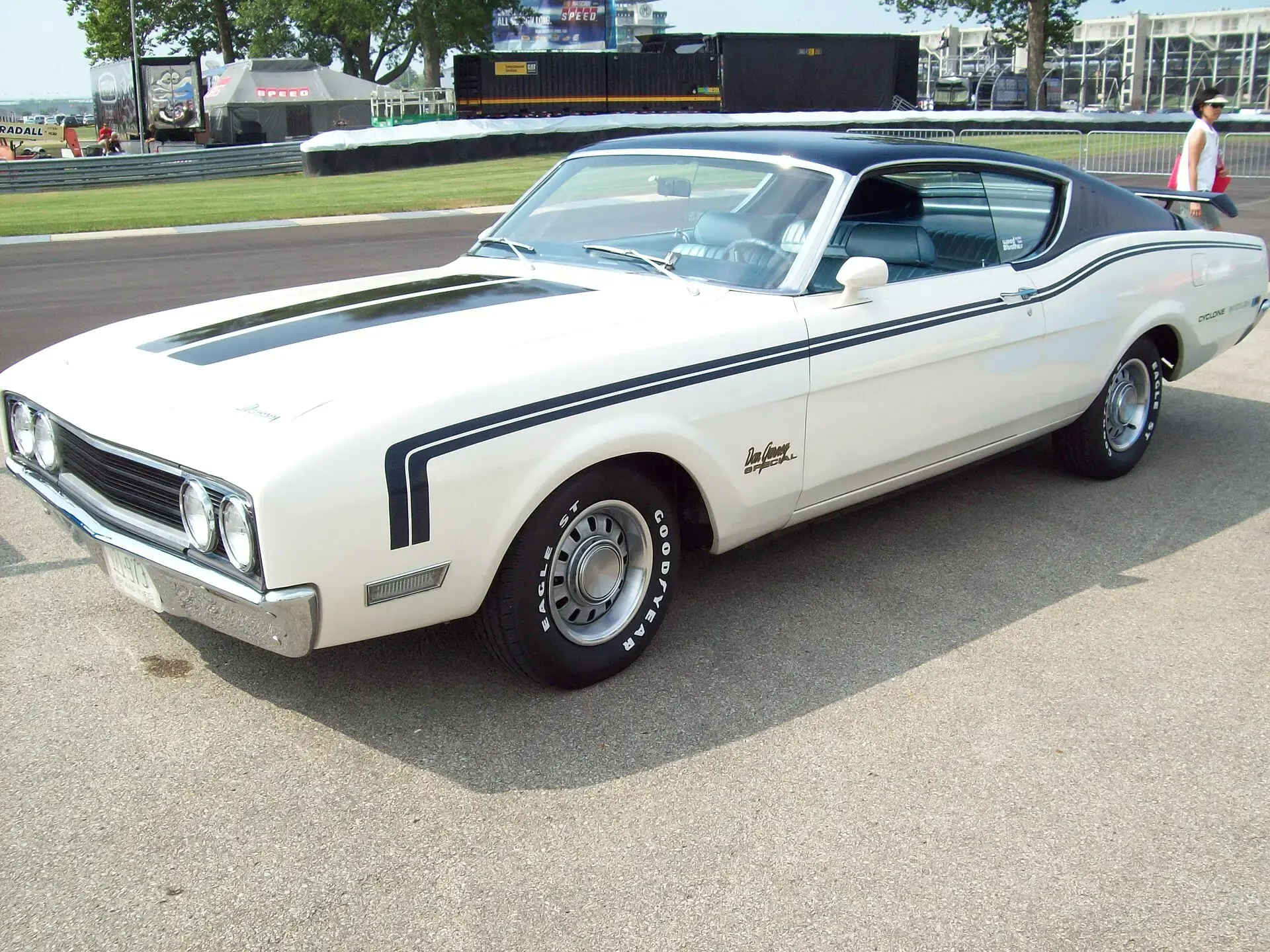
Mercury Cyclone Spoiler II: The Forgotten NASCAR Aero Warrior
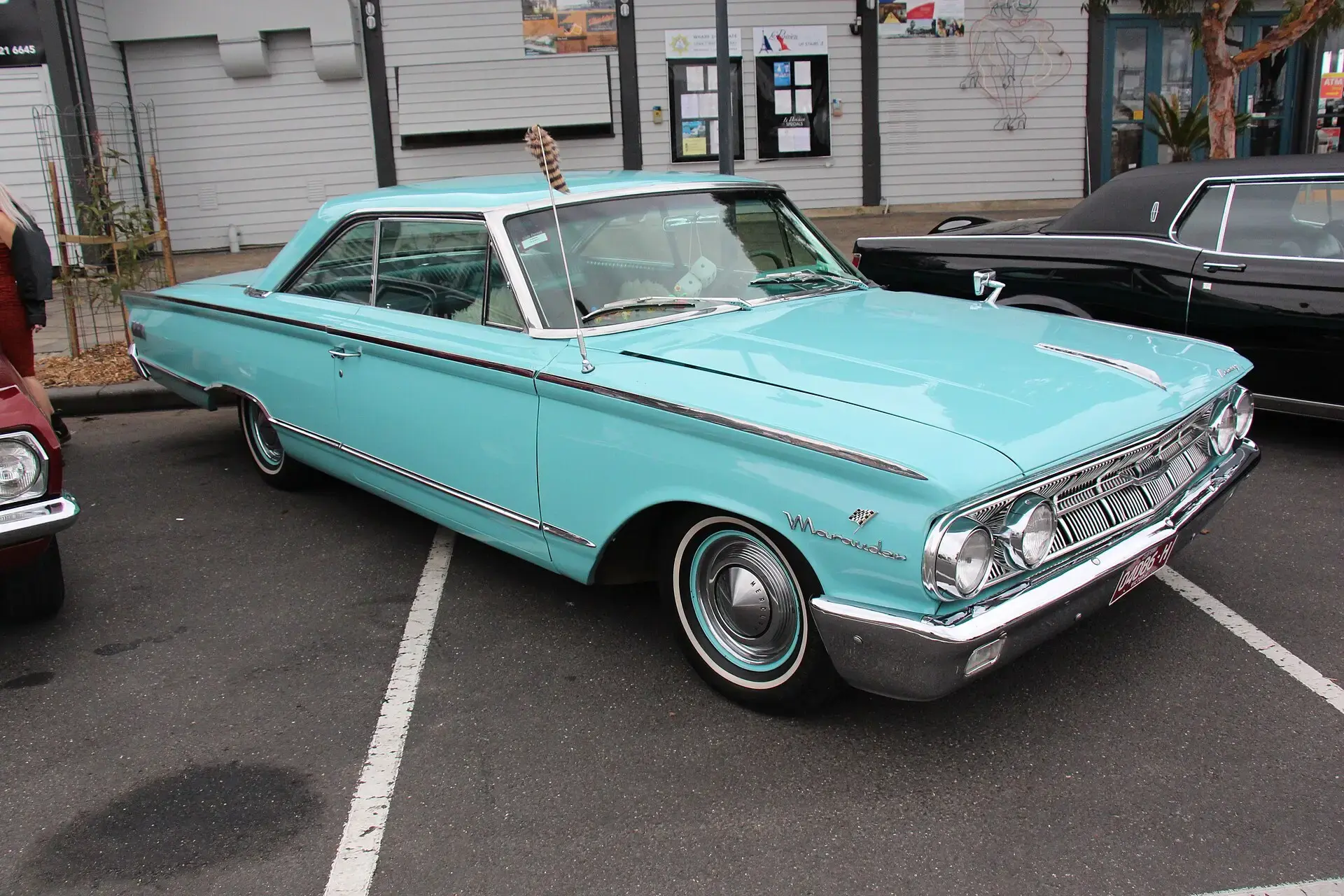
Mercury Marauder Performance: 1963–2004 Through the Decades