
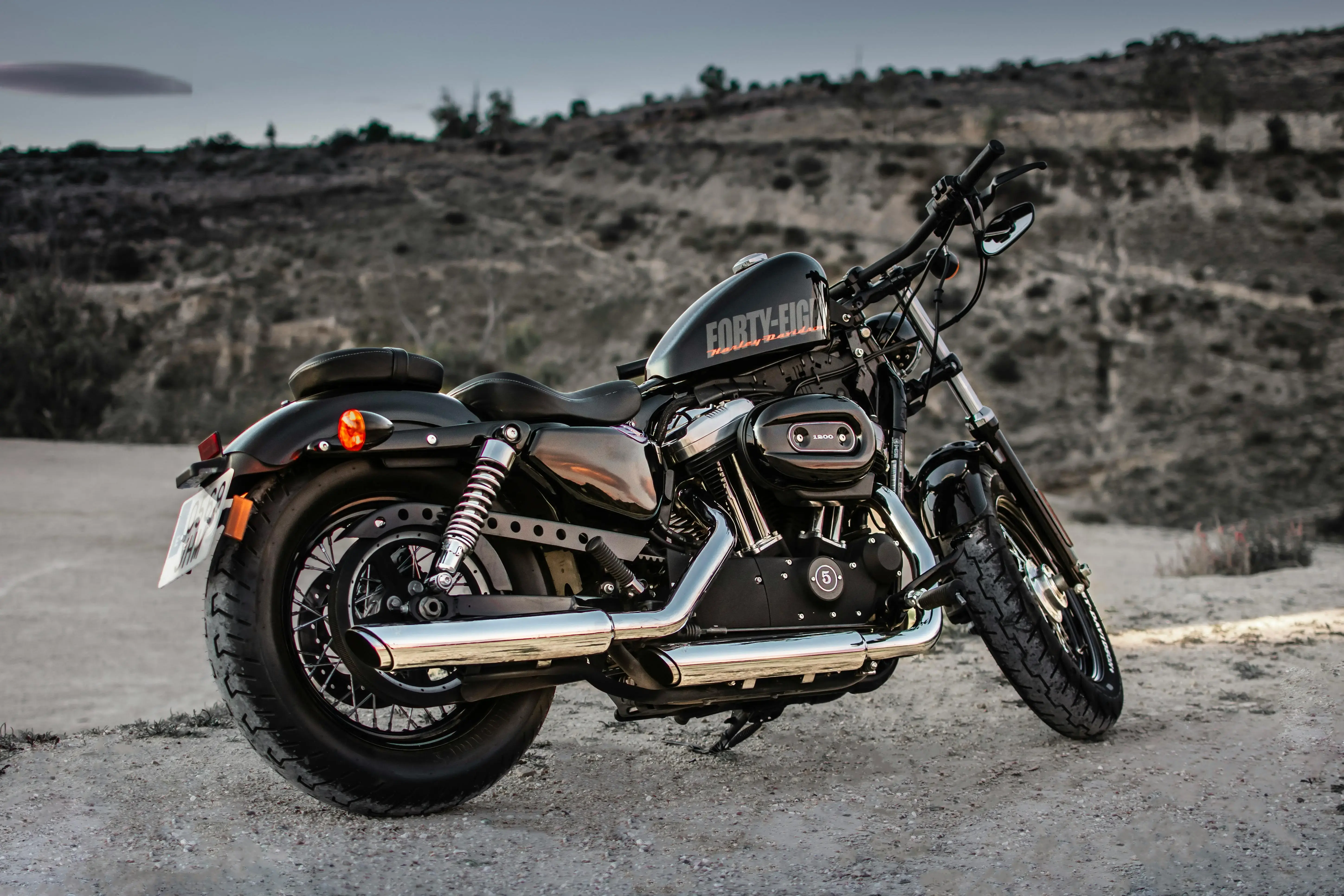
Bringing a Harley-Davidson into the UK from the USA is more than just getting it on a ship. To ride legally on UK roads, most U.S.-spec Harleys need to pass the Motorcycle Single Vehicle Approval (MSVA) test, satisfy DVSA technical requirements, and then be registered with the DVLA.
This article explains how MSVA works specifically for Harley-Davidson imports: who needs it, what the DVSA inspects, the typical modifications U.S.-spec bikes require, and how the MSVA certificate feeds into DVLA registration. For the full context on other routes such as GB conversion IVA and post‑Brexit UK vs EU decisions, see the main guide UK Harley-Davidson Import Guide: MSVA, IVA & DVLA Registration.
1. What MSVA Is and When a Harley Needs It
The UK government’s official Motorcycle single vehicle approval page explains that MSVA is required when a motorcycle has not been type‑approved to European/GB standards or has been radically altered.
For Harley-Davidsons, MSVA typically applies if:
-
The bike was built for the U.S. market and lacks EU/GB type approval.
-
It has been amateur‑built, rebuilt, or heavily modified, even if originally sold in Europe.
-
It is under 10 years old and has never been registered in the UK.
If your Harley already has an EU Certificate of Conformity and is under 10 years old, you will usually follow the GB conversion IVA route instead, which reuses EU type approval through the VCA’s GB conversion IVA process. The main article on UK Harley-Davidson imports compares both routes side by side.
2. How the MSVA Process Works with DVSA
You cannot ride an imported Harley on UK roads until it has passed MSVA (unless it qualifies for another approval route). The DVSA runs MSVA test stations and issues the Minister’s Approval Certificate (MAC) once the bike passes.
Basic MSVA steps
-
Prepare the bike for UK standards (see modifications section below).
-
Complete the MSVA application form from the Apply for Motorcycle Single Vehicle Approval (MSVA) page.
-
Choose a DVSA test station from the list on GOV.UK and send in your form and payment.Take the Harley to the inspection on the agreed date—on a trailer or truck, not ridden on public roads.
-
If it passes, DVSA issues a MAC, which you then use for DVLA registration.
The official guidance notes that MSVA is a construction and design approval, not a condition check like an MOT. The focus is on whether the Harley’s design complies with UK rules on lighting, braking, emissions, noise, and identification.
MSVA fees
MSVA test fees for motorcycles are published in the DVSA fee schedule, and they change from time to time. As of early 2026, motorcycle MSVA fees typically fall in the £150–£250 range depending on vehicle category and test type, but you should always confirm the current amount using DVSA’s online fee tables before booking. The MSVA apply page links to the latest forms and payment instructions.
If a Harley fails on a few specific items, DVSA allows a reduced‑fee retest within a defined time window; the exact retest fee also comes from the same schedule.
3. What DVSA Checks on a Harley During MSVA
The MSVA inspection manual (linked from the GOV.UK MSVA pages) sets out detailed standards, but for Harley owners the most relevant areas are:
-
Lighting and visibility – Headlights, indicators, rear lights, brake lights, and reflectors must meet UK brightness, color, and positioning rules and must not dazzle other road users.
-
Speedometer – The speedometer must display miles per hour; km/h can be shown as well but not instead of MPH.
-
Mirrors – Correct number, size, and position for the motorcycle’s category.
-
Brakes – Performance and balance tests for front and rear brakes; parking brake checks where relevant.
-
Noise and exhaust – Exhaust systems must meet noise limits and cannot leak; excessively loud aftermarket pipes are a frequent failure.
-
Emissions – For newer Harleys, exhaust emissions must meet the Euro standard applicable to the bike’s age.
-
VIN and identity – DVSA confirms that the frame carries a legible 17‑digit VIN and any required manufacturer plates.
Northern Ireland’s DVA explains the same concept for its own MSVA scheme: it is a cost‑effective form of type approval for motorcycles that do not have ECWVTA, focusing on whether the vehicle is suitable for licensing and registration. The GB scheme run by DVSA follows the same logic.
4. Typical Modifications for U.S.-Spec Harleys Before MSVA
Most U.S.-spec Harleys will not pass MSVA without some targeted work. Based on DVSA’s MSVA criteria and UK construction rules, these are the most common changes importers make before taking a Harley to test.
Headlight conversion for left‑hand traffic
UK roads use left‑hand traffic, so dipped beams must illuminate the left side without throwing glare into oncoming traffic. The government’s MSVA and lighting rules effectively require:
-
A headlamp that dips correctly for left‑hand traffic, with any right‑side kick‑up removed.
For many Harleys, the simplest route is to:
-
Install a UK or EU‑spec headlamp designed for left‑hand traffic, or
-
Have a specialist adjust the beam pattern if the original design allows it (less common with modern LED units).
Temporary stick‑on beam deflectors might get a bike through some roadworthiness tests, but for MSVA a permanent compliant solution is strongly recommended.
Speedometer showing MPH
DVSA expects a speedometer that shows MPH clearly. The NI MSVA guidance notes that the Certificate of Conformity will indicate the speedometer units and the rule of the road, and that some vehicles need a partial MSVA check if the speedo or lighting is wrong for the UK.
For Harleys:
-
Many U.S.-spec bikes already show MPH as the main unit, so no change is needed.
-
EU‑spec Harleys often need a new cluster, MPH dial, or software reconfiguration so that MPH is shown prominently.
Keep workshop invoices or documentation: they help show DVSA that the change has been done correctly.
Rear lighting, indicators, and reflectors
U.S. bikes sometimes use combined brake/indicator units or amber/red combinations that do not match UK construction rules. Before MSVA, importers usually:
-
Ensure rear indicators are amber and distinct from brake lights.
-
Check that mandatory rear reflectors are present and correctly mounted.
While motorcycles are not treated exactly like cars on fog lamp rules, any fitted fog lamp must still comply with position and function requirements.
Exhaust noise and emissions
Many Harleys coming from the USA wear aftermarket pipes that are louder than factory systems. MSVA applies noise limits related to engine capacity and test conditions; an open or “straight‑through” system is very likely to fail.
Most owners preparing for MSVA:
-
Refit the OEM Harley exhaust for the test, or
-
Use an aftermarket system with verifiable approval markings that can meet MSVA noise requirements.
For newer Euro‑standard bikes, DVSA will also verify emissions; if the factory system has been heavily altered, this can be a problem.
5. Booking, Passing, and Retesting: Practical MSVA Tips
Booking the MSVA inspection
When you are ready to test:
-
Use the instructions on the MSVA apply page to download the latest application form and choose a DVSA test station.
-
Pay the current fee as set out in DVSA’s schedule (typically within the £150–£250 band for motorcycles as of early 2026).
-
Arrange a trailer or transporter; you cannot legally ride an unregistered Harley on public roads to get to the test.
West Coast Shipping can coordinate with UK agents who manage storage and workshop visits as part of a full import program, similar to the services described on the UK car page for shipping to the UK and DVLA assistance.
On the day of the test
Bring:
-
Your appointment confirmation and ID.
-
Any supporting documents, such as workshop receipts or manufacturer data sheets, especially for non‑standard components.
The inspection typically takes around an hour, depending on how complex the bike is and whether the examiner needs to double‑check specific items.
If the Harley passes MSVA
DVSA will issue a Minister’s Approval Certificate (MAC) on the day or shortly after. Keep it safe: you will need it for DVLA.
You can then move to the DVLA stage (covered below) once customs and NOVA are completed.
If the Harley fails MSVA
The tester will give you a fail sheet listing each item that did not meet the standard—commonly headlamp aim, speedometer units, indicator layout, or exhaust noise for Harleys.
You can:
-
Fix each problem, ideally with a specialist workshop.
-
Book a partial retest, which uses a lower fee if it happens within specified time limits and covers only the failed items (details in DVSA’s fee guidance).
Planning for common Harley fail points in advance often turns MSVA into a one‑visit process instead of two or three.
6. DVLA Registration After MSVA
MSVA approval on its own does not put a number plate on the bike; you still need to register it with the DVLA. The UK government’s registering an imported vehicle guidance outlines the required steps.
HMRC and NOVA first
Before DVLA will look at your application, HMRC must confirm that the bike has been declared in the Notification of Vehicle Arrivals (NOVA) system and that any VAT and customs duty have been accounted for. This is usually handled by your customs broker or shipping agent when the Harley arrives.
DVLA registration pack
Once NOVA is cleared and you have your MSVA MAC, DVLA expects:
-
A completed V55/5 (or V55/4 for businesses).
-
The MSVA certificate.
-
Proof of identity and UK address.
-
Proof of ownership (U.S. title or equivalent).
-
Evidence of customs clearance and duty/VAT payment.
You pay the standard £55 first‑registration fee plus any applicable UK road tax when submitting the application.
The DVLA and GOV.UK guidance notes that the overall import and registration process typically involves customs, NOVA, technical approval (such as MSVA or IVA), and then DVLA registration, and can take several weeks end‑to‑end. West Coast Shipping’s UK‑focused pages and the main Harley import guide explain how their agents sequence these steps so you are not stuck paying storage while waiting for paperwork.
7. How West Coast Shipping Fits Into Your MSVA Plan
MSVA is only one part of importing a Harley; you also need reliable ocean transport, UK handling, and a clear timetable so you can plan workshop work and inspection dates.
The international motorcycle shipping rates page explains how West Coast Shipping moves bikes from U.S. hubs to ports worldwide using shared and dedicated containers, with instant rate quotes and typical transit times. From there
The UK team or partner depot can unpack your Harley, clear customs, handle NOVA, and move the bike to workshops for MSVA‑prep modifications.
-
Once the bike passes MSVA, they can help assemble the DVLA registration pack and guide you through UK‑specific paperwork, similar to the support described on the car imports to the UK guide.
For a complete overview of how MSVA sits alongside GB conversion IVA and post‑Brexit EU options, revisit the main article UK Harley-Davidson Import Guide: MSVA, IVA & DVLA Registration.
Get Your UK MSVA Shipping Quote
If you are ready to start the process, the first step is to know your shipping cost and route from the USA. Use the calculator on the international motorcycle shipping rates page to see current prices and transit times to UK ports, then schedule your DVSA MSVA inspection and DVLA registration on a realistic timeline.

Import Your Harley: UK vs EU Post‑Brexit (2024–2026)
UK Harley-Davidson Import Guide: MSVA, IVA & DVLA Registration