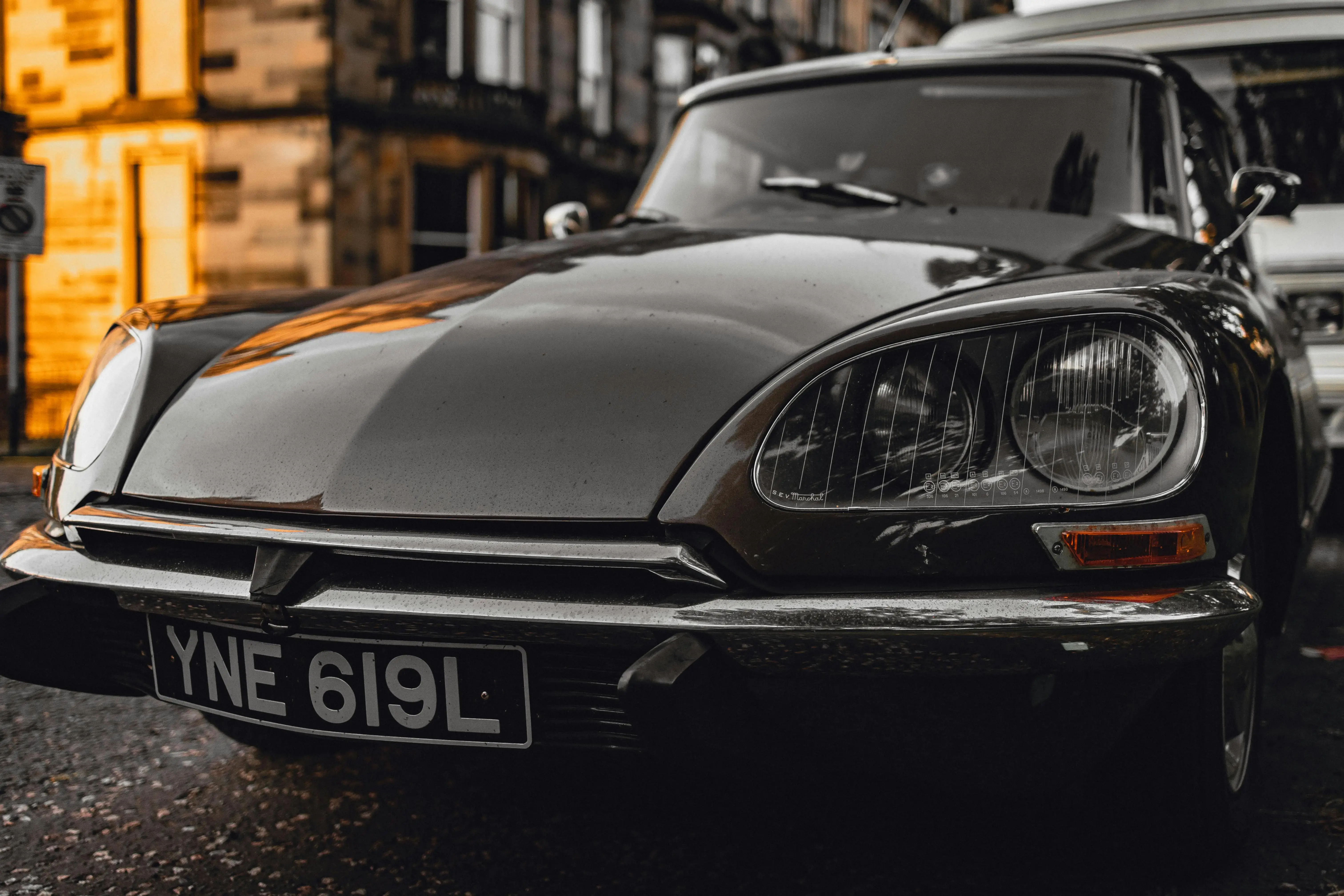

Coming Soon: 0% EU Import Duty on US Cars Under the Turnberry Deal
European buyers shopping American iron have been paying a 10% toll at the EU border for years. That toll is about to hit zero. The legislation that turns the Turnberry agreement into law cleared the European Parliament on June 16, and on June 25 the EU's member governments gave the deal its final approval. Tucked inside the fine print is something every collector and dealer moving cars across the Atlantic should read closely: vehicles originating in the United States are headed to 0% EU customs duty.
The rules take effect the day after they are published in the EU's Official Journal, which has to happen before July 4, the deadline President Trump set when he threatened fresh tariffs if the deal was not in place by then.
This is the kind of change that moves cars. And because the EU already waves genuine 30-year-old classics through at 0%, the real winners are newer: US-built cars from 1996 on, the 90s and early-2000s machines whose values are climbing fastest. Here is what the deal actually does, and where the catch is.
What the Turnberry Deal Is
Back on July 27, 2025, US President Donald Trump and European Commission President Ursula von der Leyen shook hands at Trump's Turnberry golf resort in Scotland. That handshake became the Joint Statement of August 21, 2025, a framework to settle a year of escalating tariffs between the two largest trading partners in the world. Two-way EU-US trade ran past EUR 1.6 trillion in 2024, so the stakes were never small.
The deal cuts both ways. The US agreed to cap most tariffs on EU goods at 15%. The EU, in return, committed to eliminate tariffs on all US industrial goods and open the door wider for US seafood and farm products.
On June 16, 2026, MEPs voted the main regulation through, 440 to 151 with 50 abstentions. On June 25 the EU's member governments gave the deal its final approval, and the rules take effect the day after they publish in the EU's Official Journal. That publication has to land before July 4, the date President Trump set when he threatened new tariffs if the agreement was not implemented by the US Independence Day holiday. The preferences are written to run through December 31, 2029.
Where Cars Come In
Here is the part that matters for our world. The regulation sets the EU customs duty to 0% on every product category listed in its Annex I, and Annex I is organized by chapter of the tariff schedule. Chapter 87, "Vehicles other than railway or tramway rolling stock, and parts and accessories thereof," is on the list.
That is the chapter that covers passenger cars, and it is the chapter that has carried a 10% EU import duty for as long as most of us have been shipping. Parts and accessories sit in the same chapter, so the components side benefits too.
The math is simple. Take a clean US-built Z3 M Coupe valued at $60,000 landed at the EU border. Under the old 10% rate, that is $6,000 in duty before anyone touches the keys. At 0%, that $6,000 disappears. And because import VAT is calculated on the duty-inclusive value, a smaller base means a smaller VAT bill on top, another roughly $1,140 saved at Germany's 19% rate. Call it close to $7,000 off the cost of bringing that car home.
The Catch: Origin Is Everything
Now to clear up the biggest misunderstanding of the new ruling: the 0% rate applies to goods originating in the United States. The regulation determines origin under the EU's standard non-preferential origin rules.
A Corvette, a Mustang, a Cadillac, a US-built pickup, a muscle car off a Carolina barn find: American origin, 0% duty. A Ferrari, a Porsche, or a Skyline that happened to spend a decade in a California collection: not US origin, and the 0% does not apply to it just because it shipped out of California. The country where the car was built is what the customs officer reads, not the port it left from.
So the deal is a gift to American cars specifically, and to the people who love them.
The 30-Year Line: Why 1996 Is the Year That Matters
Here is the detail that decides who actually benefits, and it is the part most coverage will miss. The EU already lets genuine classics in at 0% duty. A vehicle that qualifies as a collectors' piece under tariff heading 9705, that's at least 30 years old, has been clearing at 0% duty with reduced import VAT in several member states for years. If the car was old enough, the duty was already gone.
That 30-year line moves forward every year. In 2026 it sits at 1996. So the cars that were still paying the full 10% at the EU border are the ones built in 1996 and later, the ones not yet old enough to clear as classics. That is exactly where this Turnberry deal lands.
And it happens to be the cohort everyone in the collector market is watching right now. The 90s and early-2000s performance cars, the ones a generation grew up with on bedroom walls and PlayStation screens, have been among the fastest-climbing segments at auction in recent years. Until now, a US-origin example still cost you 10% on the way into Europe. Not anymore.
The Cars That Gain: US-Built, Under 30, and Climbing
Origin follows the assembly line, not the badge, and plenty of European and Japanese marques built cars in the United States. The ones old enough already came in free: the Springfield Rolls-Royces (built in Massachusetts from 1921 to 1931, ironically to dodge the US import tariffs of the day), the Westmoreland VW Rabbit GTI (Pennsylvania, 1983 to 1984), and the first US-built Honda Accord (Marysville, Ohio, November 1982, with car "USA 001" now in the Henry Ford Museum). All comfortably past 30. The duty was already zero.
The cars that gain under Turnberry are the US-built ones from 1996 on. The list worth watching:
- C5 Corvette Z06, Bowling Green, Kentucky (2001 to 2004). US-origin from the start, and a textbook example of the early-2000s American performance car that sits right in the window the deal rewards.
- Cadillac CTS-V, 1st gen (2004–2007) — Lansing, Michigan. The manual, LS6/LS2 cars are getting attention.
- Saleen S7 (2000–2009) — built in California. A genuine American supercar.
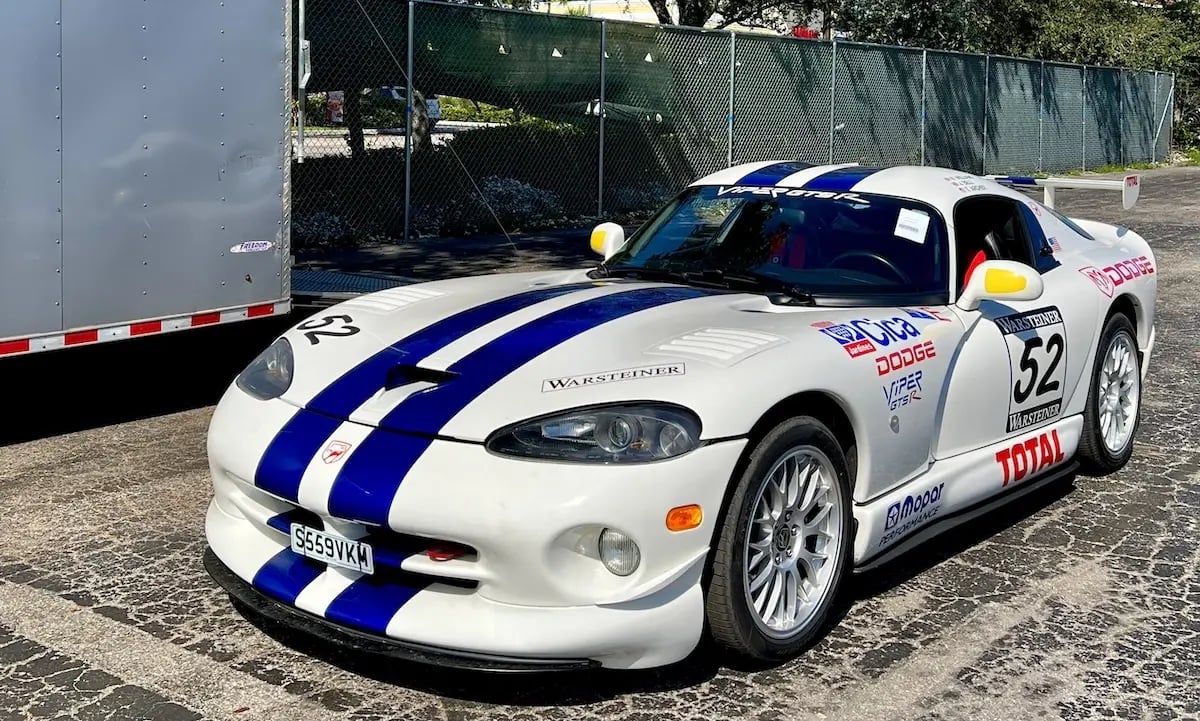
- Dodge Viper, Detroit, Michigan. Built in the city for its whole run. The blue-chip modern American collectible, with the ACR and final-edition cars leading the climb.
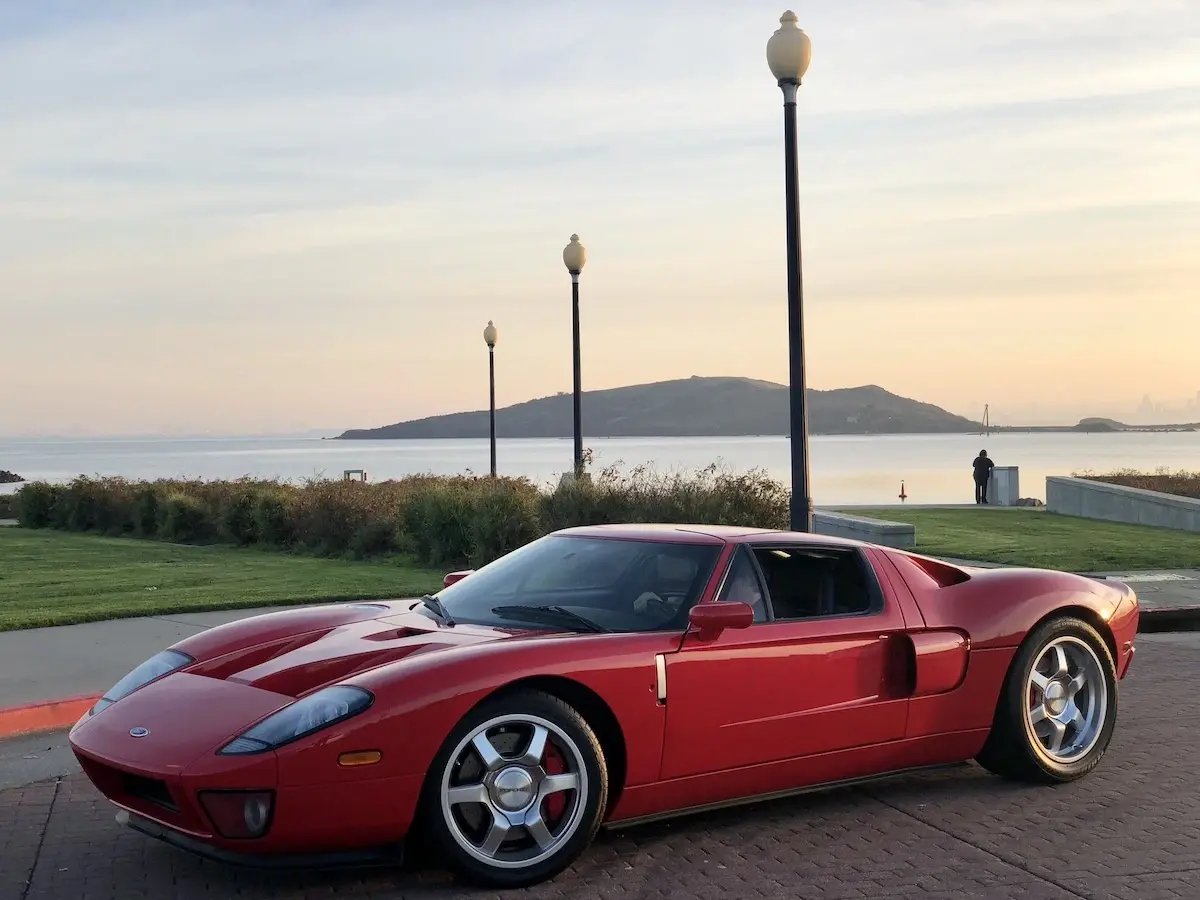
- Ford GT, Wixom, Michigan (2005 to 2006). A US-built supercar that has been appreciating hard for years.
- Acura NSX, second generation, Marysville, Ohio (2016 to 2022). Hand-built in Ohio and sold as the only supercar made in America. A foreign badge carrying US origin, the same twist as the Z3.
- Ford Mustang SVT Cobra and Shelby GT500, Michigan (2003 to 2014). The supercharged "Terminator" Cobra (2003 to 2004, the last Mustangs built at Dearborn) and the S197 Shelby GT500 (built at Flat Rock, up to 662 horsepower), both Michigan-built and climbing fast with collectors.
- Ford F-150 SVT Raptor, Dearborn, Michigan (2010 on). The truck that created its own segment, built in Michigan, with clean first-generation examples now appreciating.
- BMW Z3 and Z3 M Coupe, Spartanburg, South Carolina. The Z3 was the first BMW built entirely outside Germany, 297,087 of them, and James Bond's ride in GoldenEye. The 1998 to 2002 M Coupe, the "clownshoe," is the one collectors chase now, and prices have run hard.
- BMW Z4 M Coupe and Roadster, Spartanburg (2006 to 2008). Also US-built, also climbing, and still a relative bargain next to the Z3 M.
Here is the cleanest way to see the rule at work. A Spartanburg-built Z3 M Coupe heading back to Germany now lands at 0% duty. A German-built E46 M3 of the same years, with German origin, does not. Same era, same enthusiast, different birthplace, different invoice.
One more trap worth flagging, because the badge fools people. Some of the most American-looking performance cars are not US origin at all. Every modern Dodge Challenger and Charger, Hellcats and Demons included, was built in Brampton, Ontario. The 2004 to 2006 Pontiac GTO and the Chevrolet SS came from Australia. The 1998 to 2002 Camaro and the 2010 to 2015 Camaro were Canadian-built, though the 2016-and-later cars moved back to Michigan. None of those Canadian or Australian builds qualify for the 0% rate, no matter how American they look in the driveway.
Germany and France: 0% Duty Now Covers Every US-Origin Car
Duty is only half the bill. Import VAT is the other half, and a handful of member states treat collector cars far more kindly than their standard rate.
Germany charges 7% import VAT on a qualifying collector car, against a standard 19%. France charges 5.5%, against 20%. To earn that rate the car has to meet the heading 9705 definition: original condition, at least 30 years old, a model no longer in production.
Now layer the new duty rule on top, and here is the headline for buyers in those countries. In Germany and France, a US-origin car clears at 0% duty, classic or not. A genuine US-origin collector car landing in Frankfurt or Lyon pays 0% duty and then 7% or 5.5% VAT, about as cheaply as the rules allow. The 1996-and-later cars that drove this article get the same 0% duty today, at the standard VAT rate, until they age into the 30-year bracket and the reduced VAT kicks in too.
So for an American car headed to Germany or France, the two numbers that decide the deal both move in the buyer's favor: the duty line, now zero, and a collector VAT rate that can sit in the single digits.
One word of caution on that VAT rate. It varies by member state, and it hangs on how strictly the local customs office reads the 9705 test. Original condition and a model no longer in production are doing real work in that definition. A heavily modified car or a restomod can fail it even when it is well past 30, and lose the reduced VAT in the process. The 0% duty on a US-origin car holds either way. The single-digit VAT does not.
What It Means If You're Importing
VAT and shipping do not vanish. Import VAT still applies at each country's rate, and the boat still has to cross the ocean. What changes is the duty line, and on a six-figure American car that line was never trivial.
A few things worth keeping in mind. With the deal now approved, the rules take effect the day after the text publishes in the EU's Official Journal, due before July 4, so timing matters on cars already on the water. The preferences are scheduled through the end of 2029. And origin documentation becomes the whole ballgame, because proving a car was built in the US is what unlocks the 0% rate.
We move American cars to Europe every week out of our own US warehouses, with our own team handling the loading and the paperwork that decides how a car clears. When the duty rules shift, the documentation is what gets the benefit onto your invoice instead of leaving it on the table.
Thinking about bringing an American car across the Atlantic when the duty window is open? Get an instant rate to import your car into Europe.

Sources: European Parliament press release, June 16, 2026; Provisional agreement text, Regulation 2025/0261(COD), Article 1 and Annex I; EU MFN passenger car duty rate (10%, HS 8703). US-built foreign marques: Rolls-Royce of America, Springfield; BMW Z3, Spartanburg; VW Rabbit GTI, Westmoreland; Honda Accord, Marysville. Collector-car import VAT: Germany 7% (West Coast Shipping), France 5.5% on heading 9705 collectors' items; standard VAT rates 19% (DE) and 20% (FR).

Swiss VAT Refund When Exporting Cars: Complete Guide & Savings
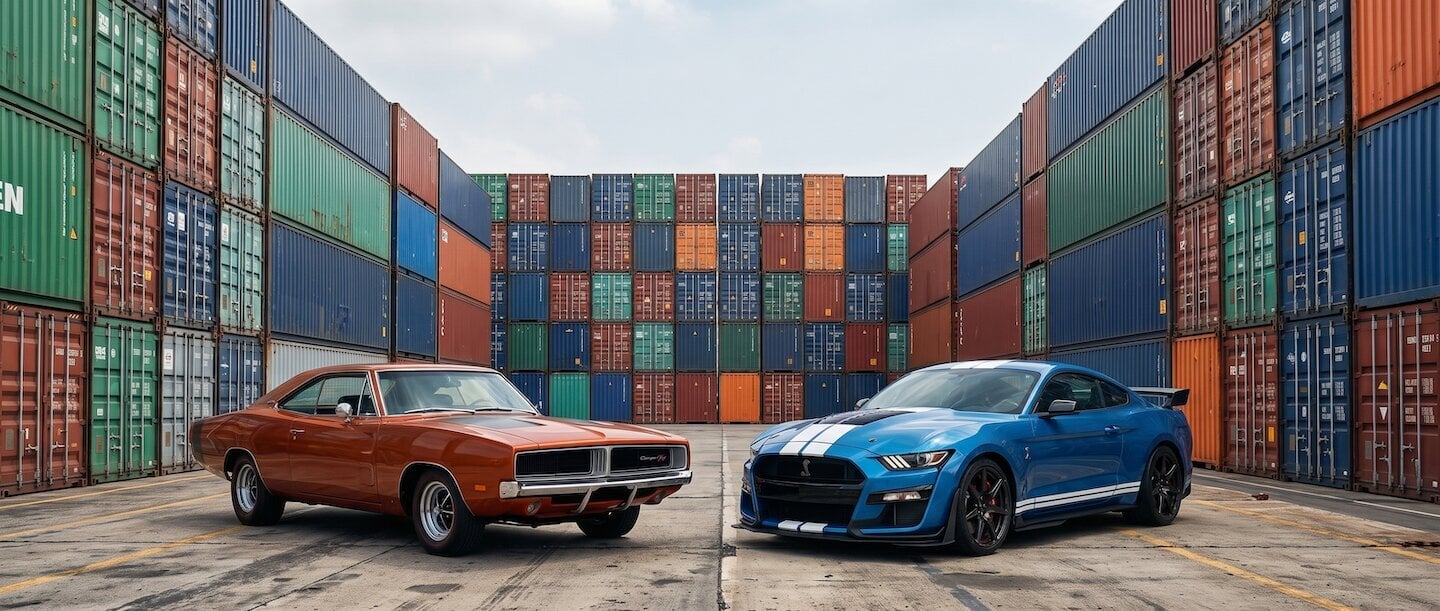
Rare Classic Muscle Cars and Their Modern Counterparts: Values & Import Costs | 2026 Guide