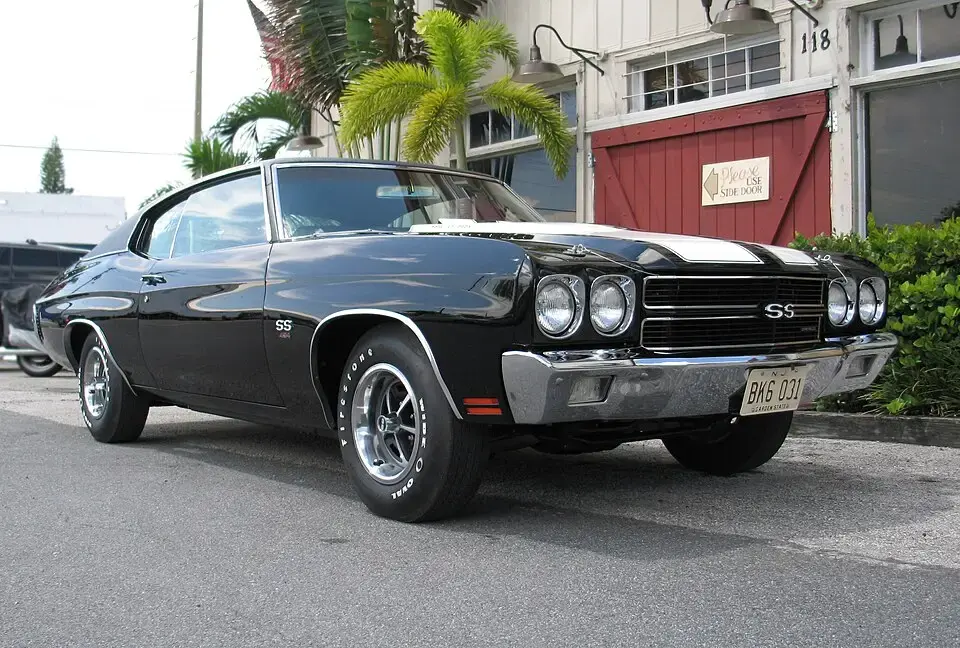

The Yenko Camaro prototype sold for $1,815,000 at Mecum Kissimmee in January, the most expensive Camaro ever auctioned. Four months later, a 1969 Camaro ZL1 brought $1,430,000 at Indy. Behind every number like these sits the same story: the muscle cars pulling seven figures today were built in runs of 69 to 2,000 units, homologation specials and dealer-built oddities that most buyers skipped when they were new. In this article we'll take a look at five rare classic muscle cars and their modern counterparts, a list of modern muscle cars worth preserving now, and what it actually costs to land one in the UK, Europe, Australia, or the UAE.
Why Rarity Rules the Muscle Car Market
Chevrolet sold roughly 243,000 Camaros in 1969. The cars collectors fight over are the rounding errors inside that total: the 69 ZL1s, the 201 Yenkos, the 14 Hemi 'Cuda convertibles. Production count is the first number any serious buyer checks, and it remains the single strongest predictor of long-term value.
The same math is now playing out with modern metal. A 3,300-unit Demon or an 1,829-unit Pontiac G8 GXP follows the exact curve its 1960s ancestors drew, just a few decades earlier in the cycle.
1969 Ford Mustang Boss 429 vs. Revology Boss 429
NASCAR required 500 street cars before Ford's semi-hemi 429 could race, and the engine was so wide it would not fit a Mustang engine bay. Ford shipped every car to its Kar Kraft skunkworks, where each one was hand-modified. Just 859 were built for 1969 and 499 for 1970, rated at a comically conservative 375 horsepower.
Revology Cars in Orlando builds new Boss 429s on an OEM-style assembly line, around 50 cars per year with over 360 delivered. Under the hood sits a supercharged Gen 4 Coyote making 710 horsepower, paired with a modern chassis and a six-speed manual. The continuation car carries its own scarcity story, and its own waiting list.
| 1969–70 Boss 429 | Revology Boss 429 | |
|---|---|---|
| Built | 1,358 | ~50 per year |
| Power | 375 hp (rated) | 710 hp |
| 2026 price | $320,000–$660,000; record $1,045,000 | From $395,000 |
1969 Yenko/SC 427 Camaro vs. SVE Yenko/SC
GM banned engines over 400 cubic inches in its pony cars, so Pennsylvania dealer Don Yenko used the COPO ordering system to have the factory quietly install the Corvette's L72 427. Only 201 were built for 1969, and with dealer tuning they ran 11-second quarter miles when that was supercar territory.
Specialty Vehicle Engineering carries the Yenko license today and sent the Camaro out swinging: the final 2024 Yenko/SC Camaros ranged from 1,150 to 1,500 horsepower in runs of 50 to 100 units. With the Camaro gone, the badge moved to the Corvette. The 2026 Yenko/SC E-Ray makes 1,564 horsepower on E85, limited to 50 units, more than any factory Corvette ever built.
| 1969 Yenko/SC 427 | 2026 Yenko/SC E-Ray | |
|---|---|---|
| Built | 201 | 50 |
| Power | 425 hp (rated) | 1,564 hp |
| 2026 price | $460,000–$700,000; record $1,815,000 | Unannounced (2024 Camaro runs started under $90,000) |
1969 Chevrolet Camaro ZL1 vs. Camaro ZL1 1LE
COPO 9560 put an all-aluminum 427 into 69 Camaros, and the engine option alone cost $4,160, more than an entire base Camaro. Rated at 430 horsepower and actually producing well over 500, many sat unsold at their $7,200 stickers. In May 2026, the second ZL1 ever built sold for $1,430,000.
Chevrolet revived the name on the sixth-generation ZL1, and the track-focused 1LE package lapped the Nürburgring in 7:16, quicker than the Porsche 911 GT3 of its day. With Camaro production finished since January 2024, Hagerty already calls the final ZL1s instant collectibles, and delivery-mileage 1LEs have been listed near $140,000.
| 1969 ZL1 (COPO 9560) | Camaro ZL1 1LE | |
|---|---|---|
| Built | 69 | Small share of ZL1 output |
| Power | 430 hp (rated), 500+ actual | 650 hp |
| 2026 price | ~$564,000 benchmark; record $1,430,000 | $86,000–$140,000 |
1970 Dodge Hemi Charger R/T vs. SpeedKore's Carbon Chargers
Dodge sold 49,800 Chargers in 1970, yet only around 112 buyers checked the $648 Hemi box on the R/T. The option carried mandatory extras and insurance surcharges that scared off nearly everyone, which is exactly why the survivors trade at two to three times comparable 440 money today.
Wisconsin's SpeedKore Performance Group builds full pre-preg carbon-fiber Chargers using the same autoclave process as OEM supercars. "Evolution," a 1970 Charger unveiled at SEMA, packs the 966-hp engine from the Dodge Demon, and the twin-turbo "Tantrum" was offered at $699,000. Dodge design boss Ralph Gilles, the man who greenlit the Hellcat era, commissioned his own 1,000-hp SpeedKore Charger. That is about as strong an endorsement as a restomod shop can get.
| 1970 Hemi Charger R/T | SpeedKore Charger | |
|---|---|---|
| Built | ~112 | One-off commissions |
| Power | 425 hp (rated) | 966–1,650 hp |
| 2026 price | $200,000–$300,000+ ('71 four-speed sold $302,500) | High six figures ("Tantrum" asked $699,000) |
1970 Plymouth Hemi 'Cuda vs. Dodge Demon 170
The 426 Hemi added roughly a third of a base Barracuda's price to the sticker, so only 652 hardtops and 14 convertibles got it in 1970. The hardtops average around $414,000 today. The convertibles sit at the very top of the American muscle market: a 1971 example brought $3.3 million at Kissimmee in January, and the 1970 convertible record stands at $2.53 million.
The Demon 170 is the 'Cuda's spiritual heir, a 1,025-hp E85-burning sendoff that runs 8.91 at 151 mph, quick enough that the NHRA bans it from stock drag racing without a cage. Exactly 3,300 were built, and only 827 got the carbon wheels. After a speculative spike past $250,000, values settled into a $125,000 to $145,000 band, which reads like the realistic entry point before the long climb.
| 1970 Hemi 'Cuda | 2023 Demon 170 | |
|---|---|---|
| Built | 652 hardtops + 14 convertibles | 3,300 |
| Power | 425 hp (rated) | 1,025 hp |
| 2026 price | ~$414,000 avg; convertibles $2.5M–$3.3M | $125,000–$145,000 |
Modern Muscle Cars Worth Preserving
Every car below shares the DNA of the classics above: limited production, a dead nameplate or powertrain, and a story. Values are July 2026 market data.
| Car | Built | 2026 Value | Why It Matters |
|---|---|---|---|
| 2018 Dodge Demon | 3,300 (3,000 US + 300 Canada) | $100,000–$135,000 | 840 hp on race gas; first production car to wheelie off the line. Trades well above its $84,995 sticker. |
| Cadillac CT5-V Blackwing (manual) | Limited runs | $95,000–$135,000+ | The last supercharged V8 manual American sedan, 668 hp. Low-mile manuals already sell over sticker. |
| Cadillac CTS-V Sport Wagon (manual) | ~500 manuals (registry data) | $50,000–$129,000 | America's last manual V8 wagon. A record example brought $128,990 in late 2025. |
| 2009 Pontiac G8 GXP | 1,829 | $20,000–$40,000+ | Corvette LS3, 415 hp, and Pontiac's dying breath. A 108-mile car brought $61,614 in December 2025. |
| 2014–2017 Chevrolet SS (manual) | 12,924 total; 2,645 manuals | $40,000–$60,000+ | GM's unadvertised LS3 sleeper sedan, still holding roughly 80% of its original price. |
| Shelby GT350R | Limited runs | $70,000–$110,000+ | Ford's only mass-produced flat-plane-crank V8, 8,250 rpm, manual only. Never again. |
| Camaro ZL1 1LE | Fraction of ZL1 output | $86,000–$140,000 | The final track Camaro, and the Camaro is gone. Hagerty calls it an instant collectible. |
| 2015–2018 Challenger Hellcat | Higher volume | $44,000–$57,000 | The cheapest ticket into 707 hp. The 2023 manual Last Call cars ($87,000–$101,000) are the collector play. |
The pattern across the whole list: manuals, final editions, and supercharged V8s that no longer exist in any showroom. The market has already noticed.
Where to Find American Muscle Cars for Sale
The United States holds an estimated 43 million classic cars, the deepest supply of muscle cars anywhere in the world. Bring a Trailer and Cars & Bids offer transparent auction histories, Mecum and Barrett-Jackson move the headline cars, and Hemmings covers everything in between. We break down the eight places worth searching in our guide to finding classic cars for sale in the USA.
For overseas buyers the process runs simpler than most expect: win the car, have it trucked to our own warehouses in California, Florida or New Jersey, which cover all of the US for imports and exports, and our own team handles the export documentation, loading, and ocean freight from there.
What It Costs to Import: UK, Europe, Australia, UAE
Two numbers decide your landed cost: the age of the car and where it was built. Cars over 30 years old clear the UK, EU, and Australia with major tax concessions. And since July 1, 2026, US-built cars can enter the EU at 0% duty under the Turnberry framework, which changes the math on modern muscle. The customs office handling the import decides whether to grant the 0%, and current guidance ties eligibility to a certificate of origin, which is usually available for new cars, not for a classic built 30 years ago. We covered that shift in detail in our Turnberry deal article.
The tables below use shared-container rates from the US East Coast at mid-2026 prices. Estimates exclude destination port fees, inland delivery, and registration; Australian taxes are set in AUD and converted at approximate current rates. For your exact car and route, run the import calculator.
Scenario 1: A $150,000 Classic (30+ Years Old)
| Destination | Freight | Duty | VAT / GST | Other | Landed Cost |
|---|---|---|---|---|---|
| United Kingdom | ~$1,500 | 0% | 5% effective ≈ $7,600 | ~$159,100 | |
| Germany | ~$1,500 | 0% | 7% ≈ $10,600 | ~$162,100 | |
| Netherlands | ~$1,500 | 0% | 9% ≈ $13,600 | ~$165,100 | |
| Australia | ~$2,200* | 0% | 10% GST ≈ $15,200 | LCT ≈ $34,000† | ~$201,400 |
| UAE (Dubai) | ~$1,250 | 5% ≈ $7,600 | 5% ≈ $7,900 | ~$166,800 |
*Australia freight includes mandatory asbestos testing. †Luxury Car Tax: 33% of the GST-inclusive value above the 2026–27 threshold of AUD 80,809. It applies to classics too.
Scenario 2: A $60,000 Modern Muscle Car (US-Built)
| Destination | Freight | Duty | VAT / GST | Other | Landed Cost |
|---|---|---|---|---|---|
| United Kingdom | ~$1,500 | 10% ≈ $6,200 | 20% ≈ $13,500 | ~$81,200 | |
| Germany | ~$1,500 | 0% if US origin accepted | 19% ≈ $11,700 | ~$73,200 | |
| Netherlands | ~$1,500 | 0% if US origin accepted | 21% ≈ $12,900 | ~$74,400 | |
| Australia | ~$2,200* | 5% ≈ $3,100‡ | 10% GST ≈ $6,500 | LCT ≈ $5,600† | ~$77,400 |
| UAE (Dubai) | ~$1,250 | 5% ≈ $3,100 | 5% ≈ $3,200 | ~$67,500 |
*Includes mandatory asbestos testing. †33% of the GST-inclusive value above AUD 80,809. ‡US-origin cars with valid paperwork can enter Australia duty-free under the US–Australia Free Trade Agreement.
Destination Notes
United Kingdom. The 30-year rule is the headline: an unmodified, original classic imports at 0% duty and an effective 5% VAT under tariff heading 9705, against 10% duty plus 20% VAT for a modern car. The EU's new 0% duty on US-built cars does not apply in the UK. Full details on our UK shipping page.
Europe. US-built cars can clear EU customs at 0% duty through 2029 if customs accepts their origin, and origin follows the assembly plant, not the badge. A Michigan-built Camaro or Mustang qualifies; a Challenger or Hellcat built in Brampton, Ontario still pays 10%. Classics over 30 years old enter at 0% duty with reduced VAT (7% Germany, 9% Netherlands) regardless of origin, and qualify for historic registration like Germany's H-Kennzeichen. See our Germany and Netherlands pages.
Australia. Every import needs a ROVER Vehicle Import Approval before shipping, and asbestos testing is effectively mandatory. Cars over 30 years old pay 0% duty; newer ones pay 5%, or 0% with US-origin paperwork. The number that surprises buyers is the Luxury Car Tax: 33% above roughly AUD 81,000 of GST-inclusive value, on classics and moderns alike. Details on our Australia page.
UAE. The simplest regime of the four: 5% duty plus 5% VAT, no age rules and no luxury tax, which is part of why Dubai keeps pulling American muscle out of the US market. Cars over 30 years old register as classics through a Vehicle Classification Certificate, and the sailing from New York to Jebel Ali runs about 25 days. See our Dubai page.
Ready to Bring One Home?
We ship door to door by ocean or air out of our own warehouses in California, Florida and New Jersey, covering all of the US for imports and exports, and our own team loads every car and handles every document, whether you bought the car at a US auction or found it at a show overseas. Shared-container rates start around $1,100 to Europe and the Middle East and $2,150 to Australia.
Ready to begin your muscle car import journey? Contact West Coast Shipping's classic car specialists today for a personalized consultation and discover how simple bringing your dream car home can be. Get an instant quote below:

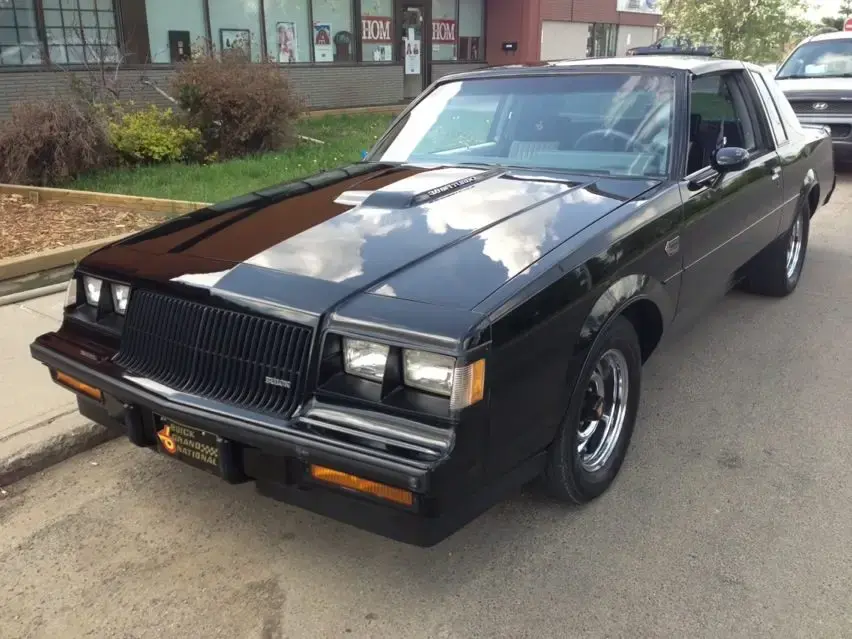
1987 Buick Grand National and GNX: Values, What to Check, and What It Takes to Import One | 2026 Guide
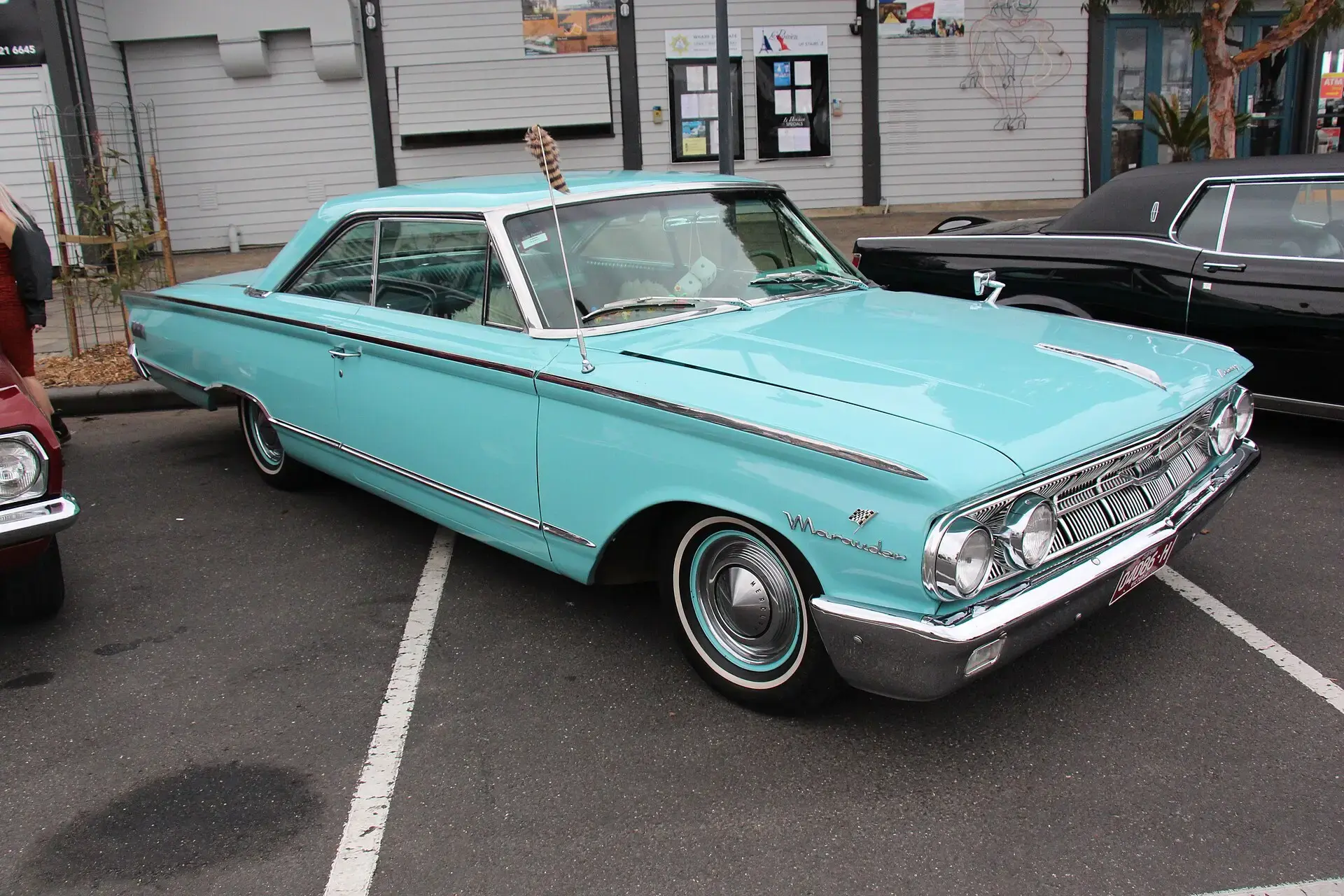
Ford's Factory Sleeper: What a Mercury Marauder Costs, What to Check, and What It Takes to Import One | 2026 Guide