
Yes, it's a bold claim to make. Especially when you stack a Volvo up against legendary Ferraris, Alfa Romeos, and Jaguars. But a driver-quality Volvo 1800ES trades in the low $20,000s, and even a sharp early coupe sits in the mid $30,000s. Using our list of recommended tools to calculate classic car values, you'll find the 1800 remains one of the few 1960s European sports cars still within reach. In this guide we'll cover which model to buy, what to pay, what to inspect, and why so many of these cars are heading from the US to Europe.
Which Volvo 1800 To Buy
Every 1800 shares the same long-nose coupe body penned by Pelle Petterson, but there are four distinct versions:
- P1800 (1961–1963): The original, assembled by Jensen in England. Roger Moore drove one in The Saint, and these early cars carry the strongest collector premium today.
- 1800S (1963–1969): Production moved to Sweden, build quality improved, and the 1.8-liter B18 grew from 100 to 115 horsepower. The sweet spot for most buyers.
- 1800E (1970–1972): The 2.0-liter B20 with Bosch fuel injection, 130 horsepower, and four-wheel disc brakes. The most usable driver of the group.
- 1800ES (1972–1973): The glass-hatch sportwagon built for only two years, with roughly 8,000 made. Its all-glass tailgate earned it the nickname "Schneewittchensarg," or Snow White's coffin.
What You'll Pay in 2026
Market data puts early Jensen-built P1800s around $37,000 and 1800S coupes around $36,000, with fuel-injected 1800E models near $26,000 and the 1800ES around $22,000. Hagerty pegs a condition #2 car at roughly $44,000. Projects still surface under $10,000, and one concours-level 1963 P1800 sold for $472,500 in late 2025, so the ceiling is moving.
For context, a comparable Jaguar E-Type coupe costs three to four times as much. Buying a Volvo from this era is the ultimate understatement.
What To Check Before You Buy
Rust decides the price. Sills and rocker panels are the number one spot, and rot there is structural. Then check the floor pans, rear wheel arches, battery box, door bottoms, and headlight surrounds. Bubbling paint on an arch usually means real metalwork ahead. Bodywork costs far more than anything mechanical on these cars, so a solid shell with a tired engine beats a shiny repaint over filler every time.
The engine will outlast you. Regularly serviced B18 and B20 engines run past 200,000 miles. Irv Gordon covered over 3 million miles in his 1966 1800S, a Guinness record for a single owner. Watch for oil leaks at the main seal (an engine-out repair), blue smoke on acceleration, and make sure it runs a proper oil filter with a non-return valve. Parts supply is strong, and mechanical shares with the Amazon and 140 series keep running costs low.
Why So Many 1800s Leave the US
Volvo sold the majority of 1800 production in North America, so the US holds the world's deepest supply of these cars, including dry-state examples that never saw road salt. European buyers know this. A rust-free California 1800ES often costs less than a rusty local car in Sweden or Germany, even after shipping.
The import math helps too. Cars over 30 years old enter most EU countries as historic vehicles with zero import duty and reduced VAT, just 5.5% in France versus 20% on a modern car. Add ocean freight from our California warehouse at around $2,000 to $3,000 in a shared container, and the total landed cost still undercuts the European market.
We recently shipped this Volvo 1800ES from California to France.
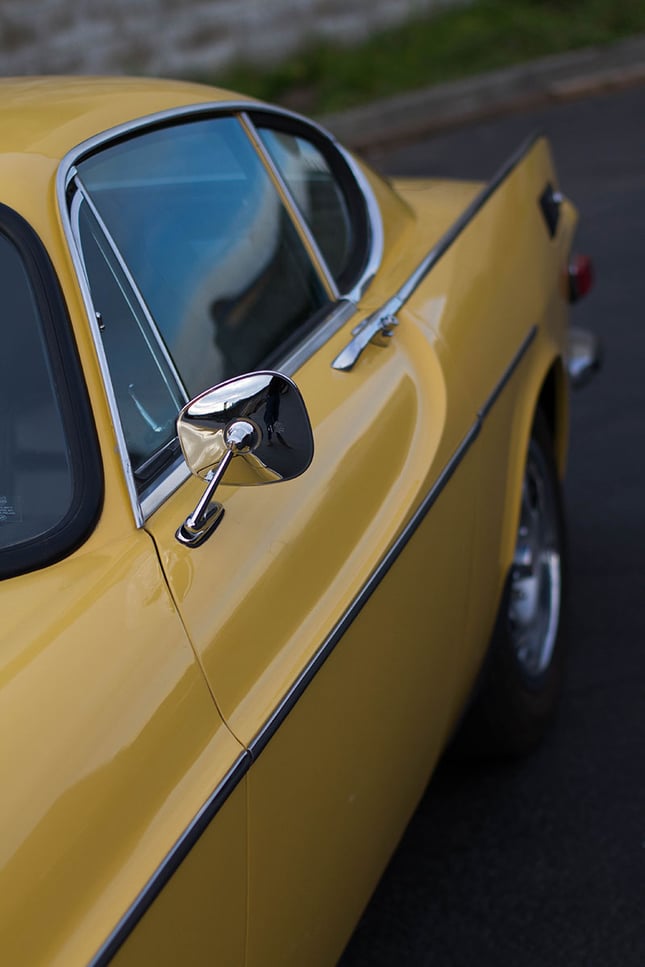
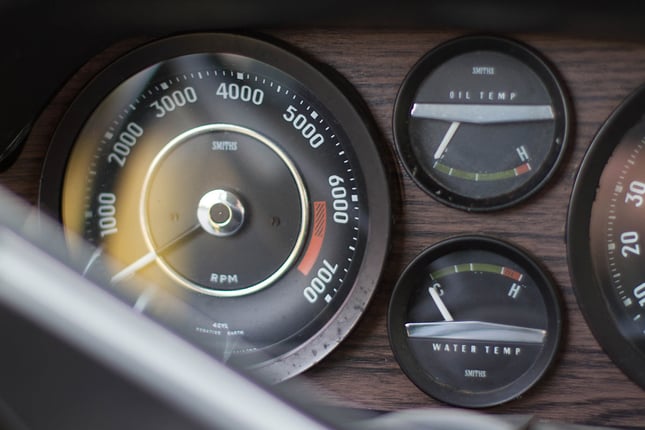
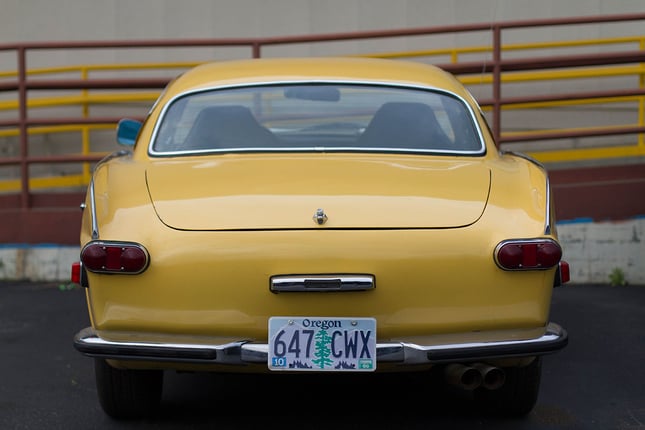
Roughly 47,500 Volvo 1800s were built across all versions, values have climbed steadily for a decade, and the car still costs a fraction of its Italian and British rivals. Find a solid shell, verify the numbers, and buy the best body you can afford. Love classic cars from this era? Explore our guide to the most valuable American cars of the 1970s and discover other classics worth collecting.
Ready to begin your Volvo 1800 shipping journey? Get an instant quote below:

Chevrolet Impala SS Buying Guide: 1994-1996 Values, 1960s Originals & What to Check | 2026
The Most Iconic American Muscle Cars and What They Cost to Buy | 2026 Guide