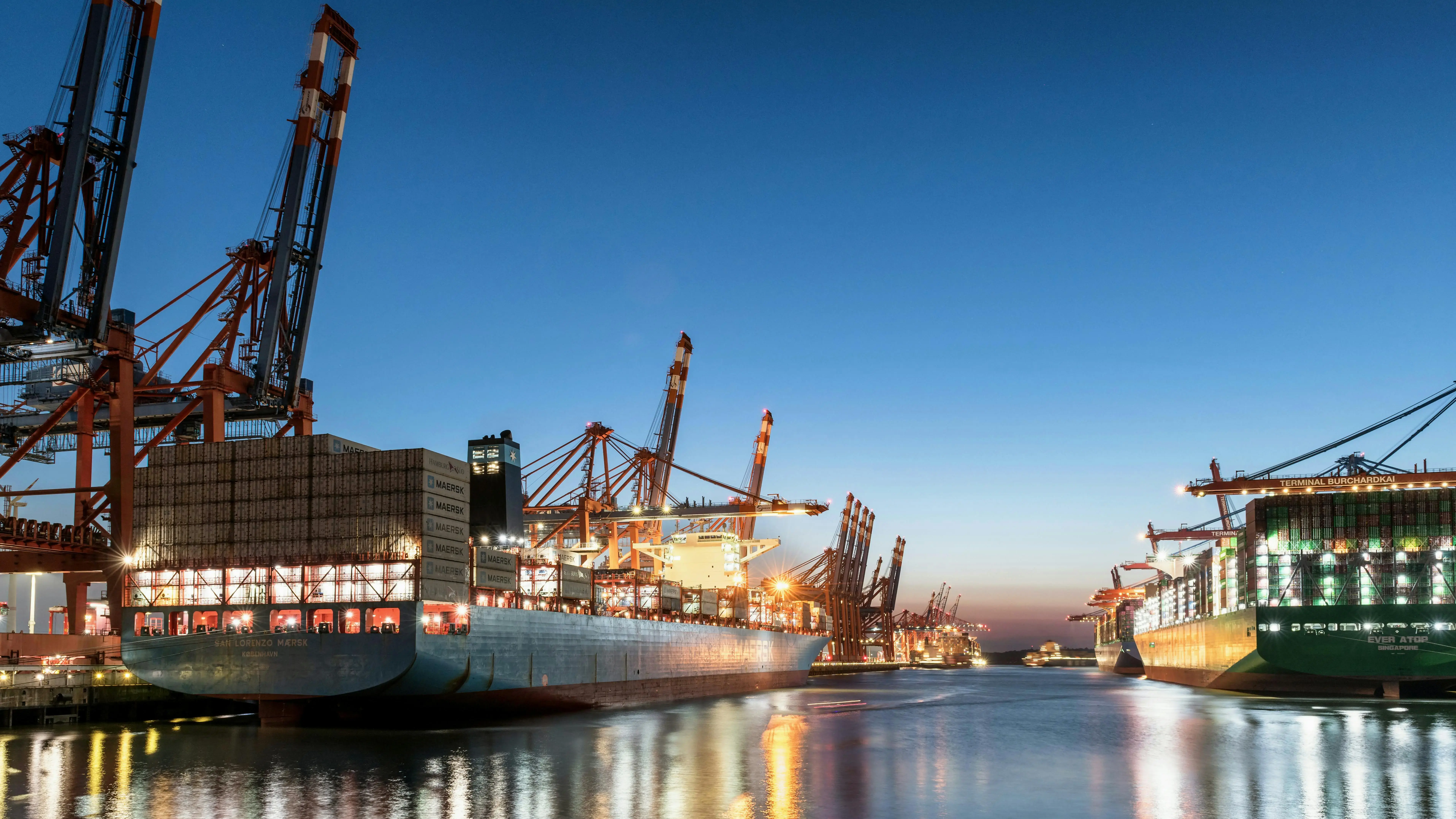

The new conflict centered on Iran has turned the Strait of Hormuz and the wider Middle East into one of the most acute maritime crises since the first Red Sea attacks in late 2023. For vehicle shippers, this is already resulting in longer routings, higher surcharges, growing container imbalances, and more complex planning for 2026 shipments, and is expected to continue if the conflict persists.
To make sense of what this means for your logistics, we will focus strictly on vessel movements, trade lanes, and freight markets—not politics.
What’s Happening in the Conflict (Logistics View)
The conflict moved into its current phase following joint U.S. and Israeli strikes on Iran announced around 28 February 2026, as covered in early war reporting by major outlets such as CNN and CBS News. From a logistics standpoint, three developments matter most right now:
-
Strait of Hormuz effectively closed to many Western‑aligned commercial ships. Iranian Revolutionary Guard Corps (IRGC) officials told state media that “the strait is closed” and warned they would attack any ship attempting to pass, a stance highlighted by Al Jazeera and echoed in Reuters coverage. Ship‑tracking data cited by CNBC and other outlets shows traffic falling sharply, with at least one day reported with no tanker crossings and major container lines effectively halting transits.
-
Red Sea and Bab el‑Mandeb risk returns. Reports indicate that Houthi‑aligned forces have threatened to resume attacks on commercial shipping following the Hormuz escalation. These threats and claimed attacks have been widely shared on regional and social media and referenced in maritime coverage from platforms like gCaptain and Sky News, prompting carriers that had begun limited Red Sea/Suez transits to revert to longer detours around Africa.
-
Attacks on merchant ships and port‑adjacent infrastructure. Multiple vessels have been reported hit in or near the Strait of Hormuz in early March, including incidents where three commercial ships were struck in one night, as shown in broadcast segments from CBS News and PBS NewsHour. International media have also reported drone attacks against oil or port‑related facilities in the wider Gulf region, including Oman and the UAE.
West Coast Shipping has documented this as a de facto closure of Hormuz for many Western‑aligned carriers and a simultaneous resurgence of Red Sea risks in their analysis of the
Iran war shipping disruption and vehicle imports.
That piece should be understood as WCS’s operational analysis rather than an official legal designation.
For day‑by‑day operational context, you can also review recent WCS updates such as
Iran War Shipping Update: Maersk Suspends Services
and
Iran War Shipping Day 12: 3 Ships Hit in Hormuz, IEA 400M Release,
which synthesize signals from sources including CNBC, Bloomberg, and the International Energy Agency.
Why This Matters for Global Shipping
Hormuz, the Red Sea, and the Suez Canal are core to east–west container flows linking Asia, the Middle East, Europe, and North America. When carriers substantially reduce or suspend use of these corridors at the same time, the effects cascade across global schedules and freight markets:
-
Two key arteries are, in practice, unavailable to many Western‑aligned carriers. As CNBC reports, major container shipping companies have ceased operations through Hormuz, while trade press and Reuters coverage show many Asia–Europe services again avoiding the Red Sea/Bab el‑Mandeb.
-
Capacity is absorbed by longer voyages. Rerouting Asia–Europe services around Africa typically adds around 10–14 days to voyages, a range cited in carrier advisories and echoed in analysis from maritime intelligence providers.
-
An expected overcapacity cycle has flipped in the short term. Industry observers quoted by Reuters and Automotive Logistics warn that a market bracing for excess vessel supply could instead face a near‑term capacity crunch on key lanes if closures and detours persist.
West Coast Shipping has seen similar patterns before. When carriers first paused Suez transits in 2022, voyages rerouted around the Cape of Good Hope added about 20 percent to transit times and caused major disruption to global logistics chains, as outlined in WCS’s analysis of
Suez Canal suspended voyages and Panama Canal delays.
Key Shipping Routes at Risk
The current conflict affects some of the busiest east–west container corridors. Below is an overview of the main route clusters and how they are being affected, based on current reporting and carrier advisories.
Middle East – Asia / Europe / Americas
-
Gulf ports (UAE, Qatar, Bahrain, Saudi East Coast, Kuwait, Iraq, Oman). Several major carriers have suspended bookings to and from selected Gulf ports or declared “end of voyage” on certain services, discharging containers at safer hubs outside the Gulf. These steps are reflected in WCS’s day‑by‑day coverage and in carrier notices reported by Reuters and Lloyd’s List.
-
Feeder networks inside the Arabian Gulf. CNBC, citing analytics firm Xeneta, notes that around 147 container ships are taking refuge in the Persian Gulf; combined with other cargo vessels, this means more than a hundred commercial ships sheltering or stranded in and around the region, representing substantial container capacity temporarily unavailable to the broader network.
This has direct implications for shippers moving vehicles via Gulf transshipment hubs that normally connect to Asia, Europe, and North America, and the exact impact will depend on specific ports and services.
Asia – Europe via Red Sea / Suez
-
Red Sea and Bab el‑Mandeb. Houthi‑aligned threats and attacks have led major lines—such as Maersk, MSC, CMA CGM, and Hapag‑Lloyd—to pause or sharply reduce Bab el‑Mandeb transits on many loops. These actions are documented in carrier circulars and in broadcast and online reporting from outlets such as Sky News and the BBC, which describe the Red Sea as a recurrent conflict zone for commercial shipping.
-
Asia–North Europe and Asia–Mediterranean lanes. These services are frequently being diverted via the Cape of Good Hope, adding around 3,500 or more nautical miles per voyage and about 10–14 days to schedules, depending on the exact port rotation and speed—a range repeated in carrier advisories and route comparisons used by analysts such as Xeneta.
This mirrors earlier Red Sea disruptions documented by West Coast Shipping, where carriers rerouted and extended transit times by weeks on Europe–Asia routes in the
Iran war shipping disruption
coverage.
Asia / Middle East – North America
-
Asia–US East Coast and Gulf. Services that previously used Suez are being rerouted via the Cape of Good Hope or, in some cases, rebalanced across the Panama Canal and US West Coast routings, according to shipping commentary in outlets like the Financial Times and ShippingWatch.
-
Panama Canal constraints still in play. Drought‑related capacity limits introduced by the Panama Canal Authority since 2023—summarized by UNCTAD and logistics blogs like FreightCenter—have reduced daily transit slots and draft allowances compared with pre‑crisis norms, and some restrictions or reduced capacity continue to affect container services.
West Coast Shipping has noted that these constraints can limit available space from California to Europe and Latin America and contribute to tighter capacity, as discussed in
Suez Canal suspended voyages and Panama Canal delays.
Major Chokepoints and Current Disruptions
| Chokepoint / Region | Status for Container Shipping (March 2026) | Main Impacted Lanes |
|---|---|---|
| Strait of Hormuz | De facto closed for many Western‑aligned commercial ships due to IRGC warnings and carrier suspensions, as reported by Al Jazeera and CNBC | Gulf–Asia, Gulf–Europe, Gulf–US |
| Red Sea / Bab el‑Mandeb | High risk; many major lines have paused most Bab el‑Mandeb transits as of early March 2026, according to carrier notices cited by Reuters and trade press | Asia–Europe, Asia–Med, some Asia–USEC |
| Suez Canal | Open, but widely avoided by many global carriers because reaching it via the Red Sea is high‑risk | Asia–Europe and Asia–USEC via Suez |
| Panama Canal | Reduced capacity from ongoing drought‑related restrictions by the canal authority | Asia–USEC, West Coast–Europe/Latin America |
| Black Sea | Elevated regional risk from ongoing conflict; box impact relatively limited versus Hormuz and the Red Sea according to current industry reporting | Regional Europe–Black Sea feeders |
| South China Sea / Taiwan | Tensions monitored; no major new closures reported by maritime authorities as of early March 2026 | Trans‑Pacific, intra‑Asia trades |
How Carriers Are Responding
Global carriers have shifted rapidly from cautious trial transits back to broad avoidance of high‑risk corridors, while keeping some flexibility on specific loops.
Suspensions and Shelter Instructions
-
Maersk has announced suspension of specific Middle East services and halted transits through the Strait of Hormuz on those loops, rerouting affected Asia–Europe and Middle East–Europe services via the Cape of Good Hope. These moves are described in CNBC’s coverage of Maersk’s Middle East suspensions and summarized in WCS’s
-
CMA CGM has instructed vessels in or bound for the Gulf region to seek shelter and has rerouted many services around Africa, significantly reducing Red Sea/Suez usage and reviewing transits on a case‑by‑case basis, as reported by Automotive Logistics and other trade outlets.
-
MSC and Hapag‑Lloyd have suspended transits through Hormuz and paused most Red Sea/Bab el‑Mandeb routings on affected services, with some loops declaring “end of voyage” and discharging cargo at alternate ports—steps described in WCS’s day‑by‑day coverage and in reporting from Bloomberg and WorldCargo News.
In some cases, carriers are pausing new bookings to and from parts of the Middle East entirely until security conditions and routing options become clearer.
Rerouting Strategy: Cape of Good Hope
Carriers are defaulting to the Cape of Good Hope as the main east–west alternative for a substantial share of services that would normally use Suez:
-
Asia–Europe and Asia–Med services are being diverted around southern Africa, adding several thousand nautical miles—commonly estimated at roughly 3,500 extra nautical miles—and about 10–14 days to schedules, according to carrier advisories and route analyses quoted by Xeneta and other data providers.
-
Knock‑on effects include higher bunker consumption, longer round‑trip times, and less effective capacity available per month on each string, which can tighten available space even if fleet size has not changed.
West Coast Shipping previously analyzed similar detours when Suez transits were suspended, noting in their
Suez Canal and Panama delays
article that these longer routes can add about 20 percent to voyage duration. That figure is WCS’s operational estimate based on typical services.
Termination of Voyage and Cargo Re‑positioning
In the Gulf region, carriers are increasingly using “termination of voyage” clauses:
-
Voyages are being ended at safer hubs outside the Arabian Gulf, with containers discharged there rather than continuing into Hormuz or upper‑Gulf ports, as described in WCS’s Day‑11 and Day‑12 updates.
-
Shippers must arrange alternative moves—either via feeder solutions when and where they resume, overland transport, or rebooking on other services—within deadlines specified by carriers.
Recent West Coast Shipping updates detail how lines are setting dates by which cargo owners must provide instructions for affected containers before termination procedures progress.
Potential Impact on Freight Costs
The combination of longer routes, conflict‑related risk pricing, and equipment imbalances is already translating into higher freight costs in several ways, according to carrier advisories and industry coverage.
Surcharges and Conflict‑Related Add‑Ons
Carriers have begun applying significant add‑ons for routes touching the conflict zone or using extended detours:
-
Conflict and emergency surcharges in the high‑hundreds to low‑thousands of dollars per container on higher‑risk lanes from the Arabian Peninsula and nearby regions have been reported by trade press.
-
Additional surcharges on cargo exiting Oman, Jordan, and Saudi Arabia have been reported in the low‑thousands of dollars per container on selected higher‑risk trades, based on the same coverage and on Maersk’s contingency surcharge levels up to around 3,300 USD per TEU summarized by WCS.
These patterns echo earlier phases of the Red Sea crisis, when lines introduced temporary surcharges to cover longer distances and enhanced security measures, as WCS discussed in their early
Iran war shipping disruption
analysis.
Longer Voyages, Higher Operating Costs
Rerouting around the Cape of Good Hope increases per‑voyage operating expenses:
-
Extra transit time: Around 10–14 additional days is commonly cited for Asia–Europe detours versus traditional Suez routings, depending on the service speed and port rotation, a range repeated in carrier advisories and analyst notes.
-
Fuel consumption: The added distance at maintained service speeds significantly raises bunker usage per round trip and can reduce the number of round voyages a vessel can complete each year, a concern highlighted by market commentators interviewed on CNBC International.
These incremental costs tend to be passed through to shippers via higher base rates or temporary surcharges, especially when effective capacity is reduced by longer rotations.
Container Equipment and Capacity Imbalance
The Iran crisis is also contributing to equipment and capacity imbalances:
-
More than a hundred vessels sheltering in and around the Gulf represent a substantial amount of container capacity temporarily tied up in the region, potentially amounting to hundreds of thousands of TEUs of capacity by some industry estimates, as suggested by figures cited in CNBC’s reporting on stranded ships and WCS’s own container‑ship counts.
-
Global container cycles elongate as vessels spend more days at sea on detours rather than turning around quickly, similar to dynamics seen during the pandemic‑era container shortage, which UNCTAD and other bodies have documented extensively.
West Coast Shipping’s guide to the
shipping container shortage and its impact on container ship transport
explains how delayed container turnarounds can translate directly into higher rates and longer lead times—a dynamic that may repeat if the current crisis persists.
Practical Expectations for Shippers
If you are planning to move vehicles internationally in Q1–Q2 2026, current reporting and carrier guidance suggest the following are likely:
-
Middle East routings are likely to remain heavily disrupted at least through the end of March and may remain volatile beyond that, depending on how the conflict evolves—a view echoed in scenario discussions on platforms like the World Economic Forum and in energy‑market analysis on CNBC.
-
Asia–Europe transit times via diverted services can often run 10–14 days longer than pre‑crisis norms, depending on the specific service, port rotation, and speed.
-
Rate volatility and surcharges are expected to remain a feature of bookings involving the Middle East, Red Sea, or Cape‑routed services in the near term, according to industry analysts quoted by Reuters and Automotive Logistics.
These are expectations and scenarios framed by current conditions and analyst commentary, not guarantees. Shippers should revisit assumptions frequently as new advisories emerge.
What This Means for Global Logistics Planning
The broader logistics implications go beyond the immediate war zone. Network planners now need to factor in sustained chokepoint risk across multiple corridors and design more resilient routing options.
1. Structural Dependence on the Cape of Good Hope
With both Hormuz and the Red Sea in practice unavailable for many Western‑aligned carriers, the Cape route has become a critical east–west alternative:
-
More services layered onto a single alternative corridor increase the risk of congestion and schedule bunching around key bunkering and transshipment ports in southern Africa, a concern flagged by analysts in international business media.
-
Schedule reliability may decline as lines juggle extended rotations, weather around the Cape, and evolving security advisories, leading to more variable ETAs.
If you are shipping vehicles from Asia to Europe or vice versa, it is prudent to build in extra buffer time and consider flexible ETD/ETA windows to absorb delays.
2. Pressure on Other Chokepoints (Panama and US Gateways)
As carriers rebalance fleets, there are knock‑on effects:
-
Panama Canal constraints remain a key factor for Asia–US East Coast and Latin America services, with the Panama Canal Authority’s drought‑related measures reducing daily transit slots and draft compared with historic norms, which can constrain container flows; these measures have been summarized by UN agencies and logistics analysts.
-
US West Coast gateways may see renewed interest as shippers route via Pacific services and then move cargo inland by rail, easing reliance on constrained all‑water Asia–USEC services in some scenarios, a pattern explored in several North American port‑focused briefings.
West Coast Shipping’s articles on
air vs ocean freight to Panama
and
RoRo vs container shipping to Panama
offer frameworks for comparing transit time, cost, and routing trade‑offs when primary canals are constrained.
3. Regional Exporters and Auto Trade
For auto exporters and importers, especially those relying on Middle East and South Asia hubs:
-
Automotive supply chains linked to Gulf and nearby ports face added complexity, as traditional hubs may be less dependable for transshipment, prompting a shift to alternative gateways in Europe, Asia, or Africa. This trend is highlighted in recent pieces from Automotive Logistics.
-
Container scarcity in origin regions can lead to booking rollovers, higher spot rates, and limited availability for shared containers, particularly on lanes most exposed to diversions and sheltering vessels.
West Coast Shipping’s experience from previous disruption cycles, as summarized in the
shipping container shortage impact guide,
can help auto traders plan around these equipment and capacity challenges.
4. Contingency Planning and Lane Diversification
Given the current risk landscape, practical steps for vehicle shippers include:
-
Diversify ports of loading and discharge. Where possible, consider alternative European, Asian, or Latin American gateways that limit exposure to Hormuz and Red Sea risks, based on current carrier routings.
-
Use flexible routing strategies. Remain open to indirect routings (for example, via transshipment hubs or alternate canals) if they reduce risk, even when they add some transit time.
-
Book earlier and plan on wider windows. Allow time for rerouting and potential vessel schedule changes, especially for time‑sensitive vehicle shipments, and plan around ranges rather than fixed “just‑in‑time” dates.
Recent commentary from organizations such as the World Economic Forum has suggested that disruptions of this scale tend to be measured in months rather than days, underscoring the importance of medium‑term contingency planning rather than waiting for an immediate return to normal.
How West Coast Shipping Helps You Navigate 2026 Disruptions
In a market where chokepoint risk has become a recurring feature, working with a specialist that monitors these lanes daily can make the difference between a predictable transit and repeated rollovers.
West Coast Shipping:
-
Monitors conflict‑related shipping advisories and carrier notices across Hormuz, the Red Sea, Suez, and Panama to adjust routings in close to real time, as reflected in frequent updates on the
-
Secures capacity through long‑term relationships and allocation planning, which proved critical during both the pandemic‑era container crunch and recent Red Sea crises, as detailed in the
global shipping container shortage
article.
-
Advises on route and method selection (RoRo vs container, direct vs transshipment, Panama vs Suez vs West Coast) using insights from recent pieces such as the
complete guide to shipping cars to Panama
and the guide on
Whether you are importing a single classic from Japan or exporting a full container of vehicles to Latin America, the same principles apply: understand where the chokepoints are, how carriers are reacting, and what that means for your timeline and budget.
Disclaimer: This article is provided by West Coast Shipping as general informational content based on publicly available reporting as of March 12, 2026. The situation in the Middle East is developing rapidly and details may change. This is not legal, financial, or customs advice. All shipping routes, carrier policies, port statuses, and cost figures referenced are illustrative and based on publicly available information at the time of writing. Actual conditions, rates, and timelines may differ. Before making any shipping decisions, contact your logistics provider directly for the most current information.
Calculate Your International Car Shipping Costs
As the Iran conflict and renewed Red Sea risks continue to reshape global shipping routes, your exact cost and transit time will depend on origin, destination, route selection, and current carrier surcharges. To get a tailored view based on today’s vessel schedules, detours, and capacity constraints, you can request a rate quote with the latest routings and transit assumptions directly from the West Coast Shipping team.

Iran War Shipping Day 10

Iran War Shipping Day 12: 3 Ships Hit in Hormuz, IEA 400M Release