

Disclosure and disclaimer (February 2026): This article is provided by West Coast Shipping (WCS) as general informational and promotional content about WCS services. It is not legal, tax, import, customs, financial, or compliance advice and does not create any client relationship. All duty rates, age thresholds, penalty examples, and regulatory references are illustrative summaries based on publicly available Ghana Revenue Authority (GRA) guidance, broker reports, and WCS’s experience as understood in February 2026, and they may change without notice. Ghana customs rules, duty rates, overage penalties, and GRA interpretations can change at any time. Before importing any vehicle, always verify current requirements with GRA, a licensed customs broker in Ghana, and consider professional financial advice regarding currency exposure.
Update, October 2, 2026: From October 1, 2026, the Ghana Standards Authority (GSA) prohibits the import of used vehicles more than 15 years old, along with flood-damaged, burnt or fire-damaged vehicles and vehicles with a broken, cracked, bent or twisted chassis or a damaged safety cage (GSA notice "Enforcement of National Vehicle Standards to Protect Consumers", August 26, 2026). The notice names no exemption for classic or collector cars. A car between 10 and 15 years old is not covered by the ban and still faces the overage penalties below, which are GRA practice and can change. Check the build year and the damage history before you buy.
Ghana is one of West Africa’s most active destinations for imported vehicles from the USA, but it also applies some of the region’s strictest age‑based rules and penalties. Understanding how those penalties work—and how quickly they escalate for older cars—is essential if you want to avoid buying a vehicle that becomes uneconomical once it reaches Tema.
This article focuses on the age‑based duty penalty side of Ghana imports: the 10‑year rule, how overage penalties are typically applied in practice, what that means for different age bands, and how West Coast Shipping fits into a compliant, predictable shipping plan. For the full context, including currency and model‑choice considerations, see the main guide on Ghana car imports, age duties, currency, and American muscle. For current routes, example rates, and transit times to Tema Port, visit the Ghana car shipping page.
Ghana’s 10‑Year Import Age Limit: The Baseline Rule
Core rule as of February 2026
As of February 2026, Ghana generally limits used vehicle imports to a maximum age of 10 years from the year of manufacture. WCS’s overview in the U.S. to Ghana car exports guide summarises the practical effect:
- For vehicles arriving in 2026, cars and light trucks typically need to be 2016 model year or newer to avoid being treated as “overage.”
- Age is calculated from the production year, not the first registration date.
This 10‑year limit is the starting point for every import decision. Anything newer than the limit is usually treated under standard duty rules, while a car between 10 and 15 years old moves into the overage category and faces discretionary penalties. From October 1, 2026, a used car more than 15 years old cannot be imported at all.
Because Parliament and GRA can revise standards and age thresholds, importers should always confirm the current allowable age with a Ghana‑based broker or GRA before purchasing a vehicle intended for Tema.
How age interacts with engine size and body type
The 10‑year rule sits on top of an already tiered duty framework. As outlined in WCS’s step‑by‑step Ghana import guide:
-
Engine size strongly influences base import duty (for example, 10% for many smaller engines and 20% for engines over 3.0 litres).
-
Vehicle type (saloon, SUV, pickup, commercial) can affect valuation, perceived market fit, and sometimes additional levies.
In other words, age is an extra layer, not a substitute for standard duty. A 3.5‑litre SUV that is 11 years old is hit twice: once for being a large‑engine vehicle, and again for being overage.
Overage Penalties: How Ghana Applies Age‑Based Charges in Practice
Discretionary, not codified in primary law
Ghana’s customs law frames the ten‑year limit, but the detailed overage penalty schedule is not printed in a single statute. Instead, as WCS notes in the classic car imports to Ghana guide:
-
GRA commonly applies age‑based penalty rates to vehicles older than 10 years.
-
Penalties are applied as an additional percentage on the CIF value (Cost + freight + coverage equivalent) on top of normal duties and levies.
-
The exact percentage varies, depending on the vehicle’s age band and how it is treated in ICUMS (Ghana’s Integrated Customs Management System).
Broker guidelines and duty calculators used in the Ghana market commonly cite the following illustrative penalty structure:
|
Vehicle Age (from production year) |
Indicative Penalty on CIF |
|---|---|
|
≤ 10 years |
0% |
|
> 10 and ≤ 12 years |
5% |
|
> 12 and ≤ 15 years |
20% |
|
> 15 and ≤ 25 years |
50% |
|
> 25 and ≤ 35 years |
70% |
|
> 35 years |
100% |
From October 1, 2026, the three bands above 15 years no longer apply to new imports, because the GSA prohibits used vehicles more than 15 years old. These bands appear consistently in broker documentation and third‑party duty calculators, but they are guidelines, not guaranteed outcomes. GRA can adjust or interpret penalties differently on a case‑by‑case basis. GRA does not publish a codified penalty schedule, meaning these percentages reflect common broker practice rather than fixed law.
Because overage penalties are discretionary and subject to change, never rely solely on generic penalty tables. Always ask your Ghana‑based customs broker how GRA is handling recent cases for vehicles of similar age and type.
How penalties stack with standard duty and VAT
Before age penalties are added, a typical duty stack for many passenger vehicles might look like this (figures are approximate and can change):
-
Import duty: 10–20% of CIF (higher end for large engines)
-
NHIL: 2.5%
-
GETFund levy: 2.5%
-
EXIM levy: 1%
-
AU levy: 0.2%
-
VAT: 15% on duty‑inclusive value
Even without overage penalties, the total burden can reach roughly 35–40% of CIF. When you add a 20%, 50%, or even 70–100% age penalty, the effective tax load on an older vehicle can exceed 80–120% of its CIF value.
The result is simple but important: slightly over‑the‑limit vehicles may still be viable, but significantly older cars often become uneconomical unless they are true high‑value collector vehicles.
Age Bands and Their Practical Impact on Import Decisions
0–10 years: Standard imports
Vehicles under 10 years old are generally treated as compliant:
-
Key characteristics:
-
No overage penalty applied.
-
Standard duty structure based on engine size and CIF.
-
Easiest path for first‑time importers and everyday buyers.
-
-
Examples:
-
A 2020 Toyota Camry, a 2019 Ford F‑150, or a 2018 Honda CR‑V.
-
For these cars, the main variables are purchase price, CIF value, and how efficiently you manage shipping and local clearance. The Ghana car shipping page outlines current container rates and how WCS moves these vehicles from US ports to Tema.
10–12 years: Light penalties, watch the margin
Vehicles between 10 and 12 years move into the first overage band:
-
Indicative penalty: around 5% of CIF.
-
Risk profile: Penalties are real but not yet devastating; the import can still work if you bought the vehicle cheaply in the US.
-
Example:
-
A 2014 mid‑size sedan imported in 2026 with relatively low CIF might attract manageable penalties.
-
However, once you factor in the 5% penalty plus standard duties and fees, the total cost can still surprise buyers who only budgeted using base duty formulas.
12–15 years: Medium penalties, case‑by‑case justification
Vehicles between 12 and 15 years can incur penalties around 20% of CIF:
-
Indicative penalty: about 20%, on top of the 35–40% base duty stack.
-
Use case: Justifiable mainly for specific high‑demand models or unusually good deals.
At this age range, you should:
-
Compare total landed cost (vehicle + shipping + full duties) with the price of newer alternatives already in Ghana.
-
Ensure your broker confirms GRA’s current stance on that age band before you lock in a purchase.
Over 15 years: banned from October 1, 2026
Until October 1, 2026, vehicles over 15 years paid reported penalties of roughly 50% of CIF. From that date they cannot be imported:
-
Before October 1, 2026: an indicative penalty of around 50% on top of regular duties and levies.
-
From October 1, 2026: prohibited from import by the Ghana Standards Authority.
Only true collector vehicles—rare classics, performance models, or historically significant cars—used to justify such a burden. The GSA notice names no exemption for them, so confirm with your Ghana broker before you buy any car more than 15 years old.
25+ years: also over the 15-year limit
For vehicles older than 25, 35, or more years, penalty guidelines used to cite 70 to 100% of CIF. These cars are also more than 15 years old, so from October 1, 2026 they fall under the GSA import ban. Until then this category was reserved for:
- Classic and vintage cars imported as collector items.
- Heritage vehicles used for exhibitions or special collections.
WCS’s classic car imports to Ghana guide covers how duty and penalties worked for older classics before the October 2026 rules.
Worked Example: How Age Penalties Change a Real‑World Cost Model
To see how age penalties affect total cost, compare two hypothetical US‑sourced SUVs headed to Tema: one within the 10‑year limit and one well beyond it. Figures below are illustrative and rounded for simplicity.
Example 1: 2018 SUV (8 years old in 2026)
Assumptions:
-
Purchase price: $18,000
-
Shipping New Jersey to Tema (shared container): $1,500 (around 27 days)
-
CIF value: $19,500
Base duty stack (approximate, assuming larger engine and 20% duty):
-
Import duty (20% of CIF): $3,900
-
Levies (NHIL, GETFund, EXIM, AU combined): ≈ $1,200–$1,300
-
VAT (15% on duty‑inclusive value): often $1,000+
Total taxes and fees can reasonably land in the $6,500–$7,500 range, making the overall landed cost in Ghana around $26,000 to $27,000 equivalent.
Because the vehicle is under 10 years old, no age penalty applies; the decision becomes a straightforward question of whether that total cost fits the buyer’s budget and local market value.
Example 2: 2010 SUV (16 years old, shipped before October 1, 2026)
Assumptions:
-
Purchase price: $10,000
-
Shipping New Jersey to Tema: $1,500
-
CIF value: $11,500
Base duty stack (same assumptions as above):
-
Import duty (20% of CIF): $2,300
-
Levies: ≈ $700–$800
-
VAT: $600–$800+, depending on final valuation.
Now add the indicative 50% age penalty for a 15–25 year vehicle:
- Age penalty (50% of CIF): $5,750
Even though the vehicle cost half as much to buy in the US, the age penalty alone is more than the original purchase price. Once all components are added:
-
Total duties/fees could easily reach $9,500–$11,000,
-
Making the total landed cost similar to or higher than the newer 2018 SUV in Example 1.
From October 1, 2026, this example no longer applies: at 16 years old, the SUV is over the GSA's 15-year limit and cannot be imported at all. The same money buys an import-eligible car like the 2018 SUV in Example 1.
Because actual penalty percentages and VAT bases can vary, always ask your Ghanaian customs broker to model scenarios for your specific vehicle before you buy, and treat online penalty tables as guidance rather than guarantees.
Documentation and Valuation: How GRA Decides What to Tax
CIF value and reference pricing
GRA calculates duties and penalties on the CIF value, but that value is not just the number on your bill of sale. In practice, valuation is based on:
-
The declared purchase price,
-
Comparable values in databases and reference guides, and
-
GRA’s internal assessment of market value.
If the declared price looks suspiciously low for a given model year and spec, GRA may:
-
Reject the invoice value and apply reference prices from their databases.
-
Increase CIF for calculation purposes, which automatically raises duty and penalties.
To minimise disputes, WCS and Ghana‑based brokers generally recommend:
-
Using realistic purchase prices, supported by auction sheets or dealer invoices.
-
Providing supporting documents such as online listings for similar vehicles, if available.
-
Keeping clear records of transport and loading charges to justify the freight cost component.
Why paperwork matters more for older vehicles
For overage vehicles, documentation is even more important because:
-
GRA will scrutinise high‑age vehicles more carefully.
-
Penalty percentages can be applied on top of any adjusted CIF value.
-
Any disagreement over valuation has a magnified effect due to penalties and VAT stacking.
For classic and collector vehicles, WCS’s dedicated guides on classic car imports to Ghana explain which documents—appraisals, auction records, and restoration invoices—help most.
How West Coast Shipping Fits Into Ghana’s Age‑Sensitive Import Process
WCS does not set Ghana’s age rules or calculate duties—that is GRA’s domain—but our job is to ensure that the logistics and documentation side of your shipment supports a smooth, compliant clearance.
For Ghana‑bound vehicles, our services typically include:
-
US collection and export preparation:
Pickup anywhere in the US and delivery to our own warehouses in California, Florida and New Jersey, covering all of the US for imports and exports. Our own team loads every car and handles every document.
-
Containerised shipping to Tema:
Regular consolidated containers and dedicated containers to Tema, with New Jersey to Tema at $1,500 per car in a shared container, about 27 days by ocean.
-
Accurate export paperwork:
Bills of lading, AES/EEI filing, and packing lists that your Ghanaian broker can use as part of the ICUMS entry.
-
Coordination with Tema‑based agents:
We work with your chosen Ghana broker or can introduce you to partners who understand age penalties and collector‑vehicle issues.
The Ghana car shipping page provides current example rates by US port, outlines how we load and secure vehicles in containers, and explains the overall timeline from US departure to Tema arrival.
If you are planning to import an overage or near‑limit vehicle, it is especially important to coordinate early so that purchase decisions, shipping dates, and customs planning all align with Ghana’s current age‑based policies.
Plan Your Next Ghana Import with Age Penalties in Mind
Ghana’s age‑based duty penalties turn vehicle age from a simple spec line into a critical cost driver. For vehicles under 10 years old, imports can be straightforward; for 10–15 year vehicles, penalties start to bite; and from October 1, 2026, a used car more than 15 years old cannot be imported at all.
To make smart decisions:
- Use the main Ghana car import guide on age duties, currency, and American muscle as your strategic overview.
- Pair it with real‑world rate examples and transit details on the Ghana car shipping page, then ask your Ghana‑based customs broker to model duties and penalties for your specific vehicle.
With realistic numbers from WCS and up‑to‑date guidance from a Ghanaian broker, you can decide whether your next import belongs in the “standard duty,” “light penalty,” or “over the limit” category before you buy.
Ready to ship your next car to Tema? We ship door to door from our own warehouses in California, Florida and New Jersey, and our own team loads every car and handles every document. It's your dream car. Let's bring her home.

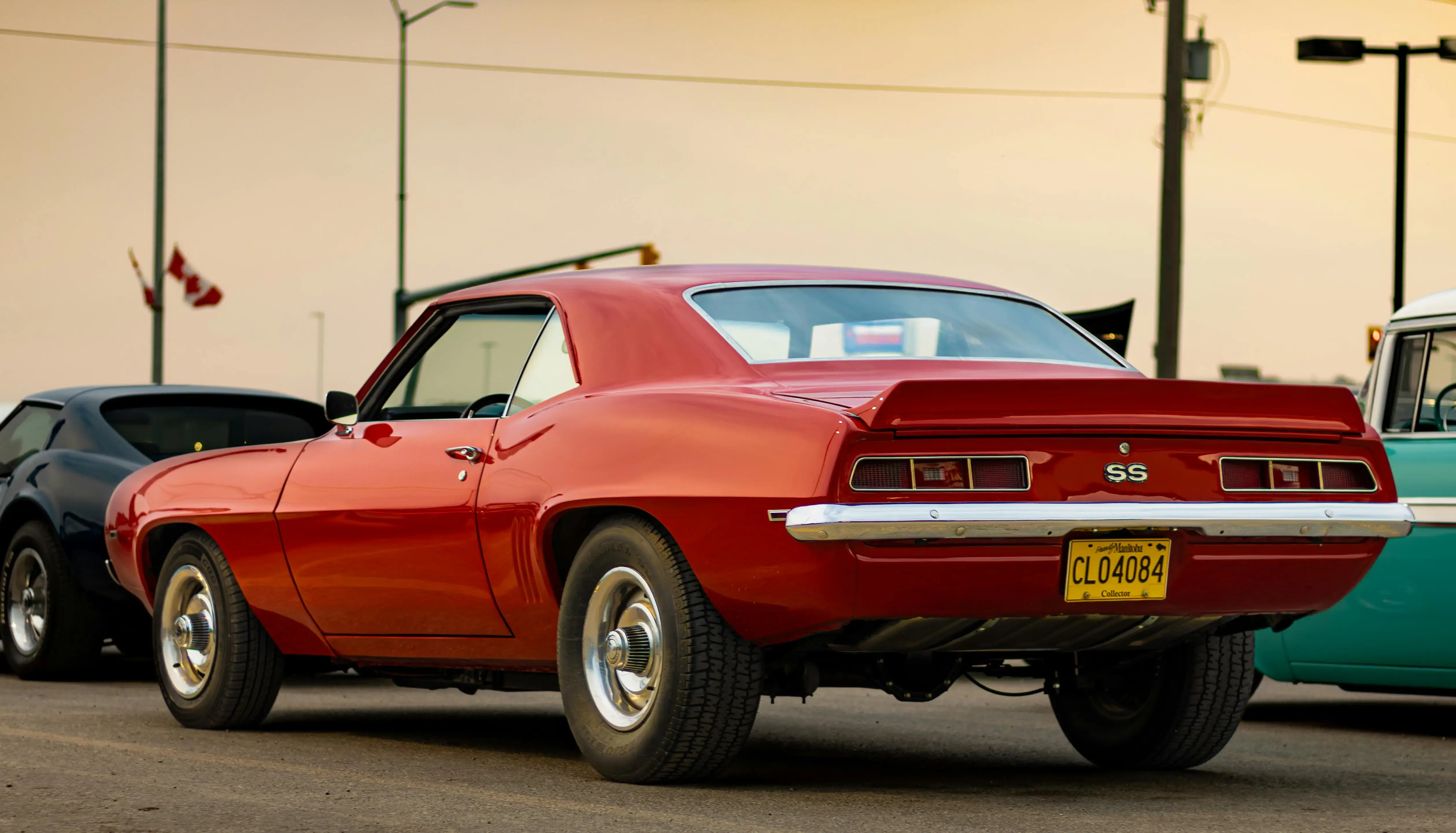
Ghana Car Import Guide: Age Duties, Currency & American Muscle

Ghana Motorcycle Duties 2026: Tema Cost Calculator Guide