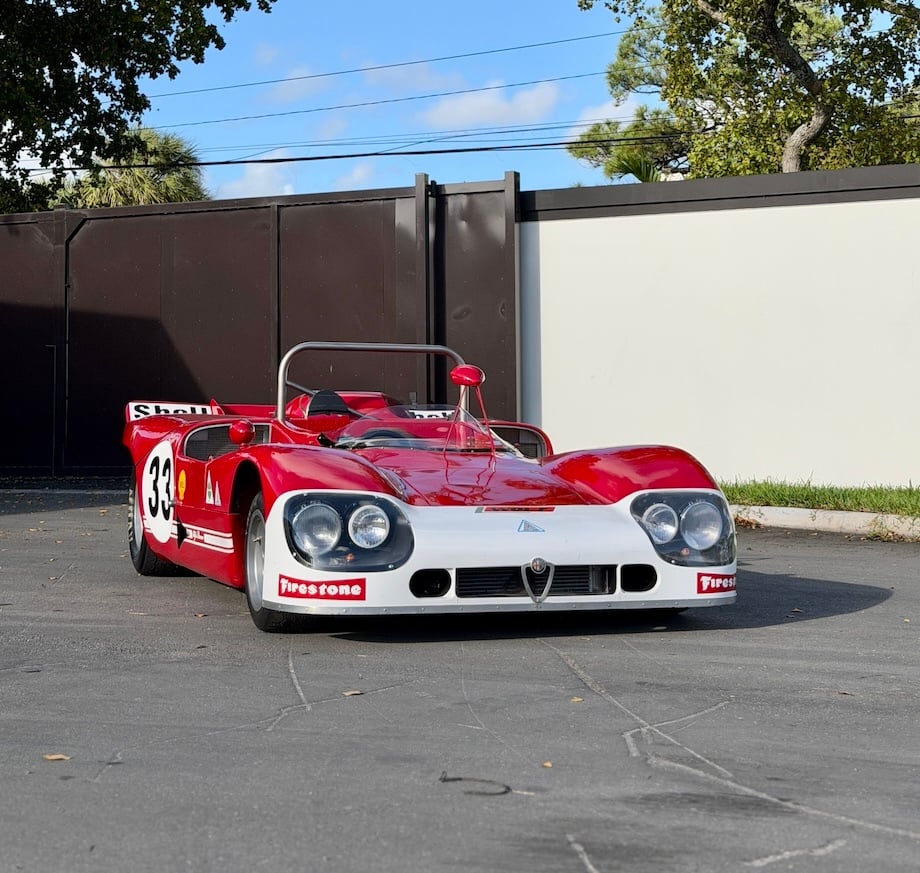
EU vs UK Classic Car Import Duty: Why a Porsche Pays 10% and a Jaguar Pays 12.5% (2026)

A passenger car 25 years or older pays a 2.5% base duty. The Section 301 duty that started July 24, 2026 treats that 2.5% differently for the EU and the UK:
EU-built: 10% combined. The 2.5% is counted inside the 10%. Total 10%.
UK-built: 10% additional. The 10% is added on top of the 2.5%. Total 12.5%.
Duty follows where the car was built, not where you bought it.
A German Porsche and a British Jaguar can be the same age, the same value, and the same kind of car. At the U.S. port they do not pay the same duty.
What duty does a $40,000 classic car pay?
| Built in the EU | Built in the UK | |
|---|---|---|
| Ordinary duty (Column 1) | 2.5% | 2.5% |
| Section 232 auto tariff (9903.94.04) | $0 | $0 |
| Section 301 heading | 9903.05.39 | 9903.05.81 |
| How the 10% applies | Combined: 2.5% counted inside the 10% | Additional: 10% added on top of 2.5% |
| Total duty rate | 10% | 2.5% + 10% = 12.5% |
| Duty on $40,000 | $4,000 | $5,000 |
The 2.5% is the same
Most passenger cars under heading 8703 carry an ordinary Column 1 duty of 2.5%. Cars 25 years or older also skip the Section 232 auto tariff.
U.S. Customs and Border Protection, Section 232 Additional FAQs: Automobiles and Auto Parts:
"Yes, used passenger vehicles and trucks are subject to the Section 232 duties pursuant to the Proclamation, except those manufactured in a year at least 25 years prior to the year of the date of entry."
That exception is HTS 9903.94.04. Its rate is "the duty provided in the applicable subheading," with no Section 232 auto tariff on top. For a car entered in 2026, that means a car manufactured in 2001 or earlier. Same for an EU car and a UK car. The split is the next layer.
Why doesn't the passenger vehicle exclusion from Section 301 apply?
Section 301 excludes passenger vehicles under 9903.05.90, but only vehicles that are subject to Section 232. A classic that qualifies for the 25-year exception under 9903.94.04 is outside Section 232, so it falls back under Section 301.
Section 301 is written two different ways: combined vs additional
CBP published the rule in CSMS #69326983, GUIDANCE: Section 301 Forced Labor Import Duties, effective for entries on or after July 24, 2026.
European Union: 10% combined, the 2.5% is included
A passenger car at 2.5% is under 10%, so it uses 9903.05.39:
"articles the product of a member state of the European Union, with an ad valorem (or ad valorem equivalent) rate of duty under column 1 less than 10 percent … will be assessed a combined column one and Section 301 duty rate of 10%."
Combined means the 2.5% base duty is counted as part of the 10%, not added to it. CBP collects 10% in total: 2.5% ordinary duty plus 7.5% Section 301. Total: 10%.
United Kingdom: 10% additional, on top of the 2.5%
Britain uses 9903.05.81:
"articles the product of the United Kingdom will be assessed an additional ad valorem rate of duty of 10%."
Additional means the 10% is stacked on the 2.5% base duty, not merged with it. The Harmonized Tariff Schedule rate is "the duty provided in the applicable subheading + 10%." 2.5 plus 10 is 12.5%.
Popular EU-built classics: 10% combined
| Car | Years | Built in | Example value → duty |
|---|---|---|---|
| Porsche 911 Carrera (993) | 1994 to 1998 | Zuffenhausen, Germany | $110,000 → $11,000 |
| Porsche 911 (964) | 1989 to 1994 | Zuffenhausen, Germany | $95,000 → $9,500 |
| BMW M3 (E30) | 1986 to 1991 | Munich, Germany | $85,000 → $8,500 |
| Mercedes-Benz 500E (W124) | 1990 to 1995 | Stuttgart area, Germany (Porsche and Mercedes) | $45,000 → $4,500 |
| Mercedes-Benz G-Class (W463) | 1990 to 2001 | Graz, Austria | $60,000 → $6,000 |
| Lancia Delta HF Integrale | 1987 to 1994 | Italy | $70,000 → $7,000 |
| Ferrari F355 | 1994 to 1999 | Maranello, Italy | $140,000 → $14,000 |
| Lamborghini Diablo | 1990 to 2001 | Sant'Agata Bolognese, Italy | $350,000 → $35,000 |
| Volkswagen Golf GTI (Mk2) | 1984 to 1992 | Wolfsburg, Germany | $18,000 → $1,800 |
| Peugeot 205 GTI | 1984 to 1994 | France | $22,000 → $2,200 |
| Renault 5 Turbo 2 | 1983 to 1986 | France | $120,000 → $12,000 |
Popular UK-built classics: 2.5% + 10% additional = 12.5%
| Car | Years | Built in | Example value → duty |
|---|---|---|---|
| Land Rover 90 / 110 and Defender | 1983 to 2001 | Solihull, England | $75,000 → $9,375 |
| Range Rover Classic | 1970 to 1996 | Solihull, England | $55,000 → $6,875 |
| Jaguar E-Type | 1961 to 1975 | Coventry, England | $150,000 → $18,750 |
| Jaguar XJ220 | 1992 to 1994 | Bloxham, England | $500,000 → $62,500 |
| Aston Martin DB7 | 1994 to 2001 | Bloxham, England | $45,000 → $5,625 |
| Classic Mini Cooper | 1961 to 2000 | Longbridge, England | $30,000 → $3,750 |
| Lotus Esprit | 1976 to 2001 | Hethel, England | $65,000 → $8,125 |
| TVR Griffith 500 | 1992 to 2001 | Blackpool, England | $50,000 → $6,250 |
| Triumph TR6 | 1968 to 1976 | Coventry, England | $35,000 → $4,375 |
| MGB | 1962 to 1980 | Abingdon, England | $20,000 → $2,500 |
Example values are illustrative, not market quotes. Duty is calculated on the transaction value declared at entry.
Where was your car built? Five that catch people out
- Ford Escort RS Cosworth (1992 to 1996): a Ford of Britain icon, built by Karmann in Rheine, Germany. EU origin, 10%.
- Porsche Boxster (986), 1997 to 2001: some were built by Valmet in Uusikaupunki, Finland. Still EU origin, 10%.
- Mercedes-Benz G-Class: built in Graz, Austria. EU origin, 10%.
- Innocenti Mini: built in Italy under license. EU origin, 10%, unlike a Longbridge Mini.
- A Jaguar sold in Germany, or a Porsche sold in London: origin does not move with the sale. The Jaguar is still UK, the Porsche is still EU.
Check the VIN and the manufacturer's plate. The build plant decides the rate. For country-specific paperwork, see our Germany and UK import pages.
What this rate covers, and what it doesn't
This stack is for passenger cars 25 years or older, heading 8703, entered on or after July 24, 2026. It is not the rate for new cars or trucks. Merchandise Processing Fee and Harbor Maintenance Fee (ocean freight) sit on top of duty. Our import car tariffs page tracks the current rates for newer cars.
Frequently asked questions
What is the import duty on a classic car from Germany to the USA in 2026?
A passenger car 25 years or older built in Germany or any other EU member state pays 10% combined when entered on or after July 24, 2026. The 2.5% ordinary duty is included in that 10%, not added to it.
What is the import duty on a classic car from the UK to the USA in 2026?
A passenger car 25 years or older built in the United Kingdom pays 12.5%: the 2.5% ordinary duty plus 10% additional Section 301 duty, added on top.
Why do UK classics pay more than EU classics?
For EU goods, the 10% is combined: the 2.5% base duty is counted inside it. For UK goods, the 10% is additional: it is added on top of the 2.5%. Same starting rate, different formula.
Does the country I buy the car in change the duty?
No. Duty follows country of origin, which for a car is where it was built. A UK-built Jaguar bought in Germany pays the UK rate.
Do cars 25 years or older pay the Section 232 auto tariff?
No. CBP excepts passenger vehicles manufactured in a year at least 25 years before the year of entry (HTS 9903.94.04). For a 2026 entry, that is a car manufactured in 2001 or earlier.
Are passenger vehicles excluded from the Section 301 forced labor duty?
Only those subject to Section 232 (9903.05.90). A 25-year-old classic is outside Section 232, so Section 301 applies.
What fees are added on top of classic car import duty?
Merchandise Processing Fee on formal entries, and Harbor Maintenance Fee on ocean shipments. Freight, insurance and customs broker fees are separate.
It's your dream car. Let's bring her home.
General information, not a customs ruling. West Coast Shipping is a licensed freight forwarder; a licensed customs broker files the entry.
About the author: Alex Naumov is COO of West Coast Shipping, overseeing import and export operations through the company's warehouses in California, Florida and New Jersey.
You May Also Like
These Related Stories
What Duties Do I Pay Today on Classic Car Imports?
The 50% Canada Tariff and Your Classic Car: What You Actually Pay | 2026 Guide