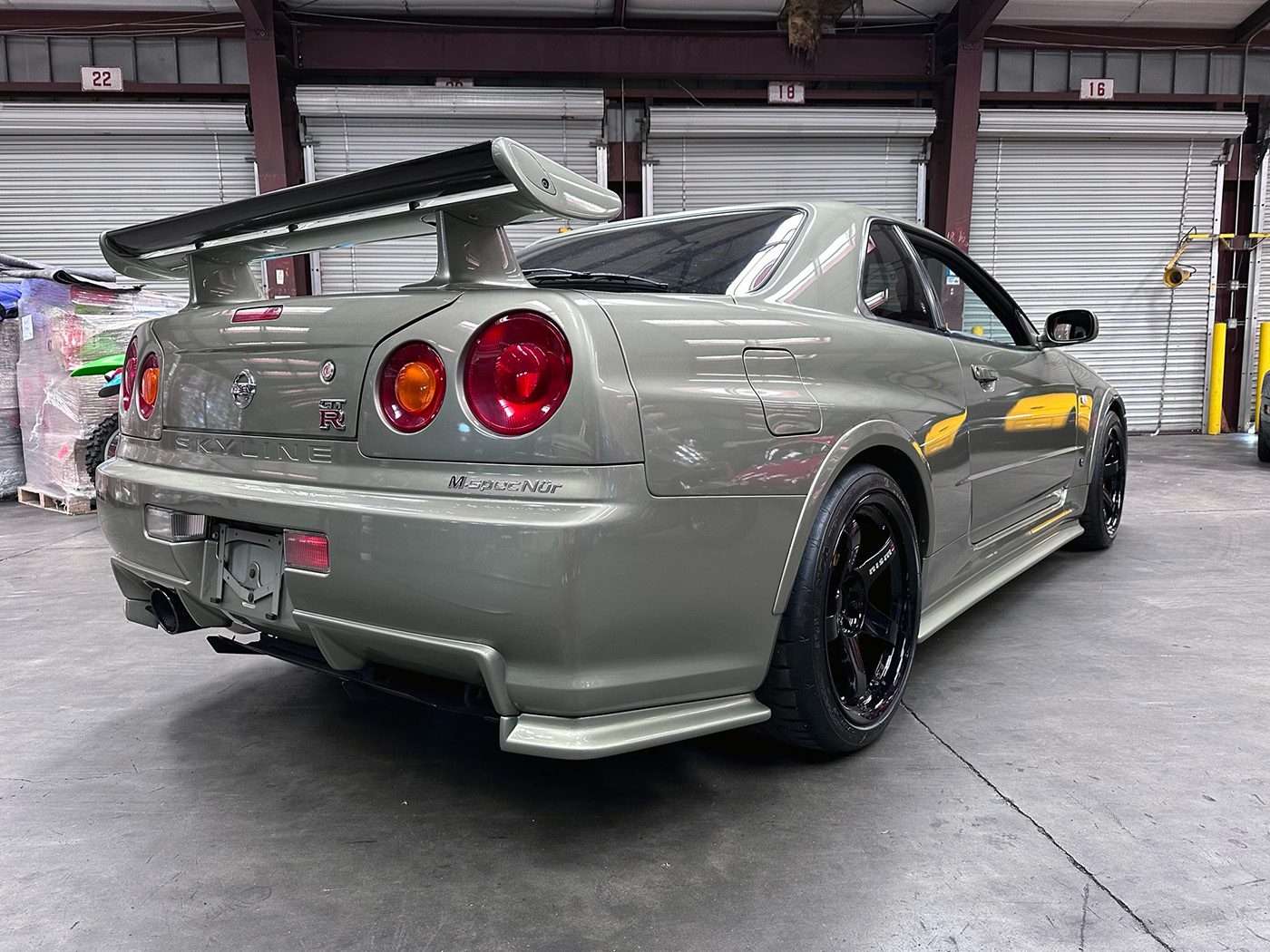

The term "grey market" tends to carry an air of mystery, as though it describes a single thing rather than a broad category of situations. In practice, it simply refers to vehicles that were built for one market and imported into another where they were never officially certified or sold.
That is not automatically illegal. Some of the most interesting European and Japanese cars in private US collections arrived through entirely legitimate grey market processes. The question is not whether a car is grey market in origin. The question is which legal pathway, if any, exists to bring it into the US.
This article explains how those pathways work, which vehicles are excluded from each one, and what "cannot legally enter the USA" actually means in practice. For context on how these restrictions apply specifically to 1970s European sports cars, including investment analysis and pre-purchase inspection guidance, see the main article on European sports car imports, inspections, and import restrictions.
Why US Import Restrictions Exist and Who Enforces Them
The Two Federal Agencies That Control Vehicle Imports
Every vehicle entering the US for permanent road use must satisfy two separate federal agencies before it can be legally registered and driven. NHTSA enforces Federal Motor Vehicle Safety Standards on behalf of the Department of Transportation. The EPA enforces emissions requirements under the Clean Air Act.
These agencies operate independently and apply different standards with different age thresholds. A vehicle can satisfy one and fail the other. Understanding them separately is the first step toward understanding why specific cars are blocked or permitted.
NHTSA's concern is structural and mechanical safety: crash performance, restraint systems, lighting, and related standards. The EPA's concern is what comes out of the exhaust. A vehicle that was engineered exclusively for European or Japanese markets almost certainly meets neither set of standards as originally built, which is why the import pathways that exist are specifically designed to address that gap.
What "Grey Market" Actually Means for US Buyers
A grey market vehicle in the US import context is typically one of the following:
-
A European or Japanese market vehicle with no US-specification variant ever produced
-
A vehicle that had a US variant, but the buyer specifically wants the non-US specification for performance, specification, or equipment reasons
-
A vehicle built for a market with right-hand drive that was never available in the US at all
None of these categories is inherently illegal to import. What matters is whether the vehicle can meet the conditions of one of the available legal entry pathways. West Coast Shipping's guide to buying a car abroad to import to the US explains how eligibility assessment should sit at the beginning of any acquisition process, before purchase rather than after.
The Three Legal Pathways Into the USA
Pathway 1: The 25-Year NHTSA Exemption
The most commonly used legal pathway for grey market classics is the 25-year exemption established under the Imported Vehicle Safety Compliance Act of 1988. Once a vehicle is 25 years old from its month and year of manufacture, it is fully exempt from Federal Motor Vehicle Safety Standards. No Registered Importer is required. No safety modifications are needed. The vehicle enters in its original configuration.
The age is calculated from the month and year of manufacture, not the model year. A vehicle produced in June 2000 becomes eligible in June 2025, not on January 1, 2025. West Coast Shipping's complete guide to the 25-year rule for US car imports covers the documentation requirements and how the monthly eligibility rollover works in practice.
The 25-year threshold also carries a useful tariff benefit. Vehicles properly classified under HTS 9903.94.04 are exempt from the Section 232 25% tariff that applies to modern vehicle imports. The base duty of 2.5% applies, and reciprocal tariffs may still apply depending on the vehicle's country of origin and current trade policy. Confirming the current tariff position for your specific vehicle and origin country with a customs broker before purchase is strongly recommended.
Separately, the EPA's age-based exemption under 40 CFR Part 85 applies to vehicles at least 21 years old from their production year that remain in original, unmodified condition. Since every 25-year-old vehicle also satisfies the 21-year EPA threshold, a car that clears the NHTSA 25-year exemption generally clears the EPA side as well, provided originality requirements are met.
Note: Tariff rates and trade policy measures are subject to change. Use the car import calculator or consult a customs broker for a current estimate.
Pathway 2: The Registered Importer Route for Modern Vehicles
Vehicles under 25 years old that were not built to US specification can potentially enter through a Registered Importer. RIs are companies certified by NHTSA to bring non-conforming vehicles into compliance through physical modification and testing.
This pathway is expensive, time-consuming, and not available for every vehicle. An RI must hold a specific compliance procedure for the exact make, model, and model year. If no RI has an approved procedure for a given vehicle, that vehicle cannot enter through this route. The cost of RI compliance can run into tens of thousands of dollars, and the 120-day bonded window within which compliance must be completed is a firm deadline, not a guideline.
West Coast Shipping's article on getting around the 25-year US car import law explains the RI process in detail and is candid about when it is and is not a realistic option.
For many desirable European and Japanese vehicles under 25 years old, no RI procedure exists. In those cases, this pathway is effectively closed, regardless of budget.
Pathway 3: Show or Display
The Show or Display exemption is a narrow provision that allows certain vehicles of significant historical or technological interest to enter the US permanently with limited road use. To qualify, a vehicle must generally have been produced in limited numbers, with NHTSA applying a production volume threshold of approximately 500 units as part of its significance assessment. A moderately rare car produced in several thousand examples is unlikely to meet this criterion.
If a vehicle's make, model, and model year already appear on NHTSA's approved list, no separate NHTSA application for that class of vehicle is required. However, each individual importer must still file the appropriate documentation at the port of entry, including DOT Form HS-7, and must comply with the 2,500-mile annual cap. The prior approval on the NHTSA list means the vehicle class is eligible; it does not remove the port filing obligation. Individual applications are only necessary when seeking Show or Display status for a vehicle type that has not previously been approved, submitted to NHTSA at importcertification@dot.gov with evidence of the vehicle's historical or technological significance.
Even with approval, road use is capped at 2,500 miles per year. The vehicle cannot be used as ordinary transport, and NHTSA takes violations of the mileage cap seriously. The EPA side of Show or Display imports is handled separately from NHTSA approval. Vehicles that qualify for the EPA age-based exemption under 40 CFR Part 85, meaning at least 21 years old and in original, unmodified condition, file EPA Form 3520-1 Code E at the port of entry. Vehicles that do not meet the age-based exemption must pursue a separate EPA authorization. Confirm the applicable EPA pathway with your customs broker before the vehicle ships.
West Coast Shipping's detailed guide to Show and Display car imports covers which vehicles currently appear on the NHTSA approved list and how the application process works in practice.
Which Cars Cannot Legally Enter the USA
Vehicles Under 25 Years Old With No RI Procedure
This is the largest category of practically prohibited imports. A modern European or Japanese performance car that was never certified for the US, for which no Registered Importer holds an approved compliance procedure, has no legal permanent import pathway currently available.
The vehicle is not prohibited because it fails any specific test. It is blocked because the compliance infrastructure to certify it simply does not exist. Until either a 25-year calendar window opens or an RI develops and obtains NHTSA approval for a compliance procedure, the car cannot enter for permanent road use through any legal route.
This is why certain highly sought-after European performance cars from the late 1990s and early 2000s have been arriving in large numbers recently. The 25-year clock is now opening those doors. West Coast Shipping's article on 2001 German cars now 25-year eligible illustrates how that rollover is playing out for specific models including the E46 M3 and Porsche 996 GT3.
Vehicles Blocked by VIN-Level Manufacturer Restrictions
Some manufacturers have taken active steps beyond regulatory compliance to prevent their vehicles from being registered in non-intended markets. Certain modern EVs, for example, have software architectures tied to regional VINs in ways that mean the vehicle may physically clear customs but be unable to access charging networks, software updates, or manufacturer services.
This is not a customs or NHTSA issue. It is a manufacturer-level restriction that sits outside the federal import framework entirely. A buyer who clears every regulatory hurdle may still find the vehicle functionally unusable in the US without access to manufacturer infrastructure.
Vehicles With Inadequate Documentation
A vehicle that cannot prove its age, origin, or configuration through acceptable documentation faces significant problems at the US port regardless of its actual compliance position. CBP officers verify VINs, and the vehicle's physical condition and configuration must match what the paperwork declares.
West Coast Shipping's checklist for importing a European car to the US addresses the specific documentation needed to establish eligibility and what happens when records are incomplete or inconsistent.
Vehicles That Fail the Original Configuration Requirement
For the EPA's 21-year age-based exemption under 40 CFR Part 85, a vehicle that is not in its original, unmodified condition may not qualify. A replaced engine is the most common disqualifying modification. Under EPA Form 3520-1 Code E, vehicles at least 21 years old with replacement engines are generally not eligible.
This is particularly relevant for grey market classics that have been modified in Europe before sale. A 1970s Italian sports car with an engine swap is a more complex import case than a comparable original-configuration car, even though both are well beyond the 21-year threshold. The EPA Imports Hotline at imports@epa.gov is the appropriate contact if there is any doubt about a specific vehicle's eligibility.
Illegal Workarounds and Why They Fail
Some buyers have attempted to work around import restrictions by separating a vehicle's drivetrain from its chassis and importing each as a separate item, hoping to avoid classification as a complete vehicle. CBP is alert to this approach. Vehicles and components arriving in configurations that appear designed to circumvent import rules are subject to seizure under 19 U.S.C. §1595a(c), and the buyer has limited recourse once seizure proceedings begin.
Attempting to import a prohibited vehicle through misclassification or false documentation carries the same risk. CBP does not simply turn a vehicle away at the port when fraud or circumvention is suspected. Seizure, and in some cases destruction, are outcomes that the statute permits. The financial and legal exposure from a failed circumvention attempt is substantially greater than simply waiting for the 25-year window to open.
The 25-Year Rule: How Eligibility Rolls Forward Monthly
Why Timing Matters More Than Most Buyers Realise
The 25-year exemption does not open on January 1 of the year the vehicle turns 25. It opens on the specific month and year of manufacture. A vehicle produced in October 2001 becomes eligible in October 2026, not on January 1, 2026.
For buyers planning to import a specific car, this means the purchase timing and the shipping timeline both need to align with the actual eligibility date. Shipping a car before its eligibility month and year arrives is not a minor procedural issue. It means the vehicle arrives as a non-conforming import with no valid exemption in place.
West Coast Shipping's Buy Now or Wait guide for European 25-year rule imports walks through how to plan the purchase and shipping timeline around the specific eligibility date for a target vehicle.
Right-Hand Drive Vehicles and Additional Registration Considerations
Right-hand drive grey market vehicles add a layer of complexity beyond federal compliance. Even where federal EPA and NHTSA requirements are satisfied through the 25-year exemption, individual US states have their own registration requirements that may affect RHD vehicles differently.
West Coast Shipping's right-hand drive imports guide covers the state-level registration landscape for RHD imports and is worth reviewing for any buyer targeting a right-hand drive European or Japanese classic.
How to Confirm Whether a Specific Car Can Enter the USA
A Practical Assessment Sequence
Before committing to any grey market acquisition, working through this sequence reduces the risk of discovering a compliance problem after funds have been transferred:
-
Confirm the vehicle's actual build month and year from factory records, not from the seller's description or the title. For the 25-year NHTSA exemption, the month matters
-
Assess EPA eligibility: Is the vehicle at least 21 years old from production year? Is it in original, unmodified condition? Is the original engine in place?
-
Check whether an RI procedure exists if the vehicle is under 25 years old. Contact NHTSA or an established Registered Importer for the specific make, model, and model year
-
Assess Show or Display eligibility if the vehicle does not qualify for either of the above. Check NHTSA's approved list first. If the make, model, and model year are already listed, no separate NHTSA application is needed, though port filing documentation is still required. If not listed, consider whether the vehicle's production volume and historical significance realistically meet the threshold before investing time in an application
-
Confirm tariff position with a licensed customs broker for the vehicle's specific country of origin and HTS classification
West Coast Shipping's importing a vehicle into the United States policy guide provides an updated framework for how CBP, NHTSA, and EPA assessments interact at the port of entry.
What Grey Market Compliance Actually Costs
For vehicles using the 25-year exemption, the compliance cost itself is minimal. The documentation is straightforward, no physical modifications are required, and no RI fees apply. The main costs are freight, port handling, customs duty, and domestic transport—areas where working with an experienced shipper like West Coast Shipping ensures a smooth, predictable process from start to finish.
For vehicles going through the RI route, the compliance cost alone can be substantial, often exceeding the freight cost many times over depending on the vehicle and required modifications. Show or Display imports involve NHTSA application time and ongoing mileage management rather than a single upfront compliance cost. In these more complex scenarios, West Coast Shipping’s expertise in handling documentation, coordination, and international logistics becomes critical to avoiding delays and costly mistakes.
The car import calculator is a useful tool for modelling the freight and duty side of a planned import once compliance eligibility is confirmed. For vehicles where compliance cost is a variable, factoring in a professional assessment from a customs broker or RI before running the numbers gives you a more accurate landed cost picture.
Planning a Grey Market Import? Start With Compliance, Not Logistics
Getting compliance wrong is significantly more expensive than getting logistics wrong. A shipment that arrives late can be rescheduled. A vehicle that arrives without a valid import pathway can be seized.
The practical starting point for any grey market import is confirming eligibility before anything else: before the purchase, before the shipping booking, and before any funds are committed. Once that foundation is in place, the logistics of moving a car from Europe or Japan to a US port are genuinely manageable with the right partner.
Use the car import calculator to model freight, duty, and route options for your target vehicle once compliance is confirmed. West Coast Shipping handles collection in Europe, export documentation, and ocean transport to your chosen US port so that the shipping side of your import is one less thing to navigate.
Get Your Shipping Quote


Pre-Purchase Inspection in Europe Before USA Car Shipment

1970s European Sports Cars: Import to USA, Costs & Value