
Importing a European car to the US is rarely a single conversation. It is a series of overlapping decisions: which car to target, whether that car is actually in the condition the seller describes, and whether it can legally enter the country at all.
This guide addresses all three of those questions with enough practical detail to help you move from curiosity to a well-informed plan. The three sections cover 1970s European sports cars as a specific investment category, the mechanics of organising a pre-purchase inspection in Europe before anything is loaded onto a vessel, and the grey market restrictions that determine which vehicles the US will and will not accept.
Throughout, the focus stays on what you can actually do with this information rather than general observations that do not help you decide anything.
1970s European Sports Cars Worth Importing to the USA: Investment Analysis and Shipping Costs
Why the 1970s Specifically?
The 1970s occupy a specific place in the European sports car timeline. It was the decade when several manufacturers produced their most analogue, driver-focused designs before emissions regulations, safety mandates, and fuel crises began to reshape priorities in the early 1980s.
For US buyers, this era offers something else: every 1970s European sports car now clears both the 25-year NHTSA threshold and the 21-year EPA threshold comfortably, meaning the compliance burden at the border is relatively straightforward. There is no need for a Registered Importer or modern emissions conversion for any car built in the 1970s.
That said, eligibility and quality are separate questions. A 1975 car that is fully exempt can still be a poor investment if it has hidden corrosion, non-original mechanical components, or a poorly documented history. Age-based exemptions do not protect buyers from condition risk.
Want a deeper look at which specific models are worth targeting and how to build a realistic landed-cost budget? Our full guide to 1970s European sports cars worth importing to the USA breaks down each national category, example models, and what shipping actually costs in 2026.
Which Models Generate the Strongest Interest?
US buyers targeting 1970s European sports cars tend to cluster around several categories. Each has its own risk and reward profile.
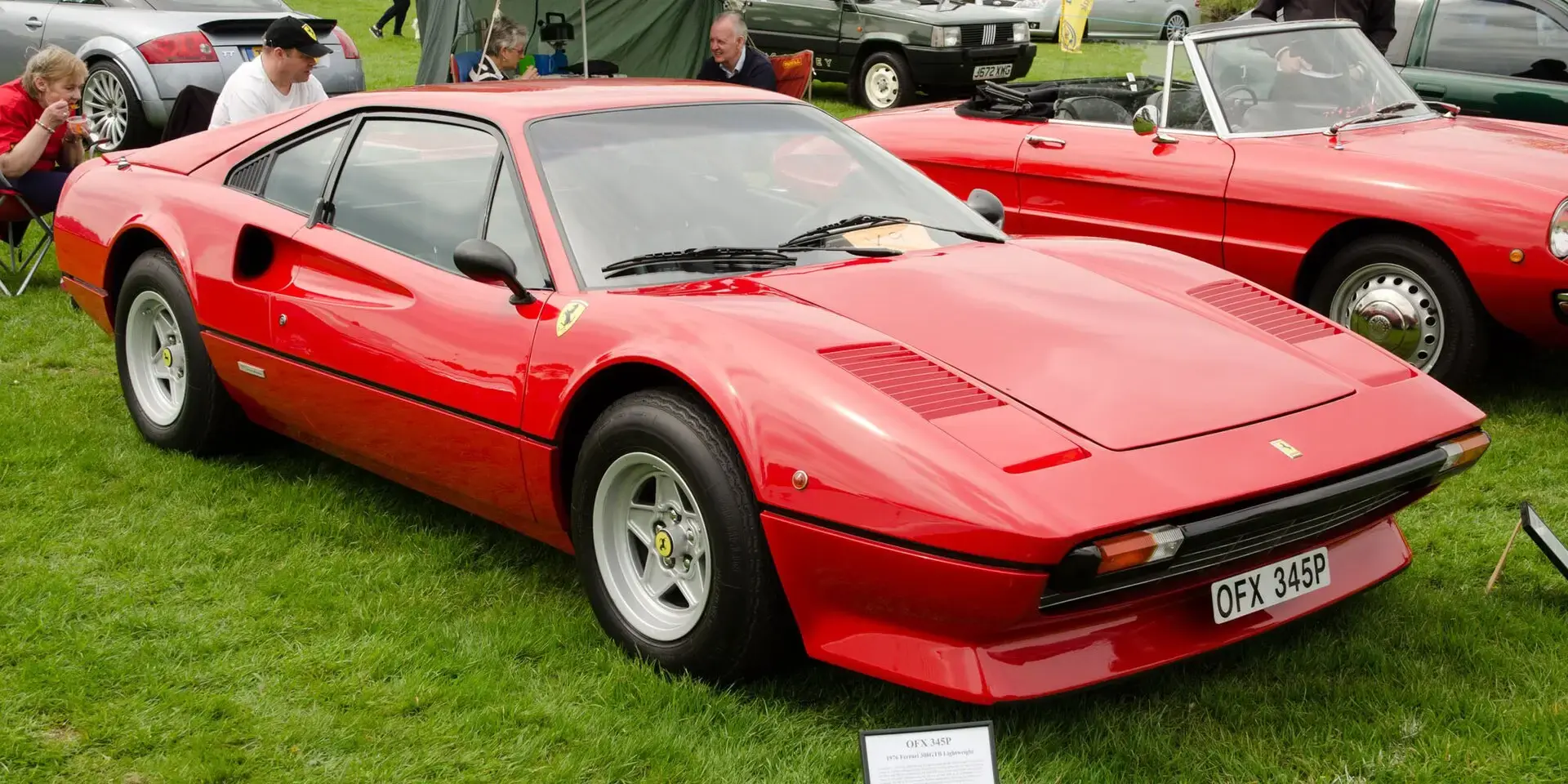
Italian sports cars from the 1970s attract buyers who want design, heritage, and provenance combined in a single package. The best examples from established Italian manufacturers command significant premiums at auction and in private sales, and values for clean, documented cars have risen substantially in recent years. One possible explanation is that supply of well-preserved examples continues to tighten as the global collector community grows faster than the pool of unrestored originals.
German sports and performance cars from the 1970s appeal to a different kind of buyer, one who values usability as much as visual appeal. Many of these cars are well-supported by parts networks and marque specialists in the US, which makes ownership more practical than some Italian alternatives.
British sports cars from the 1970s remain more accessible at the lower end of the value range but require careful due diligence on rust, electrical systems, and the availability of replacement parts. The strongest examples from reputable marques have appreciated meaningfully; the broader market is more mixed.
French sports cars from the 1970s remain undervalued relative to their Italian and German contemporaries in many respects, at least for now. That may represent an opportunity for buyers with the patience to navigate a smaller specialist ecosystem and less liquid resale market.
Investment Considerations Before You Commit
Treating a 1970s European sports car purely as a financial investment is a reasonable approach, but a few conditions tend to determine whether the economics work:
-
Originality matters significantly. Matching numbers, unmodified drivetrains, and original bodywork consistently command higher prices and resell more easily.
-
Documentation supports value. A car with continuous service history, known ownership chain, and build records is genuinely worth more than a similar car with gaps.
-
Condition diverges sharply from photos. A pre-purchase inspection in Europe before committing is not optional for serious buyers. More on that in the next section.
For buyers at the top of the market, West Coast Shipping's article on best classic car investments provides supporting context on which categories have demonstrated consistent long-term performance.
What Shipping a 1970s European Sports Car to the USA Costs
Container shipping is the appropriate method for valuable or fragile classic cars. It provides full enclosure throughout the voyage and eliminates the risks associated with open-deck transport.
Typical factors affecting total landed cost include:
-
Origin port in Europe (varies by country and city)
-
US destination port (East Coast, Gulf, or West Coast)
-
Container type: shared versus sole-use
-
Customs duty of 2.5% on the declared customs value for passenger vehicles
-
Any applicable port handling, customs brokerage, and domestic transport fees
One important cost consideration for 2026 imports is that additional tariffs may apply depending on the car's country of origin and current trade policy. Section 232 tariffs and reciprocal tariffs have been an active area of change, and their application to specific vehicle categories and origin countries can shift. Classic vehicles classified under certain HTS codes may be exempt from some of these tariffs, but the position is not identical for every country or every car. Confirming the current tariff exposure for your specific vehicle and origin with a licensed customs broker before committing is strongly recommended.
For a general cost-planning exercise, the car import calculator allows you to model specific route combinations and get a realistic freight estimate. West Coast Shipping's Europe to US car import costs guide breaks down the full cost picture including shared container options that can reduce freight costs for buyers who do not need a dedicated container.
Note: Freight costs, timelines, and applicable tariff rates are subject to change. Use the car import calculator or contact our team for a current estimate.
Pre-Purchase Inspection Services in Europe: Verifying Car Condition Before USA Shipment
Why Pre-Purchase Inspection Is Non-Negotiable for Remote Buyers
Buying a European car from the US without an independent inspection is one of the most consistently regretted decisions in classic car importing. Photos can be selective. Seller descriptions can be optimistic. A car that presents well in a sunny outdoor gallery shoot may reveal significant rust, paint repairs, or mechanical issues the moment an independent mechanic puts it on a lift.
The problem is compounded by distance. A US buyer who purchases a car based on remote assessment and then discovers problems after it arrives has limited options. The car is already through customs, the seller is in another country, and the cost of remediation falls entirely on the buyer.
A professional pre-purchase inspection in Europe, conducted before any funds are transferred or any shipping is arranged, converts an unknown quantity into a documented, assessed vehicle with known condition at a specific point in time.
Before a single euro changes hands, an independent inspection in Europe is one of the most important steps you can take. Our full guide to pre-purchase inspection services in Europe covers exactly what a thorough inspection should include, how to find the right specialist for your target car, and how inspection findings connect directly to US import compliance.
What a Pre-Purchase Inspection Should Cover
A thorough pre-purchase inspection for a European classic or sports car typically involves a specialist mechanic or marque expert examining:
-
Structural condition: Chassis integrity, sill condition, floor pan, and boot floor for rust, repairs, or prior accident damage
-
Body condition: Panel gaps, paint thickness readings across all panels, evidence of filler or respray, and door and hood alignment
-
Mechanical condition: Engine starting and running assessment, gearbox operation, brake and suspension function, and fluid levels and condition
-
Originality check: Engine numbers, chassis numbers, and any visible evidence of non-original components
-
Electrical systems: Basic function of lighting, instruments, and ancillary electrics, which is particularly relevant for British and Italian cars of the 1970s
For high-value acquisitions, commissioning a specialist to provide a written report with photographs is worth the cost. That report also serves as baseline condition documentation if any questions arise at the port during inspection.
How to Arrange an Inspection in Europe
Most serious buyers use one of three approaches:
Independent marque specialists: For specific models, there are often recognised experts in the car's home country who know exactly what to look for on that particular car. A Porsche specialist in Germany or a Ferrari marque expert in northern Italy will identify issues that a generalist might miss.
Inspection services local to the seller: Several third-party pre-purchase inspection companies operate across Europe and can dispatch a technician to assess a vehicle within a few days. These services vary in depth, so clarifying scope before booking is important.
Auction house condition reports: If the car is being offered through a reputable European classic car auction, the auction house may have a condition report or allow an independent inspection during the preview period.
West Coast Shipping's checklist for importing a European car to the US includes guidance on the documentation a pre-purchase inspection should generate and how it integrates with the rest of the import paperwork.
What Happens After the Inspection
An inspection report that confirms the car matches its description allows you to proceed with confidence. More commonly, inspection reveals some issues, and the report becomes a negotiation tool.
A car with documented bodywork repairs or a worn gearbox is not necessarily a dealbreaker. It simply allows you to recalculate the offer price to reflect the remediation cost and assess whether the purchase still makes sense once those costs are included.
If the inspection reveals serious problems, structural corrosion, significant accident history, or non-matching numbers on a car sold as original, it is generally far better to walk away and redirect attention to a better-documented example.
That decision is much easier before you have arranged shipping, paid customs duty, and booked domestic transport. Pre-purchase inspection is essentially risk management compressed into a few hundred dollars of professional time.
Grey Market Import Restrictions: Which Cars Cannot Legally Enter the USA
What the Grey Market Actually Means
The term "grey market" describes vehicles that were produced for sale in a specific country or region but are imported into a different market where they were not officially sold or certified. For US importers, this usually means a European or Japanese market car that was never sold through official US dealer channels and was not built to US specification.
Grey market imports are not automatically illegal. Many of the most sought-after European classics arrive legally through the 25-year rule or through the Registered Importer pathway. The legal question is not whether the car was a grey market vehicle in origin, but whether it meets the conditions required for legal US entry.
The restrictions that determine whether a car can actually enter come from two federal agencies: NHTSA for safety standards and the EPA for emissions compliance. These two agencies operate on different timelines, which is an important detail that affects import planning for cars that are old but not quite 25 years old.
Understanding which cars can and cannot legally enter the US is the foundation of any serious import plan. Our full guide to grey market car import restrictions covers all three legal pathways in detail, which vehicles are practically prohibited, how the 25-year rule rolls forward monthly, and a step-by-step assessment sequence you can use before committing to any purchase.
The Two Federal Thresholds: NHTSA and EPA
NHTSA exemption applies at 25 years. Once a vehicle is 25 years old from its build month, it is exempt from Federal Motor Vehicle Safety Standards. This is the threshold most buyers associate with the 25-year rule.
EPA exemption applies at 21 years. The EPA's age-based exemption is separate and has a lower threshold. Vehicles that are 21 years or older and in original, unmodified condition generally qualify for the EPA's age-based emissions exemption. This means a 22-year-old car can clear EPA requirements but cannot yet use the NHTSA 25-year exemption. For that car, a Registered Importer would still be required to address the DOT side.
This distinction matters significantly for buyers planning imports of early 2000s vehicles. Knowing which threshold applies to which agency prevents costly assumptions about whether a specific car is fully clear on both fronts.
It is also worth noting that the EPA's original condition requirement is real and enforced. A vehicle with a swapped engine is not eligible for the EPA age-based exemption unless the replacement is an equivalent or newer EPA-certified unit. That means 1970s Italian, German, and British sports cars with engine modifications face scrutiny under both the EPA and NHTSA frameworks, regardless of body and chassis age.
The Three Legal Import Pathways
The 25-year exemption is the most relevant for classic European sports cars. For cars from the 1970s, both the NHTSA and EPA thresholds are cleared comfortably, provided the vehicle is in substantially original condition.
The Registered Importer pathway applies to modern vehicles under 25 years old. A Registered Importer is a company certified by NHTSA to bring non-conforming vehicles into compliance through modification. This pathway is expensive, time-consuming, and not available for all vehicles. Some cars simply cannot be made compliant at any cost.
The Show or Display exemption is a narrow pathway for vehicles of historical or technological significance that cannot be imported through other routes. It requires application to and approval from NHTSA, grants limited road use permission capped at 2,500 miles per year, and is not a practical route for most buyers.
West Coast Shipping's guide on importing a vehicle into the United States and the detailed article on US car import rules for 2025 both outline how each pathway applies in practice.
Vehicles That Cannot Legally Enter the USA
Some vehicles cannot enter the US through any of the above pathways, making them genuinely prohibited imports regardless of buyer intention or budget. These include:
-
Vehicles under 25 years old for which no Registered Importer holds an approved compliance procedure
-
Modern vehicles where the manufacturer has explicitly blocked the VIN from US registration systems
-
Cars with heavily modified drivetrains or safety systems that deviate so significantly from any certifiable baseline that compliance modification is not feasible
-
Vehicles that lack sufficient documentation to confirm age, origin, or configuration for 25-year rule purposes
The Substantially Original Condition Requirement
One important requirement that applies to both the NHTSA 25-year exemption and the EPA 21-year exemption is that the vehicle must be in substantially original condition. A car with an engine swap, significantly modified safety systems, or structural alterations that take it outside its original factory specification may not qualify for either exemption even if the age thresholds are clearly met.
For the EPA specifically, an engine replacement disqualifies the car from the 21-year age-based exemption unless the replacement engine is an equivalent or newer EPA-certified unit. This is particularly relevant for 1970s European sports cars, where engine swaps are common in the modification and restoration market. A car that presents as a classic may carry a drivetrain that changes its entire compliance picture.
West Coast Shipping's article on avoiding common mistakes when importing a Swiss car to the US discusses the substantially original requirement in detail and explains how extensive modifications can strip a car of its age-based exemptions even when the chassis clearly meets the threshold.
How to Assess Whether a Specific Car Qualifies Before You Buy
A practical pre-purchase checklist for grey market compliance:
-
Confirm build year from factory records. For cars relying on the 25-year rule, the build date is the foundation of the entire legal case for NHTSA. For EPA, confirm the car is 21 years old or older.
-
Assess originality under both frameworks. Has the engine been replaced? Any modification that affects EPA compliance needs to be identified before purchase, not after arrival.
-
Check whether the model has any known compliance issues. Some European models have histories of scrutiny at US ports due to ambiguous documentation or common modification practices.
-
Consult a customs broker familiar with classic car imports. For any car where compliance is not obvious, a professional opinion before purchase is worth considerably more than the same opinion after the car arrives.
The car import calculator can help model the financial side of potential import options, but the legal eligibility question should always be answered first, before any costs are modelled or any purchase decisions made.
Ready to Import a European Classic to the USA?
Whether you are pricing a 1970s Italian sports car, arranging a pre-purchase inspection before committing funds, or checking whether a specific model can legally enter the US, preparation is what keeps an exciting project from becoming an expensive problem.
Use the car import calculator to model freight costs, duties, and route options for your target vehicle. West Coast Shipping's team handles the logistics from European collection through to US port arrival, so that the practical side of your import runs as smoothly as the acquisition itself.
Get Your Shipping Quote

1970s European Sports Cars: Import to USA, Costs & Value

Top 5 1970s American Muscle Cars to Import to the UK