

The original horsepower wars were fought in the 1960s with carburetors and cast‑iron big‑blocks. Today’s battles are waged with superchargers, sophisticated electronics, and launch‑control algorithms—but the goal is the same: build the most powerful road‑legal muscle car you can sell with a factory warranty.
In the main WCS overview on pre‑1970 muscle, modern V8 power and EU emissions, we connected golden‑age legends to modern performance and European regulations. Here, we zoom in on eight post‑2010 American muscle and performance cars that pushed factory horsepower into territory their 1960s ancestors could barely imagine.
Horsepower figures below are manufacturer‑quoted peak outputs for the most powerful variant in each model line.
The List: 8 Modern American Powerhouses
| Rank | Model (Most Powerful Variant) | Engine | Advertised HP |
|---|---|---|---|
| 1 |
Dodge Challenger SRT Demon 170 |
Supercharged 6.2L HEMI V8 (E85) |
1,025 HP |
| 2 |
Dodge Challenger SRT Demon (2018) |
Supercharged 6.2L HEMI V8 (race fuel) |
840 HP |
| 3 |
Dodge Challenger SRT Hellcat Redeye |
Supercharged 6.2L HEMI V8 |
797 HP |
| 4 |
Dodge Charger SRT Hellcat (various trims) |
Supercharged 6.2L HEMI V8 |
up to 807 HP (Jailbreak) |
| 5 |
Ford Mustang Shelby GT500 (2020–2022) |
Supercharged 5.2L V8 |
760 HP |
| 6 |
Chevrolet Camaro ZL1 (including 1LE) |
Supercharged 6.2L LT4 V8 |
650 HP |
| 7 |
Chevrolet Corvette Z06 (C8) |
5.5L flat‑plane V8 |
670 HP |
| 8 |
Ford Mustang Dark Horse |
5.0L Coyote V8 |
500 HP |
West Coast Shipping’s article on the Hellcat era and Dodge’s supercharged revolution and the broader history of American muscle cars explain how we reached a point where 700+ HP is not just possible but relatively common in modern muscle.
1. Dodge Challenger SRT Demon 170: Four Digits from the Factory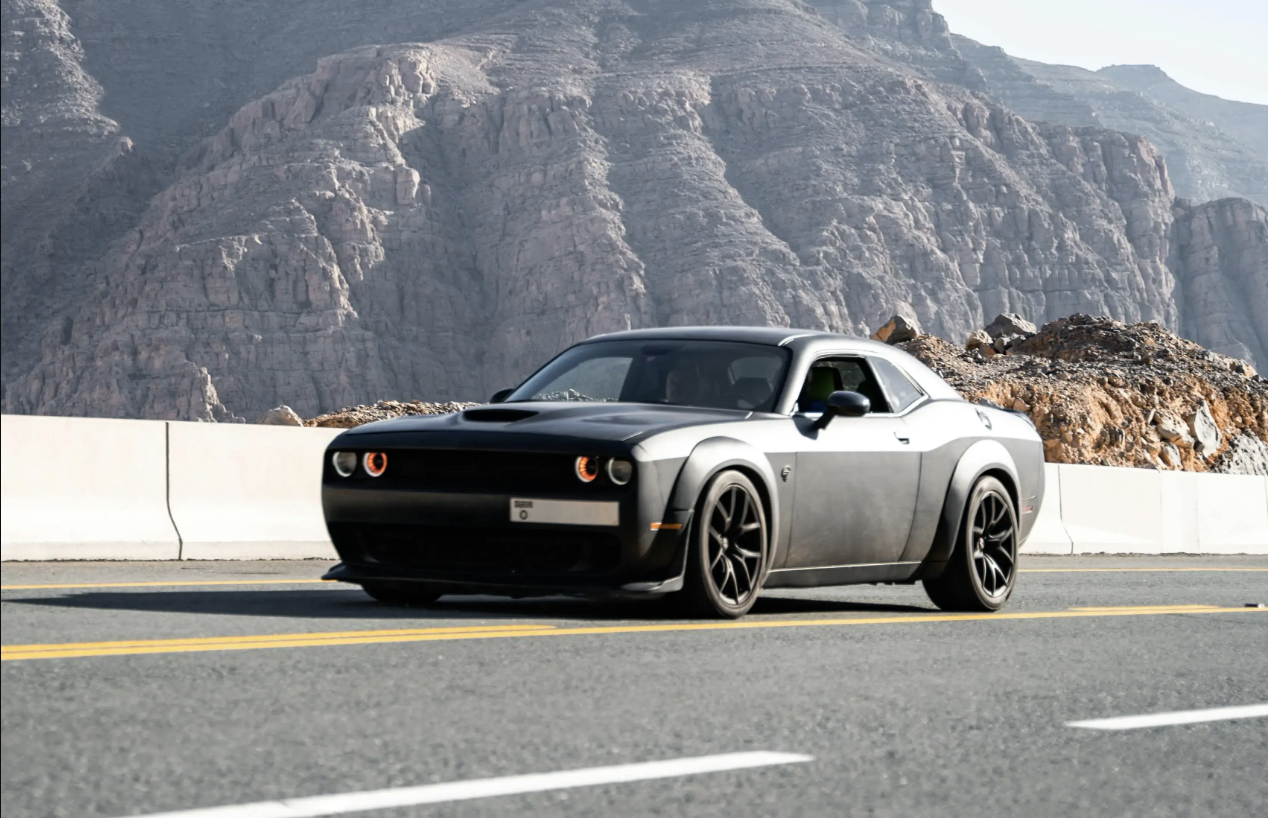
The Challenger SRT Demon 170 is the headline‑grabber of the modern era. Designed as a drag‑strip monster that can still wear a number plate, it pushes factory horsepower to a level that would have sounded fictional in the carburetor age.
Why it tops the list:
-
Power on E85. Dodge quotes up to 1,025 HP when running high‑ethanol fuel, making it one of the most powerful production internal‑combustion cars ever offered by a major manufacturer.
-
Drag‑focused hardware. As detailed in WCS’s Hellcat era feature, the Demon program brought transbrakes, torque‑management strategies, and launch modes straight into showroom cars.
-
Limited‑run collectability. With production capped, the Demon 170 sits at the pinnacle of the Challenger line and is already appearing in high‑end auction catalogues worldwide.
For overseas buyers, the Demon 170 is both an engineering showcase and a long‑term collectible—with the caveat that emissions compliance and registration can be complex in many countries.
2. Dodge Challenger SRT Demon (2018): The Original Drag-Strip Shock
.webp?width=1920&height=1328&name=Dodge_Challenger_SRT_Demon_(2018).webp)
Before the Demon 170, the original 2018 Demon redefined what a factory muscle car could be. On high‑octane race fuel, Dodge quoted 840 HP, with 808 HP on premium pump gas.
Key highlights:
-
First wave of shock. The Demon’s 840 HP figure, quarter‑mile certification, and wheel‑lifting launch videos captured global attention and kicked the modern horsepower wars into overdrive.
-
Technology showcase. Features like TransBrake, Torque Reserve, and drag‑optimized modes foreshadowed later Demon 170 refinements.
-
Cultural impact. As WCS notes in its modern muscle history, the Demon helped cement Dodge’s image as the brand willing to push the farthest in the ICE era.
Internationally, the 2018 Demon remains one of the most coveted modern American exports for buyers who want maximum drama and a clear place in automotive history.
3. Dodge Challenger SRT Hellcat Redeye: Everyday Excess
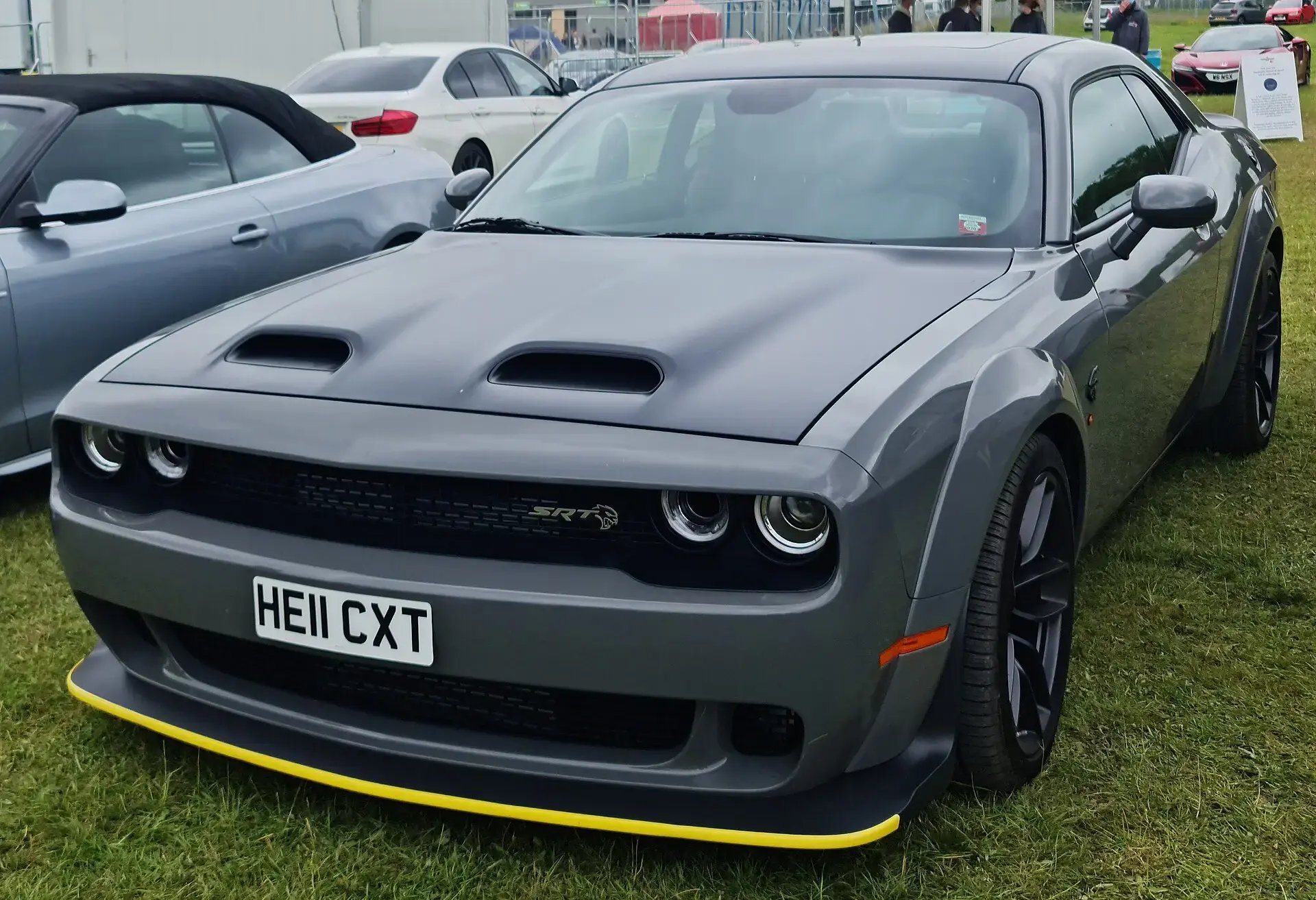
Not everyone can find or fund a Demon, but the Challenger SRT Hellcat Redeye brought much of that capability into a more accessible, repeat‑production form. Depending on specification, Dodge quoted up to 797 HP.
Why it matters:
-
Accessible 700+ HP. The original Hellcat (707 HP) made huge power broadly available; the Redeye turned the wick up further while maintaining daily‑drivable manners.
-
Multiple trims and years. As chronicled in the Hellcat era article, Dodge used the Hellcat package across multiple model years and limited editions, creating a deep bench of supercharged options for international buyers.
-
Exportable appeal. For overseas collectors, a Redeye might be easier to source and register than a Demon while still delivering outrageous performance.
For international shipping, Hellcats have become core business for WCS, often appearing in consolidated containers bound for Europe, the Middle East, and Oceania.
4. Dodge Charger SRT Hellcat: Supercharged Family Muscle
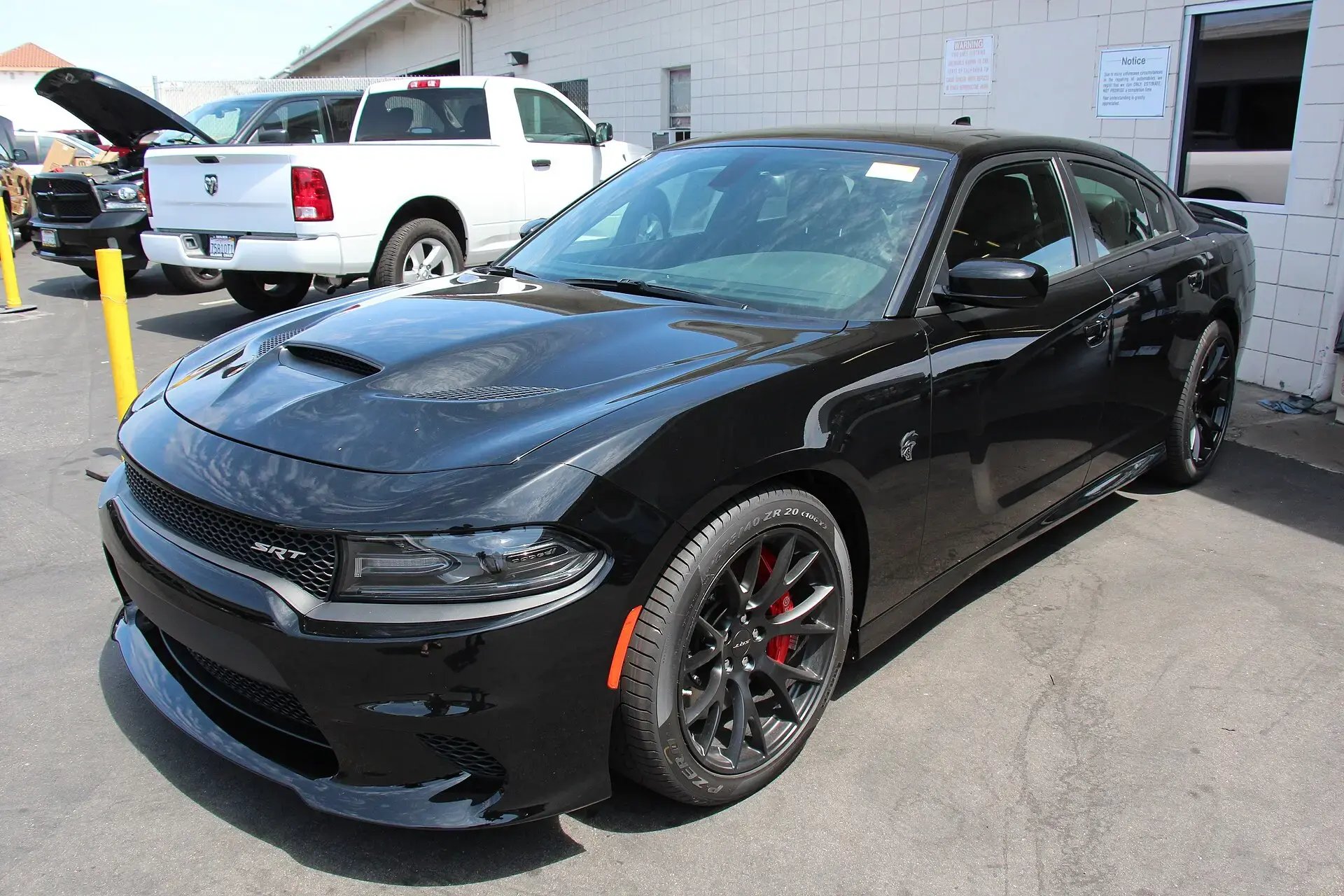
The Charger SRT Hellcat proves that four doors do not have to mean slow. In its higher‑output iterations, including Jailbreak versions, factory ratings reach the 800+ HP region.
Why it belongs on this list:
-
Supercar power in a sedan shell. The Charger Hellcat combines 700+ HP with space for four adults and a usable trunk—a combination few other cars match.
-
Global demand. As WCS’s muscle‑car export market guide notes, high‑power sedans have strong appeal in regions where coupes are taxed differently or less practical.
-
Last of its kind. With production ending, the supercharged Charger is poised to become a reference point when enthusiasts talk about the final ICE muscle era.
For buyers overseas who want one car that can do school runs, highway trips, and track days, a Charger Hellcat is uniquely versatile.
5. Ford Mustang Shelby GT500 (2020–2022): Track Weapon with 760 HP
.webp?width=1920&height=1035&name=Ford_Mustang_Shelby_GT500_(2020%E2%80%932022).webp)
Ford’s modern Shelby GT500 uses a supercharged 5.2‑liter V8 to deliver around 760 HP, making it the most powerful factory Mustang to date.
Key reasons it stands out:
-
Balanced brutality. As covered in WCS’s Mustang vs. Camaro rivalry article, the GT500 combines headline horsepower with track‑focused cooling, aerodynamics, and braking.
-
Dual‑clutch sophistication. A quick‑shifting dual‑clutch transmission helps it put power down efficiently on road courses and drag strips alike.
-
Global Mustang recognition. Mustang’s strong brand recognition overseas can make GT500 imports easier to explain to officials and insurers than more obscure models.
For international collectors, the GT500 offers an appealing blend of power, handling, and iconic nameplate—at a horsepower number that would have been unimaginable for early Shelbys.
6. Chevrolet Camaro ZL1 (and ZL1 1LE): 650 HP Track-Bred Muscle
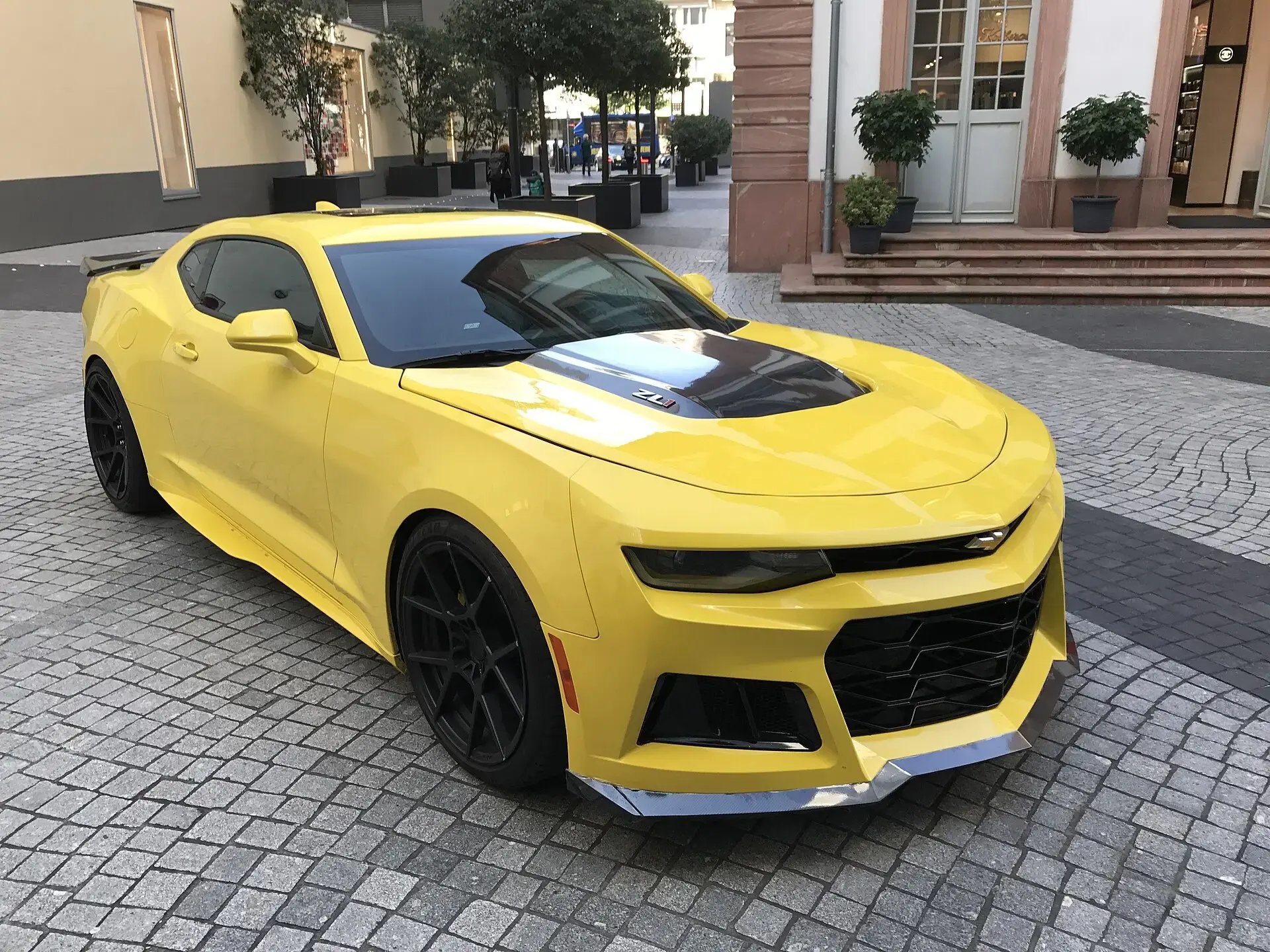
The modern Camaro ZL1, especially in 1LE trim, pairs a supercharged 6.2‑liter LT4 V8 with serious chassis upgrades. Chevrolet quotes around 650 HP for this package.
Why it earns a place here:
-
Well‑rounded performance. The ZL1 1LE’s aero, suspension, and brake upgrades make it one of the most track‑capable American performance cars of its era.
-
Heritage call‑back. As WCS notes in its American muscle history overview, the ZL1 badge recalls the 1969 all‑aluminum big‑block drag legend, giving the modern car a direct line back to the original horsepower wars.
-
Compact footprint. Compared with large Challengers and Chargers, the Camaro’s smaller footprint can make it easier to live with on narrow European roads and city streets.
For overseas buyers who value lap‑time capability as much as straight‑line speed, the ZL1 is often the sweet spot in the GM lineup.
7. Chevrolet Corvette Z06 (C8): Naturally Aspirated Outlier
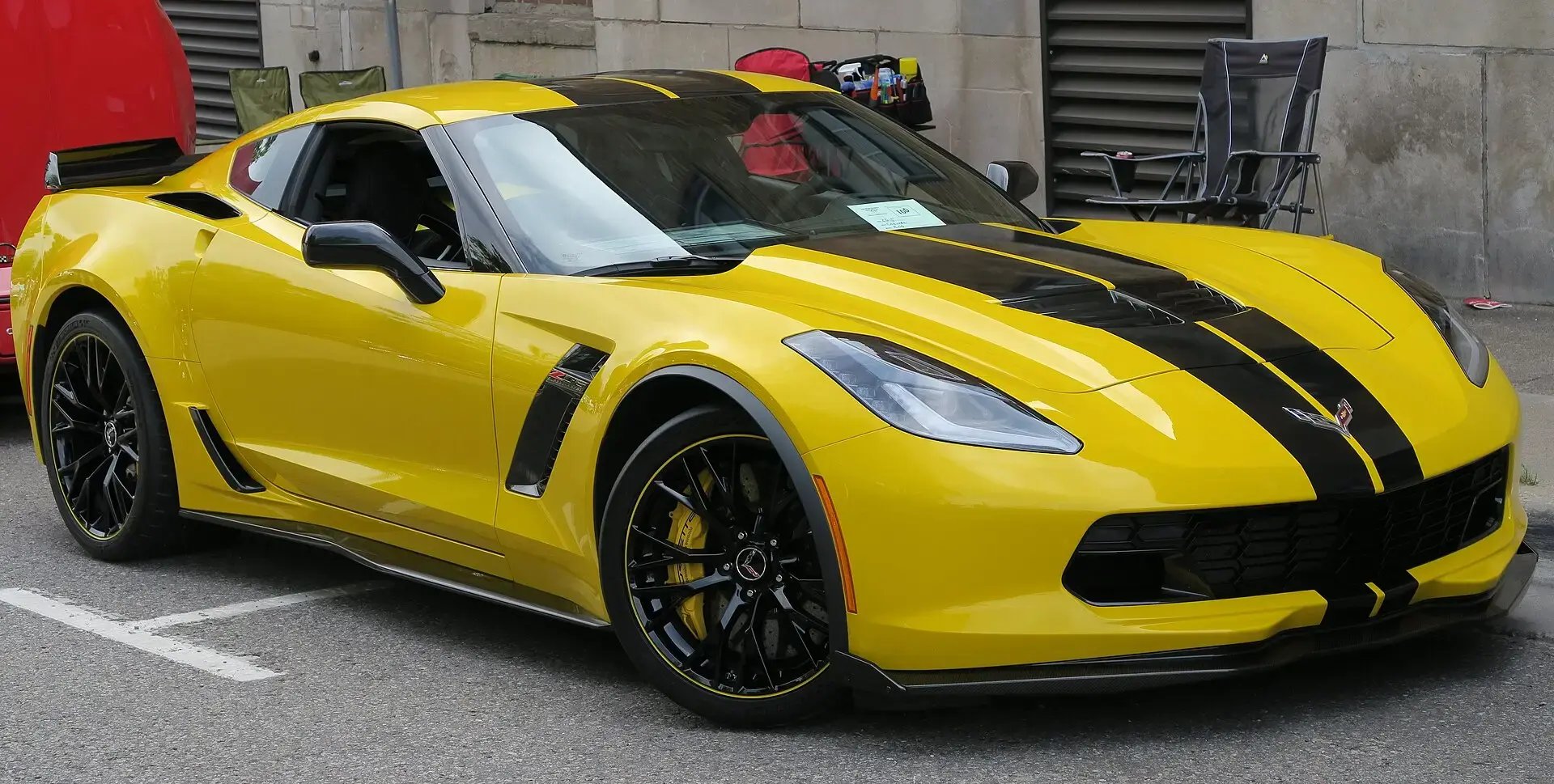
Although not a traditional muscle car, the C8 Corvette Z06 deserves inclusion as an American performance flagship. Its 5.5‑liter flat‑plane‑crank V8 produces around 670 HP without forced induction.
Reasons it matters in a muscle context:
-
High‑rev character. The Z06’s engine spins to race‑car‑like RPMs while still delivering a horsepower number that hangs comfortably with supercharged rivals.
-
Mid‑engine layout. As highlighted in WCS’s modern muscle and EV coverage, the Z06 shows how American performance is evolving beyond front‑engine formulas.
-
Global benchmark. In many markets, the Z06 competes directly with European exotics, giving it a different kind of export appeal than classic front‑engine muscle cars.
For international shipping, the Corvette’s lower roofline and mid‑engine packaging introduce some loading considerations, but its status as a halo car makes it a prime candidate for enclosed container transport.
8. Ford Mustang Dark Horse: The NA V8 Standard-Bearer
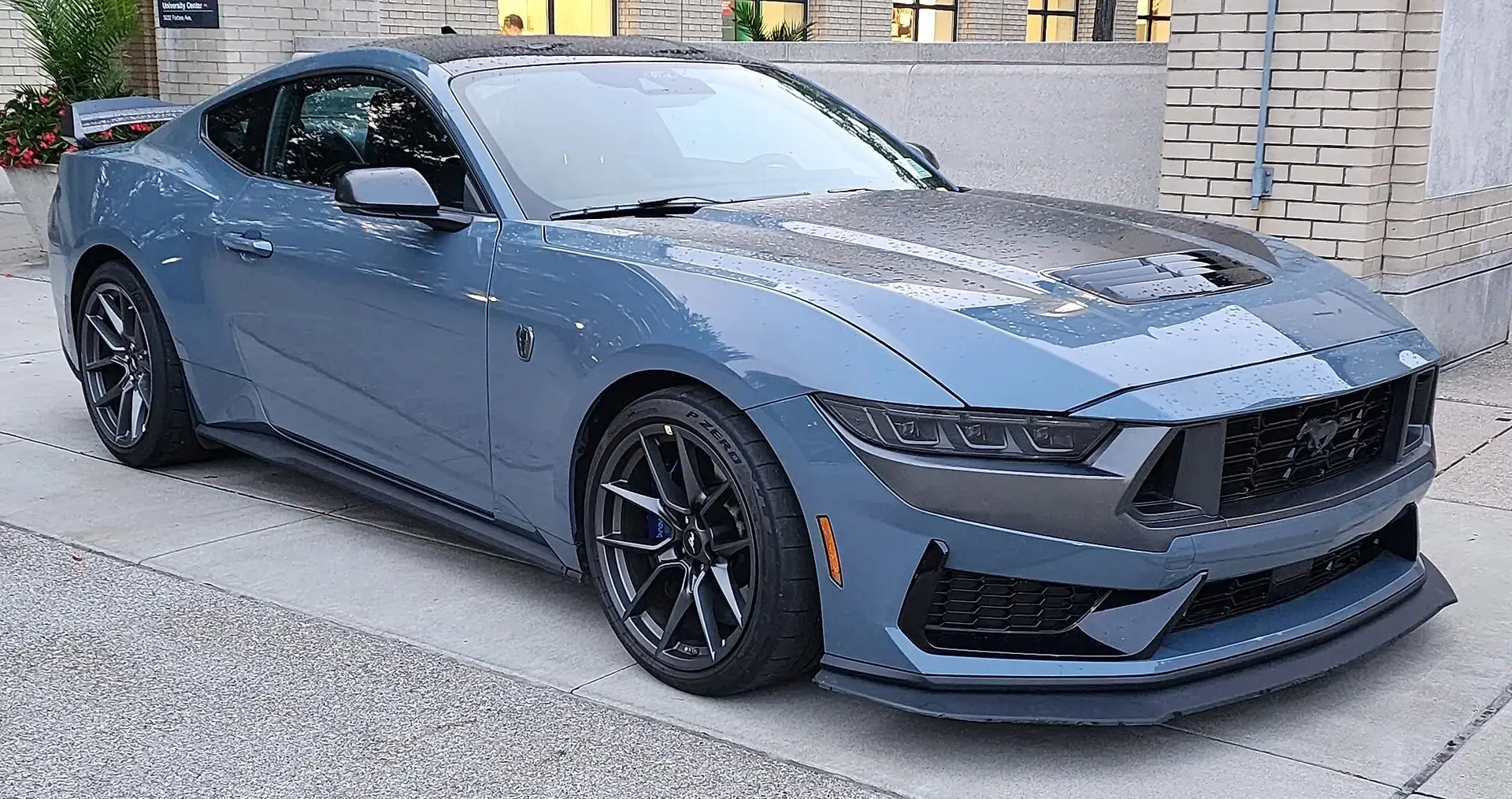
The Mustang Dark Horse is Ford’s statement that naturally aspirated V8 performance still has a place in the 2020s. Its 5.0‑liter Coyote V8 produces around 500 HP in factory trim.
Why it rounds out this list:
-
High‑revving NA character. The Dark Horse offers a different flavor of performance than the supercharged monsters above, with a powerband and sound closer to traditional muscle.
-
Track‑ready focus. Upgraded cooling, suspension, and aero make it a track‑day special out of the box, as reflected in WCS’s modern Mustang coverage in the retro renaissance article.
-
Future‑classic potential. As emissions rules tighten, a 500‑HP naturally aspirated V8 with a manual‑transmission option in some markets looks increasingly like a last‑call proposition.
For overseas enthusiasts who want a modern car with old‑school soul, the Dark Horse is one of the most compelling current‑production choices.
How These Cars Fit into the Bigger Muscle-Car Story
Taken together, these eight models illustrate what WCS describes in its history of American muscle cars as the “second golden age” of performance:
-
Output escalation. Factory horsepower figures that match or exceed 1960s drag specials—now with ABS, stability control, and climate control.
-
Variety of formats. Two‑door coupes, four‑door sedans, mid‑engine sports cars, and track‑ready specials all count as modern muscle in their own way.
-
Transition era. Articles like WCS’s muscle car EV revolution show how these ICE powerhouses sit alongside a new wave of electric performance, marking a turning point in the muscle‑car narrative.
To see how this modern chapter connects back to 1960s icons and forward to EU emissions and compliance challenges, revisit the main overview on pre‑1970 muscle, modern V8 power, and EU emissions.
Shipping Modern High-Horsepower Muscle Cars Overseas
From a logistics perspective, shipping a 700+ HP modern muscle car overseas is not entirely different from moving a classic, but there are some important nuances. West Coast Shipping’s complete overseas muscle‑car shipping guide and customs documentation primer emphasize:
-
Documentation. Clear title, bill of sale, and—depending on destination—proof of emissions compliance or a certificate of conformity.
-
Method choice. High‑value modern muscle often travels in dedicated or shared containers for protection and easier handling of low splitters and widebody kits.
-
Destination compliance. As the main overview on EU emissions and compliance explains, modern cars must typically meet current or recent emissions standards, which may require additional testing or modifications.
The muscle‑car export market guide can help you identify which countries are most receptive to modern American performance, whether you are sending a Hellcat to Germany, a GT500 to the UAE, or a ZL1 to Australia.
Disclosure and disclaimer (February 2026)
This article is provided by West Coast Shipping (WCS) for general informational and promotional purposes only. Vehicle examples, historical context, and horsepower figures are based on manufacturer data, period road tests, and enthusiast research, which may differ between publications and may be updated or corrected over time. Any discussion of import regulations, duties, VAT, emissions standards, or compliance frameworks is general in nature and does not describe the full set of requirements for any specific country or vehicle.
Horsepower and performance figures can vary depending on fuel quality, test procedures, altitude, and vehicle condition; they should be treated as indicative rather than absolute. Trade policies, import regulations, tax rules, and compliance requirements vary by jurisdiction and are subject to change without notice. Nothing in this article should be interpreted as legal, regulatory, customs, tax, financial, or investment advice.
Always verify a vehicle’s exact specifications, build date, and emissions classification with the manufacturer, official documentation, or marque specialists. Before making purchasing or import decisions, consult the relevant customs, transport, and environmental authorities, review current regulations from official government sources, and consider working with qualified import and compliance professionals in your jurisdiction. Classic and collector car markets are volatile; values and demand can change quickly. As of February 2026, all information in this article should be treated as indicative, subject to independent verification, and not a substitute for professional advice.
Ready to Ship a Modern Muscle Powerhouse?
If one of these post‑2010 American power monsters is on your radar—whether it is a Demon‑era Dodge, a supercharged Shelby, or a track‑spec Camaro—the next step is turning a data sheet into a car in your garage. West Coast Shipping’s international car shipping tools and services let you compare methods, routes, and timelines for your specific origin and destination, so you can focus on choosing the right modern muscle car while WCS manages the logistics from U.S. seller to your driveway.

Malaise Survivors, Factory Freaks & Demon 170 Global Shipping
Can Modern US V8 Muscle Cars Pass EU Emissions? Compliance Guide
.webp)