
The Spain car market presents real opportunities for US dealers, private importers, and collectors. But the mechanics of getting a vehicle across the Atlantic and legally onto Spanish roads involve layers that catch even experienced exporters off guard: IVA registration requirements for commercial shipments, a compliance framework for EVs that does not simply mirror the US incentive structure, and an emissions standard that filters most modern American vehicles before homologation even begins.
This guide addresses three specific audiences at once: US dealers building an export channel to Spain, buyers considering a US-spec Tesla or electric vehicle, and anyone trying to understand which American cars can pass Euro 6 without modifications. Each topic is distinct, but all three sit within the same import and registration framework.
US Car Dealers Exporting to Spain: Wholesale Shipping, IVA Rules and Market Entry in 2026
The Commercial Import Structure
When a US dealer exports vehicles to a Spanish buyer or business partner, the transaction is treated as a commercial import by Spanish customs rather than a personal relocation. That distinction matters because it determines both the tax structure and the documentation requirements from the moment the container is booked.
The base cost stack for a commercial vehicle import into Spain in 2026 is:
-
Import duty: 10% of the vehicle's declared CIF value
-
IVA (Spanish VAT): 21% applied to the combined vehicle value plus import duty
-
IEDMT registration tax: 0% to 14.75% at the national base rate, with some autonomous communities applying regional uplifts on top of this figure
For a US dealer shipping a modern petrol SUV valued at $40,000, the combined duty and IVA exposure alone can reach €9,000 to €12,000 before registration tax is applied. The economics work best for vehicles that carry a meaningful price premium in the Spanish market relative to locally available alternatives, which is where American muscle, US-spec trucks, and performance vehicles tend to perform.
Note: Tax rates are subject to revision. Always confirm current duty and IVA rates with a licensed Spanish customs agent before pricing your export transactions.
Want to go deeper on the dealer side? Our dedicated guide for US car dealers exporting to Spain covers wholesale shipping logistics, IVA recovery, homologation planning, and how to build a sustainable export channel from the ground up.
IVA Registration: What Dealers Need to Understand
This is where commercial exporters frequently encounter unexpected complexity. If a US dealer is selling vehicles directly to Spanish end buyers or businesses on a recurring basis, the transaction may trigger an IVA registration obligation in Spain depending on the structure of the sale and who is acting as the importer of record.
In most straightforward arrangements, the Spanish buyer acts as the importer of record, pays the IVA at customs, and reclaims it as input tax if they are a registered business. The US dealer's obligation in that structure is limited to producing accurate export documentation: the commercial invoice, the bill of sale, the title, and the AES/ITN export filing from US Customs.
Where complications arise is when US dealers use a Spanish intermediary, a local agent or distributor, and structure the sale in a way that makes the Spanish entity the formal importer rather than the end buyer. In that case, the intermediary's IVA registration and reclaim position becomes central to the landed cost calculation. Getting advice from a Spanish tax advisor before establishing a commercial export channel, rather than after the first shipment, is considerably cheaper than resolving a misclassified transaction.
Homologation and the Wholesale Reality
For dealers shipping modern US-spec vehicles commercially, the homologation question does not go away simply because the buyer is a business. Every non-EU-type-approved vehicle still needs to pass individual approval or the historic vehicle DGT evaluation before it can be registered in Spain. A dealer who sells multiple vehicles into Spain without factoring in the homologation timeline and cost is creating a problem for their buyers that will eventually reflect on the commercial relationship.
The most practical approach for dealers building a Spain channel is to focus initially on vehicles where the compliance path is predictable. Vehicles with a first registration date 30 or more years ago, meaning first registered in or before 1996 for 2026 imports, going through the historic vehicle Group B route, and newer vehicles where the buyer has an established homologation agent, represent lower-risk export transactions than shipping a 2023 American truck and hoping the approval process moves quickly.
This guide on shipping a car to Spain from the USA covers the full homologation process steps, documentation requirements, and what buyers typically encounter at the registration stage.
Freight Costs for Commercial Shipments
For dealers moving multiple vehicles, container economics matter. A 40-foot container can typically hold two to four vehicles depending on size, which changes the per-unit freight cost considerably compared to a single-vehicle booking.
Approximate ocean freight estimates for US to Spain routes, arriving at Valencia or Barcelona:
| Origin | Destination | Estimated Cost | Transit Time |
|---|---|---|---|
| New York | Valencia | ~$1,150 | ~24 to 30 days |
| Florida | Valencia | ~$2,575 | ~22 days |
| California | Valencia | ~$2,950 | ~30 days |
One detail worth noting for East Coast dealers: New York to Barcelona runs at approximately $2,500, which is slightly less than Florida to Barcelona despite the longer overland distance to the port. For dealers consolidating shipments from the Northeast, Valencia via New York is also the most cost-effective route in the table overall.
These are approximate estimates and should not be considered final prices. Actual costs vary depending on vehicle dimensions, container type, and market conditions. For an accurate quote, use our shipping calculator or contact our team directly.
Note: Freight costs and transit times are subject to change based on carrier schedules and market conditions.
For a more detailed view of how freight costs break down across Spain's main arrival ports and what the full landed cost structure looks like for different vehicle categories, this cost breakdown by port covers the numbers in detail.
Importing a Tesla or EV from the USA to Spain: Tax Credits, Compliance and Registration
Why the EV Import Question Is More Complex Than It Looks
Importing a US-spec Tesla or other electric vehicle to Spain is an increasingly common inquiry, driven partly by price differentials and partly by buyers who already own a US-spec EV and are relocating. The financial case can be attractive in theory, but the practical picture involves several layers that are worth understanding before the purchase decision is made.
Want to go deeper on the EV side? Our dedicated guide to importing a Tesla or EV from the USA to Spain covers the full tax structure, the current state of Spain's EV purchase incentives, US-spec compliance challenges, and what the registration process looks like from port arrival to Spanish plates.
The Tax Structure for EV Imports in Spain
Electric vehicles imported from the US into Spain face the same base duty and IVA structure as any other commercial import. The 10% import duty applies on the vehicle's declared CIF value, and 21% IVA is applied to the combined value of the car plus duty.
Where EVs receive preferential treatment in Spain is at the registration tax level. Fully electric vehicles are completely exempt from IEDMT, the registration tax that applies to petrol and diesel vehicles at rates between 0% and 14.75% at the national base rate. On a higher-value EV, this exemption can represent a saving of several thousand euros compared to an equivalent combustion vehicle import.
To illustrate the overall tax structure, consider a US-spec Tesla Model Y valued at approximately $55,000:
| Tax Component | Amount |
|---|---|
| Import duty (10%) | ~€5,500 |
| IVA 21% on combined value | ~€12,705 |
| IEDMT registration tax | €0 (EV exemption) |
| Approximate total tax burden | ~€18,205 |
These figures are illustrative and use approximate exchange rates. Actual amounts depend on the declared CIF value, current USD/EUR rate, and applicable assessments at the time of clearance.
The Current EV Incentive Landscape in Spain: An Unusually Volatile Picture
The 15% personal income tax (IRPF) deduction for EV purchases has experienced significant legislative changes in early 2026. Initially extended under Royal Decree-Law 16/2025, it was later rejected by Congress, briefly reinstated under Royal Decree-Law 2/2026, and ultimately repealed again in late February 2026.
As of now, the deduction does not appear to apply to EV purchases made in 2026. Buyers who purchased in 2025 can still claim it, but those considering a 2026 purchase should not assume eligibility and must confirm with a licensed Spanish tax advisor.
Spain’s new incentive program, Plan Auto+, launched in January 2026, replaces MOVES III and offers up to €4,500 in direct discounts for eligible electric vehicles. To qualify, vehicles must carry a DGT ZERO label and be priced at or below €45,000 (excluding taxes). Additionally, buyers must be Spanish residents or registered companies; non-residents are not eligible.
Local incentives may also apply, including IVTM road tax reductions of up to 75%, depending on the municipality.
Given the rapid policy changes in 2026, verifying all incentives with a Spanish tax advisor before making a purchase decision is essential.
The Compliance Challenge for US-Spec Teslas
This is where the EV import question becomes more nuanced. A US-spec Tesla is not EU type-approved. It was built to US federal motor vehicle safety standards, not to EU ECE regulations, and it leaves the factory with US-market specifications including charging systems, lighting configurations, and software settings calibrated to the American market.
The practical compliance issues for a US-spec Tesla being registered in Spain typically include:
-
Charging compatibility: US Teslas use the NACS connector. Spain's public charging network is predominantly CCS2. Tesla offers official CCS2 adapters, but network access is less seamless than with a European-spec vehicle.
-
Speedometer and display units: US vehicles display miles per hour. Spanish registration requires kilometres per hour display, which on a Tesla is a software setting change but needs to be documented for the ITV inspection.
-
Lighting configuration: Headlight beam pattern and positioning are calibrated for right-hand traffic in the US, which aligns with Spain, but the exact compliance with ECE lighting standards needs confirmation at the ITV stage.
-
Software and OTA updates: Tesla's European vehicles receive different software builds from US-market cars. Update compatibility and feature availability may diverge over time.
The individual approval process for a US-spec Tesla in Spain follows the Group B DGT evaluation route. Unlike a 30-year-old classic going through the historic vehicle path, a modern EV has no simplified registration equivalent, and the technical documentation requirements are more demanding. This guide on EU homologation for American vehicles covers the individual approval process in detail, including what the DGT evaluation involves and what documentation is required.
One honest observation: for most buyers who are not relocating with an existing US-spec Tesla, purchasing a European-spec EV in Spain is likely simpler and potentially not much more expensive when the full landed cost and compliance timeline are factored in. For buyers who already own the vehicle and are relocating, the import is worth doing, but with realistic expectations about the registration timeline.
Euro 6 Emissions: Which American Cars Pass Without Modification
What Euro 6 Actually Requires
Euro 6 is the EU's current emissions standard for passenger cars, covering limits on nitrogen oxides (NOx), particulate matter, carbon monoxide (CO), and hydrocarbons (HC). For petrol vehicles, the Euro 6 NOx limit is 60 mg/km, measured under the WLTP and Real Driving Emissions protocols.
A direct numerical comparison with US EPA Tier 3 standards is less straightforward than it might appear, and worth explaining carefully. The US Tier 3 Bin 50 standard sets a combined NMOG and NOx limit of 50 mg per mile, not a NOx-only figure, and uses the FTP-75 test cycle rather than WLTP. These are different pollutant groupings, different test cycles, and different units, and converting across them produces a range of outcomes depending on methodology. Presenting a single comparative figure would be misleading. The practical takeaway is that a vehicle certified under US Tier 3 cannot be assumed to meet Euro 6 NOx limits without independent testing under the European protocol, and the gap is most pronounced for large-displacement petrol engines.
Want to go deeper on emissions compliance? Our dedicated guide to Euro 6 and American cars covers which US vehicles have the best chance of passing without modification, why diesel imports face the hardest compliance path, how the historic vehicle exemption changes the calculation for pre-1996 cars, and when modification costs make an import financially unviable.
Which American Cars Have the Best Chance
Predicting with certainty which specific US-spec vehicles pass Euro 6 without modification is not straightforward, because the answer depends on the specific engine, model year, and emissions control equipment fitted to that vehicle. That said, some patterns are consistent across homologation assessments:
Most likely to pass without significant modification:
-
Modern US-spec vehicles with emissions control systems from manufacturers that sell the same basic powertrain in both US and European markets, where the underlying architecture was designed with Euro 6 in mind
-
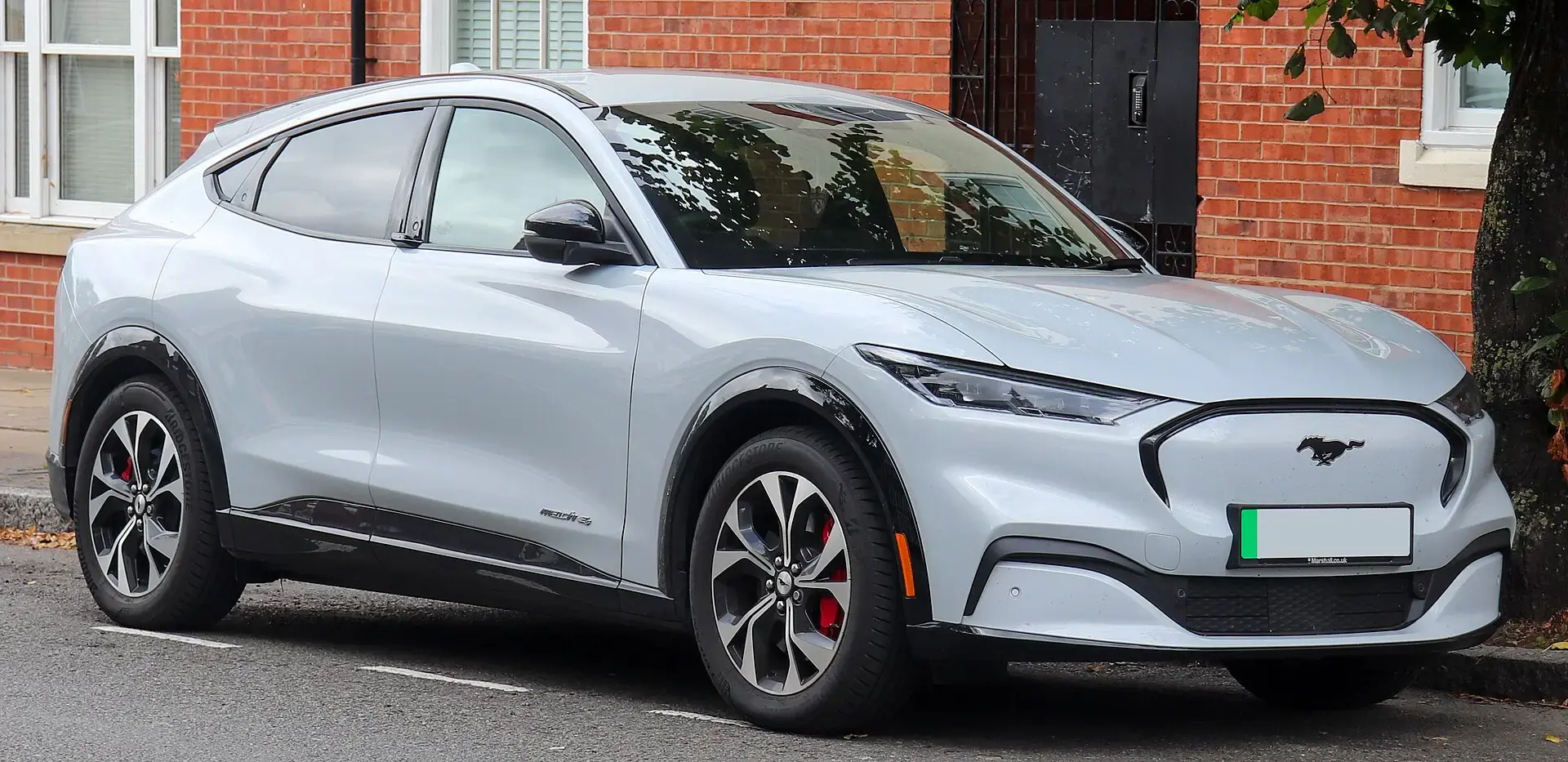
Ford Mustang Mach-E and other US-built EVs and plug-in hybrids, where the tailpipe emissions compliance question does not arise for the electric drivetrain
-
Vehicles from manufacturers with global platforms: some variants of the Ford F-150 PowerBoost hybrid, certain Ram configurations, and some Chevrolet models with smaller-displacement turbocharged engines may fall within range depending on the specific build
Most likely to require modification:
-
High-displacement V8 petrol engines, particularly those without modern three-way catalytic systems or without architecture designed to the Euro 6 NOx threshold
-
American vehicles manufactured before Euro 6's introduction in 2014 that were never designed to approach European NOx limits
-
Diesel-powered American vehicles, where the Euro 6 NOx limits are particularly strict and the gap between US and EU standards is the widest
The practical question for most importers is not whether a vehicle meets Euro 6 in theory, but whether it can be made to meet it cost-effectively. For vehicles that fall slightly outside the limits, catalytic converter replacement or emissions system servicing can sometimes bring a car within range. For vehicles with fundamentally different emissions architectures, the modification cost can be prohibitive.
The Historic Vehicle Exemption Changes the Calculation
For vehicles with a first registration date 30 or more years ago, meaning first registered in or before 1996 for 2026 imports, which fall under Spain's historic vehicle framework, Euro 6 compliance is not the relevant question. Historic vehicles are assessed as period pieces under the ITV historic route rather than against current emissions standards. A 1969 Dodge Charger with a 440 cubic-inch V8 is not going to pass Euro 6, and it does not need to.
The Euro 6 question matters primarily for modern or near-modern US vehicles being imported for everyday road use, where the buyer intends to register the car under current standards rather than through the historic vehicle path.
This analysis of whether modern US V8 muscle cars can pass EU emissions standards covers the specific compliance picture for current-generation American performance engines in detail, including what modifications are typically required and what the approval process involves when a vehicle falls outside the standard limits.
Emissions and the Homologation Decision
For importers weighing whether to proceed with a non-historic American vehicle, the emissions compliance question is usually the first filter. If the vehicle's emissions profile is genuinely incompatible with Euro 6 and modification costs are high, the total import cost quickly makes the transaction financially unattractive compared to buying a European-market equivalent.
The cases where the import still makes sense despite emissions work are typically vehicles with strong collector or cultural appeal that simply cannot be sourced in the European market: a low-mileage American truck, a specific trim level not sold in Europe, or a vehicle that holds personal significance for a relocating buyer. In those situations, the compliance cost is part of the accepted price of bringing the specific car over.
For full details on shipping routes, freight options, and how to coordinate documentation across the commercial, EV, and classic vehicle categories, the WCS Spain shipping page covers current services and what to expect at each stage of the process.
Ready to Ship Your Vehicle to Spain?
Whether you are a dealer building a commercial export channel, a buyer importing a Tesla or EV, or an enthusiast trying to work out what your American car needs to pass Spanish registration, use our shipping calculator to get an accurate freight quote based on your vehicle, US origin port, and Spanish destination.

Exporting EVs from Norway: How To Sell & Ship Used Electric Cars Abroad
Euro 6 Emissions: Which American Cars Pass Without Modification