

Disclosure and disclaimer (February 2026): This article is provided by West Coast Shipping (WCS) as general informational and promotional content about WCS services. It is not legal, tax, import, or compliance advice and does not create any client relationship. All model examples, regulatory references, and cost comments are illustrative summaries based on public information and WCS’s experience shipping vehicles as understood in February 2026, and they may change without notice. Vehicle values, demand, and UK government rules can change at any time. Before purchasing or importing any vehicle, always verify current DVLA, HMRC, and MOT requirements on GOV.UK and consult qualified UK customs, tax, or legal professionals.
The 1970s were tougher years for American muscle than the headline‑grabbing 1960s, but they still produced some of the most charismatic V8‑powered cars ever built. Today, many of those 1970s models sit comfortably inside the UK’s rolling 40‑year historic window, which can open up attractive Vehicle Excise Duty and MOT advantages when they are imported and registered correctly.
This article focuses on five 1970s American muscle cars that, in WCS’s experience, work especially well for UK buyers. The picks balance historic‑class eligibility, parts support, cultural recognition, and day‑to‑day usability on British roads. For a deeper breakdown of how the UK’s historic tax class and MOT exemption generally apply to these cars, see the main guide on 1970s American muscle cars and UK historic tax/MOT exemptions, then use this list as your short‑list of models to target.
1. Dodge Charger (1970–1974): The Icon with Presence
.webp?width=1920&height=1022&name=Dodge_Charger_(1970_1974).webp)
Few cars turn heads in the UK like a 1970‑era Dodge Charger. The long nose, Coke‑bottle hips, and movie‑star profile make it instantly recognisable even to people who have never opened a muscle‑car magazine in their lives.
Why the Charger works well in the UK
From a UK‑import perspective, Chargers built in the early 1970s often tick several boxes:
-
Historic eligibility: By 2026, 1970–1974 Chargers sit deep within the 40‑year window, making them natural candidates for the historic tax class if they remain close to original spec.
-
Strong support network: Mopar communities in both the US and UK help with sourcing parts, decoding VINs, and verifying build dates—useful when DVLA wants evidence for historic registration.
-
Collectability: The combination of film exposure and period racing heritage means demand is broad, which can support long‑term values if the car is well documented.
Practical import notes
The Charger is big even by American standards. UK buyers who plan to use one regularly should:
-
Confirm that their driveway or garage can accommodate its length and width.
-
Budget for careful container loading and unloading to protect those long quarter panels and bumpers.
-
Consider power steering and brake upgrades that respect the original layout but make low‑speed manoeuvres less stressful in tight British streets.
If you are thinking about heavy modifications—such as a modern chassis or late‑model engine swap—it is sensible to review DVLA “substantial change” guidance first, especially if you want to preserve historic status. The main historic tax/MOT guide walks through how those rules typically interact with 1970s muscle cars.
2. Plymouth ’Cuda (1970–1974): Compact, Rare, and Highly Sought‑After
.webp?width=1920&height=1279&name=Plymouth_%E2%80%99Cuda_(1970_1974).webp)
The E‑body Plymouth ’Cuda is often at the top of global Mopar wish lists. Even non‑enthusiasts recognise its aggressive stance and shaker hoods; enthusiasts know it as one of the ultimate expressions of Detroit performance.
Why the ’Cuda is a compelling UK import
For UK buyers who want something rarer than a Mustang or Camaro, the ’Cuda offers:
-
Compact dimensions: Compared with full‑size Mopars, the ’Cuda’s slightly smaller footprint can feel more manageable on UK roads and in car parks.
-
Historic status alignment: The full 1970–1974 run is well past the 40‑year threshold. Clean, largely original cars can often be presented as ideal candidates for historic tax class and, where appropriate, MOT exemption.
-
Market recognition: Auction results and specialist dealer inventories show sustained global interest in these cars, particularly for well‑documented big‑block and Hemi variants.
Choosing the right ’Cuda for UK use
Top‑tier Hemi ’Cudas attract strong six‑ or seven‑figure prices at major auctions, which places them in a different category of risk and protection‑related planning. Many UK‑bound buyers instead focus on:
-
340 and 383 small‑block cars, often in striking colours.
-
440 big‑block cars that offer a similar presence with slightly more approachable pricing.
Regardless of engine, ’Cudas reward detailed pre‑purchase inspections. Rust repair and panel alignment can be expensive, especially if you want the car to present well at UK shows. WCS’s classic‑focused content on shipping American muscle cars overseas and the broader UK import page can help you understand how to protect a high‑value E‑body during transit.
3. Pontiac Firebird Trans Am (Mid‑ to Late‑1970s): Usable Muscle with GT Flair
.webp?width=640&height=402&name=Pontiac_Firebird_Trans_Am_(Mid_to_Late_1970s).webp)
The second‑generation Pontiac Firebird, especially the Trans Am variants, combines muscle‑car attitude with a more refined, grand‑touring flavour. Thanks to films like Smokey and the Bandit, the 1977–1979 Trans Am in particular has a strong pop‑culture imprint in the UK.
Why the Trans Am suits UK buyers
Trans Ams from the mid‑ to late‑1970s often stand out for:
-
More balanced dynamics: Compared with earlier, drag‑strip‑biased muscle cars, the second‑gen Firebird was designed with a stronger emphasis on cornering and braking. That can make it more enjoyable on twisty B‑roads.
-
Historic‑class timing: By 2026, even the last of the 1970s Trans Ams are comfortably eligible for historic classification, subject to DVLA’s modification rules.
-
Broader price spread: Emissions‑era engines mean some later cars have lower factory horsepower ratings, which can keep price points more approachable while still delivering the look and sound owners want.
Key considerations for a UK Trans Am
On the practical side:
-
Look for rust‑free shells from drier US regions; second‑gen Firebirds can rust around rear arches and floorpans.
-
Decide whether you want the full “screaming chicken” period graphics, a more understated look, or something in between.
-
Consider how far you want to go with modern upgrades (brakes, suspension, or gearbox) and how these might interact with DVLA’s interpretation of substantial changes if you’re counting on historic status.
Our main guide on 1970s American muscle in the UK includes more detail on how these model‑year choices can influence MOT testing decisions and tax‑class planning.
4. Oldsmobile 442 (1968–1972, with Early‑’70s Focus): Refined Muscle for Longer Drives
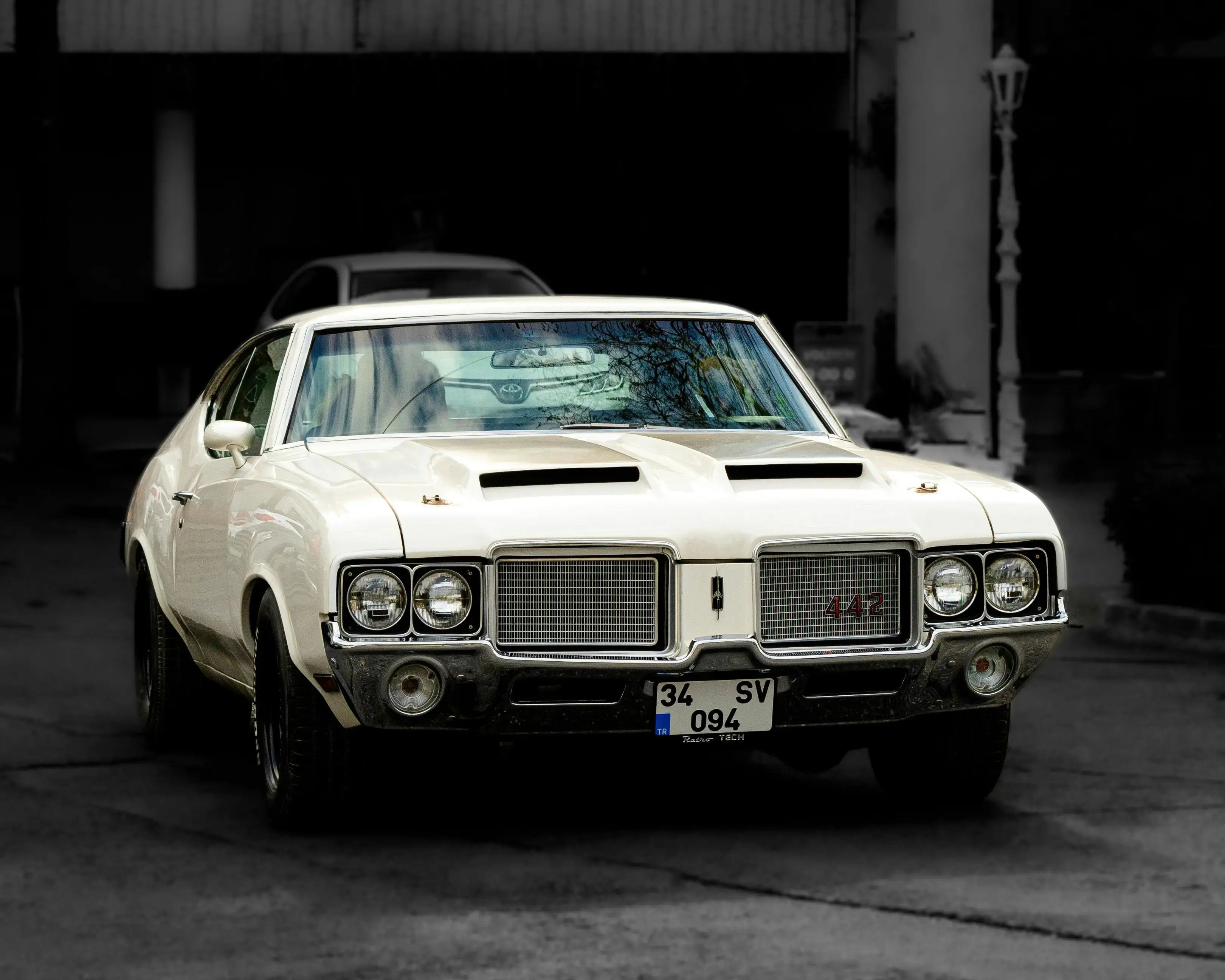
The Oldsmobile 442 represents muscle with a more mature edge—big V8 power blended with quieter cabins, better trim, and an image aimed at buyers who wanted performance without sacrificing comfort.
Why the 442 is worth importing
UK buyers who want a long‑legged cruiser often gravitate to the 442 because:
-
It’s distinctive in the UK. Mustangs and Camaros are common sights at British shows; a clean 442 stands out immediately.
-
Historic‑friendly age: Late‑’60s and early‑’70s 442s sit well beyond the 40‑year cut‑off, and many examples remain close to original specification.
-
Touring capability: The 442’s more relaxed suspension tuning and better‑insulated cabins lend themselves to cross‑country drives and continental touring.
Points to watch with a 442
Because Oldsmobile no longer exists as a current brand, some trim items and model‑specific components can be more challenging to source than Chevrolet equivalents. In practice:
-
Mechanical parts—engines, transmissions, and many suspension components—are still available thanks to shared GM platforms.
-
UK buyers should factor in slightly longer lead times for rare badges, interior pieces, and era‑correct wheels.
For those prepared to be patient with parts supply, the 442 offers a compelling mix of rarity and usability, especially when supported by careful transport via container shipping as outlined on the UK car shipping page.
5. Chevrolet Chevelle SS (1970–1972): Blue‑Chip Muscle with Broad Support
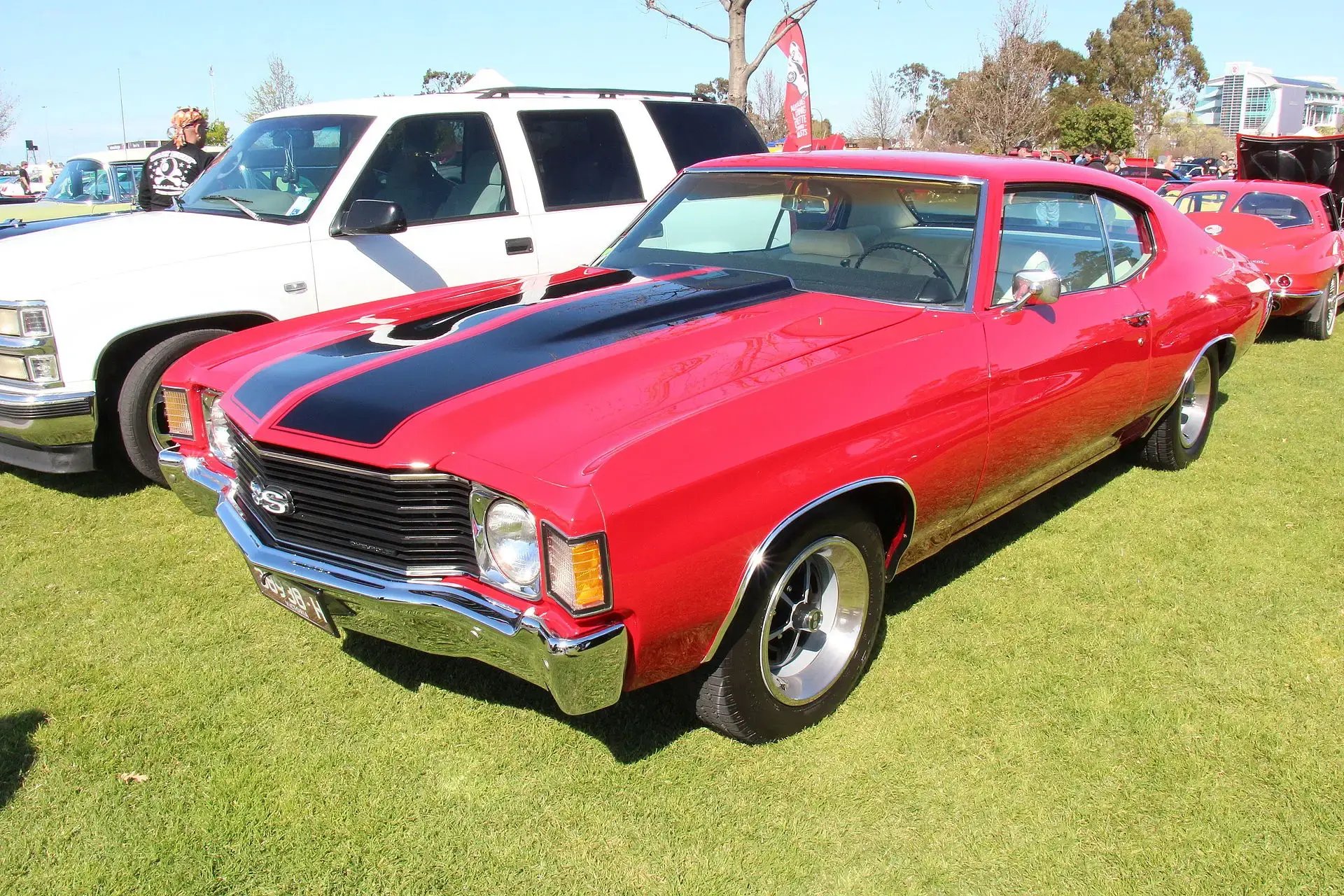
The Chevrolet Chevelle SS, particularly the 1970 models with big‑block engines, is often ranked among the definitive muscle cars. For UK buyers, it offers a familiar badge, a massive parts ecosystem, and a body size that feels substantial without being quite as unwieldy as the largest Mopars.
Why the Chevelle SS is a smart UK import
Key advantages include:
-
Chevrolet brand familiarity: UK workshops used to working on Camaros and Corvettes are usually comfortable with Chevelles as well, simplifying maintenance and upgrades.
-
Strong parts support: Reproduction panels, interior kits, and mechanical parts are widely available from US suppliers, making long‑term ownership less stressful.
-
Historic compatibility: 1970–1972 SS models are clearly historic by age, with many surviving cars still riding on original‑style frames and suspension layouts.
Choosing and shipping a Chevelle
Because Chevelles were produced in significant numbers and heavily modified over the decades, due diligence matters:
-
Verify SS status carefully—some cars are rebadged Malibu or base models.
-
Cross‑check VINs, trim tags, and any build sheets with marque‑specific resources.
-
Factor in both UK fuel prices and your intended mileage when choosing between small‑block and big‑block engines.
Once you have the right car identified, WCS can help you compare dedicated versus shared containers and map realistic timings from US ports to UK destinations using our USA‑to‑UK shipping calculator.
How to Narrow Your Shortlist: Matching Models to UK Use Cases
Picking a specific 1970s muscle car to import is as much about lifestyle as it is about specification sheets. WCS frequently sees UK clients grouping models into three broad “roles”:
-
Showpiece and weekend car:
-
Typical picks: High‑spec Chargers, rare ’Cudas, or particularly original Chevelles.
-
Priorities: Historic status, originality, provenance, and presentation.
-
Shipping approach: Dedicated or carefully managed shared containers, minimal modifications.
-
-
Frequent‑use classic:
-
Typical picks: Trans Ams and Oldsmobile 442s with comfortable interiors and reliable drivetrains.
-
Priorities: Usability in traffic, brake and cooling upgrades that respect DVLA rules, comfort on longer trips.
-
Shipping approach: Shared containers are common, with immediate post‑arrival servicing and sometimes a voluntary MOT even if exempt.
-
-
Restomod platform:
-
Typical picks: Solid but non‑numbers‑matching Chevelles or Chargers.
-
Priorities: Chassis strength and body condition over pure originality.
-
Shipping approach: Similar to above, but owners often accept that heavy modifications may move the car out of historic tax/MOT categories.
-
If you are still deciding which role fits you best, the main historic tax and MOT guide walks through how each approach interacts with UK rules and costs.
Shipping 1970s Muscle from the USA to the UK: Where West Coast Shipping Fits In
Once you settle on a model, the next question is how to get it to the UK safely and compliantly. WCS’s UK car shipping page outlines our standard approach, which typically includes:
-
US vehicle collection: From private sellers, dealers, or auctions anywhere in the United States, moving your car to one of our export hubs in California, Florida, or New Jersey.
-
Containerised shipping: Shared and dedicated containers to ports such as Southampton, Felixstowe, and Liverpool, with custom blocking and bracing tailored to long‑hood muscle cars.
-
Customs and DVLA support: Coordination with established UK import agents who understand how historic classification, duty/VAT treatment, and MOT rules generally affect older imports.
-
Condition documentation: Detailed photos and condition reports before loading, so you and your UK workshop know exactly how the car looked at origin.
These logistics pieces turn your choice of Charger, ’Cuda, Trans Am, 442, or Chevelle into a practical project, rather than just a daydream on a classifieds site.
Start Planning Your 1970s Muscle Import to the UK
The 1970s may have seen horsepower numbers soften on paper, but from today’s perspective the decade left behind a group of charismatic, usable muscle cars that fit UK historic rules and road conditions surprisingly well. Whether you lean toward Mopar drama, Pontiac flair, Oldsmobile refinement, or Chevrolet breadth, the key is to pick a model that matches how you want to use the car—and then plan shipping and registration around that decision.
When you are ready to run the numbers on your own import, begin with West Coast Shipping’s USA‑to‑UK car shipping page to check routes, sample rates, and container options. Pair those insights with the main guide on 1970s American muscle cars and UK historic tax/MOT exemptions, and you will have a clear framework for choosing, shipping, and registering the right 1970s muscle car for life on UK roads.


UK Historic Vehicle Tax: 1970s American Muscle Car Eligibility
1970s American Muscle Cars: UK Historic Tax & MOT Exemption Guide
.webp)