
Where to Buy Classic Cars in Europe in 2026

The math on importing a classic car from Europe just changed again, and this time it moved in the buyer's favor. On July 24, 2026, the Section 122 global surcharge expired. The new Section 301 framework that replaces it leaves European classics at a combined 12.5% duty and drops UK classics to roughly 10% total. Meanwhile, a modern car from the EU still pays 15% under the US-EU trade deal, and modern imports from countries without a deal face the 25% Section 232 tariff on top of the base rate.
For US buyers, that spread is the whole story. A 25-year-old car from Europe now clears customs at a lower rate than almost any modern import, skips EPA and DOT conversion entirely, and arrives from a market where the selection of European metal is deeper and often cheaper than anything stateside. Here is where to find the right car, and what it costs to bring it home in 2026.
Can You Buy a Car in Europe From the US?
Yes. Thousands of American collectors do it every year without ever leaving home. European sellers, auction houses, and marketplaces are used to working with overseas buyers. You can bid remotely, arrange an independent pre-purchase inspection, wire the funds, and have a shipping company collect the car from the seller's door. The two things you need to get right are verifying the car before you pay and understanding your landed cost before you bid. The rest is logistics, and that part is easier than most first-time importers expect.
The 2026 Tariff Picture for Classic Car Importers
Three separate rules shape what you pay at US customs in 2026, and classics come out ahead under all of them.
First, vehicles manufactured at least 25 years ago remain exempt from the 25% Section 232 auto tariff when entered under the classic car provisions (HTS 9903.94.04). They pay the historic 2.5% base duty instead.
Second, the Section 122 surcharge that added 10% to nearly every import expired on July 24, 2026. Its Section 301 replacement targets a specific list of countries, and the practical result for collector car imports is this: classics from the EU continue to land at about 12.5% total, while classics from the UK drop to roughly 10% total.
Third, modern cars did not get the same break. EU-built modern vehicles pay the flat 15% negotiated in the US-EU trade deal. Modern cars from countries without a deal still stack the full Section 232 tariff.
| Vehicle | Approximate Total US Duty (July 2026) | EPA/DOT Compliance |
|---|---|---|
| Classic (25+ years) from the EU | ~12.5% | Exempt under the 25-year rule |
| Classic (25+ years) from the UK | ~10% | Exempt under the 25-year rule |
| Modern car from the EU | 15% | Full compliance required |
| Modern car, no trade deal | 25%+ (Section 232) | Full compliance required |
Run the numbers on a real car. An $80,000 Porsche 993 Carrera bought in Stuttgart pays about $10,000 in duty as a classic. The same money spent on a modern EU car pays $12,000, then adds an estimated $9,500 to $15,000 in EPA/DOT conversion work that the classic skips entirely. On a UK car the gap is even wider. Duty rates can shift as the Section 301 framework is finalized, so confirm the current rate with a licensed customs broker before you commit to a purchase.
The 25-Year Rule Just Unlocked the Class of 2001
The 25-year exemption is a rolling window, calculated from the month of manufacture. Through 2026, that means 2001-built cars become legal to import month by month. This is one of the strongest vintages in years for enthusiast imports. Cars now crossing the threshold include the BMW E46 M3 in European specification, the Mercedes-Benz C32 AMG, the Porsche 996 Turbo, the Ferrari 550 Maranello, the Lotus Elise Series 1 and early Series 2, and European-market diesels and wagons that were never sold in the US at all.
Remember that eligibility follows the build date, not the model year. A car built in June 2001 becomes eligible in June 2026. Get the manufacture date verified before you buy, because a few months' difference determines whether the car enters as an exempt classic or an expensive modern import.
Best Online Marketplaces for Classic Cars in Europe
1. AutoScout24. The largest general car marketplace in continental Europe, covering Germany, Italy, France, Benelux, and beyond. The classic section is deep, and it is often where honest driver-grade cars surface at dealer and private-seller prices before they reach curated platforms.
2. Mobile.de. Germany's dominant listing site and the first stop for German metal: Porsche, Mercedes, BMW, and Audi in specifications America never got. Filters let you search by first registration year, which makes 25-year-rule shopping easy.
3. Classic Trader. A dedicated classic platform with strong dealer inventory across Germany and the rest of Europe. Listings tend to be well documented, with condition grading and history that make remote buying less risky.
4. Car & Classic. One of Europe's largest classic marketplaces and now a major online auction venue. Especially strong for UK cars, which matters in 2026 because UK classics carry the lowest duty of any European origin.
5. Collecting Cars. The UK-based auction platform that has become a fixture for modern classics and enthusiast cars across the UK and Europe. No-reserve formats and detailed photo sets make it popular with US bidders.
6. Catawiki. Netherlands-based weekly auctions with a broad classic car section. Good hunting ground for continental oddities and entry-level classics at accessible prices.
7. Classic Driver Market. A curated marketplace where Europe's top-tier dealers list investment-grade cars. Expect higher asking prices and correspondingly better cars and documentation.
8. TheParking.eu. A meta-search engine that aggregates listings from across European sites. The fastest way to scan the whole continent for a specific model and specification in one search.
European Auction Houses Worth Watching in 2026
Auctions are where the best documented cars change hands, and every major European house welcomes American phone and internet bidders. Factor the buyer's premium, typically 10% to 15%, into your bid math.
RM Sotheby's runs a strong European calendar through the rest of 2026: Zurich on September 26, London on October 31, and Munich on November 20. Catalogs publish weeks in advance, with condition reports available on request.
Bonhams|Cars holds its flagship European sale at the Goodwood Revival each September, plus year-round online sales that regularly surface UK barn finds and estate cars at realistic money. A 10% duty on UK classics makes these sales especially interesting for US buyers this year.
Artcurial Motorcars anchors the Paris scene, headlined by its Retromobile sale each February. Strong in French coachbuilt classics, Ferraris, and significant competition cars.
Broad Arrow Auctions has built a serious European presence, with its Zoute Concours sale in Belgium each October serving as the continental highlight.
Aguttes, France's largest independent house, and UK specialists like Iconic Auctioneers and Historics Auctioneers round out the field. These mid-market sales are often where the value is: less international bidding pressure than the marquee events, same exportable cars.
Buy Where the Cars Are: 2026 Events and Fairs
Europe's big classic fairs double as marketplaces. Hundreds of dealers bring inventory priced to sell, and walking a fair remains the fastest way to compare dozens of examples of the same model in person. If you are planning a buying trip for the rest of 2026, these are the dates.
Goodwood Revival (UK, mid-September) puts the Bonhams sale alongside the world's most famous historic race meeting. Techno Classica (September 24-27) moves to Dortmund this year and remains Germany's flagship classic fair, with several halls of dealer stock. Zoute Grand Prix (Knokke-Heist, Belgium, October 7-11) combines a concours with the Broad Arrow sale. Auto e Moto d'Epoca (Bologna, October 22-25) is Italy's biggest classic market and arguably Europe's best hunting ground for Alfa Romeo, Lancia, Fiat, and Ferrari. Epoqu'Auto (Lyon, November) and the NEC Classic Motor Show (Birmingham, November) close out the season.
Planning further ahead, the buying season restarts with InterClassics Maastricht in January and Retromobile in Paris in early February, where Artcurial, Bonhams, and RM Sotheby's all hold sales in the same week.
How Much Does It Cost to Import a Classic Car From Europe?
Container shipping from Europe to the US starts at $2,750 per vehicle. Typical routes and transit times:
| Route | Rate From | Transit Time |
|---|---|---|
| Continental Europe to New York | $2,750 | ~18 days |
| Southampton, UK to US East Coast | $2,750 | ~26 days |
| Belgium to California | $3,350 | ~43 days |
Add duty on the purchase price, marine insurance, and destination charges, and a complete landed-cost picture for a $50,000 UK classic looks like roughly $5,000 in duty plus shipping. For an exact door-to-door quote on your specific car and route, use our Car Import Calculator.
Why Ship Your European Classic With West Coast Shipping
West Coast Shipping has moved classic cars across the Atlantic for over 20 years, with weekly consolidated containers from the UK and Europe to our own warehouses on both US coasts. Your car is collected from the seller, auction house, or fairground, loaded and secured by teams that handle collector cars daily, and photographed at every step. We offer door-to-door service from anywhere in the UK or EU, and we keep you notified of updates as your car moves through the import process.
Ready to Import Your European Classic to the USA?
The duty spread will not stay this favorable forever. Tariff frameworks have changed four times since 2025, and the current rules reward buyers who move while classics from the UK clear at around 10% and EU classics at 12.5%. If you have found the car, or you are still hunting through the sites and sales above, get a shipping quote or call us at +1 (510) 236-3008 and we will handle the journey home.
You May Also Like
These Related Stories
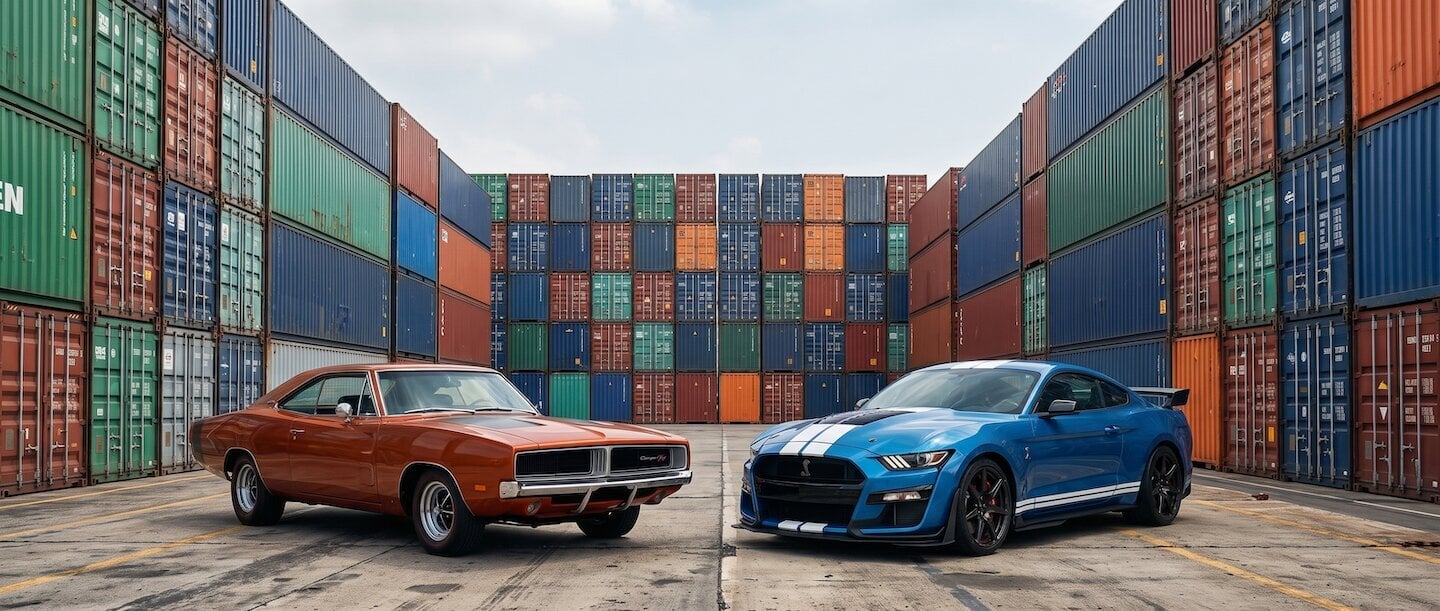
Rare Classic Muscle Cars and Their Modern Counterparts: Values & Import Costs | 2026 Guide

What Duties Do I Pay Today on Classic Car Imports?