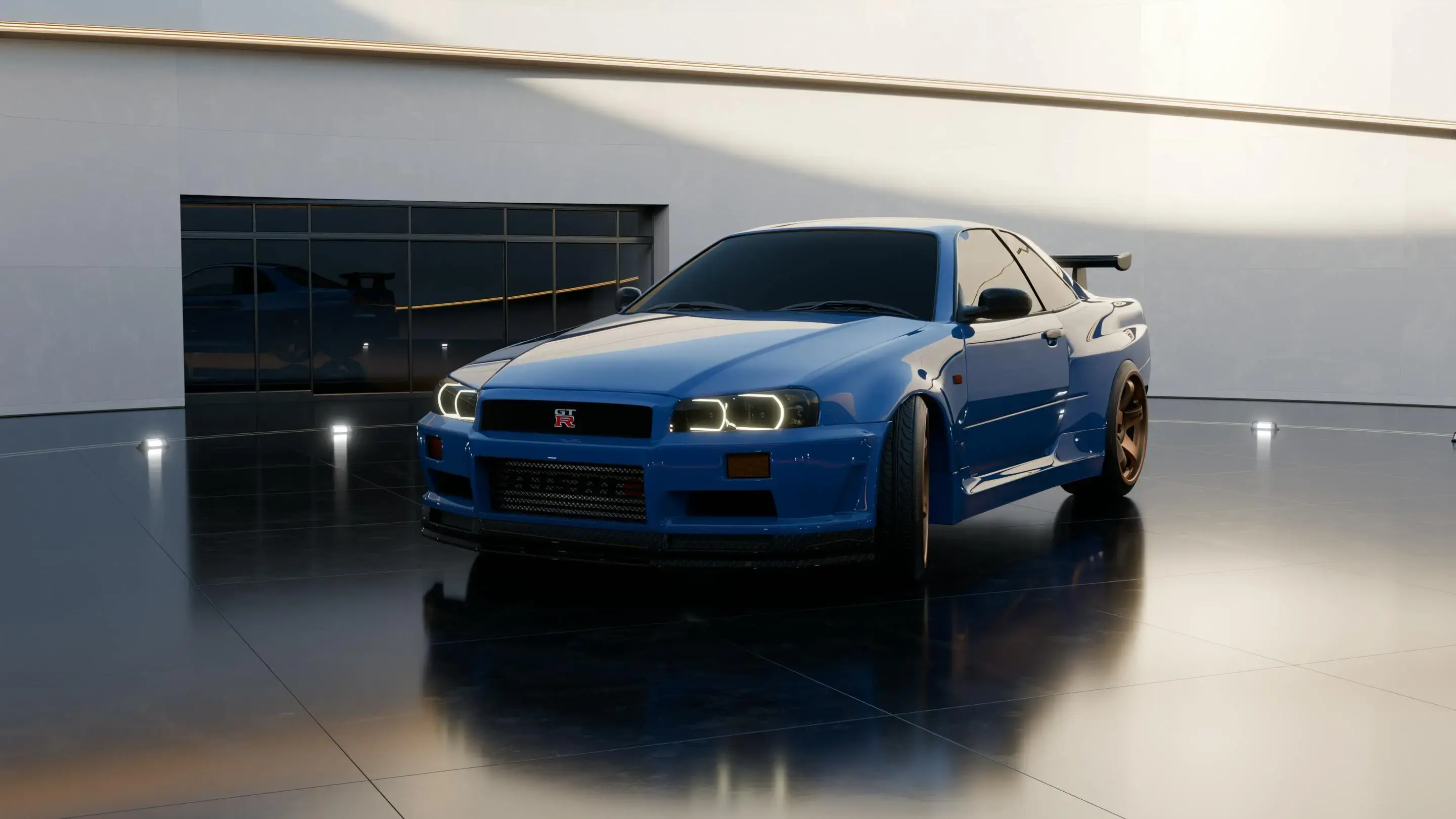

German car imports to the USA are in the middle of a structural shift. The 25-year rule is unlocking some of the most desirable European performance cars ever built, tariff exemptions are changing the landed-cost math, and collectors who act early are finding the best examples before prices reflect the new demand.
This guide covers three connected topics: where the import opportunity is moving in 2026, which specific 2001 German cars are now 25-year eligible, and which 1990s models are emerging as the next collector wave worth targeting before the window closes.
For shipping logistics, costs, and transit times for the Germany–USA route, see our Import a Car to the US.
Why German Car Import Traffic Is Shifting and Where the Opportunities Are in 2026
The rules haven't changed, but the cars have
The 25-year rule itself is not new. What changes every January 1 is which cars move across the eligibility line and in 2026, that group includes some of the most iconic German performance cars of the early 2000s.
At the same time, broader market conditions are putting pressure on how and why people import:
-
Section 232 tariffs of 25% apply to modern vehicle imports, but 25-year-eligible cars are exempt. That makes the cost difference between importing a qualifying classic and buying a recent-model car in the US significant enough to change the decision entirely.
-
Currency dynamics between the USD and EUR have made certain German car purchases more attractive when paying in dollars, particularly for vehicles that command premium prices in Germany but are still undervalued relative to their US market potential.
-
Domestic supply constraints for certain European-spec models—manual transmissions, specific engine variants, or color and trim combinations that were never exported to the USA—continue to push buyers toward direct European sourcing.
Want to understand the bigger picture before you buy? Read our dedicated article on why German car imports are shifting in 2026 and where the opportunities are, where we break down how Section 232 tariffs, the 25-year rule, and supply gaps are reshaping the market for US buyers right now.
Where traffic is actually shifting
The practical effect is a bifurcation of the import market:
-
Older pre-1990 classics are still moving, but buyer competition has intensified and prices for the most desirable examples (E30 M3, early 964, E28 M5) have compressed the arbitrage opportunity for new buyers.
-
2001 model-year cars just crossing the 25-year line are attracting early-mover attention from collectors who watched the same pattern play out with 1998–2000 models and are determined not to miss it again.
-
1990s mid-tier models—well-specced standard BMWs, Mercedes, and Porsches that are not yet collectible by wide consensus—are quietly appreciating as the collector base grows younger and its reference points shift toward these cars.
The Germany-to-USA shipping corridor benefits directly from all three trends. Understanding each one helps you decide where your own import strategy fits.
2001 German Cars Now 25-Year Eligible: The E46 M3, 996 GT3 & E39 M5 Import Wave
What 25-year eligibility means in practice
When a car manufactured in 2001 turns 25, it becomes exempt from EPA and DOT compliance requirements that would otherwise apply to modern imports. In practice, that means:
-
No costly modifications by a Registered Importer to meet Federal Motor Vehicle Safety Standards.
-
Exemption from the Section 232 25% tariff that applies to newer vehicle imports from Europe.
-
A straightforward customs entry using EPA Form 3520-1 and DOT Form HS-7 under the classic-vehicle pathway.
For the cars entering this window in 2026, the result is access to some of the best-documented, most sought-after European performance models of the early 2000s—on favorable import terms.
Eligibility is based on the manufacture date, not the model year. A "2001 model year" car built in late 2000 would not qualify until it reaches its actual 25-year manufacture anniversary. Always verify build-date documentation against the VIN and factory records before shipping. For a detailed breakdown of the 25-year rule, see our complete classic import guide.
Want a deep dive into the specific models crossing the 25-year line this year? Check out our full article on 2001 German cars now 25-year eligible: the E46 M3, 996 GT3 & E39 M5, where we cover what makes each model worth importing, what to inspect before you buy, and how the compliance exemptions work in practice.
BMW E46 M3 (2001 builds)
The E46 M3 is widely regarded as one of the most complete driver's cars BMW has ever built. Its S54 inline-six, near-perfect weight distribution, and communicative chassis made it a benchmark when new and have kept it desirable ever since.
The key reason to import a European-market E46 M3 rather than source one domestically:
-
Manual transmission only: Many of the most desirable specs are six-speed manuals, which were available in the US but are harder to find in clean, unmodified condition with European provenance and documentation.
-
Unique specifications and colors: European-market cars came with option combinations and colors that were either unavailable in the US or produced in very limited numbers for North American allocation.
-
Service history and condition: Low-mileage European examples—particularly from dry Central European markets—often carry more complete dealer histories than comparable US market cars of the same age.
For 2026, early-production 2001 E46 M3 builds are now crossing the threshold. Our article on classic cars eligible for the 25-year import rule in 2026 covers the E46 M3 eligibility in detail.
Porsche 996 GT3 (2001)
The 996-generation GT3 is a homologation special built around Porsche's Mezger engine—an entirely different mechanical package from the base 996 Carrera. The GT3 was never officially sold in the USA in first-generation (996.1) form, which makes 25-year-eligible examples uniquely attractive to Porsche collectors.
-
The 996.1 GT3 features the naturally aspirated 360 hp Mezger flat-six, a motorsport-derived engine shared with the 996 Turbo but in a lighter, more focused application.
-
As a car that was not sold in the US market, even finding a comparable domestic example is not possible—all GT3s of this generation must be imported.
-
With the 25-year eligibility window now open, the compliance cost and tariff burden that previously applied to GT3 imports is removed, making the economics substantially different from what they were even 12 months ago.
This is the model that most clearly demonstrates the value of early-mover positioning: supply is finite, demand from Porsche enthusiasts is global, and the 25-year window makes 2026 the first practical year for cost-effective US import.
BMW E39 M5 (2001)
The E39 M5 sits in a different category from the E46 M3 and 996 GT3—it is a full four-door performance sedan with an S62 V8, and it was sold in the US market. The reason to seek out European examples is specification breadth and condition availability.
-
Manual Touring variants: The E39 5-Series was available as a manual Touring (wagon) in Europe, a combination never offered in the USA.
-
Euro-spec diesel options: For buyers seeking specific powertrains or specification histories, European-market cars can offer configurations simply absent from US-delivered stock.
-
Condition and provenance: Like the E46 M3, European examples can offer well-documented histories that are harder to find in comparable US market cars that have now been through 25 years of ownership chains.
Our guide to importing the BMW E39 5-Series from Germany walks through eligibility, documentation, and shipping steps.
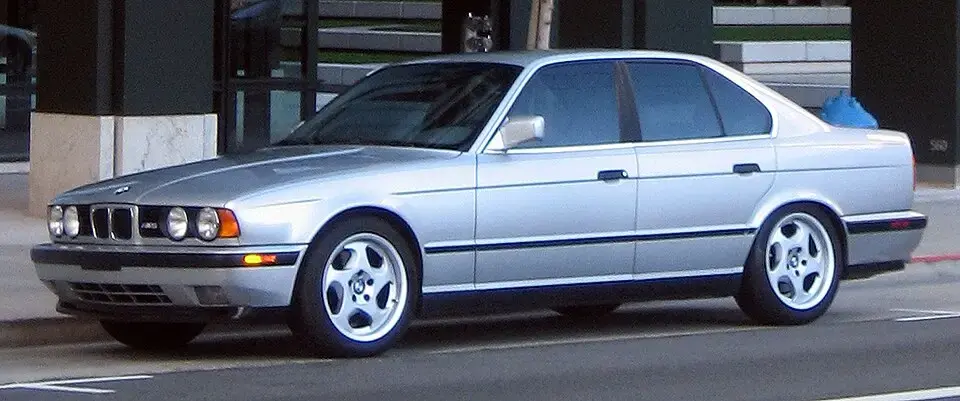
1990s German Performance Cars Worth Importing: The New Collector Wave
Why the 1990s window is narrowing
The 1990s cohort of German performance cars is not a new discovery, but it is now in a critical transitional period:
-
Cars from 1995–2001 are either already 25-year eligible or within a few years of crossing that line.
-
Prices in Germany and across Europe for the most desirable examples have been rising as the domestic collector base recognizes the same values that attract American buyers.
-
Physical condition is becoming a sorting mechanism: clean, low-mileage, well-documented 1990s Germans are appreciating faster than average examples, and supply of the best ones is genuinely contracting.
The buyers who are most actively sourcing now are not waiting for a model to become collectible in the mainstream—they are acting on their own research while the window for finding exceptional examples at reasonable prices is still open.
Want to explore the broader 1990s collector opportunity beyond the 2001 eligibles? Read our full guide on 1990s German performance cars worth importing in 2026, where we cover the E36 M3, C36 AMG, Porsche 993, E34 M5 Touring, and more—including what to look for and why European sourcing still has an edge over the US domestic market.
BMW E36 M3 (European specification)
The E36 M3 is one of the clearest examples of the US-Europe specification gap. The US-market E36 M3 received a detuned version of the straight-six, producing around 240 hp. The European-market car used the proper S50 and later S52 engines producing 286–321 hp depending on variant and year.
-
European-spec E36 M3s with complete service histories and original paint are the targets here.
-
Lightweight and competition variants command significant premiums but remain substantially cheaper than their E30 predecessors.
-
With 1998–2001 examples already qualifying under the 25-year rule and earlier models even easier to import, this is an active market rather than a theoretical one.
For a full BMW import roadmap see our guide to importing a BMW from Germany to the USA.
Mercedes-Benz C36 and C43 AMG
The mid-1990s AMG sedans represent Mercedes' first era of factory-integrated AMG performance, before AMG became a sub-brand in its own right. The C36 AMG (1994–1997) and C43 AMG (1997–2000) offer:
-
Factory AMG engines with genuine performance credentials.
-
Conservative exterior styling that has aged exceptionally well.
-
A collector story that is just beginning to develop in the US market, meaning prices have not yet fully reflected the models' significance.
European-market examples with manual transmissions and sport packages are particularly sought after, as these configurations are uncommon in US-delivered cars.
Porsche 993 Carrera and Carrera S
The 993 is the last air-cooled 911, and it has already achieved strong collector status globally. However, within the 993 range, there are still specification pockets that remain underpriced relative to their long-term desirability:
-
Targa models and Cabriolets in unusual color combinations.
-
European-delivery Carrera S models with specific option codes.
-
Well-preserved high-mileage examples that, properly inspected, offer genuine driver quality at lower cost than the lower-mileage collectible tier.
All 993-generation cars (1994–1998) are already 25-year eligible, making import straightforward. The opportunity here is not about compliance timing but about finding the right example—and that still requires sourcing directly in Germany rather than waiting for cars to surface in the US.
Sourcing and shipping from Germany
For all of the models discussed above, Germany remains the primary sourcing market:
-
The largest population of European-spec examples is concentrated in German-speaking markets (Germany, Austria, Switzerland).
-
German registration and service records provide reliable documentation chains.
-
Multiple auction platforms and dealer networks specialize in performance and collector cars.
West Coast Shipping runs regular container consolidations from German ports—primarily Bremerhaven and Hamburg—with transit times that vary by US departure and origin port. Our main Import a Car to the US provides current route information and typical timelines. For a broader view of the classic import trend shaping 2025 and 2026, see our classic car import trend analysis.
Container shipping rates, transit times, and customs requirements are subject to change based on carrier schedules, port conditions, and regulatory updates. Always request a current quote and confirm import eligibility against the vehicle's actual manufacture date before committing to a purchase.
Get a Quote for Shipping a German Car to the USA


The Most Popular German Cars Imported to the USA in 2025
1990s German Performance Cars Worth Importing: Collector Wave 2026