Ship Retro Classics Essen Cars to USA: Complete Logistics Guide
Successfully acquiring a vehicle at Retro Classics Essen is only the first step. Turning that stand‑floor purchase into a car in your American garage means planning export, ocean freight, customs, and final delivery long before the show closes.
This guide walks through each stage—from storage in Essen to port transport, German export documentation, container shipping from Bremerhaven or Hamburg, US import clearance, and domestic delivery—so you know what to expect over the typical six‑to‑eight‑week journey. West Coast Shipping supports this end‑to‑end process via its international car shipping services and our broader Retro Classics Essen buy‑and‑ship guide.
Immediate Post‑Purchase Logistics and Storage
Why storage planning matters
Retro Classics Essen is a temporary exhibition, not a storage facility. Once the show ends, vehicles must leave Messe Essen quickly, which means you need a plan for the car’s next stop as soon as you close a deal.
The show typically runs from mid‑week through Sunday. Exhibitors start packing up on Sunday evening and Monday morning, and Messe Essen expects vehicles to be removed promptly. Leaving a car on site beyond teardown can trigger fees and creates security risks for a newly bought classic.
Dealer and specialist storage options
Most buyers move their purchases to a dealer facility or a specialist storage yard near Essen:
-
Many dealers will hold the car for a short period—often one to two weeks—while you arrange transport and shipping.
-
Some businesses maintain dedicated export storage with covered parking, basic security, and procedures for coordinating pickup with your shipper.
-
Typical short‑term storage may run in the €50–150 per week range depending on the facility and level of protection.
Agree on storage duration, any fees, and who is responsible for the vehicle’s condition in writing before you leave Essen for the day.
Storage pricing and availability around major events can change year to year. Always confirm current rates and terms during negotiations.
Transport from Essen to German Export Ports
Choosing between Bremerhaven and Hamburg
Most Retro Classics Essen purchases ship through either Bremerhaven or Hamburg:
-
Bremerhaven is Germany’s main automotive export hub with dense sailings and highly optimized vehicle handling.
-
Hamburg offers similarly frequent services and may be preferable depending on carrier schedules or consolidation requirements.
Approximate road distances from Essen are:
-
Essen → Bremerhaven: about 220 km (roughly a 4–5‑hour drive)
-
Essen → Hamburg: about 340 km
Professional carriers familiar with classics typically charge around €200–400 for this leg, depending on origin, destination terminal, vehicle size, and urgency.
Why enclosed transport is strongly recommended
For valuable youngtimers and classics, enclosed transport is usually worth the premium:
-
Protection from weather and road debris during a multi‑hour motorway run
-
Lower risk of stone chips, vandalism, or casual damage at fuel and rest stops
-
Drivers and equipment tailored to low‑ground‑clearance and high‑value cars
Coordinate the pickup schedule so the car reaches port within the free‑storage window offered by the terminal and your shipping provider. Arriving too early can add daily storage fees; arriving too late risks missing a sailing.
Local transport prices depend on demand, fuel costs, and route density. Obtain a written quote that reflects current conditions before committing.
German Export Documentation and VAT
Export declaration (Ausfuhranmeldung)
Every car leaving Germany needs an export declaration filed with customs. In practice, your dealer, export agent, or shipping company will:
-
Register the vehicle’s VIN, make, model, and value in the customs system
-
Identify the exporter and the non‑EU destination country
-
Link the declaration to the planned vessel and port
This document proves the car has legally left the EU and supports VAT‑free treatment of the sale when the seller files their German tax return.
De‑registration and export plates
Before export, the vehicle must be removed from the German registration system:
-
The seller or their agent visits the local Zulassungsstelle with the registration document, proof of sale, and ID.
-
The car is formally de‑registered and, if needed, issued export or transit plates valid for a limited period.
-
These plates allow legal road use to the port if the car is being driven rather than trailered.
Even if you plan to only move the car on a transporter, ensuring proper de‑registration avoids future paperwork issues and confirms the car has fully left the German system.
VAT‑free pricing for exported cars
When a car is exported directly from Germany to the USA, the sale can often be structured as VAT‑free. To support this, the seller typically requires:
-
The customs export declaration showing departure
-
The bill of lading or other shipping documents proving the car is loaded for a non‑EU destination
-
A buyer statement confirming the export to the USA
Because German VAT is significant, getting this right can reduce your effective purchase cost by thousands of euros. Our separate guide on shipping vehicles from Switzerland outlines how similar documentation works in another European market and is useful reading for any European export.
VAT handling depends on up‑to‑date tax rules and proper documentation. Confirm details with the seller and your shipping partner before finalizing price and payment.
Container Shipping from Germany to the United States
Shared vs. dedicated containers
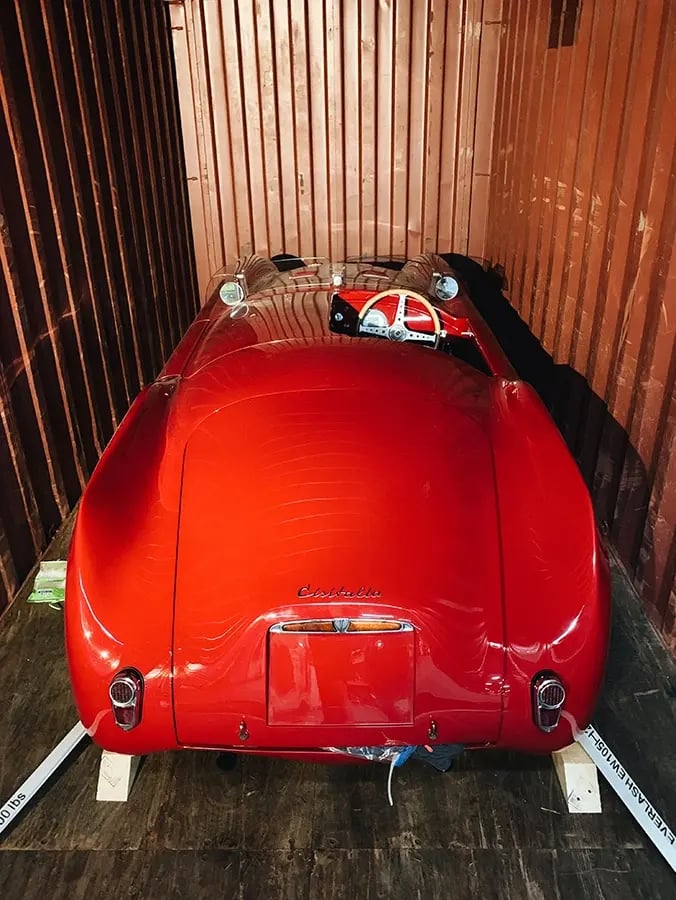
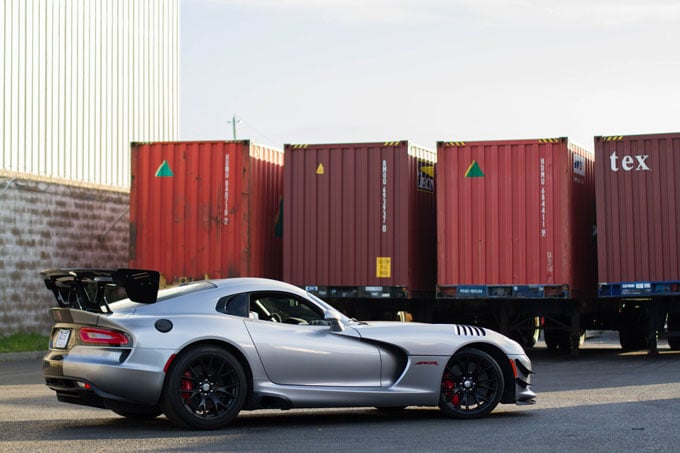
From Bremerhaven or Hamburg, most cars move in 40‑foot containers:
-
Shared containers (consolidation)
-
Your car shares space with other vehicles.
-
Standard loads are 2–3 sedans or 3–4 smaller cars in one container.
-
This keeps per‑car cost lower but may add 1–2 weeks while the consolidator fills the container.
-
-
Dedicated containers
-
You or your group use the entire container.
-
Offers maximum control over timing and loading, ideal for very high‑value cars or multi‑car purchases.
-
Costs more overall but can be attractive when shipping several vehicles at once.
-
Professional automotive consolidators secure every car with wheel chocks, soft straps, and bracing to prevent movement during the voyage. This enclosed environment protects the vehicle from weather, salt spray, and incidental port handling.
Typical ocean‑freight pricing
For standard passenger vehicles moving in a shared container from Germany to a major US East Coast port such as New York or New Jersey, current market pricing often starts around 2,750 USD per car. Dedicated containers cost more overall but can be cost‑effective when divided across multiple vehicles.
Ocean‑freight prices and surcharges fluctuate with season, fuel costs, and carrier capacity. Treat any example rate as a reference point only and obtain a fresh quote for your shipment.
Route and transit time expectations
Most routes from Bremerhaven or Hamburg to the US East Coast:
-
Offer weekly or near‑weekly sailings
-
Take around 18 days at sea to reach New York / New Jersey in normal conditions
Some buyers choose alternative US entry ports depending on final destination, but East Coast gateways generally provide the best mix of frequency, cost, and inland distribution options.
Overall Shipping Timeline
From the moment you buy at Retro Classics Essen to the day the car reaches your US port, expect several distinct phases:
-
Post‑purchase storage and Essen‑to‑port transport
-
Coordinating storage, pickup, and arrival at the export terminal
-
Typically about 1 week
-
-
Container booking and loading
-
Consolidating vehicles and matching them to a sailing
-
Usually 1–2 weeks, depending on how quickly a container fills
-
-
Ocean transit from Germany to the US East Coast
-
Approximately 18 days on the water in standard conditions
-
-
US customs clearance and port release
-
Document review, duty payment, and any inspections
-
Commonly 3–7 days after arrival
-
-
Domestic transport to your city or storage facility
-
Time depends on distance and carrier availability
-
Roughly 3–7 days for most routes
-
In practice, this yields a typical end‑to‑end window of 6–8 weeks from purchase to arrival at your US destination.
Weather, port congestion, and customs inspections can lengthen these phases. Always plan with some buffer time if you have a hard deadline, such as a show or rally.
US Import Customs Clearance
Leveraging the 25‑year import exemption
Most of the youngtimers and classics that attract buyers at Retro Classics Essen are already more than 25 years old. That is crucial for US import rules, because vehicles at least 25 years old:
-
Are exempt from modern EPA emissions standards for import purposes
-
Are exempt from DOT requirements for current safety equipment
To qualify, US Customs and Border Protection (CBP) needs proof of the vehicle’s build date:
-
German registration documents that list the year and, ideally, month of first registration
-
Factory build certificates or data sheets
-
VIN‑based documentation from the manufacturer or another authoritative source
Your customs broker will reference this documentation when completing the EPA and DOT forms, using the correct exemption codes for a 25‑year‑old vehicle. For a broader discussion of these rules, see our checklist for importing a European car to the US.
Key documents for US entry
For 25‑year‑eligible cars, you and your broker should have ready:
-
Original German title or registration document
-
Signed bill of sale with purchase price and seller/buyer details
-
Bill of lading and export documents from Germany
-
EPA Form 3520‑1 and DOT Form HS‑7 completed under the 25‑year exemption
Accurate documentation minimizes questions at the port and reduces the chances of a delay caused by missing or inconsistent data.
Duties, fees and customs processing
Most passenger cars over 25 years old imported into the US incur:
-
2.5% import duty calculated on the CIF value (car price plus ocean freight)
-
Small federal fees such as the Harbor Maintenance Fee and Merchandise Processing Fee
For example, a car valued at roughly 32,800 USD with 2,750 USD in freight (CIF value around 35,550 USD) would generate:
-
Duty at 2.5%: about 889 USD
-
Additional federal fees: modest, but still added on top of the duty and any broker charges
Licensed customs brokers file the entry, calculate the total, and arrange payment so CBP can release the vehicle. Clearance for a well‑documented classic often takes only a few business days, though random inspections can extend that slightly.
Domestic Delivery from Port to Your Garage
Choosing a transport method
Once the car is cleared, the final leg is moving it from the port to your home or preferred storage:
- Enclosed transport
-
Highest level of protection from weather and road debris
-
Preferred for freshly restored, high‑value, or rare vehicles
-
-
Open transport
-
Lower cost but exposes the car to the elements
-
May be acceptable for more rugged projects or shorter routes
-
Most classic buyers coming off an expensive international shipment opt for enclosed transport to preserve the car’s condition for resale or long‑term enjoyment.
Typical cost ranges and timing
Costs vary by distance and season, but you can use these broad ranges as a planning tool:
-
400–1,200 USD for relatively short East Coast moves from New York / New Jersey to destinations within about 500 miles
-
1,200–2,500 USD for cross‑country moves to the West Coast or remote interior points
Transit time is usually:
-
A few days for nearby East Coast cities
-
Up to a week or more for cross‑country routes
Your carrier will arrange a pickup window from the port terminal and a delivery window at your address or nearby meeting point, depending on access for large trucks.
Domestic transport pricing and timing depend heavily on current demand and route density. Ask for an updated quote and realistic delivery window when you book your carrier.
Plan Your Retro Classics Essen Purchase and Shipping
When you are ready to turn a Retro Classics Essen purchase into a car in your US garage, West Coast Shipping can coordinate every step—from pickup in the Essen area, export processing, and container loading, to customs clearance and domestic delivery—through its international car shipping services and the playbook outlined in our Retro Classics Essen buy‑and‑ship guide.
Get Your Germany‑to‑USA Shipping Quote
You May Also Like
These Related Stories

Retro Classics Essen: Buy & Ship German Cars to USA | Complete Guide

Retro Classics Essen Exhibition Grounds & Visitor Logistics Guide

-093789-edited.png?width=220&height=79&name=wcs_final_logo_(1)-093789-edited.png)