

On November 9, 2026, Toyota revealed a new brand, Scion by Toyota, and its first vehicle: the KEI-01, a kei truck built for America. It has a 660cc three-cylinder engine, selectable four-wheel drive and a fold-down bed, and it will be assembled in Indiana starting in the second half of 2027.
It is also limited to 25 mph and will start out as a fleet-only vehicle. If you want a kei truck you can buy, register and drive on ordinary roads, importing a 25-year-old truck from Japan is still the faster route. Here is what Toyota announced, what it means, and how the two options compare.
Toyota KEI-01 at a Glance
| Toyota / Scion KEI-01 specs | |
|---|---|
| Engine | 660cc three-cylinder, CVT |
| Drive | Selectable 4WD with auto mode and push-button lock |
| Size | Just over 11 ft long, under 5 ft wide |
| Payload | Up to 600 lb in the bed |
| Bed | Three-way fold-down sides |
| Cab | Extended cab, raised roof, heat and A/C |
| Steering | Right-hand drive, per Toyota's release |
| Top speed | 25 mph (built to the federal low-speed vehicle standard) |
| Assembly | Toyota Motor Manufacturing Indiana |
| On sale | Second half of 2027, through a fleet pilot program |
| Price | Not announced |
Toyota says the first trucks go to fleet buyers through a small group of Scion by Toyota dealers chosen from its existing network. Retail sales may follow later, depending on demand. Toyota also showed two concepts alongside it, the SxS side-by-side and the BKE personal-mobility concept, neither of which is for sale.
Is the KEI-01 a Real Kei Truck?
In engine size and footprint, yes. Japan's kei class caps engines at 660cc and limits length and width, and the KEI-01 fits that envelope. Toyota itself describes it as drawing on "Japan's legendary kei trucks."
Toyota is not new to kei trucks. In Japan it sells the Toyota Pixis Truck, a rebadged Daihatsu Hijet, and Daihatsu is part of the Toyota group. The difference is the rulebook. A Japanese kei truck is built to Japanese road standards. The KEI-01 is built to the US standard for low-speed vehicles (FMVSS No. 500), which is what makes it legal to sell new here, and also what caps it at 25 mph.
The 25 mph Question: Where Can You Drive a KEI-01?
A low-speed vehicle (LSV) is a federal category for four-wheel vehicles with a top speed between 20 and 25 mph. States decide where LSVs may go, and most limit them to roads posted at 35 mph or less. That suits farms, campuses, resorts, municipal work and in-town deliveries, which are exactly the buyers Toyota names. It does not suit a commute on a 55 mph county road.
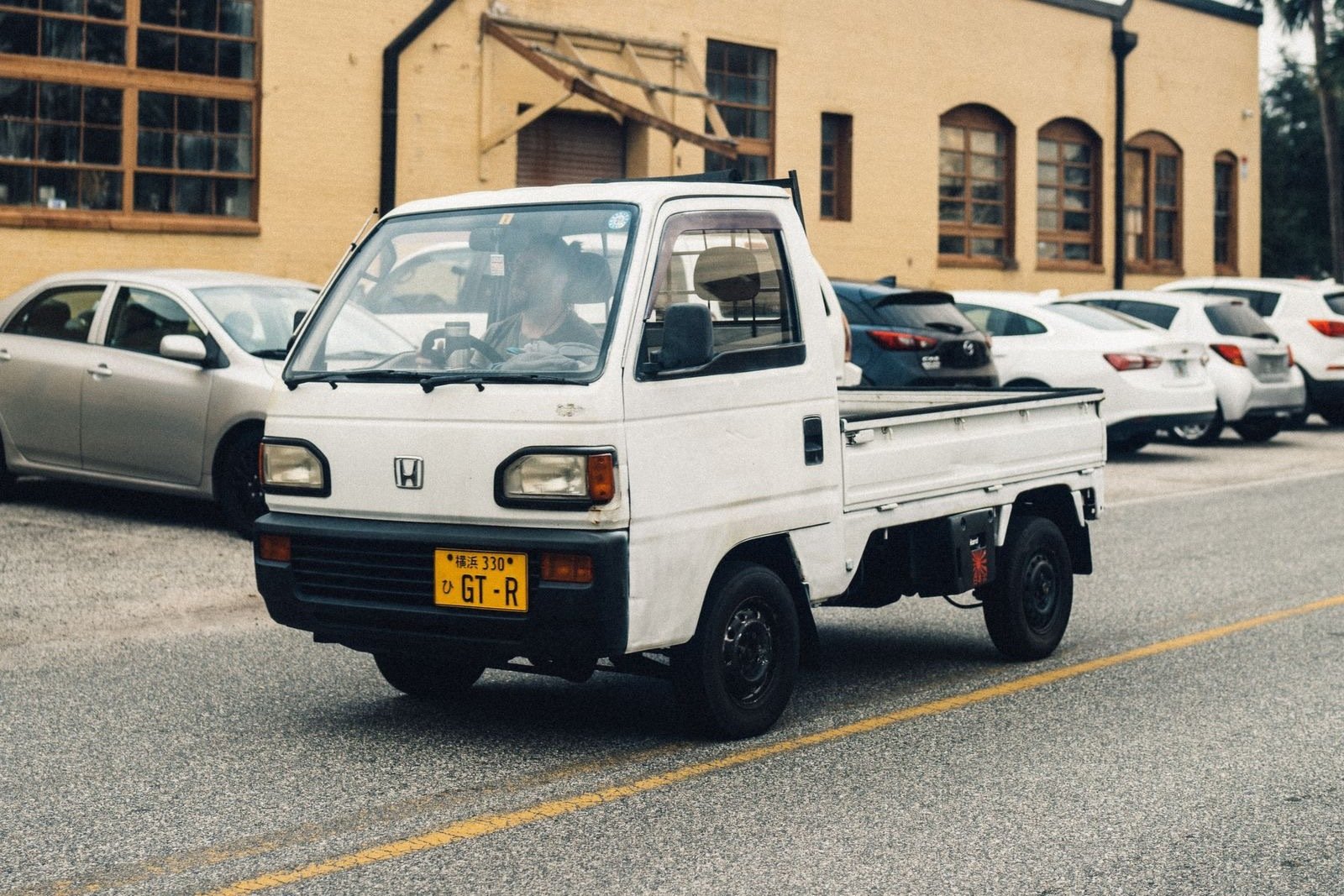
That is the biggest practical difference from an imported kei truck. A stock 25-year-old Hijet, Carry or Acty is not speed-limited by design. Most will run at ordinary rural road speeds, though none are comfortable on an interstate. Whether you may drive one on public roads, and on which roads, depends on your state. Our kei truck laws by state guide covers every state.
How This Fits the "Tiny Cars" Push
In December 2025, President Trump said he had approved "tiny cars" to be built in America after praising Japan's kei cars, and Transportation Secretary Sean Duffy said the administration would work to clear the rules. No new federal standard for full-speed kei cars has followed yet. Toyota's answer, for now, is to build its kei truck under the low-speed vehicle rules that already exist.
None of this changed the rules for importing older kei trucks. The 25-year exemption still applies, and states still control registration.
Scion KEI-01 vs. an Imported Kei Truck
| Scion KEI-01 | Imported 25-year-old kei truck | |
|---|---|---|
| Available | Second half of 2027, fleet buyers first | Now: trucks built through November 2001 qualify as of November 2026 |
| Top speed | 25 mph | Not limited by design |
| Where it can drive | LSV roads set by each state, usually 35 mph or less | Set by each state; from full road use to off-road only |
| Drive side | Right-hand drive | Right-hand drive |
| Price | Not announced | Clean 1999–2001 trucks typically $2,500–$4,500 at Japanese auction, before shipping and duty |
| Import duty | None (built in Indiana) | 25% on kei pickups (the "chicken tax"); far lower on kei vans |
| Warranty and service | Expected through Scion by Toyota dealers | None; parts come through specialists and Japan |
If you run a fleet on a campus or a farm and want a new truck with dealer support, the KEI-01 is worth waiting for. If you want a kei truck this year, want to drive it beyond 25 mph, or want a specific model like a 4WD Acty or a supercharged Sambar, importing remains the way to get one.
Can You Import a Toyota Kei Truck from Japan?
Not yet, if you mean a Toyota-badged one. The Pixis Truck went on sale in Japan in 2011, so the first examples will not reach 25 years old until 2036.
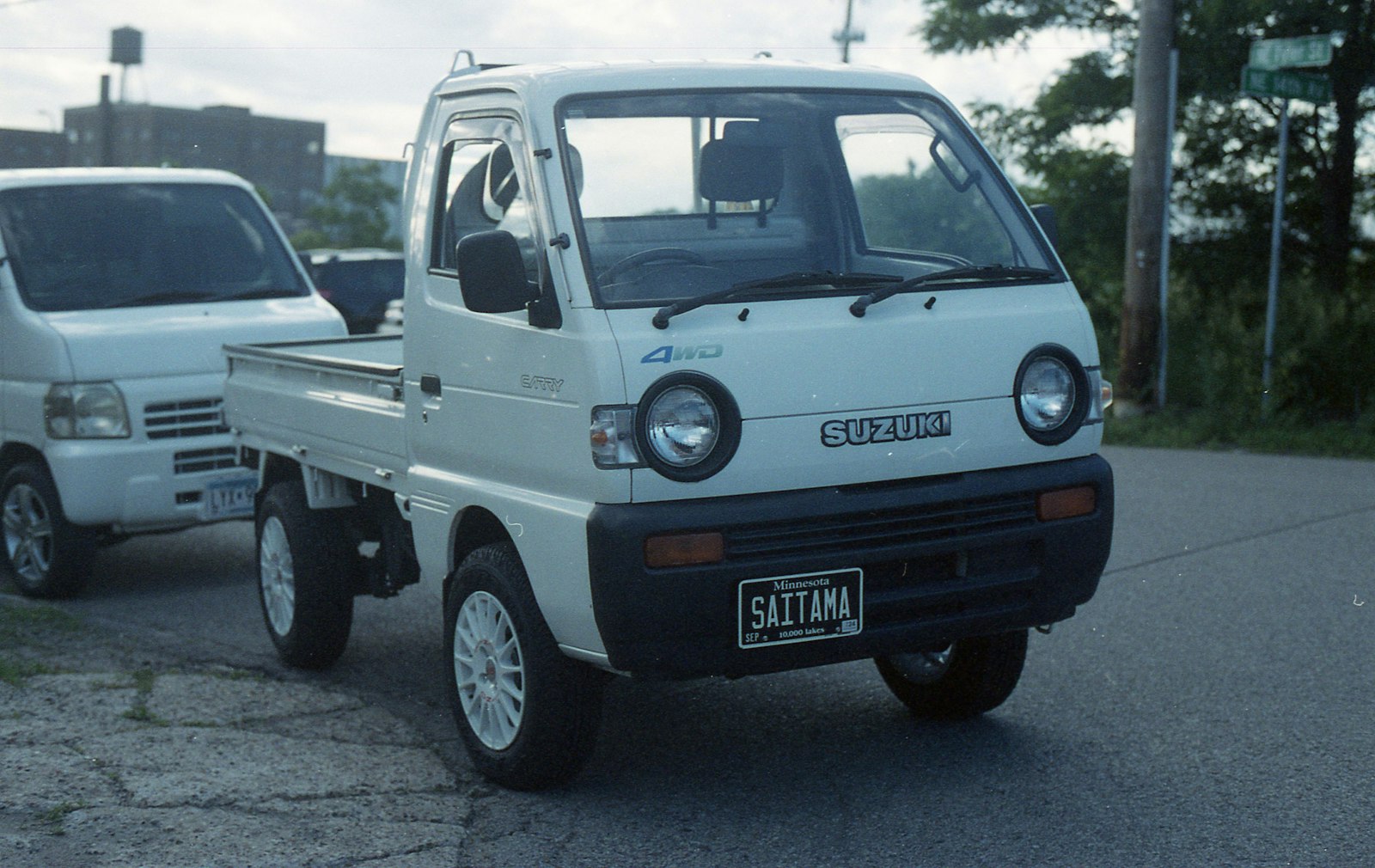
The closest thing you can import today is its ancestor, the Daihatsu Hijet. Hijets built through November 2001 are eligible now, and the S200P and S210P generations from 1999 to 2001 are some of the most common kei trucks in the US. The Honda Acty, Suzuki Carry, Subaru Sambar and Mitsubishi Minicab are the other usual choices. Our kei truck import guide compares all five, with costs and a worked example.
How to Import a Kei Truck Now
- Check your state first. Registration rules vary more for kei trucks than for any other import. Start with our state-by-state guide.
- Confirm the build date. Eligibility counts from the month and year of manufacture, not the model year. A truck built in December 2001 becomes eligible in December 2026.
- Buy through a Japanese auction or exporter. The exporter handles deregistration, the export certificate and inland transport to the port.
- Ship it. We usually ship kei trucks in containers from Tokyo, Yokohama, Osaka or Nagoya. Three fit nose to tail in a 40-foot container, which keeps the cost per truck down.
- Clear US customs. A licensed customs broker files the entry with the DOT HS-7 and EPA 3520-1 forms and pays the duty.
- Title and register. Your state DMV decides whether the truck gets road plates, limited plates or off-road use only.
For a full cost breakdown, read how much it costs to import a car from Japan, or start a quote on our Japan import page.
Toyota Kei Truck FAQ
Is Toyota selling a kei truck in the US?
Yes. The Scion by Toyota KEI-01 is due in the second half of 2027. It will be built at Toyota's Indiana plant and sold first to fleet customers through selected Toyota dealers.
How fast is the Toyota KEI-01?
Its top speed is 25 mph. It is built to the federal low-speed vehicle standard, and in most states that limits it to roads posted at 35 mph or less.
How much will the Scion KEI-01 cost?
Toyota has not announced a price.
Can individuals buy the KEI-01?
Not at launch. Toyota plans a fleet pilot program first and says it may consider limited retail sales later.
Does the KEI-01 make imported kei trucks legal in my state?
No. Imported kei trucks enter under the federal 25-year exemption, and each state still decides whether to register them. A new low-speed vehicle from Toyota does not change those state rules.
What is the Toyota kei truck sold in Japan?
The Toyota Pixis Truck, a rebadged Daihatsu Hijet sold since 2011. It will not be eligible for US import under the 25-year rule until 2036. Older Hijets from 1999 to 2001 are eligible now.
Ready to Bring a Kei Truck Home?
West Coast Shipping has been moving vehicles between the US and the rest of the world since 2007, with our own warehouses in California, Florida and New Jersey. Tell us which truck you are looking at and where it needs to go, and we will quote the shipping from Japan to your door.