
American classics keep crossing the Atlantic to Germany in 2026, and the reason is arithmetic. A car over 30 years old pays 0% import duty and 7% VAT instead of 10% and 19%. On a €30,000 car that is €2,205 in tax instead of €9,555. This guide covers the 1994 to 1996 models that have just crossed the 30-year line, the reverse imports German buyers are bringing home, and what the shipping and registration process looks like end to end.
The weaker dollar against the euro adds a second discount on top of the tax one, since these cars are priced in dollars and bought in euros.
The models below are the ones that show up most often in WCS containers leaving Newark and Oakland for Bremerhaven. They combine three things German buyers ask for: a build date past the 30-year line, a story worth telling at a Sunday meet, and a price that still makes sense after shipping.
Understanding the 30-Year Rule Advantage
Before diving into specific models, it's crucial to understand why certain classic cars are especially attractive for German import. Vehicles over 30 years old imported to Germany qualify for substantial tax benefits, including:
-
Complete exemption from the standard 10% import duty
-
Reduced Value Added Tax (VAT) of only 7% instead of the standard 19%
This creates significant savings when importing classic cars to Germany. For example, on a classic valued at €30,000:
-
Standard taxation: Approximately €9,555 (10% duty plus 19% VAT)
-
Classic car taxation: Only €2,205 (0% duty plus 7% VAT)
That is over €7,300 saved, usually more than the ocean freight itself. Germany is also Europe's largest importer of American classics, so resale liquidity is strong once the car is registered.
The USD/EUR Exchange Rate Advantage
The recent weakening of the US dollar against the euro has created an additional financial advantage for German collectors. While classic car values have remained relatively stable in dollars, the stronger euro means these vehicles are effectively "on sale" for European buyers.
For example, a classic American car valued at $50,000 in early 2025 cost approximately €46,300 at the earlier exchange rate. At the 2026 rate that same car costs approximately €43,100, about €3,200 less purely from currency movement. Combined with the 30-year rule, the total saving can exceed €10,000 on a single purchase. Rates move both ways, so check the day you bid, not the day you read this.
As detailed in our analysis of USD's growing buying power for European classic cars, currency fluctuations can create significant opportunities for international collectors—and the current market strongly favors European buyers of American classics.
Top American Muscle Cars Now Eligible for German Import
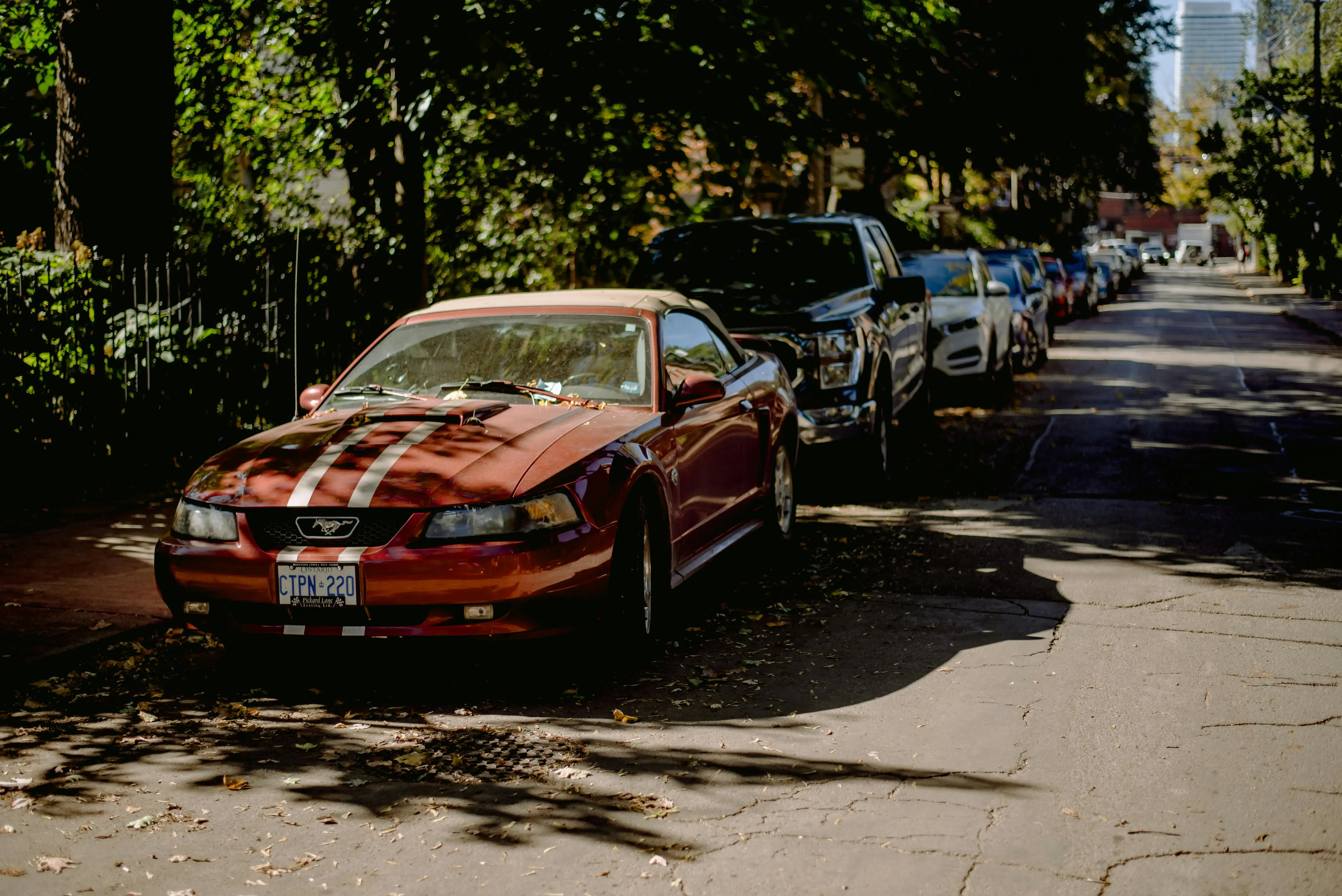
1. Ford Mustang SVT Cobra (1995)
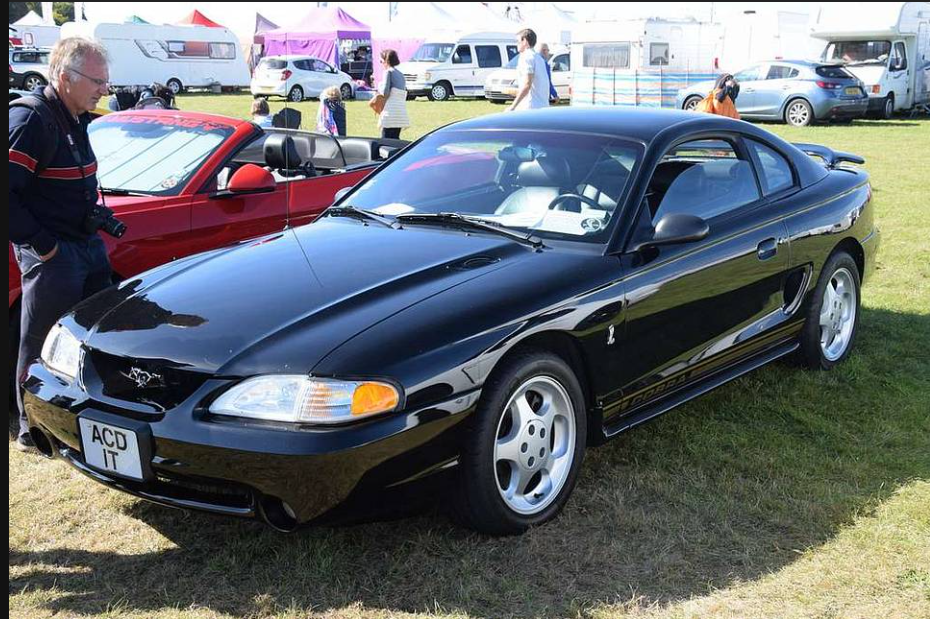
The 1995 Ford Mustang SVT Cobra represents a pivotal moment in American muscle car history. As the Special Vehicle Team's flagship performance Mustang, this limited-production model featured the enhanced 5.0L V8 engine producing 240 horsepower—modest by today's standards but impressive for its era.
Their Story
The 1995 SVT Cobra holds a special place in Mustang history as it represents the final year of the venerable 5.0L V8 in the Mustang lineup before Ford's transition to the modular engine family. Ford's Special Vehicle Team created just 5,009 units for the 1995 model year, ensuring long-term collectibility.
The SVT Cobra emerged as the performance flagship of the SN-95 Mustang generation, featuring distinctive styling cues including a unique front fascia, rear spoiler, and special 17-inch wheels that set it apart from standard Mustangs. Its combination of limited production, historical significance, and superior performance has made it one of the most sought-after Fox-body era Mustangs.
Key Specifications:
-
Engine: 5.0L V8
-
Power: 240 hp
-
Torque: 285 lb-ft
-
Transmission: 5-speed manual
-
Production: 5,009 units
Their Prices
-
Pre-USD drop value: €32,500 ($35,000)
-
Current value: €29,600 ($35,000)
-
Savings from exchange rate: €2,900
Why It's a Great Purchase
The SVT Cobra represents exceptional value compared to European performance cars of the same era. While a comparable BMW M3 from this period might command €40,000 or more in Germany, the SVT Cobra delivers similar performance with greater exclusivity at a lower price point.
Newly classic status (it crossed the 30-year line in 2025), the last of the 5.0L Mustangs, and a price below a comparable E36 M3 make the SVT Cobra the single most requested car on this lane. Values have moved up steadily as collectors recognize its place in Mustang history. For the full buying guide, see the 1995 SVT Cobra buyer's guide.
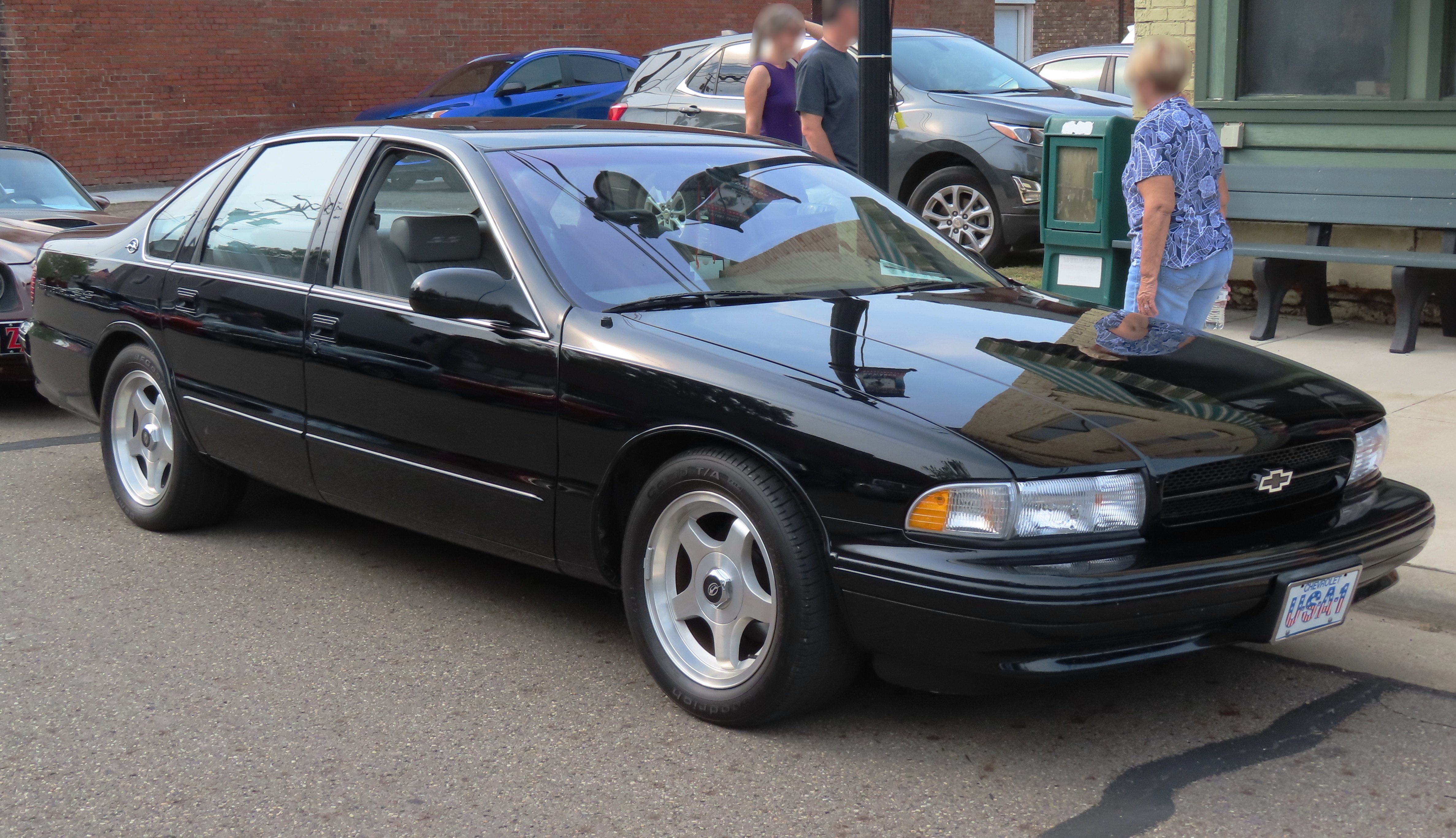
2. Chevrolet Impala SS (1994-1995)
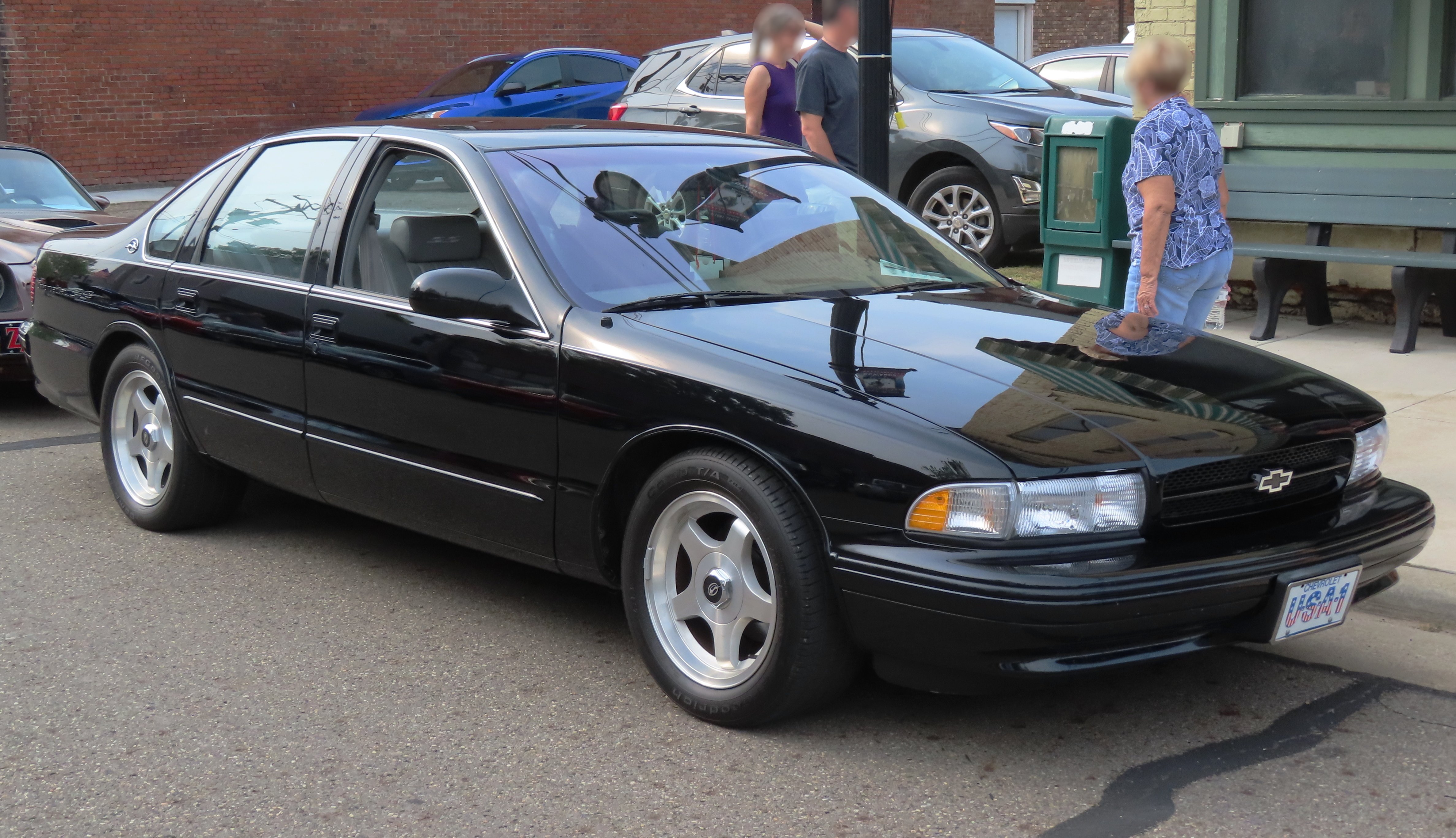
The Impala SS has emerged as a dark horse in German imports, with the 1994-1995 models now qualifying for classic status. This full-size American muscle sedan offers a distinctive driving experience completely different from German performance sedans of the same era.
Their Story
Reviving a legendary nameplate, the 1994-1995 Impala SS was born from Chevrolet's police package Caprice. What began as an auto show concept received such positive response that Chevrolet put it into production. The Impala SS featured a Corvette-derived LT1 V8 engine, sport-tuned suspension, and distinctive monochromatic styling.
With production limited to just two model years before the Caprice platform was discontinued, these vehicles represent the last of GM's traditional full-size, rear-wheel-drive performance sedans before the modern era revival. Only 69,768 were produced across both model years, making well-preserved examples increasingly difficult to find.
Key Specifications:
-
Engine: 5.7L LT1 V8
-
Power: 260 hp
-
Torque: 330 lb-ft
-
Transmission: 4-speed automatic
-
Notable features: Sport-tuned suspension, 17-inch aluminum wheels, dual exhaust
Their Prices
-
Pre-USD drop value: €25,500 ($27,500)
-
Current value: €23,200 ($27,500)
-
Savings from exchange rate: €2,300
Why It's a Great Purchase
The Impala SS offers a unique proposition in the German market—a full-size American muscle sedan with impressive performance credentials at a fraction of the cost of German performance sedans from the same era. Its combination of V8 power, rear-wheel drive, and full-size comfort make it a conversation starter at any German car gathering.
The Impala SS delivers a distinctly American driving experience that no European sedan of the era replicates, and values have appreciated steadily. Our Impala SS buying guide covers what to check before you bid.
3. Buick Roadmaster Estate Wagon (1991-1995)
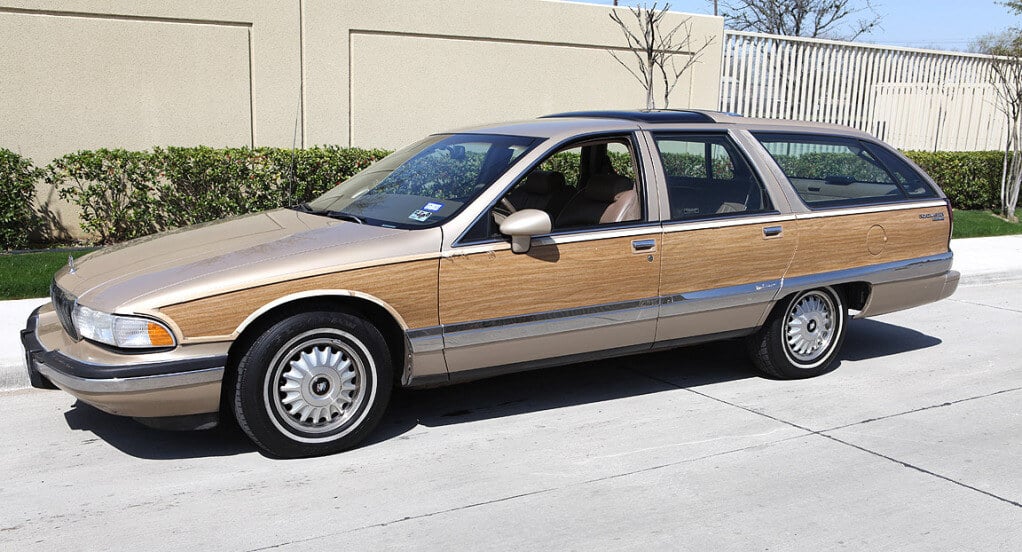
The Buick Roadmaster Estate Wagon represents the last hurrah of the traditional American station wagon—a vehicle category that has all but disappeared from American roads but maintains a cult following internationally.
Their Story
The Roadmaster Estate Wagon stands as the final chapter in America's love affair with full-size station wagons. Produced from 1991 to 1995, it represented the end of an era—the last of the traditional American "woodie" wagons with V8 power and rear-wheel drive.
What makes the Roadmaster particularly significant is its dual nature—combining luxury car comfort with unexpected performance. In 1994-1995, Buick equipped the wagon with the Corvette-derived LT1 V8 engine, creating what many enthusiasts consider a "sleeper" performance vehicle hidden beneath conservative styling and wood grain paneling.
Key Specifications:
-
Engine: 5.7L LT1 V8 (1994-1995)
-
Power: 260 hp
-
Torque: 330 lb-ft
-
Transmission: 4-speed automatic
-
Notable features: Wood grain exterior trim, third-row seating, towing capability
Their Prices
-
Pre-USD drop value: €22,400 ($24,000)
-
Current value: €20,300 ($24,000)
-
Savings from exchange rate: €2,100
Why It's a Great Purchase
For German collectors, the Roadmaster Estate Wagon offers something truly different—a distinctly American approach to family transportation that contrasts sharply with European wagons of the same era. Its combination of luxury, space, and surprising performance makes it an intriguing alternative to period Mercedes and BMW estate cars.
German collectors particularly appreciate the Roadmaster's rarity and character. It has a growing cult following, with values rising for well-preserved LT1 examples. See the Roadmaster Estate buying guide.
4. GMC Syclone (1991)
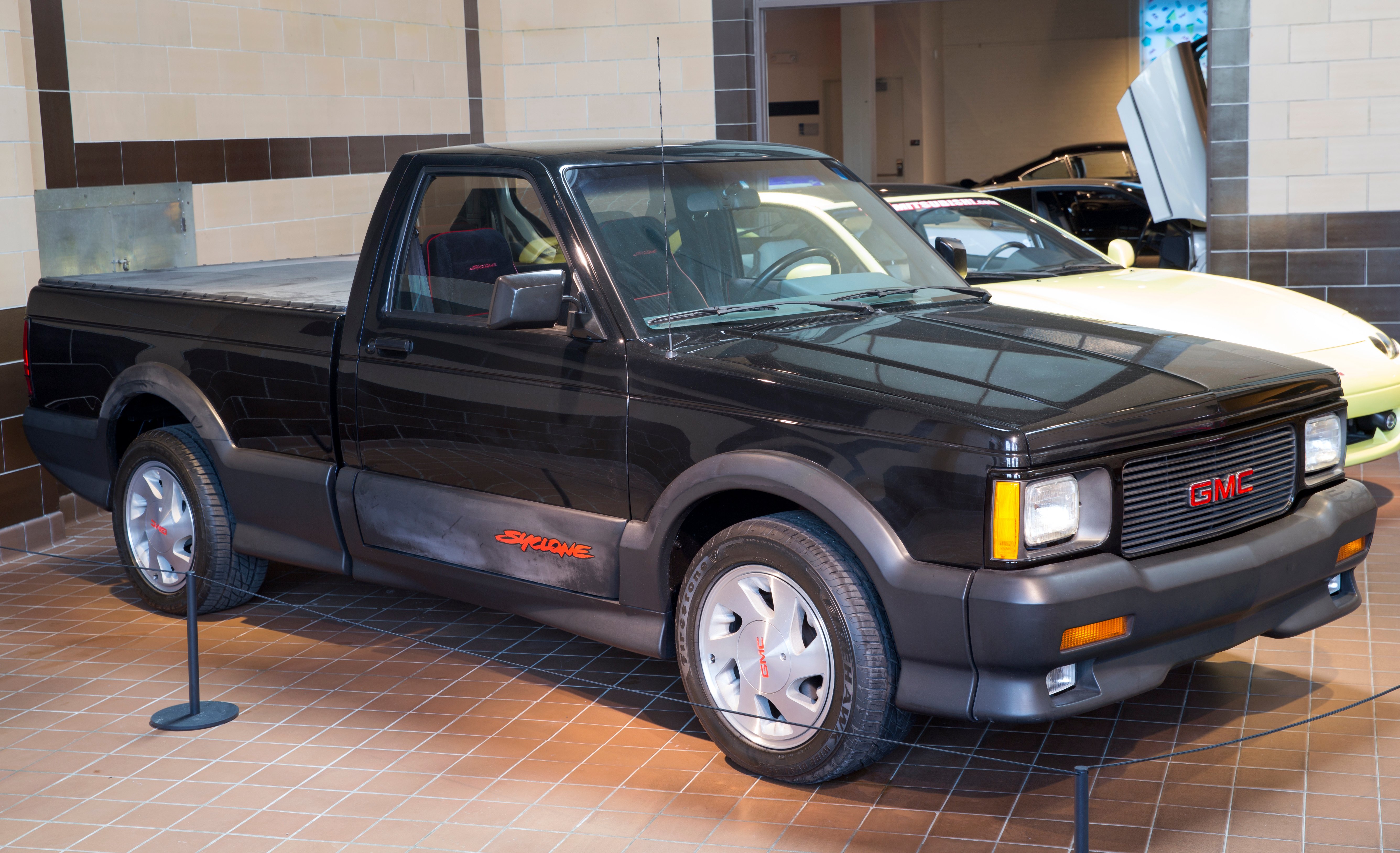
The GMC Syclone represents one of the most unusual muscle cars ever created—a limited-production performance pickup truck that could outaccelerate many contemporary sports cars.
Their Story
In 1991, GMC shocked the automotive world by creating what was then the fastest-accelerating production vehicle available in North America. The Syclone was a small pickup truck equipped with a turbocharged V6 engine, all-wheel drive, and performance-tuned suspension.
With production limited to just 2,995 units during a single model year, the Syclone was a bold experiment that created an entirely new vehicle category. Its ability to outperform contemporary Ferraris and Porsches in a straight line made it an instant legend and cemented its place in automotive history as one of the most innovative American performance vehicles of its era.
Key Specifications:
-
Engine: 4.3L turbocharged V6
-
Power: 280 hp
-
Torque: 350 lb-ft
-
Transmission: 4-speed automatic
-
Drive: All-wheel drive
-
0-60 mph: 4.3 seconds
Their Prices
-
Pre-USD drop value: €46,800 ($50,000)
-
Current value: €42,300 ($50,000)
-
Savings from exchange rate: €4,500
Why It's a Great Purchase
The Syclone offers German collectors something completely unique—a performance vehicle unlike anything produced in Europe. Its combination of pickup truck utility, supercar acceleration, and extreme rarity makes it a standout at any automotive gathering.
With values steadily climbing in recent years, the Syclone represents not only an exhilarating driving experience but also a solid investment opportunity. Its limited production numbers ensure long-term collectibility, while its technical innovations and performance credentials give it historical significance beyond typical muscle cars.
5. Lincoln Town Car (1990-1995)
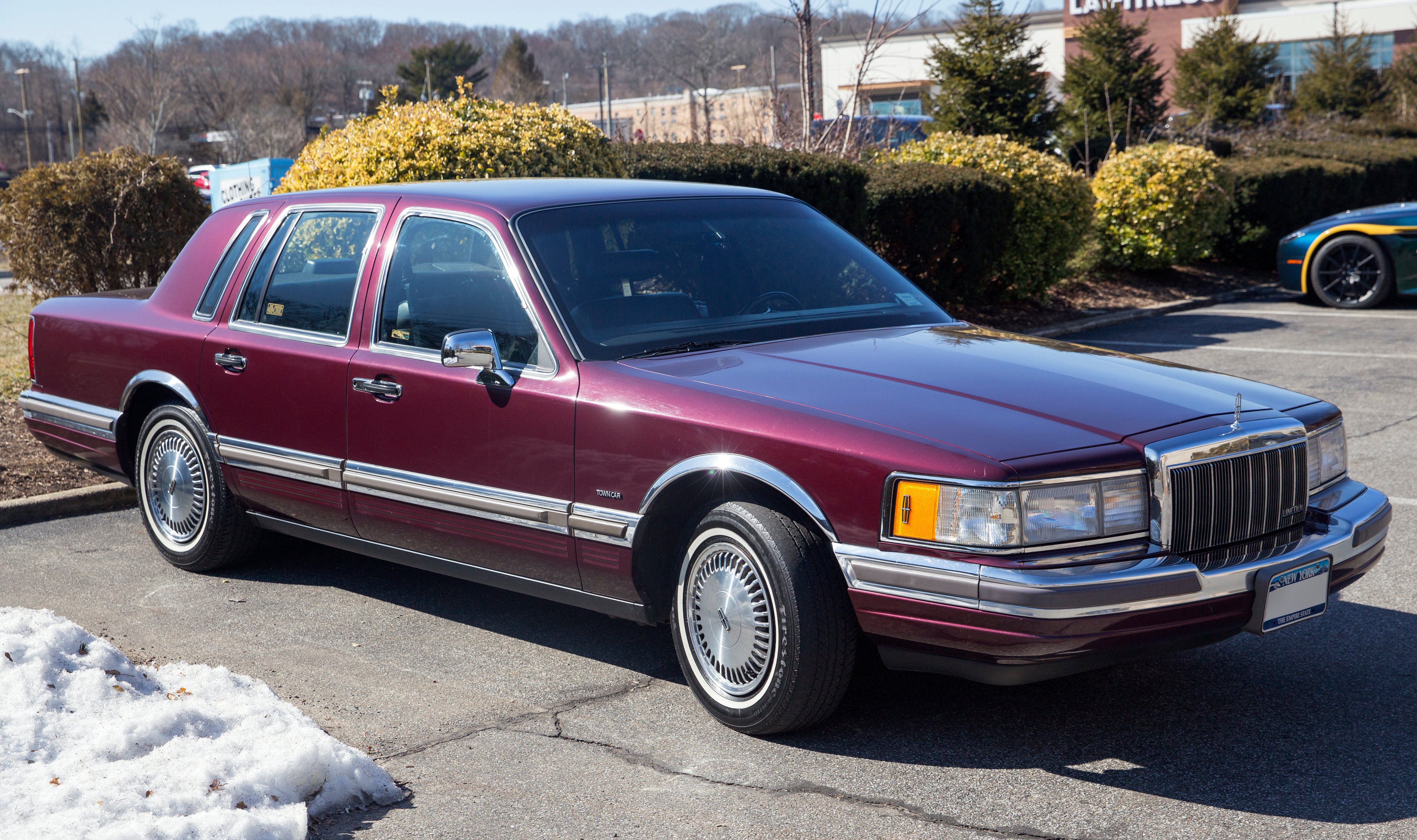
The Lincoln Town Car represents classic American luxury—a full-size sedan focused on comfort, presence, and refined road manners rather than outright performance.
Their Story
The second-generation Lincoln Town Car (1990-1997) embodied traditional American luxury values during a period when European and Japanese luxury brands were increasingly dominating the market. While competitors embraced aerodynamic designs and sportier handling, Lincoln maintained its commitment to a formal aesthetic and prioritized comfort above all else.
What makes these Town Cars particularly significant is their representation of a distinctly American approach to luxury—emphasizing spaciousness, soft ride quality, and isolation from road disturbances rather than the driver engagement favored by European marques. For collectors, they represent the last of the traditional American luxury cars before Lincoln began adopting more international design elements.
Key Specifications:
-
Engine: 4.6L V8 (1991-1995)
-
Power: 210 hp
-
Transmission: 4-speed automatic
-
Notable features: Leather interior, air suspension, formal styling
Their Prices
-
Pre-USD drop value: €18,700 ($20,000)
-
Current value: €16,900 ($20,000)
-
Savings from exchange rate: €1,800
Why It's a Great Purchase
For German enthusiasts, the Town Car provides an authentic experience of American luxury that contrasts completely with European luxury sedans of the same era. While a Mercedes-Benz S-Class or BMW 7 Series focused on engineering precision and driver involvement, the Town Car prioritized passenger comfort and isolation—creating a distinctly different driving experience.
These cars remain affordable next to a period S-Class while offering more presence and a softer ride. See the Town Car buying guide.
6. Pontiac Firebird Trans Am (1993-1995)
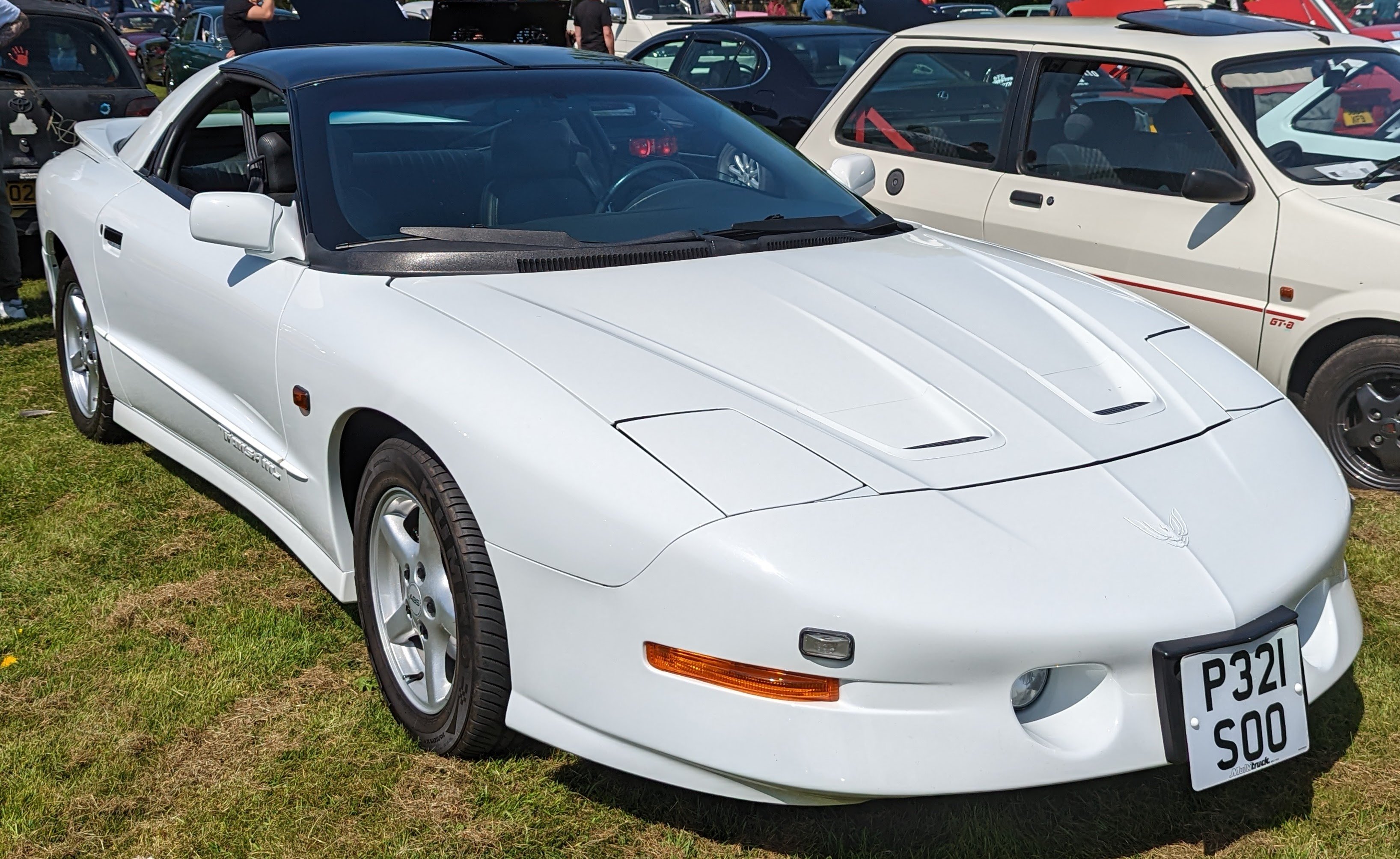
The fourth-generation Pontiac Firebird Trans Am represents American muscle car evolution—combining traditional V8 power with more sophisticated aerodynamics and handling capabilities.
Their Story
Introduced for the 1993 model year, the fourth-generation Firebird Trans Am featured dramatic styling changes, with smooth, aerodynamic bodywork replacing the angular design of its predecessor. The Trans Am model served as the performance flagship of the Firebird lineup, offering the most powerful engines and enhanced handling capabilities.
What makes the 1993-1995 models particularly significant is their position at the beginning of a new Firebird generation while still featuring traditional pushrod V8 engines before the transition to the LS1 in later years. The distinctive styling, with its prominent hood bulge and hidden headlights, makes it instantly recognizable as a product of a specific moment in American automotive design.
Key Specifications:
-
Engine: 5.7L LT1 V8
-
Power: 275 hp
-
Torque: 325 lb-ft
-
Transmission: 6-speed manual or 4-speed automatic
-
Notable features: Ram air hood, performance suspension, limited-slip differential
Their Prices
-
Pre-USD drop value: €28,000 ($30,000)
-
Current value: €25,400 ($30,000)
-
Savings from exchange rate: €2,600
Why It's a Great Purchase
The Trans Am delivers exhilarating performance at a fraction of the cost of European sports cars from the same era. Its distinctive styling and cultural significance—enhanced by appearances in films and television—give it an additional layer of appeal for German collectors seeking an authentic piece of American automotive culture.
The Trans Am has been appreciating as collectors recognize its place in the muscle car timeline. The 1993 to 1995 cars hit a sweet spot of modern usability and classic character for buyers who want to drive what they own. See the Trans Am buying guide.
Also Crossing the Atlantic: Reverse Imports and Trucks
Not everything in a WCS container bound for Bremerhaven is a muscle car. Three other groups ship steadily.
German cars going home
US-market Mercedes-Benz R107 SLs (1971 to 1989) and Porsche 993s (1994 to 1998) are returning to Germany in numbers. American examples often have lower mileage, less corrosion, single-market service history and color combinations rarely seen in Europe. Well-kept R107s trade between €25,000 and €60,000; 993s run from €60,000 for a base Carrera to over €250,000 for Turbos and limited editions.
Corvette C4 (1984 to 1996)
The fourth-generation Corvette gives German buyers a distinctly American sports car at a fraction of a period European equivalent, with simple mechanicals. ZR-1 and Grand Sport cars carry the premiums, but standard C4s are appreciating too.
Jeep Wrangler YJ and Ford Bronco
The square-headlight YJ (1987 to 1995) qualifies fully under the 30-year rule from 2025 and sells at €12,000 for drivers to €25,000 for the best examples. Early Broncos (1966 to 1977) command premiums, while the full-size 1978 to 1996 trucks are the affordable way in. Both benefit from the growing German market for outdoor vehicles.
First-generation Dodge Challenger (1970 to 1974)
Long eligible as a classic, and still one of the most requested American shapes in Germany. Base cars start around €40,000 and restored Hemi cars exceed €200,000.
Also Crossing the Atlantic: Reverse Imports and Trucks
Not everything in a WCS container bound for Bremerhaven is a muscle car. Three other groups ship steadily.
German cars going home
US-market Mercedes-Benz R107 SLs (1971 to 1989) and Porsche 993s (1994 to 1998) are returning to Germany in numbers. American examples often have lower mileage, less corrosion, single-market service history and color combinations rarely seen in Europe. Well-kept R107s trade between €25,000 and €60,000; 993s run from €60,000 for a base Carrera to over €250,000 for Turbos and limited editions.
Corvette C4 (1984 to 1996)
The fourth-generation Corvette gives German buyers a distinctly American sports car at a fraction of a period European equivalent, with simple mechanicals. ZR-1 and Grand Sport cars carry the premiums, but standard C4s are appreciating too.
Jeep Wrangler YJ and Ford Bronco
The square-headlight YJ (1987 to 1995) qualifies fully under the 30-year rule from 2025 and sells at €12,000 for drivers to €25,000 for the best examples. Early Broncos (1966 to 1977) command premiums, while the full-size 1978 to 1996 trucks are the affordable way in. Both benefit from the growing German market for outdoor vehicles.
First-generation Dodge Challenger (1970 to 1974)
Long eligible as a classic, and still one of the most requested American shapes in Germany. Base cars start around €40,000 and restored Hemi cars exceed €200,000.
Importing Your American Classic to Germany: What to Expect
Every car on this lane moves the same way: pickup in the US, loading at the WCS warehouse in Newark, Oakland or Miami, ocean freight to Bremerhaven, German customs, then TÜV and registration. Here is what each step needs.
Documentation Requirements
Proper documentation is crucial for qualifying for the reduced 7% VAT rate and duty exemption:
-
Original title and registration documents
-
Purchase agreement with clear pricing
-
Vehicle history documentation
-
Proof of age (build date certification)
-
Original manufacturer specifications
German customs authorities scrutinize these documents carefully, so ensuring their completeness and accuracy is essential for a smooth import process.
Shipping Options
For valuable classics, we recommend container shipping for maximum protection during transit:
-
Complete protection from weather elements
-
Secure bracing to prevent movement
-
Reduced handling compared to RoRo shipping
-
Option for shared containers to reduce costs
RoRo is cheaper on some routes but a poor fit for a classic: the car must run, port staff drive it on and off the vessel, many classics have start-up quirks those drivers do not know, and the car sits exposed on deck and at the port. For a running daily driver it can work; for anything on this list, container. Air freight is the option for a rare car or a firm event deadline, at a premium. For rates by method, see how to ship a car to Germany.
Timeline Expectations
From an East Coast departure the total process typically runs 30 to 45 days door to door. West Coast departures take longer because the vessel routes through the Panama Canal or transships. Plan on:
-
1 to 2 weeks for purchase, documentation and container loading in the US
-
2 to 3 weeks sailing from Newark to Bremerhaven, or 5 to 10 weeks from Oakland
-
1 to 2 weeks for German customs clearance and delivery
Our team provides regular updates throughout the shipping process, ensuring you always know exactly where your vehicle is and when to expect delivery.
German Registration Process
Once your classic American car arrives in Germany, several steps are necessary:
-
TÜV inspection to verify roadworthiness
-
Customs clearance with proper documentation
-
Registration at the local vehicle authority
-
Obtaining historic vehicle registration (H-Kennzeichen) for qualifying classics
The TÜV inspection checks original condition, safety equipment, lighting and emissions appropriate to the car's age. Common modifications for an American classic are headlight and side-marker changes; a shop that knows both TÜV and classic preservation can do them without touching originality. Our TÜV guide for American cars goes through it item by item.
Cars over 30 years that pass qualify for H-Kennzeichen, the historic plate, which brings a flat low road tax, exemption from most environmental-zone restrictions and the distinctive H plate itself. Preparing the car for these checks before it ships makes the German side faster.
Market Outlook and Investment Potential
American muscle cars and classics continue to appreciate globally as collectors recognize their historical significance and cultural impact. Based on our import data, we've observed several key trends:
-
Limited production models like the GMC Syclone and SVT Cobra are appreciating most rapidly
-
Original, unmodified examples command significant premiums over modified vehicles
-
Complete service history significantly impacts value, especially for higher-mileage cars
-
Special colors and options often add 10-20% to a vehicle's market value
The 30-year rule plus the current exchange rate is a strong buying window for German collectors. As our German duty analysis shows, the newer-car side of the ledger has moved against importers, which is exactly why the classic side is busy.
How West Coast Shipping Can Help
Our specialized American classic car import service to Germany includes:
-
Vehicle sourcing through our established network of US dealers and private sellers
-
Pre-purchase inspections to verify condition before commitment
-
Complete shipping logistics from door to door
-
Customs clearance handling by our experienced team
-
Documentation preparation to ensure qualification for tax benefits
-
Transportation to your location anywhere in Germany
WCS owns the warehouses the cars load in and employs the people who brace them, so the same team handles the car and the paperwork from pickup to the Bremerhaven gate.
Why 2026 Is a Good Year to Ship
Every January another model year crosses the 30-year line. In 2026 that means 1996 cars, including the last Impala SS and Roadmaster and the first LT4 Corvettes, join the list. The duty exemption and 7% VAT save thousands of euros on each one.
Beyond the financial benefits, these American classics offer German enthusiasts something different from typical European offerings. Their distinctive styling, powerful engines, and unique driving characteristics provide an authentic American experience that stands out at car shows and gatherings throughout Germany.
WCS ships door to door, from pickup anywhere in the United States to delivery in Germany, including customs formalities and the documentation German customs will ask for.
Ready to bring your American classic to Germany?
Contact West Coast Shipping's Germany specialists today for a personalized quote and discover how simple bringing her home can be.

Best Classic Car Investments 2025 - Top Models & Shipping Guide
.jpg)
1995 Ford Mustang SVT Cobra Buying Guide: The Last of the 5.0L Legends