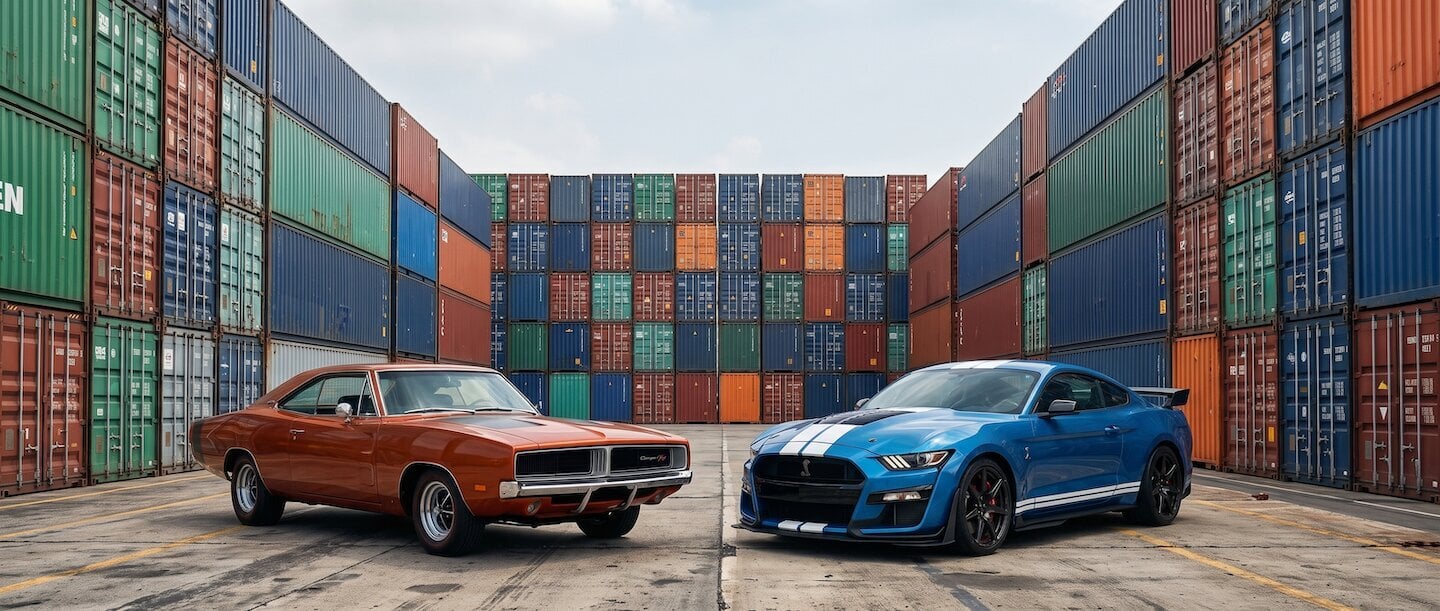
Every American car registered in Germany passes through a TÜV inspection first. For a typical US-spec car that means four predictable changes (headlights, a rear fog light, amber side indicators and a km/h speedometer), an inspection fee of €100 to €200, and €600 to €1,700 in modifications, or €2,500 to €4,000 on a classic that needs belts and a catalytic converter. This guide lists what the inspector checks, what it costs, how long it takes, and how the rules relax for cars over 30 years old.
What is the TÜV and Why It Matters
The TÜV inspection is mandatory for all vehicles being registered in Germany, regardless of their country of origin. This comprehensive examination ensures your vehicle complies with German road safety regulations and emissions standards. Passing this inspection is a non-negotiable step in the registration process.
The inspection consists of two main components:
-
Hauptuntersuchung (HU): The general inspection covering safety features and vehicle condition
-
Abgasuntersuchung (AU): The emissions test ensuring environmental compliance
Common US Vehicle Modifications Required for TÜV Approval
American vehicles typically require several modifications to meet German standards. From the cars WCS has shipped to Bremerhaven, these are the ones that come up on nearly every inspection:
Lighting Systems Modifications

-
Headlight adjustments: US headlights have different beam patterns than those required in Europe
-
Amber turn signals and side indicators: US red or clear lenses are replaced with amber
-
Rear fog lamps: Mandatory in Germany but often absent on US vehicles
-
Headlight range adjustment: Must be installed if not already present
-
Reflectors: Additional reflectors may be needed for European compliance
Safety Equipment Requirements
-
Approved seat belts: Must meet EU standards
-
Speedometer conversion: km/h must be readable; a dual-scale mph/km/h face is accepted, a km/h-only face is the cleanest
-
First aid kit and warning triangle: Required safety equipment in Germany
Emissions Compliance

-
Catalytic converter by build year: cars built before 1995 are not required to have one; cars from 1995 on need a converter that meets at least Euro 1, so a deleted cat has to go back in
-
Emissions class for modern cars: current Euro 6 standards apply to recent models, and the emissions class also decides which Umweltzone sticker the car gets
-
Noise level testing: Exhaust systems must comply with EU noise regulations
The TÜV Inspection Process: Step by Step
Navigating the TÜV inspection requires careful planning and preparation:
1. Pre-Inspection Preparation
Before scheduling your official TÜV inspection:
-
Contact a TÜV office for a preliminary assessment
-
Get a written list of required modifications specific to your vehicle
-
Have modifications performed by qualified technicians familiar with EU standards
-
Gather all necessary documentation
2. Documentation Requirements
Bring the following to the inspection. The item that most often goes missing is the build sheet or manufacturer data; without it the inspector cannot confirm original specification, and we have seen that add four to six weeks.
-
Original title and registration documents
-
Customs clearance certificate (Zollbescheinigung)
-
Bill of sale with clear ownership transfer
-
Proof of insurance valid in Germany
-
Technical specifications, build sheet and any notarized German translations of the invoice
-
Title VIN matching the chassis and engine stampings
3. The Inspection Itself
During the actual TÜV inspection, examiners will check:
-
All safety features including brakes, tires, and lights
-
Emissions compliance through exhaust testing
-
Structural integrity and lack of excessive corrosion
-
Proper function of all required equipment
-
Verification that all modifications meet German standards
4. Potential Outcomes
The TÜV inspection results fall into four categories:
-
No faults: Complete pass
-
Minor faults: Pass with obligation to repair minor issues
-
Major faults: Requires repairs and follow-up examination within one month
-
Severe faults: Vehicle deemed unsafe, driving only permitted to repair shop
Cost Expectations for TÜV Approval
The financial aspect of obtaining TÜV approval involves several components:
Basic Inspection Costs
-
Standard TÜV inspection: €100-€200 depending on vehicle type
-
Pre-inspection consultation: Approximately €250 for detailed information
Modification Expenses
These vary significantly based on your specific vehicle:
-
Lighting system modifications: €200-€600
-
Emissions system adjustments: €300-€800
-
Safety equipment upgrades: €100-€300
-
Classic muscle car needing EU three-point belts front and rear plus a catalytic converter: €2,500-€4,000 all in
Specialist Services
For comprehensive assistance with imported vehicles:
-
Complete inspection and modification packages: €600-€1,000
-
Individual modification certifications: €80-€90 per modified component
Timeline Considerations
When planning your vehicle import, factor in these timeframes:
Pre-Import Planning: 1-2 Months
-
Research requirements specific to your vehicle
-
Obtain quotes for necessary modifications
-
Schedule appointments with specialists
Modification Process: 2-4 Weeks
-
Time needed for parts acquisition
-
Installation of required components
-
Testing before official inspection
TÜV Inspection: 1-2 Weeks
-
Initial inspection appointment
-
Potential follow-up for minor adjustments
-
Final approval process
Registration Timeline: 1 Week
-
Processing at the Zulassungsstelle (registration office)
-
License plate issuance
-
Insurance verification
Special Considerations for Classic American Cars
Owners of classic American vehicles (over 30 years old) have some advantages:
H-Kennzeichen Benefits
Vehicles qualifying for historic registration (H-Kennzeichen) enjoy:
-
Lower road tax rates
-
Exemption from certain environmental zone restrictions
-
Special historic vehicle license plates
-
Some flexibility in technical requirements
Modified Inspection Standards
Classic vehicles are typically evaluated based on:
-
Period-correct safety standards
-
Original equipment specifications
-
Historical authenticity
-
Proper maintenance rather than modern feature requirements
A 1970 Plymouth Hemi 'Cuda we shipped cleared TÜV in three days because the pre-inspection report, build sheet and translated invoice went to the inspector before the car did. The average for a classic arriving without that file is closer to 30 days. Which cars qualify and what the duty saving looks like is covered in our 30-year rule guide.
Working with Specialists vs. DIY Approach
When preparing for TÜV inspection, you have options:
Professional Assistance
Working with specialists like West Coast Shipping offers:
-
Comprehensive understanding of requirements
-
Access to approved parts and modifications
-
Higher success rates on first inspection
Self-Managed Process
If you prefer handling the process yourself:
-
Research thoroughly before beginning
-
Connect with TÜV-approved workshops
-
Document all modifications with proper certifications
-
Prepare for potentially multiple inspection attempts
Success Tips from Experienced Importers
Based on feedback from customers who have successfully navigated the TÜV process:
-
Start early: Begin modifications while the vehicle is still in the US if possible
-
Document everything: Keep detailed records of all modifications and parts
-
Use approved parts: Look for components with existing EU/German certifications
-
Build relationships: Find a sympathetic TÜV inspector familiar with US vehicles
-
Prepare for adjustments: Budget for unexpected modification requirements
Achieving TÜV Success
Thousands of American cars pass TÜV every year. The ones that pass first time arrive with the modifications done in the US, the parts certified, and the paperwork ahead of the car. For the shipping side, see how to ship a car to Germany from the USA; for what you will pay at the border, see the 2026 German duty guide.
Ready to ship your car to Germany? Contact West Coast Shipping's Germany specialists today for a personalized quote and discover how simple bringing her home can be.


What American Cars Are Banned In Germany? 2026 Rules Explained
Buying A Car Abroad To Import To The US: Complete Purchase & Import Guide