
Best Netherlands Car Auction Sites: Import Guide To The USA | WCS
For American automotive enthusiasts, the Netherlands offers a compelling marketplace for European vehicles—from classic Volvos and Saabs that entered through Dutch ports decades ago, to rare European‑spec performance cars and unique Dutch‑market models rarely seen in the United States. Whether you are targeting a 25‑year‑eligible classic, a left‑hand‑drive European import, or you want to leverage the Netherlands’ role as a major EU logistics hub, understanding where to find these vehicles and how to navigate the Dutch‑to‑US import process is essential.
This guide explores the best Netherlands car auction sites and platforms for American buyers, along with a detailed breakdown of the shipping and import process to bring your Dutch find safely and legally across the Atlantic. For Netherlands‑specific routes, rates, and services, visit West Coast Shipping’s dedicated Netherlands car shipping page.
Information current as of December 8, 2025.
Top Netherlands Car Auction and Marketplace Platforms
The Dutch automotive market combines high‑volume online marketplaces with specialist auction houses and dealers, all supported by the country’s strength as a European import/export hub.
Marktplaats
Marktplaats is the Netherlands’ largest online classifieds platform and one of the main sources for used vehicles of every type.
Why it matters for US importers:
-
Huge inventory across all segments: classics, daily drivers, work vehicles, and project cars.
-
Direct access to private sellers and small dealers throughout the country.
-
Good availability of Swedish, German, Italian, and other European vehicles that entered the EU through Dutch ports.
-
Many sellers are familiar with export, as the Netherlands is a major vehicle transit country.
The site is primarily in Dutch, so US buyers benefit from translation tools or a Dutch‑speaking agent to clarify condition descriptions and transaction terms.
AutoTrack
AutoTrack focuses on vetted listings and professional presentation for Dutch vehicles.
Why it matters:
-
Strong dealer network that often knows how to handle exports.
-
Structured listings with clear specifications, mileage, and equipment.
-
Useful search filters to target specific years (including 25‑year‑eligible vehicles), body styles, and fuel types.
-
Often better documentation and photo sets than general classifieds.
AutoTrack is especially helpful when you want late‑model or higher‑value vehicles with clearer histories.
Collecting Cars Netherlands
Collecting Cars operates throughout Europe, including the Netherlands, with timed online auctions for enthusiast and collector vehicles.
Why it matters:
-
Curated selection of enthusiast‑grade cars—Porsche, BMW M, AMG, classic Volvos, and more—often located in the Netherlands.
-
High‑quality photography, detailed descriptions, and English‑language support.
-
Sellers are typically enthusiasts, often comfortable with international buyers and export processes.
-
Transparent auction format with fixed end times and clear reserve logic.
For US buyers, Collecting Cars offers a familiar, English‑friendly interface while still tapping into Dutch inventory.
Classic Car Auction Houses (Netherlands)
The Netherlands has several auction houses that run classic and collector car sales multiple times per year.
Why they matter:
-
Regular auctions featuring European classics located in the Netherlands, including Volvos, Saabs, Porsches, Mercedes, and Italian sports cars.
-
Professional cataloguing and on‑site viewing days.
-
Many lots come from long‑time Dutch ownership with well‑documented histories.
-
Staff accustomed to export buyers and shipping agents.
These auctions are particularly good for building a container of mid‑market classics rather than hunting only blue‑chip collectibles.
AutoScout24 Netherlands
AutoScout24 Netherlands is the Dutch arm of a major pan‑European marketplace.
Why it matters:
-
Cross‑border visibility with ads from dealers and exporters that target international buyers.
-
Detailed technical specs, fuel consumption, emissions data, and photos.
-
Many professional sellers advertise “export ready” vehicles.
-
Useful for sourcing European‑spec performance models and variants not sold in the US.
BVA Auctions
BVA Auctions runs large online auctions for vehicles, including fleet cars, ex‑lease inventory, and occasional salvage or damaged lots.
Why it matters:
-
High volume of modern vehicles with documented fleet histories.
-
Professional grading and inspection notes.
-
Attractive for small dealers or repeat importers building inventory.
-
Salvage and non‑runner sections for buyers comfortable with rebuild projects.
West Coast Shipping’s content on auction car documentation is especially relevant when buying from Dutch auctions.
Catawiki Classic Cars (Netherlands)
Catawiki Classic Cars hosts weekly online classic auctions with a steady stream of Netherlands‑located vehicles.
Why it matters:
-
International platform with English support for bidding and documentation.
-
Transparent bidding with clearly stated reserves and auction timelines.
-
Regular appearances of Dutch‑registered classics and European vehicles.
-
Sellers and Catawiki staff often assist with export preparation.
RM Sotheby’s & Other High‑End Sales
RM Sotheby’s and other major houses occasionally include Dutch cars or hold events that feature Netherlands‑based lots.
Why it matters:
-
Top‑tier collector cars with strong provenance and documentation.
-
Fully professional process geared to international buyers.
-
Ideal for buyers seeking investment‑grade vehicles rather than just enthusiast cars.
How to Purchase a Car from Dutch Platforms Safely
Language and Communication
Dutch sellers typically speak good English, but listings and documents are often in Dutch:
-
Use browser translation for ads but verify key technical terms.
-
Prepare questions in English and, if possible, Dutch for clarity (rust, APK status, oil leaks, accident history).
-
For higher‑value deals or auctions, consider a bilingual agent or local partner to inspect and negotiate.
-
Understand basic Dutch automotive terms like APK (inspection), kentekenbewijs / kentekencard (registration card), and zonder garantie (no warranty).
Payment and Currency
Common payment methods in Dutch vehicle transactions:
-
Bank transfer in euros (standard for both dealers and private sellers).
-
International wire transfers from US banks—allow time for processing and FX spreads.
-
Deposits for auction participation or to reserve a vehicle pending export.
-
Escrow in higher‑value cases where both parties request additional security.
Exchange rates between USD and EUR can materially affect your landed cost, so many importers watch rates and time large transfers accordingly.
Inspection and Verification
Before committing:
-
Review the latest APK (Algemene Periodieke Keuring) report—the Dutch periodic inspection focused on safety and emissions, not full pre‑purchase condition.
-
Ask for RDW registration extracts to verify ownership history and mileage readings.
-
Request detailed photos of common rust areas for that model, the underbody, and typical failure points.
-
Request cold‑start videos and driving clips showing gauges, warning lights, and behavior under load.
-
For higher‑value or sight‑unseen purchases, hire a Dutch inspector or mechanic to provide a written report.
APK proves the car met legal standards on the inspection date, but it is not a substitute for a comprehensive mechanical inspection.
Understanding Dutch Vehicle Documentation
Key Netherlands documents you will encounter:
-
Kentekenbewijs / kentekencard – Dutch registration card proving the vehicle’s registration and linking to the RDW record.
-
RDW registration extract – official history that may show changes of ownership and some technical details.
-
APK certificate – proof of the most recent periodic inspection.
-
Export certificate – issued when the vehicle is deregistered for export.
-
Koopovereenkomst / bill of sale – contract showing the purchase price, VIN, parties, and date.
For US import, you especially need the original registration card (or official RDW export proof), a clear bill of sale, and proof of build date when claiming the 25‑year exemption.
The Import Process: Bringing Your Dutch Car to the USA
Step 1: Confirm US Eligibility (25‑Year Rule and EPA/DOT)
Ensure the car fits US federal requirements:
-
25‑year NHTSA exemption: Vehicles 25 years old or older (measured from the actual date of manufacture) are exempt from Federal Motor Vehicle Safety Standards; in 2025 this typically means vehicles whose build date is at least 25 years in the past, which for much of the year will be 2000‑build cars and older.
-
EPA emissions: Vehicles 21+ years old in original configuration can use simplified treatment on EPA Form 3520‑1, but the form still must be filed.
-
Newer vehicles (under 25 years) must either be US‑spec, “substantially similar” and converted by a Registered Importer, or fall under a narrow exemption, which is often uneconomical for typical passenger cars.
West Coast Shipping’s 25‑year rule guide and broader Europe‑to‑US cost guide break down these paths clearly.
Step 2: Dutch Export Formalities
Exporting a vehicle from the Netherlands involves three main components: RDW deregistration, customs export, and VAT handling.
RDW Deregistration
-
Register the car for export with RDW (Netherlands Vehicle Authority).
-
Turn in the kentekenbewijs/kentekencard and receive an export certificate and confirmation.
-
This deregisters the vehicle, ends Dutch road‑tax obligations, and makes the car eligible for export plates where needed.
RDW’s official exporting a vehicle pages outline this process, which reputable Dutch exporters follow closely.
Dutch Customs Export Declaration
-
File an export declaration with Dutch customs, typically handled by your export agent, freight forwarder, or shipping company.
-
This formalizes EU exit and is necessary to treat the sale as an export transaction.
-
You or your agent should retain stamped copies of customs documents as proof.
West Coast Shipping’s general guide on customs paperwork for international exports explains how export declarations fit into the broader customs workflow.
VAT Considerations
From a US buyer’s point of view:
-
Private individuals in the Netherlands do not charge VAT on used private‑sale vehicles.
-
VAT zero‑rating applies mainly when a VAT‑registered business sells a vehicle for export and can prove it left the EU.
-
In practice, you generally won’t pay Dutch VAT if the car is being permanently exported outside the EU and the seller or broker documents the export correctly and keeps proof of export for Dutch tax authorities.
Discuss VAT status with the seller at the start, especially if buying from a dealer rather than a private party.
Step 3: Choose Shipping Method (Container vs RoRo)
West Coast Shipping positions container shipping as the default for most cars and classics, with RoRo primarily for oversized or special‑purpose vehicles.
Container Shipping (Recommended)
For Dutch exports headed to the US:
-
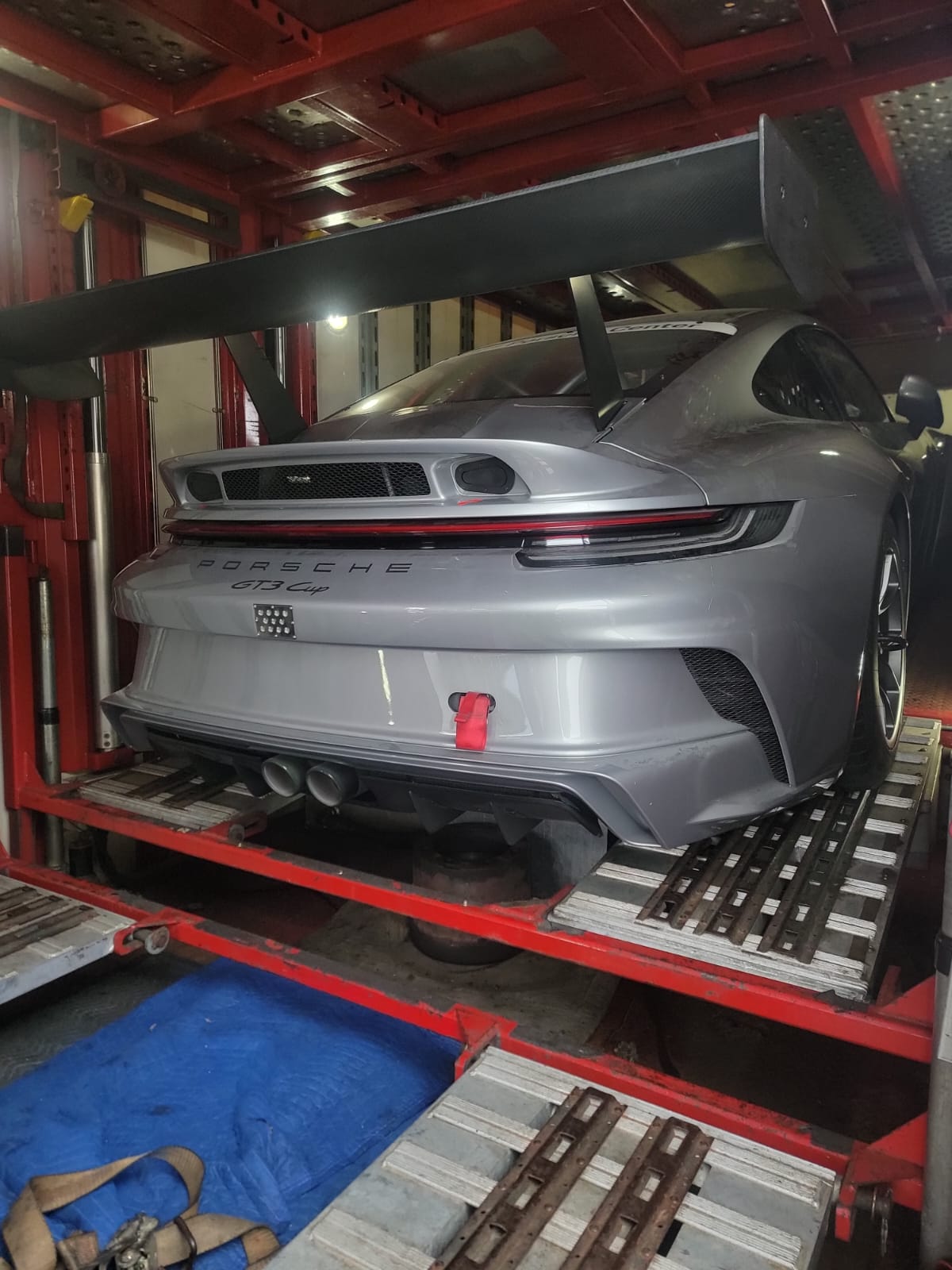
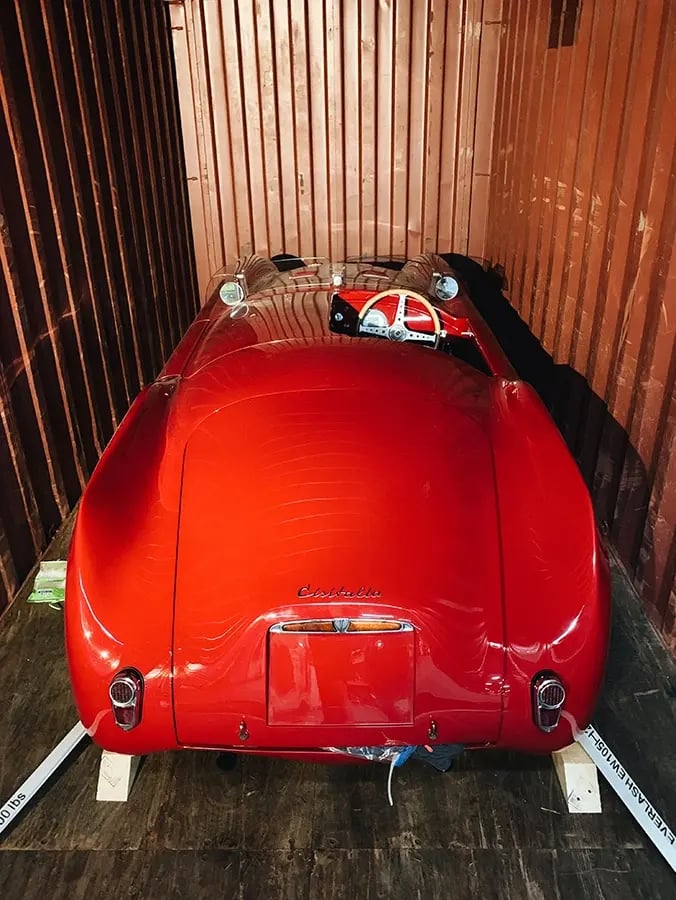
Vehicles are loaded into sealed containers (often at Rotterdam), secured with chocks, straps, and blocking.
-
Offers maximum protection from weather, salt, and port handling.
-
Works for both running and non‑running vehicles.
-
Supports consolidated (shared) containers for cost efficiency, or dedicated containers when shipping multiple vehicles or high‑value cars.
-
Allows spare parts and extra items to travel with the car, subject to carrier rules.
West Coast Shipping’s container shipping guide details loading methods, consolidation logic, and when to choose shared vs dedicated containers.
RoRo (Niche Tool)
-
Primarily for trucks, machinery, and oversized vehicles that do not fit efficiently into containers.
-
Vehicle must be in running condition and driven on/off the ship.
-
Less protection than container shipping and no personal items in the vehicle.
-
Sometimes cost‑competitive on certain lanes but not automatically cheaper.
For typical Dutch passenger cars and classics, container shipping from Rotterdam is usually the best solution.
Step 4: US Arrival and Customs
On arrival at a US port, customs clearance generally requires:
-
Bill of Lading from the ocean carrier.
-
Original Dutch registration (or export certificate) and bill of sale proving ownership and declared value.
-
EPA Form 3520‑1 declaring emissions status.
-
DOT Form HS‑7 declaring safety compliance or 25‑year exemption.
-
CBP Entry Form 7501 filed by your customs broker.
-
Copies of the Dutch export declaration and RDW export documentation as supporting proof.
West Coast Shipping’s updated 2025 US import policy guide walks through how these forms come together at CBP, and their Netherlands‑specific shipping guides show this process step‑by‑step for Dutch exports.
2025 US Duties, Tariffs, and Fees for Dutch (EU‑Origin) Vehicles
US duty and tariff treatment for EU‑origin vehicles changed in 2025 and is no longer just a simple 2.5% rule.
Import Duty and Tariffs (2025 Framework)
For most Dutch‑sourced, EU‑origin passenger cars:
-
The base customs duty of 2.5% of customs value still applies to standard passenger cars under the US tariff schedule.
-
2025 trade measures added extra auto tariffs on EU goods, and for a period some scenarios produced effective rates around 27.5% (2.5% duty + 25% surcharge).
-
A US–EU de‑escalation agreement now aims to set combined duties for many EU‑origin passenger cars at around 15% in typical cases, but the exact rate still depends on HS classification, origin, any quotas, and how current rules are applied at the time of entry.
-
In practice, West Coast Shipping and its clients treat roughly 15% as a working planning number for many modern EU vehicles, while recognizing that some classic or special categories may still land closer to the base 2.5% or follow different treatment.
Because this tariff framework is the most fluid part of landed cost, always confirm the current duty and tariff combination with your customs broker or directly with West Coast Shipping shortly before import.
West Coast Shipping’s 2025 US import policy guide and Netherlands‑specific cost content, such as Netherlands–USA car shipping cost guides, keep this discussion aligned with live policy.
Merchandise Processing Fee (MPF)
-
MPF is generally 0.3464% of the declared value for formal entries.
-
CBP adjusts minimum and maximum dollar caps annually; FY 2025 thresholds are higher than past years and will change again with inflation.
-
Treat MPF as “0.3464% of value, subject to annually updated minimum and maximum amounts” rather than memorizing fixed dollar figures.
Other Federal Costs
-
Harbor Maintenance Fee (HMF): usually 0.125% of cargo value on ocean imports.
-
Customs broker fees: vary by broker and complexity of the entry.
-
State sales/use tax: charged at registration, typically based on purchase price and your state’s tax rules.
The Europe‑to‑US cost guide shows how duty, MPF, HMF, and domestic costs stack up across real examples.
Routes and Timelines: Netherlands to USA
Common Dutch departure ports:
-
Rotterdam – Europe’s largest container port and the main hub for vehicle exports to the US.
-
Amsterdam – used in some routes, though Rotterdam dominates containerized car traffic.
Typical US arrival ports:
-
East Coast: New York/Newark, Baltimore, Savannah, Jacksonville—often 12–18 days from Rotterdam in recent schedules.
-
Gulf: Houston, New Orleans—about 14–20 days.
-
West Coast: Los Angeles, Oakland—roughly 22–30 days via the Panama Canal, depending on routing.
Door‑to‑door project timing:
-
Purchase and Dutch prep (RDW export, inland trucking): 1–2 weeks.
-
Port processing and container loading: about 1 week, depending on sailing date.
-
Ocean transit: 2–4 weeks based on route.
-
US customs clearance: typically 3–10 days with complete documentation.
-
Domestic US delivery: 2–7 days depending on distance.
Overall, most Netherlands‑to‑US projects run about 45–70 days from purchase to delivery, consistent with West Coast Shipping’s Netherlands guides and case studies.
Popular Netherlands Vehicle Categories for US Import
Classic Swedish and Northern European Cars
The Netherlands has historically imported a large number of Swedish and Northern European vehicles:
-
Volvo P1800, Amazon, 140/240 series, 740/940 with thorough maintenance records.
-
Saab 96, 99, classic 900, 9000 in original or lightly modified form.
-
Scandinavian‑market spec vehicles that spent most of their life in the Netherlands after import.
European‑Spec Performance Cars
Dutch dealers and enthusiasts maintain strong inventories of:
-
Volkswagen Golf GTI and R variants including Euro‑only editions.
-
BMW M‑cars (E30/E36/E46 M3, M5, and others) in EU spec.
-
Mercedes‑AMG models and special edition diesels.
-
Audi S/RS models.
-
Alfa Romeo and other Italian performance cars.
As more 1990s and early‑2000s models cross the 25‑year threshold, Dutch‑based examples are becoming particularly attractive to US enthusiasts.
Classic European Sports and GT Cars
The Netherlands hosts a mature collector community:
-
Porsche 911 and 944/968 with Dutch or wider EU histories.
-
Ferrari, Maserati, and Lamborghini imported to the Netherlands when new.
-
British sports cars (Jaguar, Lotus, TVR) preserved by Dutch enthusiasts.
-
Classic Alfa Romeo coupes and spiders.
Dutch‑Market Specialties
Vehicles that reflect Dutch usage patterns:
-
High‑spec station wagons/estates with performance engines.
-
Diesel performance models not sold in the US.
-
Small‑displacement turbo cars that balance performance and European fuel costs.
Common Pitfalls and How to Avoid Them
Treating APK as a Full Inspection
-
APK ensures the car meets basic roadworthiness and emissions requirements, but it does not equal a comprehensive pre‑purchase inspection.
-
Combine APK results with independent mechanical inspections, especially for classics and performance vehicles.
VAT and Export Documentation Gaps
-
If a dealer treats the sale as domestic rather than export, VAT may be incorrectly applied.
-
Confirm in writing that the transaction is treated as a permanent export and that the seller or broker will complete export proofs.
-
Retain all RDW and customs export documents; they matter for both VAT treatment and US import.
Overreliance on Photos
-
Photos may hide rust, paint issues, or interior wear.
-
Always request underbody photos, detailed close‑ups, and cold‑start videos.
-
Consider third‑party inspections for anything beyond a low‑risk project car.
Underestimating Tariffs in 2025
-
Budget using a planning range that assumes combined duty and tariffs could approach 15% for many modern EU‑origin vehicles, rather than the old flat 2.5% assumption.
-
Use WCS cost tools and current blogs to model several duty scenarios before setting your maximum auction bid.
Why Work With West Coast Shipping on Netherlands Imports
West Coast Shipping has dedicated Netherlands‑to‑USA workflows and content to support Dutch projects:
-
End‑to‑end logistics: From Dutch seller pickup to US driveway delivery, including RDW export, customs, and inland trucking.
-
Container‑first strategy: Prioritizing container shipping from Rotterdam for most cars and classics, with RoRo reserved for oversized equipment.
-
Document management: Handling export certificates, RDW deregistration, and all US CBP/EPA/DOT paperwork.
-
Tariff‑aware planning: Modeling 2025 tariff layers and US–EU arrangements in your landing‑cost calculations
-
Classic and enthusiast focus: Strong experience with 25‑year‑rule imports, documented in resources like the classic car shipping guide and Netherlands classic import content.
Their Netherlands topic hub aggregates all related articles so you can dive deeper into taxes, duty‑free possibilities, and cost case studies.
Get Your Netherlands‑to‑USA Shipping Quote With 2025 Tariff Scenarios
If you are ready to turn a Dutch auction win into a US‑titled car, the smartest next step is to see how current freight rates and 2025 duties affect your specific vehicle and route. Use the calculator and route options on the Netherlands car shipping page to get live pricing and preview several tariff scenarios, then coordinate with West Coast Shipping’s team to align your buying, shipping, and import strategy.
-093789-edited.png?width=220&height=79&name=wcs_final_logo_(1)-093789-edited.png)