

Four‑door muscle sedans show that extra doors never had to mean “just” a family car. Detroit quietly built serious performance hardware into sedans that shared engines, transmissions, and suspension packages with their two‑door siblings, yet many of these cars attracted little attention when new—and even less now.
For buyers who needed to carry a family but still wanted big‑block acceleration, four‑door muscle was the answer. Because they were often perceived as mundane transportation, far fewer were preserved, making genuinely documented four‑door performance cars rarer than many celebrated coupes in today’s market as of February 2026, a theme explored in WCS’s pillar on Grand Prix four‑door, muscle, and convertible rarity.
What Defines a Four-Door Muscle Sedan?
Four‑door muscle sedans are performance‑oriented family cars that carry:
-
High‑output V8 or equivalent powertrains
-
Upgraded suspensions, gearing, and brakes
-
Muscle‑era styling cues and trim packages
The key difference from traditional muscle coupes is the body style: instead of two doors and a sporty roofline, these sedans offer full rear‑seat access and more upright proportions. Mechanically, though, they can be surprisingly close to the coupes that dominate magazines and auction catalogs—a point reinforced by WCS’s broader American muscle car guide.
Because documentation, order codes, and surviving paperwork can be incomplete, any claimed four‑door muscle sedan should be treated as a hypothesis to verify, not an assumption to accept. That verification mindset is central to all the specific examples below.
1966–1972 Chevrolet Chevelle/Malibu SS-Spec Four-Door Sedans
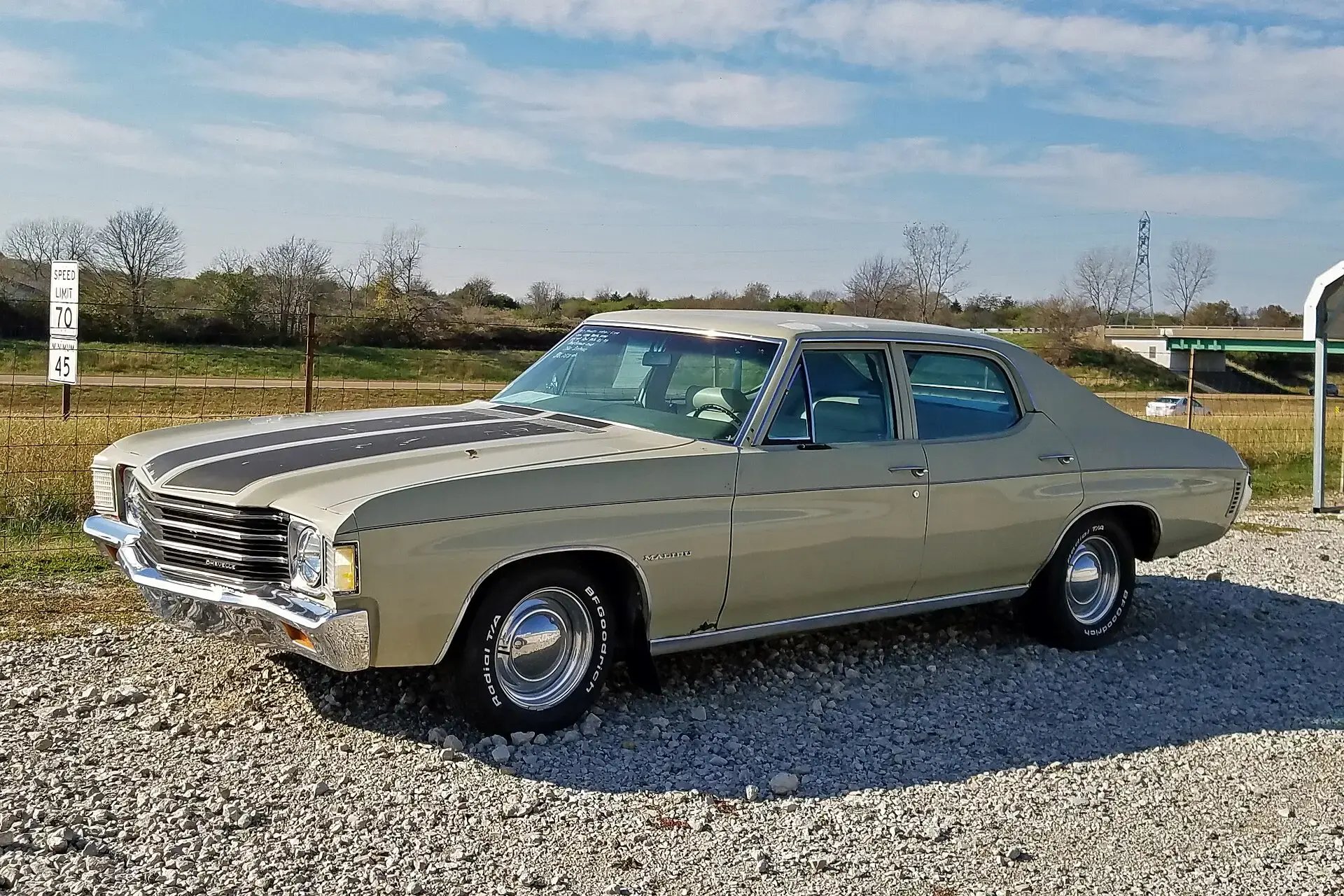
Enthusiast discussions and ordering lore suggest that SS‑equivalent drivetrain and suspension combinations could be specified on some four‑door Chevelle and Malibu sedans between roughly 1966 and 1972. In other words, it may have been possible to order a sedan with:
-
Big‑block 396 or later 454 V8 powertrains
-
Heavy‑duty suspensions and brakes similar to SS coupes
-
Performance‑oriented axle ratios and transmission choices
However, documentation and hard production numbers for such specific four‑door SS‑spec configurations are limited and sometimes debated. Anyone considering a purported “SS‑spec” Chevelle or Malibu sedan should work closely with Chevrolet marque experts, inspect build sheets and cowl tags, and, where possible, cross‑check with GM historical records before paying a premium. As with the models highlighted in WCS’s hidden classic car value guides, paperwork is more important than badges.
1968–1970 Dodge Coronet / Super Bee Four-Door Sedans
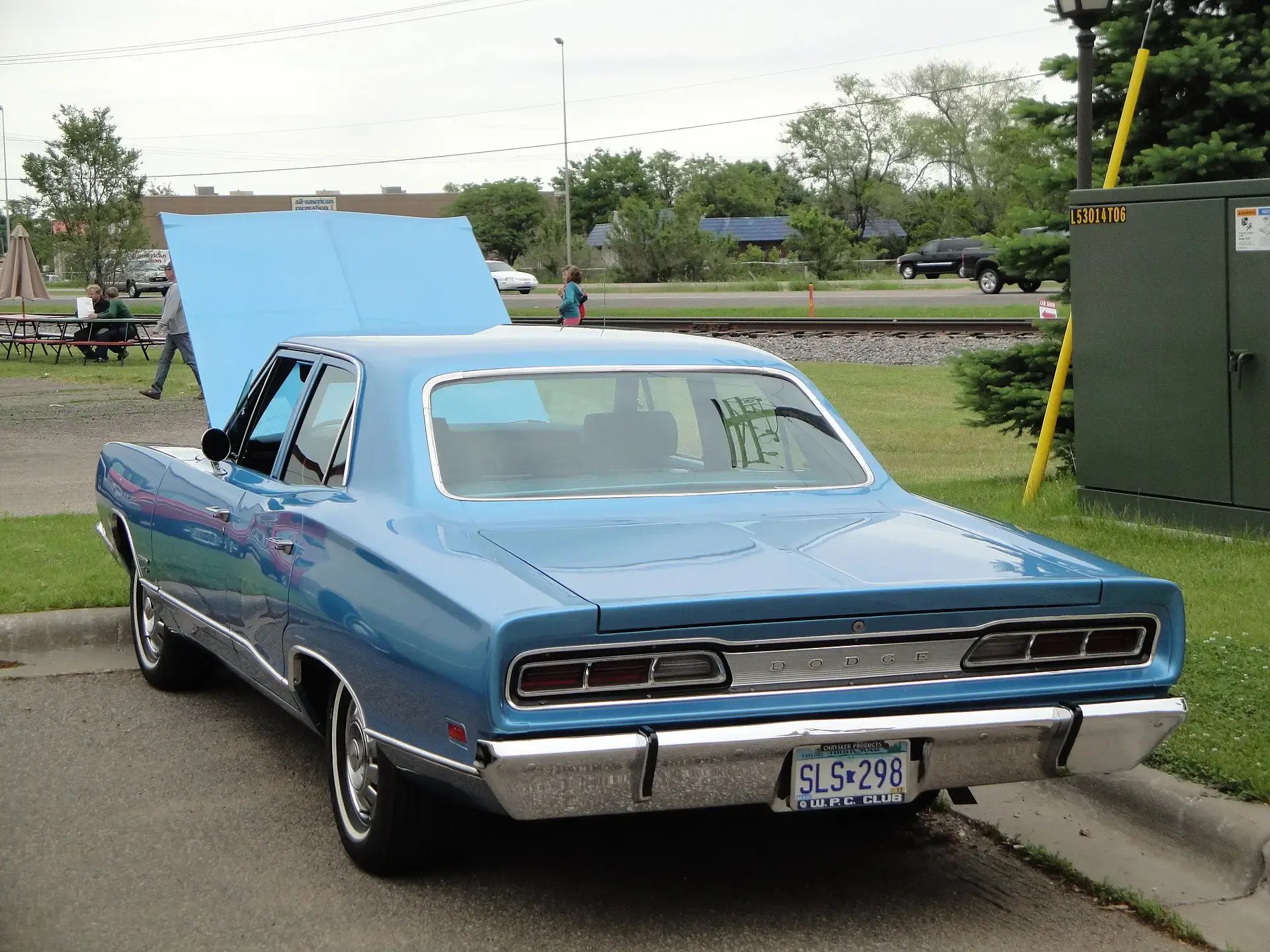
On the Mopar side, four‑door muscle often appears through special‑order and fleet channels rather than headline marketing. Mopar registries and specialist discussions indicate that certain high‑performance engines, including 440 powertrains and, in very rare cases, 426 Hemi configurations, may have found their way into Coronet four‑door sedans between about 1968 and 1970.
These cars were frequently associated with:
-
Police and fleet packages that favored heavy‑duty components
-
Special‑order builds for law enforcement or internal use
-
Configurations that mirrored the performance hardware of two‑door Super Bee or Coronet R/T models
If correctly documented, such sedans would rank among the rarest performance Mopars built. Records are incomplete, fakes are common, and component swapping is easy, so any supposed four‑door Coronet “muscle sedan” should be vetted using fender tags, broadcast sheets, registry input, and expert inspection. The caution WCS applies in articles like the rarest American muscle cars is especially important here.
Pontiac GTO-Spec Four-Door Special Orders
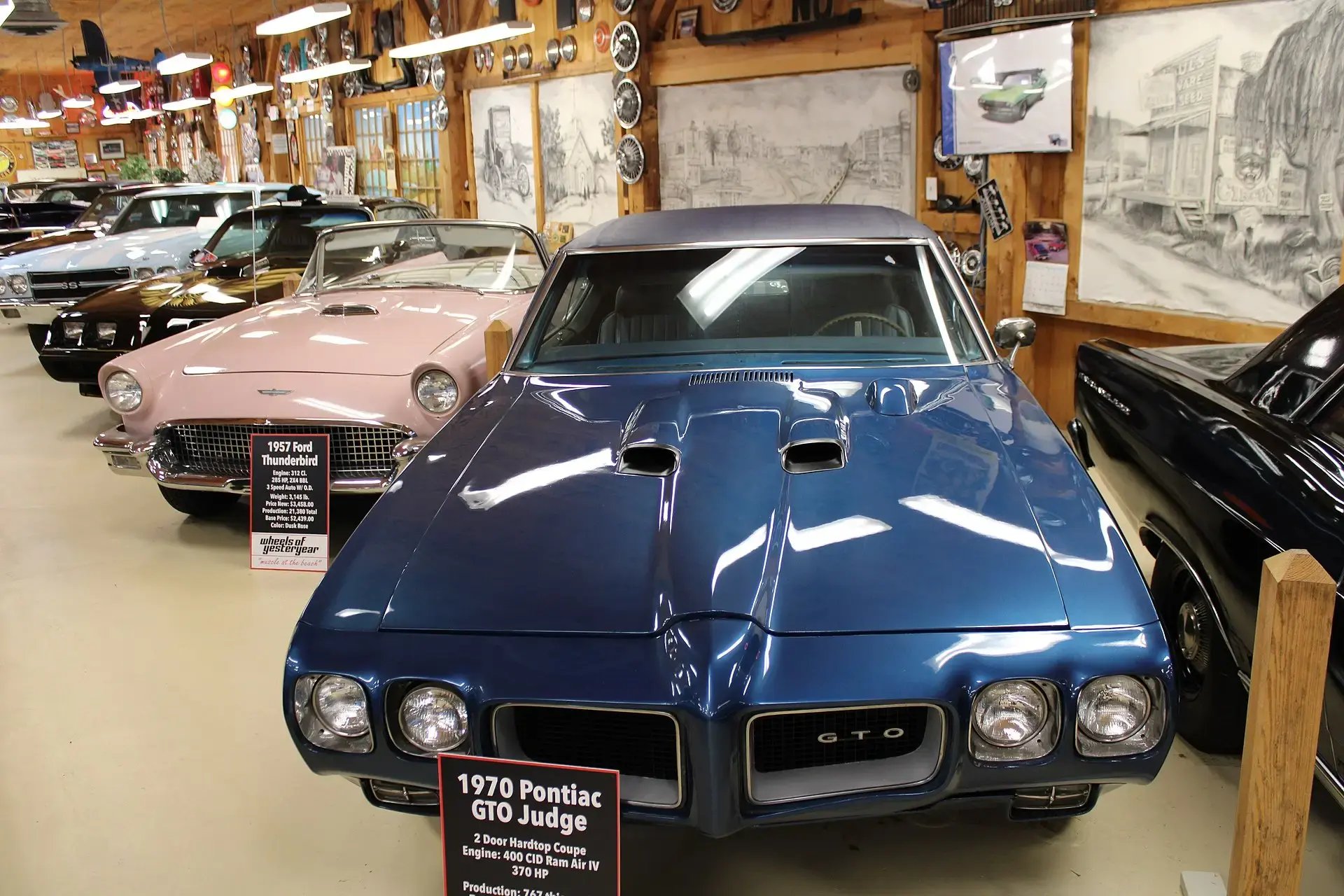
Pontiac’s contribution to four‑door muscle is mostly found at the very edges of documented production. Some Pontiac historians and club registries reference special‑order four‑door Tempest or LeMans sedans equipped with GTO‑spec engines and suspension parts, particularly for:
-
Export markets where regulations or demand favored four doors
-
Internal corporate or executive use
-
Special promotional or demonstration vehicles
These potential builds sit at the outer margins of Pontiac history, and factory‑confirmed examples are extremely rare. Anyone considering a claimed four‑door “GTO sedan” should treat that label as a theory to be rigorously proved. In practice, that means relying on Pontiac Historic Services (PHS) documentation, original invoices, and long‑term ownership records—not just anecdotes or added emblems. WCS’s deep dive into Grand Prix and muscle rarity underscores how critical it is to separate legend from verifiable fact.
Oldsmobile 442-Spec Four-Door Availability
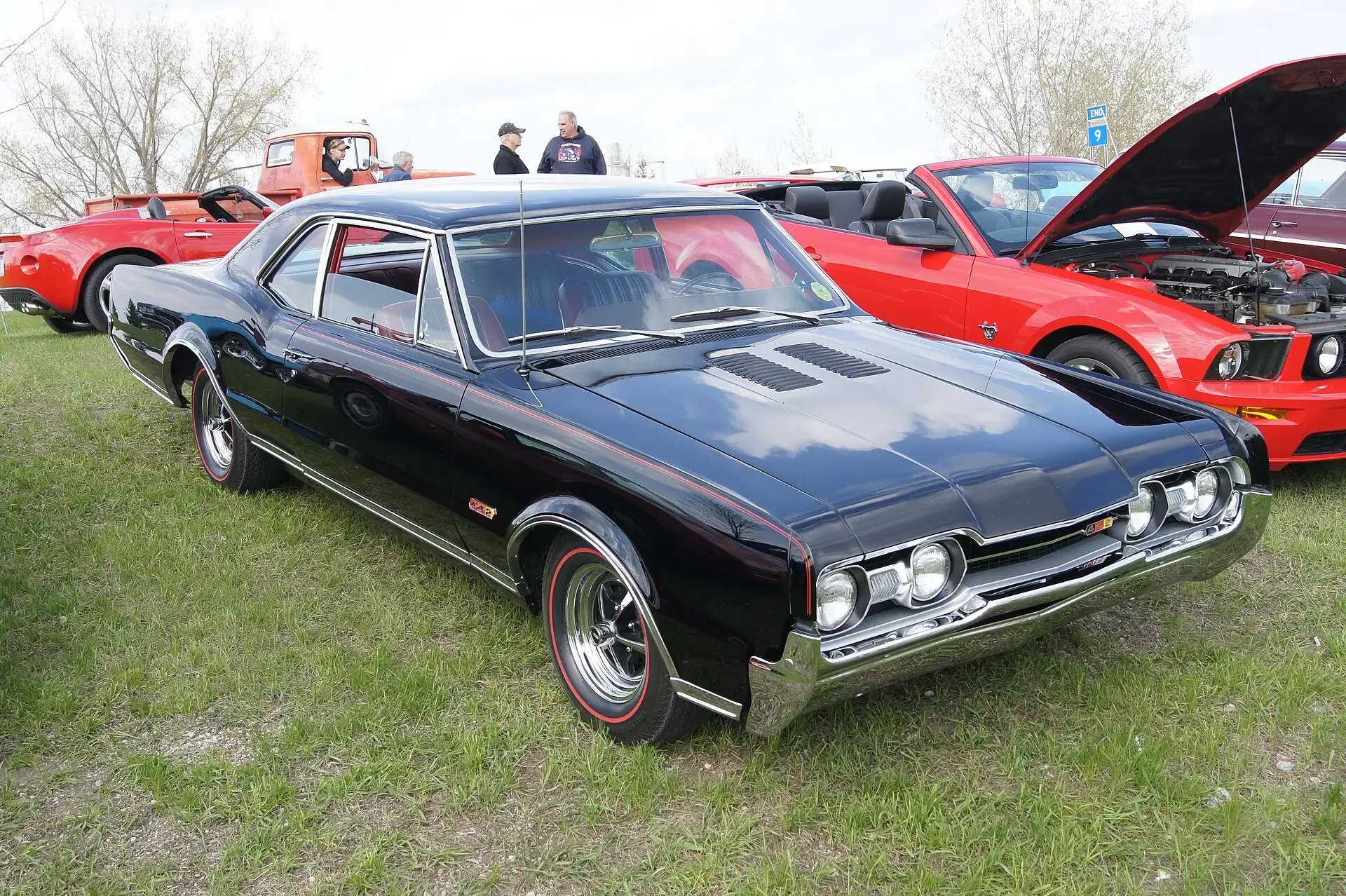
Oldsmobile’s 442 started as an option package, and during those early years some evidence suggests that 442‑type performance equipment could be specified on four‑door F‑85 or Cutlass bodies in limited, special‑purpose contexts. These might have included:
-
Fleet or law‑enforcement orders needing extra punch
-
Internal or promotional cars built for specific roles
-
Rare customer orders placed through knowledgeable dealers
Surviving examples, if any, are poorly documented and frequently confused with standard V8 sedans wearing 442 badges added later. Anyone evaluating a supposed four‑door “442 sedan” should engage Oldsmobile marque experts, check factory documentation, and avoid relying solely on visual cues. This kind of careful vetting aligns with the approach WCS encourages in its Oldsmobile 442 evolution and forgotten icon coverage.
Why Collectors Are Reconsidering Four-Door Muscle (as of February 2026)
As highlighted in WCS guides like 10 classic American muscle cars to buy under $30k and the $25k–$75k muscle‑car sweet spot, rising prices for blue‑chip coupes have pushed many buyers toward overlooked configurations. Four‑door muscle offers a compelling blend of traits:
-
Genuine rarity: Fewer four‑door performance cars were ordered, and far fewer survive in correct, documented form today.
-
Mechanical parity: Under the hood, a big‑block or high‑output four‑door often shares engines, transmissions, and axles with its two‑door counterparts.
-
Price advantage: As of early 2026, market observers generally note that documented four‑door performance sedans typically command significantly less than equivalent coupes, sometimes trading at a meaningful discount for similar condition and options, though actual percentages vary by model and market.
-
Practical usability: Extra rear‑seat space and additional doors make them friendly for shows, road trips, and family use.
The WCS European cars vs American muscle comparison points out that American performance sedans occupy a unique niche globally. Few period European sedans offered comparable displacement and straight‑line speed at similar price points, which helps explain why a well‑documented four‑door muscle car can stand out dramatically at overseas events where nearly everyone else brings coupes and convertibles.
Four-Door Muscle in the Global Market
For international buyers, four‑door muscle sedans offer a mix of practicality and presence that can be especially appealing. In cities where parking is limited and multi‑purpose vehicles are the norm, a four‑door Chevelle, Coronet, GTO‑spec Tempest, or 442‑spec F‑85 can serve as:
-
A standout family classic for weekend outings
-
A comfortable long‑distance tourer for rallies or cross‑border events
-
A conversation‑starter at local shows, precisely because of its rarity
WCS’s coverage of the most popular American classics imported overseas and top American muscle cars for import to Germany shows strong international demand for American performance, but also hints at growing interest in less obvious body styles. Four‑door muscle fits squarely into that trend.
Shipping Four-Door Muscle Sedans Internationally with West Coast Shipping
Once you locate the right four‑door Chevelle/Malibu, Coronet, GTO‑spec sedan, or 442‑spec Oldsmobile, the biggest challenge is often logistics rather than horsepower. This is where West Coast Shipping’s global experience becomes a key advantage.
Through its international car shipping services, WCS can:
-
Arrange pickup from private sellers, collectors, dealers, or auctions across the United States.
-
Load your sedan into secure containers, with options for single‑vehicle or shared shipments depending on your budget and timing.
-
Coordinate ocean shipping to ports in Europe, the UK, the Middle East, Asia, Australia, and other regions.
-
Provide guidance on export paperwork and connect you with trusted partners for customs handling at destination.
Four‑door sedans tend to pack efficiently in containers and benefit from the controlled environment container shipping provides. For many buyers, that balance of cost, safety, and flexibility makes containerized transport the preferred choice, a topic expanded in WCS’s international services checklist and broader how‑to content.
Transit Times, Routes, and Cost Drivers
Transit times for four‑door muscle sedans broadly match those for other classic vehicles shipped in containers:
-
Routes from the U.S. to Northern Europe often involve a few weeks at sea, plus handling before departure and after arrival.
-
Shipments to Asia, Australia, and more distant destinations can require longer sailing times and potentially more complex routing.
-
Shared containers typically reduce per‑vehicle cost but may introduce additional time for consolidation and scheduling.
Because ocean freight conditions, port congestion, and fuel surcharges can change quickly, all timelines and cost examples should be treated as estimates rather than guarantees. The international car shipping page and WCS’s main site calculator allow you to obtain up‑to‑date quotes that reflect current conditions and your specific origin/destination pair.
Import Rules, Age Thresholds, and Documentation Checks
Many four‑door muscle sedans from the 1960s and 1970s easily clear common 25‑ or 30‑year import thresholds, but the details vary by country. WCS’s guide to classic cars eligible for 25‑year import in 2026 demonstrates how model year and build date can affect import classification.
Before committing to a purchase and shipment, you should:
-
Confirm how your jurisdiction treats older vehicles in terms of registration, inspections, and taxation.
-
Check whether modifications (exhaust, ride height, wheels, etc.) could complicate compliance.
-
Ensure you receive clear title (or local equivalent), a proper bill of sale, and export‑ready documentation.
The WCS FAQ and how‑to guide offers step‑by‑step explanations of the export and import process, while high‑volume buyers and dealers can benefit from the company’s wholesale car shipping options for moving multiple vehicles efficiently.
Buying Tips: Verifying a Claimed Four-Door Muscle Car
Because four‑door muscle sedans are so often tied to special orders, fleet builds, or debated configurations, verification is absolutely critical. Before wiring money for a claimed SS‑spec, Coronet muscle sedan, GTO‑spec four‑door, or 442‑spec car:
-
Prioritize documentation: seek build sheets, window stickers, factory invoices, and, when applicable, PHS or similar factory‑backed records.
-
Consult marque specialists and registries to confirm that the claimed configuration is plausible and correctly represented.
-
Arrange independent inspections that include detailed photos of tags, stampings, and key components.
The same principles that WCS applies in features like hidden classic car gems under $50k and 5 underrated American performance cars apply doubly to rare four‑door muscle contenders: paperwork and expert validation are more important than stories.
Four-Door Muscle in Your Collection
As of February 2026, interest in four‑door muscle is steadily growing among enthusiasts who want something different from the usual muscle‑car playbook. In a diversified collection, these sedans can serve as:
-
Practical, comfortable long‑distance event cars
-
Unique show‑field standouts among rows of coupes and convertibles
-
Family‑friendly classics that invite more people along for the ride
When viewed alongside the coupes, convertibles, and special‑body cars covered across the WCS blog—including the Grand Prix four‑door, muscle, and convertible rarity feature—four‑door muscle sedans help tell a more complete story of how Detroit balanced performance with everyday usability.
Disclosure and disclaimer (February 2026)
This article is provided by West Coast Shipping (WCS) for general informational and promotional purposes only. Vehicle specifications, performance figures, production numbers, and historical details are based on third‑party sources, period publications, and enthusiast research, which may differ from one another and may be updated over time. Market observations, including any references to relative values or “undervalued” models, are general in nature and not investment advice or a guarantee of future performance. Classic and collector car markets are highly volatile; values vary significantly by condition, originality, documentation, specification, and regional demand, and can change rapidly.
Always verify technical specifications, production data, and options for any specific vehicle with marque specialists, factory documentation where available, and current expert resources before making purchasing decisions. Before relying on any market or value commentary, consult multiple up‑to‑date sources such as recent auction results, dealer listings, and independent valuation tools in your target market. Nothing in this article should be construed as legal, tax, financial, or investment advice. For advice on those topics, consult appropriately qualified professionals in your jurisdiction.
Ship Your Four-Door Muscle Sedan with West Coast Shipping
Ready to bring a four‑door Chevelle, Coronet, GTO‑spec Tempest, or 442‑spec Oldsmobile into your garage, wherever you are in the world? Use West Coast Shipping’s online tools and international car shipping services to compare routes, estimate costs, and plan the journey from U.S. seller to your driveway—so you can focus on choosing the right high‑performance family sedan while WCS handles the logistics.

Grand Prix, Four‑Door Muscle & Convertible Rarity Explained
Top 5 Pre‑1970 Muscle Cars That Sparked the Horsepower Wars